Many people buy insurance to protect their health, home, car, or family. But a common question is: How insurance companies make money if they are constantly paying claims?
Insurance companies operate using a structured financial model that balances risk, premiums, and long-term investments. While they collect money from policyholders, they must also pay claims, manage administrative costs, and comply with regulations. Their profitability depends on careful planning, statistical analysis, and disciplined financial management.
Understanding how insurance companies earn profits helps consumers make informed decisions. It also builds awareness about pricing, underwriting, and claim processes. For a global audience, the core business model is similar across countries, even though regulations and policies vary.
This guide explains in simple language how insurers generate revenue, manage risk, invest funds, and remain profitable over time. It includes tables, real-world examples, pros and cons, and answers to common questions.
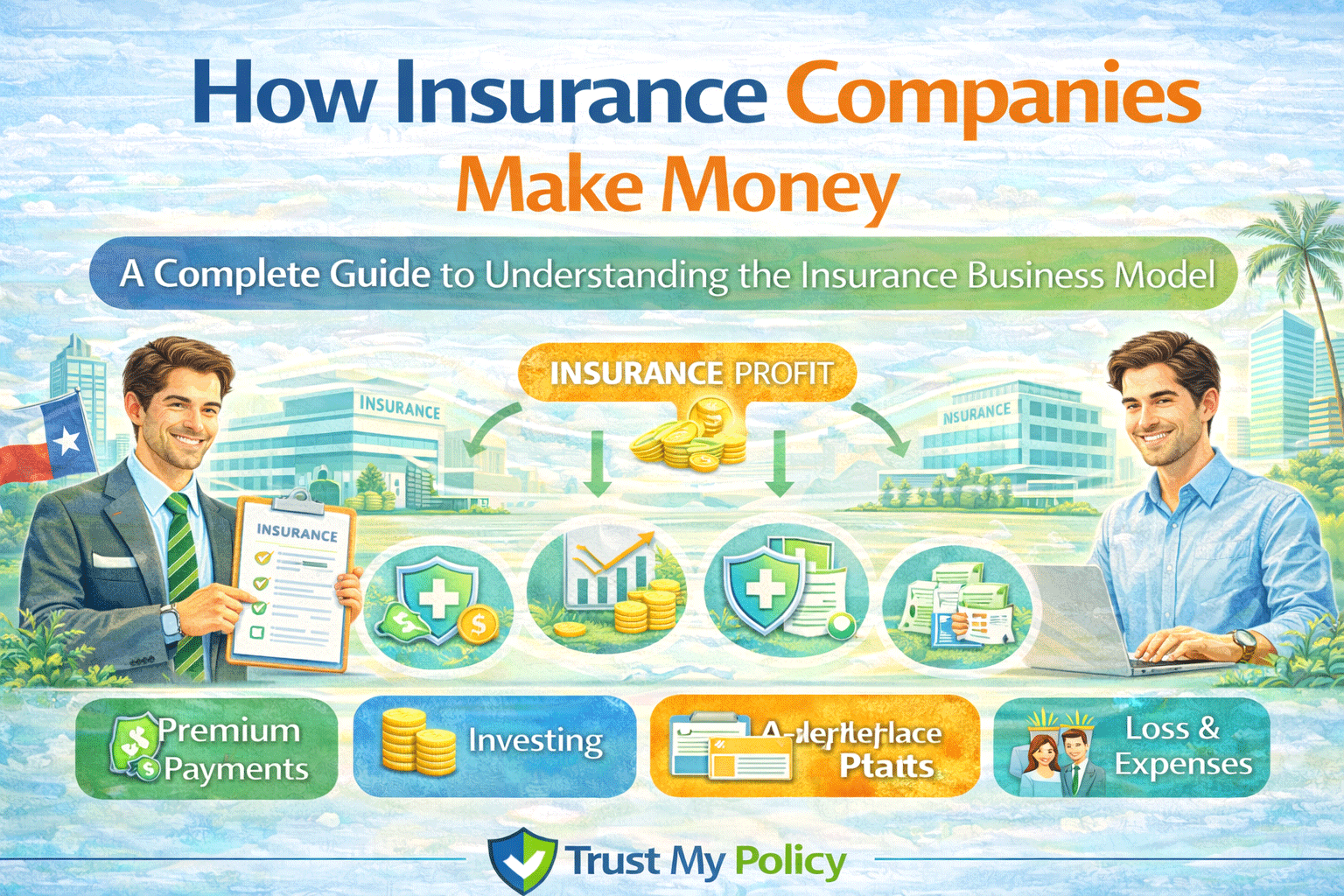
How Insurance Companies Make Money
| Revenue Source | What It Means | Why It Matters |
|---|---|---|
| Premium Income | Money collected from policyholders | Primary source of revenue |
| Investment Income | Earnings from investing premiums | Major profit driver |
| Underwriting Profit | When premiums exceed claims and expenses | Shows operational efficiency |
| Float | Holding premiums before paying claims | Provides investment opportunity |
| Reinsurance | Risk-sharing with other insurers | Protects financial stability |
| Fees & Charges | Administrative or policy fees | Additional income stream |
Basic Insurance Business Model
To understand how insurance companies make money, we need to look at three main pillars:
-
Collecting premiums
-
Paying claims
-
Investing collected funds
If insurers collect more money than they pay out (after expenses), they earn a profit.
What Are Insurance Premiums?
Premiums are payments policyholders make to maintain coverage.
Example:
If 10,000 drivers each pay $1,000 per year for car insurance, the insurer collects:
$10 million in premium income.
Not all drivers will file claims in the same year. This allows insurers to pool risk.
Risk Pooling Explained
Risk pooling is the foundation of insurance.
Instead of one person bearing a large financial loss alone, many people share the cost of risk.
Key Concept:
-
Many pay premiums
-
Few file claims
-
Funds are redistributed to those who need it
This system works because insurers use statistical data to estimate future claims.
What Is Underwriting?
Underwriting is the process of evaluating risk before issuing a policy.
Insurers assess:
-
Age
-
Health
-
Driving record
-
Property location
-
Occupation
The goal is to charge a premium that reflects the level of risk.
If pricing is accurate, insurers collect enough premiums to cover expected claims and expenses.
Choosing the right insurance coverage requires understanding different policy types, benefits, and financial protection options available to policyholders. Many readers compare multiple guides before selecting a plan so they can clearly evaluate premiums, claim procedures, and long‑term advantages. A useful resource to explore is Insurance Premium Explained, which explains how this insurance policy works, the key benefits it offers, and situations where it may be the most suitable option. By reviewing this guide, you can gain deeper insights into coverage features, eligibility requirements, and practical tips that help individuals and families make smarter insurance decisions.
Underwriting Profit vs Investment Profit
Insurance companies earn money in two main ways.
1. Underwriting Profit
Occurs when:
Premiums collected > Claims paid + Operating expenses
This means the insurance operations themselves are profitable.
2. Investment Profit
Insurers invest collected premiums in:
-
Government bonds
-
Corporate bonds
-
Stocks
-
Real estate
Investment returns often represent a large portion of total profits.
Detailed Comparison Table: Underwriting vs Investment Income
| Feature | Underwriting Profit | Investment Income |
|---|---|---|
| Source | Insurance operations | Financial markets |
| Risk Level | Based on claim accuracy | Market risk |
| Stability | Varies by claim frequency | Depends on economy |
| Time Horizon | Short to medium term | Medium to long term |
| Importance | Core business | Major profit driver |
What Is the Insurance “Float”?
The “float” refers to premium money collected but not yet paid out in claims.
During this time, insurers invest the money.
Example:
-
Premium collected today
-
Claim paid months or years later
-
Investment income earned in between
Float can generate significant revenue over time.
Claims Management and Profitability
Insurance companies must carefully manage claims.
If claims exceed expectations:
-
Underwriting loss occurs
-
Profit depends more on investments
If claims are lower than expected:
-
Company earns underwriting profit
Accurate risk prediction is critical.
Expense Management
Insurance companies also manage operational costs, including:
-
Employee salaries
-
Technology systems
-
Customer service
-
Marketing
-
Regulatory compliance
Lower operating costs improve overall profit margins.
Reinsurance: Risk Sharing Strategy
Reinsurance means insurers transfer part of their risk to another company.
Example:
A hurricane causes massive property damage.
Primary insurer shares losses with reinsurance company.
Reinsurance helps stabilize profits and prevent large financial losses.
Choosing the right insurance coverage requires understanding different policy types, benefits, and financial protection options available to policyholders. Many readers compare multiple guides before selecting a plan so they can clearly evaluate premiums, claim procedures, and long‑term advantages. A useful resource to explore is Short Term Health Insurance Explained, which explains how this insurance policy works, the key benefits it offers, and situations where it may be the most suitable option. By reviewing this guide, you can gain deeper insights into coverage features, eligibility requirements, and practical tips that help individuals and families make smarter insurance decisions.
Different Types of Insurance and Profit Patterns
Profit models vary by insurance type.
Life Insurance
-
Long-term policies
-
Lower frequency, high-value claims
-
Strong investment component
Health Insurance
-
High claim frequency
-
Thin margins
-
Strong cost control focus
Auto Insurance
-
Moderate frequency
-
Pricing based heavily on risk factors
Property Insurance
-
High exposure to natural disasters
-
Profit fluctuates yearly
How Insurance Pricing Is Determined
Insurance companies use actuarial science.
Actuaries analyze:
-
Historical claims data
-
Demographics
-
Economic trends
-
Weather patterns
Pricing must be:
-
Competitive
-
Sufficient to cover claims
-
Compliant with regulations
Pros and Cons of the Insurance Business Model
Advantages
-
Predictable long-term revenue
-
Risk diversification
-
Investment income potential
-
Scalable business structure
Disadvantages
-
Exposure to unexpected disasters
-
Market investment risk
-
Regulatory complexity
-
Claim fraud losses
Real-Life Examples
Example 1: Auto Insurance Company
Collects $500 million in premiums.
Pays $400 million in claims and expenses.
Underwriting profit = $100 million.
Additionally, earns $30 million from investments.
Total profit = $130 million.
Example 2: Property Insurer During Natural Disaster
Collects $200 million premiums.
Unexpected hurricane causes $250 million in claims.
Underwriting loss = $50 million.
Investment income may offset some losses.
Example 3: Life Insurance Company
Collects long-term premiums.
Invests funds for decades before paying benefits.
Investment returns significantly contribute to profits.
Choosing the right insurance coverage requires understanding different policy types, benefits, and financial protection options available to policyholders. Many readers compare multiple guides before selecting a plan so they can clearly evaluate premiums, claim procedures, and long‑term advantages. A useful resource to explore is How Insurance Protects Your Money, which explains how this insurance policy works, the key benefits it offers, and situations where it may be the most suitable option. By reviewing this guide, you can gain deeper insights into coverage features, eligibility requirements, and practical tips that help individuals and families make smarter insurance decisions.
Common Misunderstandings About Insurance Company Profits
1. “Insurers Keep All Premium Money”
Incorrect. Most premium income goes toward claims and expenses.
2. “Companies Profit by Denying Claims”
Claims are paid according to policy terms. Profit primarily depends on pricing accuracy and investments.
3. “Insurance Is Always Highly Profitable”
Profit margins can be small and fluctuate yearly.
4. “Premiums Are Randomly Set”
Premiums are calculated using actuarial data and statistical models.
How Regulations Affect Profits
Governments regulate insurance companies to:
-
Protect consumers
-
Ensure claim payments
-
Prevent unfair pricing
-
Maintain financial stability
Insurers must maintain reserves to guarantee future claim payments.
The Combined Ratio Explained
The combined ratio measures underwriting performance.
Formula:
(Claims + Expenses) ÷ Premiums
If ratio is:
-
Below 100% → Underwriting profit
-
Above 100% → Underwriting loss
Investment income may still generate overall profit even if combined ratio exceeds 100%.
Frequently Asked Questions (FAQs)
1. How insurance companies make money if they pay large claims?
They collect premiums from many policyholders and invest the funds before claims are paid.
2. What is the main source of insurance company profit?
Premium income and investment returns are the two main sources.
3. Do insurance companies always make underwriting profit?
No. Some years result in underwriting losses, especially after disasters.
4. What is the float in insurance?
Float is premium money held before paying claims, which insurers invest.
5. Why do premiums increase over time?
Premiums may rise due to inflation, higher claim costs, or increased risk factors.
6. Are insurance companies highly regulated?
Yes. Governments closely regulate insurers to protect policyholders.
7. Can investment losses hurt insurance companies?
Yes. Poor investment performance can reduce profitability.
Key Takeaways
-
Insurance companies collect premiums from many policyholders.
-
Not all policyholders file claims.
-
Companies invest collected funds.
-
Underwriting accuracy is essential.
-
Profit comes from both operations and investments.
-
Risk management protects long-term stability.
Choosing the right insurance coverage requires understanding different policy types, benefits, and financial protection options available to policyholders. Many readers compare multiple guides before selecting a plan so they can clearly evaluate premiums, claim procedures, and long‑term advantages. A useful resource to explore is Insurance Rider Explained, which explains how this insurance policy works, the key benefits it offers, and situations where it may be the most suitable option. By reviewing this guide, you can gain deeper insights into coverage features, eligibility requirements, and practical tips that help individuals and families make smarter insurance decisions.
Conclusion
Understanding how insurance companies make money helps consumers see the bigger financial picture. Insurers operate by pooling risk, carefully pricing policies, managing claims, controlling expenses, and investing premium funds.
Their profitability depends on balancing underwriting performance and investment returns. While some years bring strong profits, others may result in losses due to natural disasters or market downturns.
Insurance companies play an important role in financial systems worldwide by spreading risk and providing protection against unexpected events. Their business model is built on statistical analysis, long-term planning, and disciplined financial management.
Disclaimer: This article is for educational purposes only. Trust My Policy is an independent informational platform and does not sell insurance products or represent any insurance provider. Readers should consult official policy documents or licensed professionals for personalized advice.