
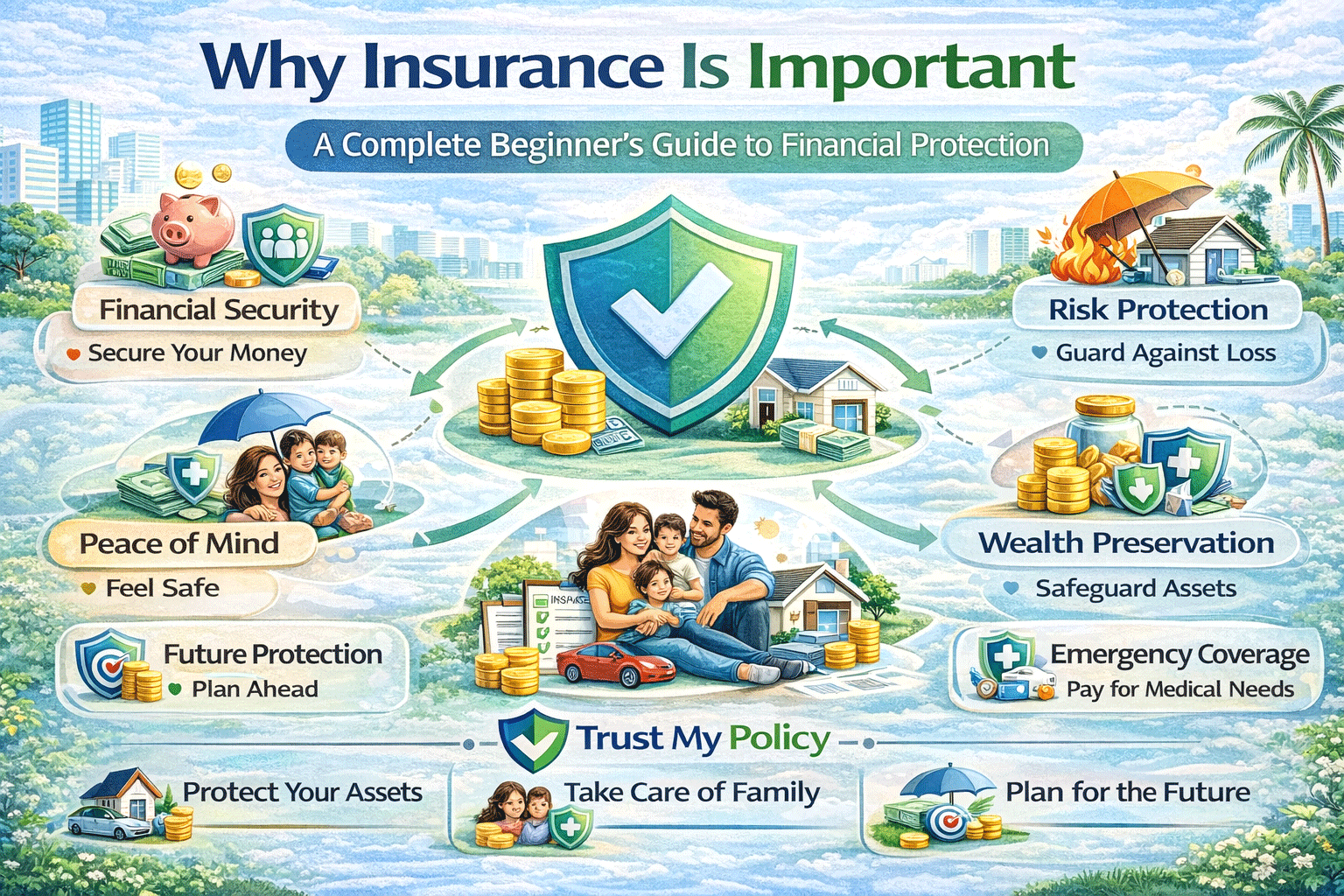
Insurance is important because it protects you against financial losses that could otherwise be devastating — a serious illness, a house fire, a lawsuit, or the loss of an income earner. A single uninsured event, like Carlos’s $63,000 fire damage, can wipe out years of savings in a single incident that a modest monthly premium would have fully covered.
Carlos Reyes, 36, skipped renewing his homeowners insurance in Florida for one year to save $1,800, betting that nothing would happen before he renewed. Three months later, a kitchen fire caused $63,000 in damage. With no policy active, Carlos covered the entire repair himself, wiping out most of his savings in a single afternoon.
Why Insurance Is Important in 2026 comes down to one simple fact: it converts a rare, potentially devastating financial loss into a small, predictable cost you can actually budget for. Without coverage, a single accident, illness, or disaster can erase years of savings instantly. This guide explains exactly why each core type of insurance matters, with real numbers showing what’s at stake.
This article covers the core financial protection insurance provides, why each major type matters, real scenarios with specific dollar amounts, and a clear framework for prioritizing your own coverage. By the end, you’ll know exactly where the real risk lies if you go without.
| Feature | Details |
| What it is | Financial protection against losses too large to absorb out of pocket |
| Who needs it | Anyone with a home, a car, dependents, income, or significant assets |
| Typical core premium cost | $500–$2,500/year for auto and home combined in the US; £300–£1,200 in the UK |
| Potential loss without coverage | $10,000–$500,000+ depending on the event |
| Key benefit | Converts rare, catastrophic losses into small, predictable costs |
| Key limitation | Ongoing premium cost even during years without a claim |
| Regulator | State insurance departments (US); Financial Conduct Authority (UK) |
Most people treat insurance like a seatbelt they only think about right before a crash. The truth is closer to a fire extinguisher mounted on the wall — its value isn’t in how often you use it, but in the fact that the one time you genuinely need it, nothing else will do the job in time.
Insurance is important because it transfers the financial risk of a rare but potentially catastrophic loss from you individually to a large pool of policyholders, in exchange for a small, predictable premium. Anyone with a home, vehicle, income, dependents, or meaningful savings needs to understand this, because the alternative is carrying that entire risk alone.
| Criteria | Going Without Insurance | Carrying Core Coverage |
| Cost in a normal year | $0 premium | $500–$2,500/year for typical core coverage |
| Cost in a bad year | Potentially $10,000–$500,000+ out of pocket | Capped at your premium plus any deductible |
| Predictability | Highly unpredictable | Predictable, budgetable cost |
| Pros | No ongoing premium cost | Protection against financial ruin |
| Cons | Total exposure to catastrophic losses | Ongoing cost even without a claim |
We recommend carrying core insurance coverage for nearly all readers because the cost of going without it, even briefly, can be financially catastrophic if a major loss occurs.
Scenario 1: Carlos, 36, homeowner in Florida. Carlos skipped a year of homeowners insurance to save $1,800, then faced $63,000 in fire damage entirely out of pocket. Verdict: the saved premium was wiped out 35 times over by a single incident. Action: Carlos now treats homeowners insurance as a non-negotiable fixed cost, never a discretionary expense.
Scenario 2: A 38-year-old mother of two in Manchester without life insurance. When she passed away unexpectedly, her family had no income replacement and struggled to cover the mortgage. Verdict: the absence of even a modest term life policy created a lasting financial hardship. Action: her partner later took out a £400,000 policy of his own for £22 a month.
Scenario 3: James, 29, uninsured driver in Texas who caused a $58,000 accident. Without auto liability coverage, James faced a personal lawsuit for the full damages. Verdict: liability insurance would have covered the entire loss for a fraction of the cost. Action: James now carries $100,000 in liability coverage and budgets it as a fixed monthly expense.
Scenario 4: A self-employed graphic designer in Ohio with no disability insurance. After a car accident left her unable to work for eight months, she had no income replacement and depleted her savings. Verdict: she had insured her car and her home but overlooked her own earning ability. Action: she purchased a disability policy covering 60% of her income going forward.
| Pros | Cons |
| Protects against losses that could otherwise be financially devastating. | Requires an ongoing premium cost even during claim-free years. |
| Provides predictable budgeting instead of unpredictable catastrophic costs. | Choosing the wrong coverage amount can still leave you underinsured. |
| Often required by law or lenders for major financial commitments. | Comparing policies and providers takes time and effort. |
| Protects dependents’ financial future through life and disability coverage. | Premiums can rise over time even without a personal claim. |
| Spreads rare, catastrophic risk across a large pool of policyholders. | Some core coverage still carries exclusions worth understanding upfront. |
⚠️ WARNING: Never let homeowners, auto liability, or health insurance lapse, even temporarily, to save money. A single uninsured incident during that gap can cost far more than years of premiums combined.
| Your Situation | Our Recommendation |
| You own a home or car | Yes — core coverage is essential, not optional |
| You support dependents financially | Yes — get term life insurance to protect their future |
| Your income depends on your ability to work | Yes — consider disability insurance to protect that income |
| You’re debating letting a policy lapse to save money temporarily | No — keep core coverage continuously active |
| You’re young, healthy, and debating life insurance | Yes — apply now while premiums are at their lowest |
| You rent and assume you don’t need coverage | No — get renters insurance for your personal belongings |
| You have significant savings and feel “self-insured enough” | Yes — still carry liability coverage, since lawsuit exposure isn’t capped by your savings |
💡 TIP: The single golden rule for understanding why insurance matters: compare your premium to the realistic cost of the worst-case loss it protects against, not to how unlikely that loss feels.
| Scenario | Annual Premium | Potential Loss Without Coverage |
| US homeowners insurance | $1,200–$2,500 | $50,000–$300,000+ for a major fire or storm |
| UK home insurance | £250–£600 | £20,000–£100,000+ depending on the incident |
| US auto liability insurance | $400–$900 | $50,000–$1,000,000+ in a serious crash lawsuit |
| US term life insurance, healthy 35-year-old, $500,000 | $250–$450 | $500,000 in lost income replacement for dependents |
| UK term life insurance, healthy 35-year-old, £300,000 | £150–£300 | £300,000 in lost income replacement for dependents |
| US disability insurance, covering 60% of income | $300–$700 | Full lost income for the duration of a disability |
| US health insurance, subsidized marketplace plan | $0–$1,800 | $50,000–$500,000+ for a major illness or surgery |
State Farm — One of the largest US insurers offering bundled home, auto, and life coverage with broad agent availability. Cost range: competitive, varies by state. Best for: US households wanting one insurer across multiple core policies. Rating: AM Best A++.
Aviva — A leading UK insurer offering home, life, and auto coverage with strong financial strength ratings. Cost range: competitive UK pricing. Best for: UK households wanting comprehensive core coverage. Rating: Defaqto 5 Star.
Policygenius (US) — A comparison platform specializing in term life and disability insurance for income protection. Cost range: free to compare. Best for: US buyers prioritizing life and disability coverage. Rating: independently reviewed comparison service.
Lemonade — A digital-first renters and home insurer known for fast claims processing. Cost range: competitive, especially for renters. Best for: renters who assume they don’t need coverage. Rating: AM Best A-.
Compare the Market (UK) — A leading UK comparison site for home, auto, and life insurance quotes. Cost range: free to compare. Best for: UK shoppers wanting to compare core coverage quickly. Rating: FCA-regulated comparison service.
We recommend State Farm or Aviva as best overall because both offer comprehensive core coverage across home, auto, and life insurance from a single, financially strong insurer.
Insurance is important because it converts rare but potentially devastating financial losses, like a house fire or major illness, into small, predictable premium payments.
Without insurance, you bear the full financial cost of any loss yourself, which can range from a few thousand dollars to hundreds of thousands for major incidents like a house fire or serious accident.
Health insurance is critical because medical costs can reach catastrophic levels quickly, but auto liability, home, and life insurance each protect against equally serious financial risks in their own areas.
Life insurance protects your dependents’ financial future, and applying while young and healthy secures the lowest possible premium for that protection.
Yes, especially if your income depends on your ability to work, since an injury or illness preventing you from working can be as financially damaging as losing your home.
Liability exposure from lawsuits isn’t capped by your savings, so even financially comfortable individuals typically still need core liability coverage.
A landlord’s insurance typically covers only the building, not a tenant’s personal belongings, making a separate renters policy necessary for real protection.
Coverage needs vary by individual circumstances, but a good starting point is comparing your premium against the realistic cost of your area’s most common major losses.
Yes. A single uninsured incident during a lapse can cost far more than the premium saved, making continuous coverage important even during tight financial periods.
Disability insurance is frequently overlooked, even though your ability to earn an income is often your most valuable financial asset.
This guide reflects the latest 2026 insurance data.
This article is for informational purposes only. Always consult a licensed insurance professional before making coverage decisions. Trust My Policy does not sell insurance products or represent any insurer.

Jagadeesh Gutha is the founder of TrustMyPolicy.com, an independent insurance information platform covering life, health, car, home, and business insurance for US and UK readers. He researches insurance products, policy structures, and consumer rights to help everyday people make informed coverage decisions without the jargon. All content on TrustMyPolicy is independently researched, fact-checked, and written to educate — not to sell.


Insurance Guides for UK, USA & Worldwide We are not an insurer or broker.

Reader Comments (0)