
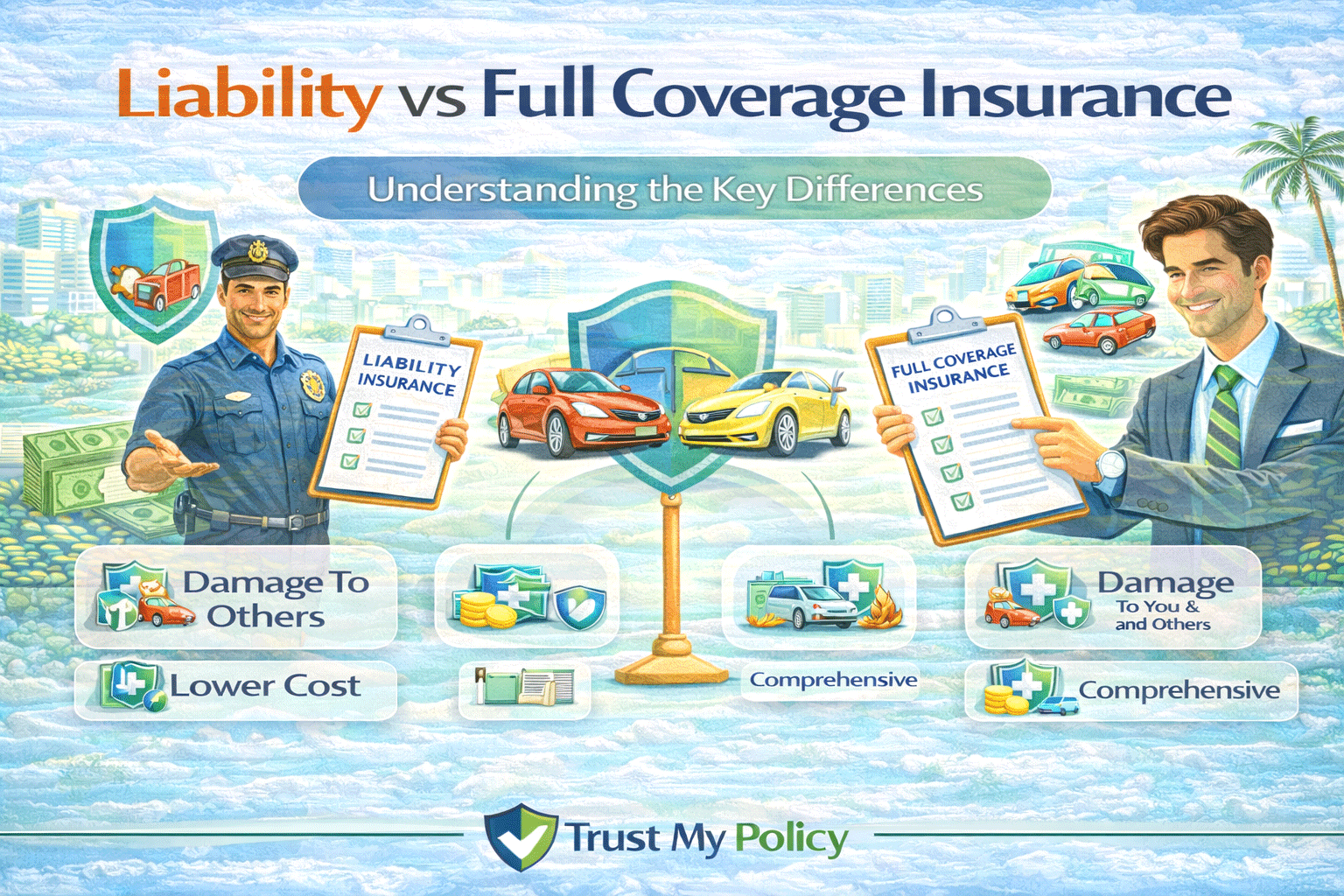
Liability insurance covers injury or property damage you cause to others and is legally required almost everywhere. Full coverage adds collision insurance, which pays for damage to your own car from an accident, and comprehensive insurance, which covers theft, fire, and weather damage. Full coverage typically costs $50–$100 more per month than liability alone but is often required for financed or leased vehicles.
Greg Sullivan, 26, drove a paid-off 2014 sedan in Phoenix and carried only state-minimum liability insurance to save money. After a hailstorm shattered his windshield and dented his hood, he learned the hard way that liability coverage pays for damage you cause to others — never your own vehicle.
Liability vs Full Coverage Insurance in 2026 comes down to one key difference: liability insurance pays for damage or injury you cause to others, while full coverage adds collision and comprehensive insurance to also pay for damage to your own car. Liability is the legal minimum in nearly every US state and the UK; full coverage is optional but often required by lenders on financed vehicles. This guide breaks down exactly what each one covers and which makes sense for your car.
This article covers what each coverage type actually includes, when full coverage is worth the extra cost, real scenarios with dollar figures, and a clear decision framework. By the end, you’ll know exactly which one fits your situation.
| Feature | Details |
| What it is | Liability covers damage you cause to others; full coverage adds protection for your own vehicle |
| Who needs liability | Every driver, legally required in nearly all US states and the UK |
| Who needs full coverage | Drivers with a loan or lease, or anyone who couldn’t afford to replace their car out of pocket |
| Typical cost | $40–$90/month liability only; $100–$200/month for full coverage |
| Key benefit | Full coverage protects your own asset; liability protects you from lawsuits |
| Key limitation | Liability pays nothing toward your own car’s repair or replacement |
| Regulator | State insurance departments (US); Financial Conduct Authority and DVLA (UK) |
Think of liability insurance like a financial shield aimed outward — it protects other people and their property from costs you cause, but it offers you nothing back if your own car is damaged. Full coverage adds a second shield aimed inward, protecting your own vehicle as well.
Liability insurance pays for injuries or property damage you cause to other people in an accident you’re at fault for. Full coverage is a package that adds collision insurance, covering damage to your own car regardless of fault, and comprehensive insurance, covering non-collision events like theft, fire, vandalism, or weather damage. Anyone financing a vehicle, or anyone who couldn’t afford to replace their car out of pocket, needs to understand this distinction clearly.
| Criteria | Liability Insurance | Full Coverage (Liability + Collision + Comprehensive) |
| Cost | $40–$90/month | $100–$200/month |
| Covers your own car | No | Yes, for collision and most non-collision events |
| Covers damage to others | Yes | Yes |
| Best for | Older, paid-off cars with low resale value | Financed, leased, or higher-value vehicles |
| Pros | Lower cost, satisfies legal minimum requirements | Protects your own asset, often required by lenders |
| Cons | No protection for your own vehicle at all | Higher premium, plus a deductible when you claim |
We recommend full coverage for most readers with a financed or higher-value vehicle, because the cost of replacing your own car out of pocket usually outweighs the extra premium.
Scenario 1: Greg, 26, driver in Phoenix with a paid-off 2014 sedan. Greg carried liability-only coverage and learned it paid nothing toward his $2,400 hailstorm repair bill. Verdict: liability never covers your own vehicle, regardless of the cause. Action: Greg added comprehensive coverage for $22 a month after the storm, given his area’s hail risk.
Scenario 2: Maria, 31, driver in Dallas with a financed SUV. Maria’s lender required full coverage as a loan condition, and a rear-end collision she caused was fully repaired under her collision coverage. Verdict: full coverage protected the asset her lender had a financial interest in. Action: Maria plans to drop comprehensive and collision once the loan is paid off and reassess based on the car’s value at that time.
Scenario 3: James, 52, driver in Leeds with an older paid-off hatchback worth £1,800. James compared the cost of full coverage against his car’s resale value and found the annual collision premium alone would exceed half the car’s worth over three years. Verdict: full coverage didn’t make financial sense for a low-value vehicle. Action: James kept third-party liability-equivalent coverage only.
Scenario 4: A rideshare driver in Houston using a financed vehicle for both personal and gig work. Standard liability coverage excluded rideshare-related accidents, leaving a gap during active trips. Verdict: full coverage alone wasn’t enough without a rideshare-specific endorsement. Action: the driver added a rideshare endorsement on top of full coverage to close the gap.
| Pros | Cons |
| Liability insurance satisfies the legal minimum at the lowest cost. | Liability insurance pays nothing toward your own vehicle’s damage. |
| Full coverage protects your own car from accidents, theft, and weather. | Full coverage costs significantly more per month than liability alone. |
| Full coverage is often required by lenders, protecting your loan investment. | You still pay a deductible on collision and comprehensive claims. |
| Liability frees up budget for older, low-value vehicles. | Liability-only drivers bear 100% of their own repair or replacement costs. |
| Comprehensive coverage protects against non-accident events like theft and storms. | Full coverage on a very old car can cost more than the car is worth over time. |
⚠️ WARNING: Never assume liability-only coverage protects your own vehicle in any scenario. If you couldn’t afford to repair or replace your car out of pocket, liability-only coverage leaves that entire cost on you.
| Your Situation | Our Recommendation |
| Your car is financed or leased | Yes — get full coverage, it’s likely required by your lender anyway |
| Your car is paid off and worth under $3,000–$4,000 | No — liability-only often makes more financial sense |
| You live in an area prone to hail, flooding, or theft | Yes — add comprehensive coverage even on an older car |
| You couldn’t afford to replace your car out of pocket | Yes — get full coverage regardless of your car’s age |
| You drive for a rideshare or delivery service | Yes — add a rideshare endorsement on top of full coverage |
| You’re deciding right after paying off your loan | Yes — reassess based on current car value before dropping coverage |
| You’re unsure what your state’s minimum liability limits are | Yes — check with your state insurance department before assuming you’re adequately covered |
💡 TIP: The single golden rule for choosing between liability and full coverage: compare your car’s current resale value to the cost of comprehensive and collision premiums, and only keep full coverage if your car’s value still justifies it.
| Scenario | Cost | Notes |
| State-minimum liability only, clean driving record | $40–$70/month | Cheapest legal option in most US states |
| Liability with higher limits ($100,000+) | $70–$90/month | Recommended if you have significant assets to protect |
| Full coverage on a financed sedan | $120–$180/month | Often required by the lender until the loan is paid off |
| Full coverage on a high-value SUV or truck | $150–$250/month | Reflects higher replacement cost |
| Comprehensive-only add-on for an older paid-off car | $15–$30/month | Useful in areas with high theft or weather risk |
| Full coverage with rideshare endorsement | $160–$280/month | Closes the personal-policy gap during active rideshare trips |
| UK comprehensive car insurance, average driver | £450–£700/year | Often cheaper than third-party-only in some UK cases due to insurer pricing quirks |
GEICO (US) — Known for competitive liability and full coverage pricing with a fully digital claims process. Cost range: competitive across most US states. Best for: drivers wanting low-cost liability or full coverage. Rating: AM Best A++.
Progressive (US) — Offers flexible coverage tiers and a usage-based discount program useful for comparing liability versus full coverage costs directly. Cost range: competitive US pricing. Best for: drivers wanting to customize coverage levels. Rating: AM Best A+.
Admiral (UK) — A leading UK insurer offering both third-party and comprehensive car insurance with multi-car discounts. Cost range: competitive UK pricing. Best for: UK drivers comparing comprehensive versus third-party coverage. Rating: Defaqto 4-5 Star.
State Farm (US) — A large US insurer with broad agent access for in-person advice on choosing between liability and full coverage. Cost range: competitive, varies by state. Best for: US drivers wanting personalized guidance. Rating: AM Best A++.
Aviva (UK) — Offers comprehensive and third-party car insurance with strong financial backing and flexible add-ons. Cost range: competitive UK pricing. Best for: UK drivers wanting a financially stable insurer. Rating: Defaqto 5 Star.
We recommend Progressive for US readers and Admiral for UK readers as best overall because both make it easy to compare liability and full coverage pricing side by side before deciding.
Liability insurance pays for damage or injury you cause to others, while full coverage adds collision and comprehensive insurance, which also pay for damage to your own vehicle.
Not always. It generally makes sense for financed, leased, or higher-value vehicles, but may not be worth it for older, low-value cars you could afford to replace out of pocket.
No. Liability insurance only pays for damage or injury you cause to other people and their property, never your own vehicle.
Yes, in most cases, though you should compare your car’s current value against the cost of collision and comprehensive premiums before deciding.
No. Only liability insurance is typically required by law; full coverage is usually only required by a lender or leasing company, not by government regulation.
Comprehensive coverage typically covers non-collision events like theft, vandalism, fire, falling objects, and weather-related damage to your vehicle.
Full coverage typically costs $100–$200 a month, compared to $40–$90 a month for liability-only coverage, though exact pricing varies by state, age, and driving record.
No. Standard personal auto policies, including full coverage, often exclude rideshare or delivery driving, so a specific endorsement is usually needed to close that gap.
Yes, broadly. UK third-party insurance and US liability insurance both cover damage or injury you cause to others, not your own vehicle.
Compare your car’s current resale value to your annual collision and comprehensive premium costs; if the premium approaches a significant share of the car’s value, liability-only may make more sense.
This guide reflects the latest 2026 insurance data.
This article is for informational purposes only. Always consult a licensed insurance professional before making coverage decisions. Trust My Policy does not sell insurance products or represent any insurer.

Jagadeesh Gutha is the founder of TrustMyPolicy.com, an independent insurance information platform covering life, health, car, home, and business insurance for US and UK readers. He researches insurance products, policy structures, and consumer rights to help everyday people make informed coverage decisions without the jargon. All content on TrustMyPolicy is independently researched, fact-checked, and written to educate — not to sell.







Insurance Guides for UK, USA & Worldwide We are not an insurer or broker.
Reader Comments (1)
[…] Auto and home liability coverage protects your savings from lawsuits. A serious accident or injury on your property can result in legal claims far exceeding what most people have saved. […]