
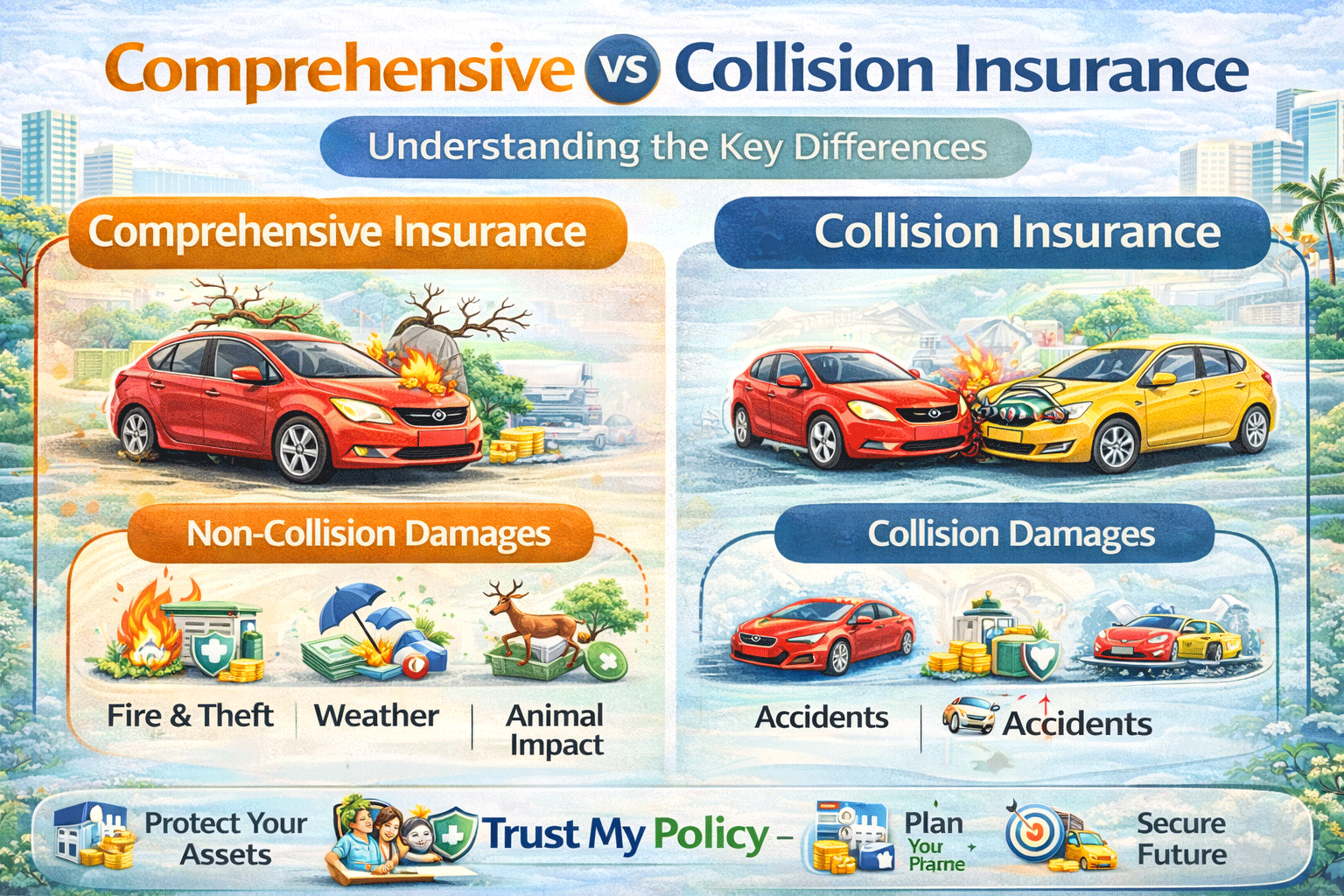
Collision insurance pays for damage to your own car after a crash, whether you hit another vehicle, an object, or roll your car, regardless of fault. Comprehensive insurance pays for non-collision damage like theft, vandalism, fire, hail, or a cracked windshield from a rock. Both typically cost $20–$80 a month combined and both require a separate deductible, often $500–$1,000.
Nina Torres, 33, parked her car on a Denver street overnight and woke up to a smashed windshield and a stolen catalytic converter. She filed a claim assuming her “full coverage” would handle it, only to learn from her insurer which specific half of her policy actually applied — and why it mattered for her deductible.
Comprehensive vs Collision Insurance in 2026 comes down to what caused the damage. Collision insurance pays for damage to your own car from a crash, regardless of who’s at fault. Comprehensive insurance pays for damage from non-collision events like theft, vandalism, fire, falling objects, and weather. Both are optional add-ons to liability coverage, and both are commonly bundled together as “full coverage.” This guide breaks down exactly what each one pays for and when you need both.
This article covers the precise difference between these two coverages, when each one applies, real scenarios with dollar figures, and a clear decision framework. By the end, you’ll know exactly which claims go where.
| Feature | Details |
| What it is | Two separate optional coverages, often bundled together as “full coverage” |
| Who needs collision | Drivers in financed or leased vehicles, or anyone wanting crash protection |
| Who needs comprehensive | Drivers in high-theft, high-weather, or high-vandalism areas |
| Typical cost | $15–$40/month collision; $10–$40/month comprehensive |
| Key benefit | Collision covers crashes; comprehensive covers nearly everything else |
| Key limitation | Neither covers normal wear and tear or mechanical breakdowns |
| Regulator | State insurance departments (US); Financial Conduct Authority (UK) |
Imagine your car insurance has two separate doors. One door opens for anything involving an actual collision — hitting another car, a fence, or a pothole. The other door opens for almost everything else that isn’t a collision — a thief, a falling tree branch, a hailstorm. Knowing which door to knock on determines whether your claim gets paid quickly or gets bounced back as the wrong coverage.
Collision insurance pays to repair or replace your car after it’s damaged in an accident, whether you collide with another vehicle, an object, or flip the car, regardless of who caused it. Comprehensive insurance pays for damage from causes unrelated to a collision, such as theft, vandalism, fire, falling objects, animal strikes, and weather events like hail or flooding. Anyone financing a vehicle, parking in higher-risk areas, or simply wanting full protection for their car needs to understand both.
| Criteria | Collision Insurance | Comprehensive Insurance |
| Cost | $15–$40/month | $10–$40/month |
| Covers crashes with other vehicles or objects | Yes | No |
| Covers theft, vandalism, fire, weather | No | Yes |
| Best for | Drivers wanting crash protection, especially financed vehicles | Drivers in high-theft, high-weather, or high-vandalism areas |
| Pros | Protects against the most common type of vehicle damage | Covers a wide range of non-crash risks |
| Cons | Doesn’t cover non-collision events like theft or hail | Doesn’t cover damage from an actual crash |
We recommend carrying both together for most readers, since they cover entirely different categories of risk and are usually bundled at a reasonable combined cost.
Scenario 1: Nina, 33, driver in Denver. Nina’s shattered windshield and stolen catalytic converter were both covered under her comprehensive coverage, not collision, since no crash was involved. Verdict: theft and vandalism always fall under comprehensive, not collision. Action: Nina now knows to file theft and vandalism claims specifically against her comprehensive deductible.
Scenario 2: Marcus, 27, driver in Chicago who rear-ended another car. His own car’s $3,800 repair bill was covered by his collision insurance, regardless of the fact that he was at fault. Verdict: collision pays out regardless of fault, unlike liability insurance. Action: Marcus confirmed his collision deductible was set at an amount he could comfortably afford before his next renewal.
Scenario 3: A driver in rural Texas whose windshield was cracked by a rock kicked up from a gravel road. This non-collision glass damage was covered under comprehensive insurance, with some insurers waiving the deductible for glass-only claims. Verdict: comprehensive often includes favorable terms for glass damage specifically. Action: the driver asked their insurer directly whether a glass-only deductible waiver applied.
Scenario 4: A homeowner in Florida whose parked car was damaged by a falling tree branch during a storm. This was covered under comprehensive insurance, since no collision with another vehicle occurred. Verdict: weather-related and falling-object damage consistently falls under comprehensive. Action: the homeowner confirmed comprehensive coverage was active before storm season each year.
| Pros | Cons |
| Collision insurance pays out regardless of who caused the accident. | Collision insurance doesn’t cover theft, vandalism, or weather damage. |
| Comprehensive insurance covers a wide range of non-crash risks. | Comprehensive insurance doesn’t cover any actual collision damage. |
| Both coverages are often required together by lenders on financed vehicles. | Each coverage has its own separate deductible, which can add up at claim time. |
| Comprehensive often includes favorable terms for glass-only damage. | Carrying both raises your premium compared to liability-only coverage. |
| Together they protect against nearly every type of vehicle damage. | Neither covers mechanical breakdowns or normal wear and tear. |
⚠️ WARNING: Never assume comprehensive insurance covers damage from a crash. If you hit another car or object, that claim falls under collision insurance, even if comprehensive is also active on your policy.
| Your Situation | Our Recommendation |
| Your car is financed or leased | Yes — carry both, lenders typically require this |
| You live in a high-theft or high-vandalism area | Yes — keep comprehensive coverage active |
| You live in an area prone to hail or severe weather | Yes — keep comprehensive coverage active |
| You’re worried specifically about crash damage to your own car | Yes — keep collision coverage active |
| Your car is older and worth less than your annual combined premium | No — consider dropping both and keeping liability only |
| You’re unsure which deductible applies to a recent claim | Yes — ask your insurer directly before assuming the wrong category |
| You frequently park on the street in an urban area | Yes — comprehensive coverage is particularly valuable in this situation |
💡 TIP: The single golden rule for telling these apart: if another vehicle or object was involved in the damage, it’s collision; if not, it’s almost certainly comprehensive.
| Scenario | Cost | Notes |
| Collision coverage, average sedan | $20–$35/month | Higher for newer or higher-value vehicles |
| Comprehensive coverage, average sedan | $12–$25/month | Higher in high-theft or high-weather-risk areas |
| Combined collision and comprehensive, financed vehicle | $40–$80/month | Often required together by the lender |
| Glass-only claim with deductible waiver | $0 out-of-pocket | Available with some insurers as a comprehensive add-on |
| Total loss claim payout | Car’s actual cash value | Applies when repair costs exceed the vehicle’s worth |
| Comprehensive claim, hailstorm damage | $1,500–$6,000+ in repairs | Common in hail-prone US regions |
| UK fully comprehensive car insurance | £450–£700/year | Often includes both collision and non-collision protection by default |
Progressive (US) — Offers flexible collision and comprehensive coverage tiers with usage-based discount options. Cost range: competitive US pricing. Best for: drivers wanting to customize each coverage separately. Rating: AM Best A+.
GEICO (US) — Known for competitive comprehensive and collision pricing with a fully digital claims process. Cost range: competitive across most US states. Best for: drivers wanting fast digital claims. Rating: AM Best A++.
Admiral (UK) — A leading UK insurer offering fully comprehensive car insurance with multi-car discounts. Cost range: competitive UK pricing. Best for: UK drivers wanting bundled comprehensive coverage. Rating: Defaqto 4-5 Star.
Allstate (US) — Offers strong comprehensive coverage with flexible glass-damage deductible options. Cost range: competitive US pricing. Best for: drivers wanting customizable glass coverage terms. Rating: AM Best A+.
Aviva (UK) — Offers comprehensive car insurance with strong financial backing and flexible add-ons. Cost range: competitive UK pricing. Best for: UK drivers wanting a financially stable insurer. Rating: Defaqto 5 Star.
We recommend Progressive for US readers and Admiral for UK readers as best overall because both make it easy to compare and customize collision and comprehensive coverage levels separately.
Collision insurance pays for damage to your own car from a crash, regardless of fault, while comprehensive insurance pays for non-collision damage like theft, vandalism, fire, or weather.
Most drivers with a financed or higher-value vehicle benefit from carrying both, since they cover different categories of risk that together address nearly all common causes of vehicle damage.
No. Theft is covered under comprehensive insurance, not collision, since no crash is involved.
No. Damage from an actual collision, regardless of fault, is covered under collision insurance, not comprehensive.
Combined, comprehensive and collision insurance typically costs $40–$80 a month, varying by vehicle value, location, and driving record.
It depends on your car’s value. If your car is worth less than a few years of combined premiums, liability-only coverage may make more financial sense.
Yes, in most cases, and some insurers offer a reduced or waived deductible specifically for glass-only comprehensive claims.
No. Neither is legally required, though lenders and leasing companies typically require both until a vehicle loan or lease is paid off.
The insurer pays out your car’s actual cash value at the time of the loss, rather than the full cost of repairs, if repair costs exceed that value.
Choose a deductible amount you could comfortably pay in cash if you needed to file a claim, balancing that against how much a lower deductible raises your premium.
This guide reflects the latest 2026 insurance data.
This article is for informational purposes only. Always consult a licensed insurance professional before making coverage decisions. Trust My Policy does not sell insurance products or represent any insurer.

Jagadeesh Gutha is the founder of TrustMyPolicy.com, an independent insurance information platform covering life, health, car, home, and business insurance for US and UK readers. He researches insurance products, policy structures, and consumer rights to help everyday people make informed coverage decisions without the jargon. All content on TrustMyPolicy is independently researched, fact-checked, and written to educate — not to sell.






Insurance Guides for UK, USA & Worldwide We are not an insurer or broker.
Reader Comments (1)
[…] cause to other people in an accident you’re at fault for. Full coverage is a package that adds collision insurance, covering damage to your own car regardless of fault, and comprehensive insurance, covering […]