
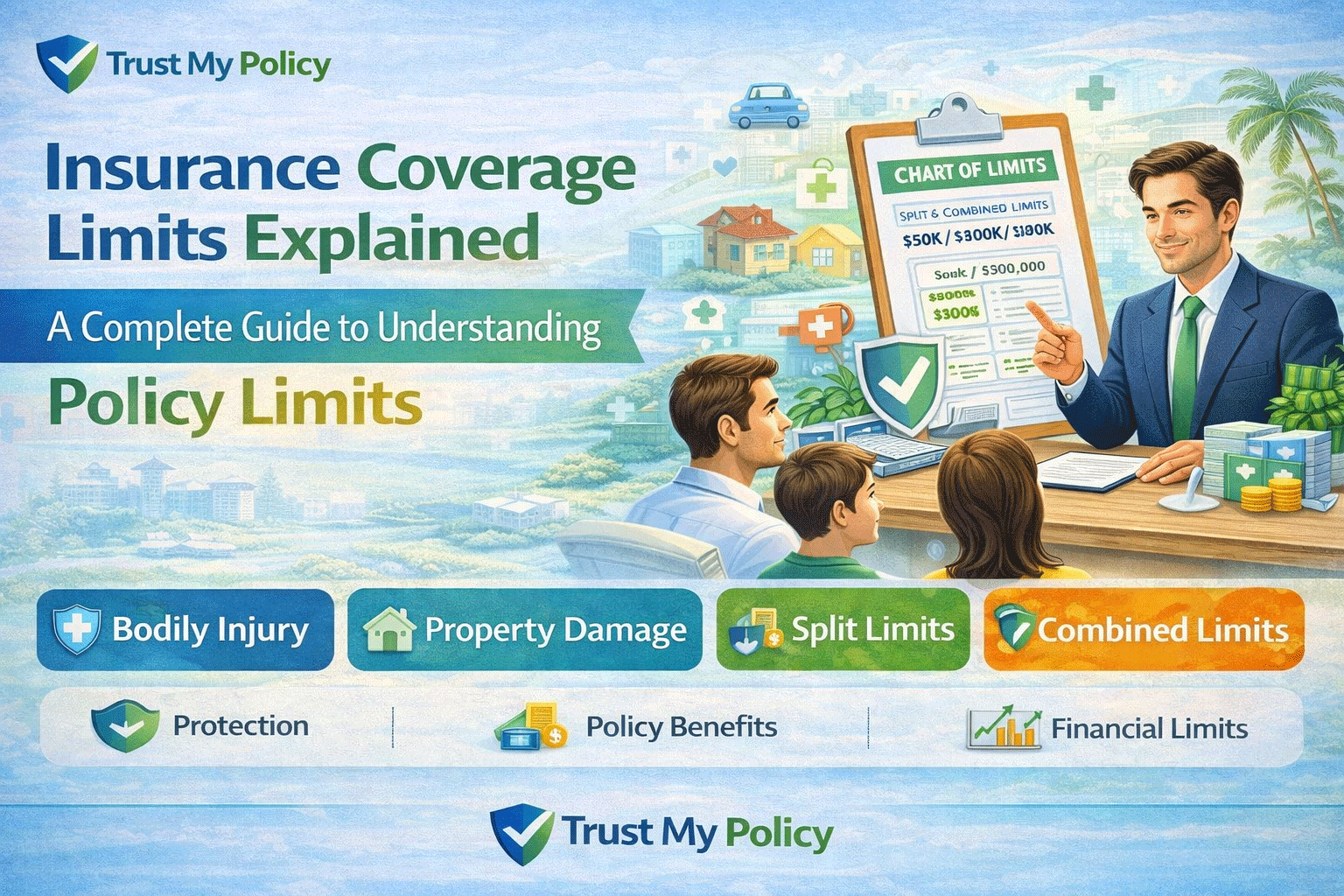
Insurance coverage limits are the maximum dollar amount your insurer will pay for a covered claim, set per incident, per category, or as a lifetime maximum depending on the policy. Auto liability limits often default to state minimums as low as $25,000–$50,000, while a serious accident can easily exceed $300,000 in damages and medical costs, leaving the difference as your personal responsibility.
Patrick Hayes, 41, was sued for $340,000 after a serious car accident in Denver, only to discover his auto liability coverage limit was $100,000 — leaving him personally responsible for the remaining $240,000. He’d chosen the lowest available limit years earlier to save $15 a month, never imagining a single accident could exceed it by that much.
Insurance Coverage Limits in 2026 are the maximum amount your insurer will pay for a covered claim, whether per incident, per category, or over the policy’s lifetime. Choosing a limit too low can leave you personally responsible for costs beyond it, while a limit set appropriately can fully absorb even a serious loss. This guide breaks down exactly how coverage limits work, where they apply, and how to set yours correctly.
This article covers what coverage limits actually mean, how they apply across different insurance types, real scenarios showing the financial impact, and a clear framework for setting your own. By the end, you’ll know exactly how much protection your policy really provides.
| Feature | Details |
| What it is | The maximum amount an insurer will pay for a specific covered claim or category |
| Who it affects | Anyone with auto, home, health, or liability insurance |
| Typical default | State-minimum limits, often too low for real-world losses |
| Recommended liability limit | $300,000–$500,000+ for most drivers and homeowners with meaningful assets |
| Key benefit | Protects you from personal financial exposure above your premium cost |
| Key limitation | Anything above your limit becomes your personal financial responsibility |
| Regulator | State insurance departments (US); Financial Conduct Authority (UK) |
Think of a coverage limit like the maximum balance on a company credit card given to an employee. The company will cover purchases up to that ceiling, but anything beyond it becomes the employee’s own problem. Insurance works the same way — your insurer pays up to your chosen limit, and you’re personally on the hook for anything above it.
A coverage limit is the maximum dollar amount an insurer will pay out for a covered claim, which can apply per incident, per specific category of loss, or as a lifetime maximum across the life of the policy. Anyone choosing auto, home, liability, or health insurance needs to understand exactly where their limits sit, since the gap between your limit and a real-world loss becomes entirely your own financial responsibility.
| Criteria | Low Coverage Limits (e.g., State Minimum) | Adequate Coverage Limits |
| Cost | Lower premium | Moderately higher premium |
| Protection for a serious loss | Minimal, leaves significant personal exposure | Covers most realistic loss scenarios in full |
| Best for | Those with very few personal assets to protect | Anyone with meaningful assets, income, or net worth |
| Pros | Cheapest option upfront | Removes the risk of catastrophic personal financial exposure |
| Cons | A single serious claim can exceed the limit by hundreds of thousands of dollars | Slightly higher ongoing premium cost |
We recommend setting liability limits well above the state minimum for most readers, since the cost difference is usually small relative to the financial exposure it removes.
Scenario 1: Patrick, 41, driver in Denver. Patrick’s $100,000 liability limit left him personally responsible for $240,000 after a serious accident exceeded that ceiling. Verdict: low limits chosen to save a small amount monthly created massive personal exposure. Action: Patrick raised his liability limit to $500,000 immediately after the lawsuit, despite the higher premium.
Scenario 2: A homeowner in Leeds with a £15,000 jewelry sub-limit inside a broader contents policy. A burglary resulted in £28,000 of stolen jewelry, but the payout was capped at the £15,000 sub-limit despite the broader policy’s higher overall limit. Verdict: sub-limits within a policy can cap specific categories well below the headline coverage amount. Action: the homeowner added a separate jewelry endorsement to cover the full value going forward.
Scenario 3: A small business owner in Texas with a $1,000,000 general liability limit. A customer injury lawsuit settled for $850,000, comfortably within the policy’s limit, fully protecting the business owner’s personal assets. Verdict: an adequate limit fully absorbed a genuinely serious claim. Action: the owner reviews his liability limit annually as his business grows, to ensure it stays adequate.
Scenario 4: A family with a health insurance plan carrying a lifetime maximum benefit on a specific treatment category. A chronic condition’s cumulative treatment costs approached that lifetime maximum after several years. Verdict: lifetime maximums, though less common since ACA reforms in the US, can still apply to certain plan types or categories. Action: the family checked their plan documents carefully to confirm whether any lifetime maximums applied to their specific situation.
| Pros | Cons |
| Higher limits remove the risk of catastrophic personal financial exposure. | Higher limits come with a moderately higher premium cost. |
| Limits give you a clear, predictable ceiling on insurer-paid claims. | Anything above your limit becomes entirely your personal responsibility. |
| Sub-limits allow insurers to price specific high-value categories appropriately. | Sub-limits can catch policyholders off guard if they assume the broader limit applies. |
| You can typically adjust limits at renewal as your assets or needs change. | Many policyholders never review or increase their limits after initial setup. |
| Umbrella policies can extend liability limits beyond a standard policy’s ceiling. | Umbrella coverage requires an additional separate policy and premium. |
⚠️ WARNING: Never assume your state’s minimum required liability limit is adequate protection. State minimums are set as a legal floor, not a recommendation, and a single serious accident or lawsuit can easily exceed that minimum by hundreds of thousands of dollars.
| Your Situation | Our Recommendation |
| You currently carry state-minimum auto liability limits | Yes — raise your limits, the added premium cost is usually modest |
| You have significant personal assets or savings to protect | Yes — consider an umbrella policy on top of standard liability limits |
| You own high-value jewelry, art, or electronics | Yes — check for sub-limits and add a specific endorsement if needed |
| You haven’t reviewed your coverage limits in several years | Yes — review them now, especially if your assets or income have grown |
| You’re a small business owner with growing revenue | Yes — reassess your liability limit as your business grows |
| You have very few personal assets and minimal income | No — lower limits may be more reasonable for your specific situation |
| You’re unsure whether your health plan has any category-specific limits | Yes — review your plan documents directly to confirm |
💡 TIP: The single golden rule for setting coverage limits: choose a limit that could fully absorb a realistic worst-case loss for your situation, not just the cheapest option that satisfies a legal minimum.
| Scenario | Limit | Approximate Added Monthly Cost |
| State-minimum auto liability | $25,000–$50,000 | Baseline, lowest-cost option |
| Moderate auto liability limit | $100,000–$300,000 | +$10–$25/month over state minimum |
| High auto liability limit | $500,000+ | +$20–$40/month over state minimum |
| Umbrella policy, $1,000,000 additional liability | On top of standard limits | $150–$300/year for most households |
| Jewelry endorsement above a standard sub-limit | Varies by appraised value | $1–$2 per $100 of insured value annually |
| Small business general liability, standard limit | $1,000,000 | Baseline for many small businesses |
| Small business general liability, higher limit | $2,000,000+ | Modest additional premium relative to the added protection |
Independent insurance brokers — Brokers can assess your specific assets and recommend appropriate limits across your policies. Cost range: typically free for the consumer. Best for: anyone unsure whether their current limits are adequate. Rating: varies by broker, check state or FCA licensing.
Umbrella insurance providers — Many standard insurers also offer umbrella policies that extend liability limits well beyond standard coverage. Cost range: $150–$300/year for $1,000,000 in additional coverage. Best for: anyone with significant assets beyond standard liability limits. Rating: varies by provider, check AM Best or Defaqto ratings.
NAIC consumer resources (US) — Publishes plain-language guidance on how coverage limits work across different US states. Cost range: free public resource. Best for: US consumers researching appropriate limit levels. Rating: regulatory standards body.
Financial Conduct Authority (UK) — Sets standards for how UK insurers must clearly disclose limits and sub-limits to consumers. Cost range: free to consult guidance. Best for: UK consumers wanting to understand disclosure requirements. Rating: government regulatory body.
Your insurer’s policy documents — The definitive source for your current limits and any applicable sub-limits. Cost range: free to review. Best for: confirming your exact current coverage before assuming you’re adequately protected. Rating: not applicable, primary source document.
We recommend an independent broker as best overall because they can assess your full financial picture and recommend coverage limits tailored specifically to your assets and risk exposure.
Insurance coverage limits are the maximum dollar amounts an insurer will pay for a covered claim, which can apply per incident, per specific category, or as a lifetime maximum depending on the policy.
You become personally responsible for any amount above your coverage limit, which can mean significant out-of-pocket costs or even a lawsuit judgment beyond what your insurer pays.
Usually not. State minimums are set as a legal floor, not a financial recommendation, and a serious accident can easily exceed them by hundreds of thousands of dollars.
A sub-limit is a lower coverage cap within a broader policy limit, often applied to specific high-value categories like jewelry, electronics, or certain medical treatments.
Yes, if your assets or income exceed your standard liability limits, since umbrella policies provide additional liability protection at a relatively low added cost.
Yes, in most cases you can request a limit increase at any time or at renewal, though this will typically increase your premium.
Major reforms have removed many lifetime limits on essential health benefits in the US, but some plan types or specific categories may still carry limits, so it’s worth checking your plan documents.
Compare your limits against a realistic worst-case loss scenario for your specific assets, income, and liability exposure, rather than relying on the cheapest default option.
Most homeowners and renters policies include a much lower sub-limit specifically for jewelry, separate from the broader policy limit, unless you’ve added a specific endorsement.
Review your limits annually, and especially after any significant increase in assets, income, or business revenue.
This article is for informational purposes only. Always consult a licensed insurance professional before making coverage decisions. Trust My Policy does not sell insurance products or represent any insurer.

Jagadeesh Gutha is the founder of TrustMyPolicy.com, an independent insurance information platform covering life, health, car, home, and business insurance for US and UK readers. He researches insurance products, policy structures, and consumer rights to help everyday people make informed coverage decisions without the jargon. All content on TrustMyPolicy is independently researched, fact-checked, and written to educate — not to sell.

[…] fault sparked a kitchen fire that closed her shop for seven weeks. Her business interruption coverage paid her lost income during the closure, the one part of her policy she’d almost cancelled the […]

Insurance Guides for UK, USA & Worldwide We are not an insurer or broker.
Reader Comments (2)
[…] Age, location, claims history, credit-based insurance score, and coverage limits […]