
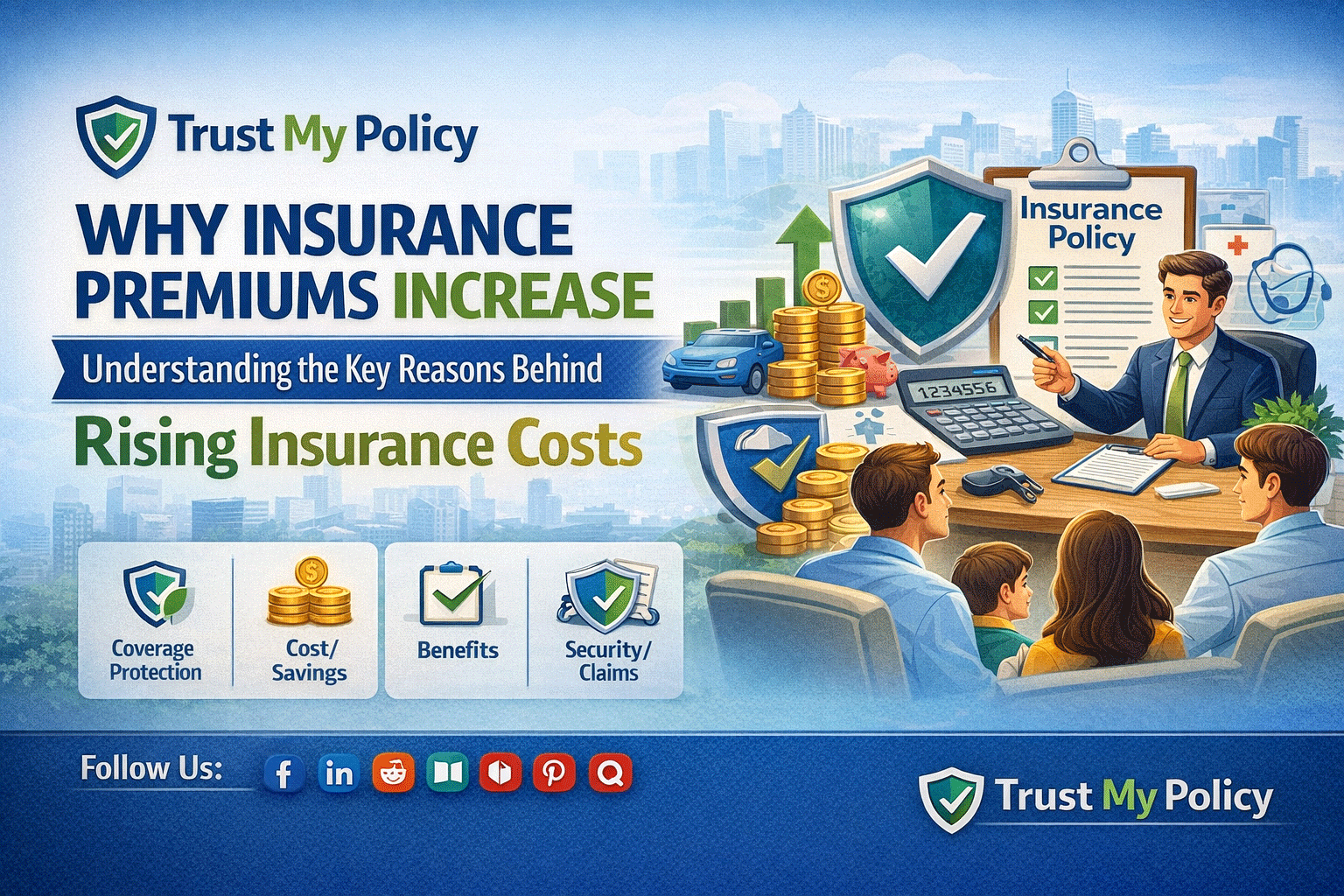
Insurance premiums increase due to inflation in repair, replacement, and medical costs, rising reinsurance costs after large-scale disasters, increased claims frequency or severity in a region, and regulatory rate filing adjustments. Personal factors like a new claim or driving violation can also raise an individual premium, but industry-wide increases often happen even for policyholders with a perfectly clean record.
Patricia Nolan, 56, called her home insurer in Tampa furious after her premium rose 22% with zero claims in over a decade. The agent explained the increase had almost nothing to do with her personally — rebuilding costs had risen sharply across her region, and the insurer’s own reinsurance costs had increased after several severe hurricane seasons nationally.
Why Insurance Premiums Increase in 2026 usually comes down to forces well beyond any single policyholder: inflation in repair and medical costs, rising reinsurance costs after large-scale disasters, increased claims frequency or severity across a region, and regulatory rate filing catch-up after years of underpriced risk. This guide breaks down the real macro and micro forces driving rate increases across the industry.
This article covers the major industry-wide causes of rising premiums, how they interact with your personal rating factors, real scenarios showing the effects, and what you can actually do about it. By the end, you’ll understand why “I haven’t claimed” doesn’t always mean “my rate shouldn’t rise.”
| Feature | Details |
| What it is | The combination of industry-wide and personal factors that raise premiums over time |
| Who it affects | Nearly every policyholder, regardless of personal claims history |
| Main industry-wide causes | Inflation, reinsurance costs, regional claims trends, regulatory rate catch-up |
| Main personal causes | New claims, violations, lapses in coverage, age-related risk changes |
| Key benefit (of understanding this) | Helps you tell apart what you can control versus what you can’t |
| Key limitation | Industry-wide increases can’t be avoided through personal behavior alone |
| Regulator | State insurance departments (US); Financial Conduct Authority (UK) |
Picture your premium like the price of a cup of coffee at your regular café. Sometimes it rises because you personally ordered something fancier. But often it rises because coffee bean prices went up globally, the café’s rent increased, or a supply shortage hit the whole industry — none of which has anything to do with your personal order.
Premium increases come from two distinct categories: personal factors specific to you, like a new claim or driving violation, and industry-wide or regional factors that affect everyone in your risk pool, like inflation, reinsurance costs, and broader claims trends. Anyone confused about why their “perfect record” still resulted in a higher renewal needs to understand this second category clearly.
| Criteria | Industry-Wide Causes | Personal Causes |
| Examples | Inflation, reinsurance costs, regional disasters, regulatory catch-up | New claims, traffic violations, coverage lapses, aging into a new risk bracket |
| Within your control | No | Often yes, to some degree |
| Affects | An entire risk pool or region | Just your individual policy |
| Pros of understanding this | Helps you avoid blaming yourself unnecessarily | Helps you identify what you can actually improve |
| Cons | Little you can do beyond shopping for a better rate elsewhere | Requires honest self-assessment of your own risk factors |
We recommend most readers shop multiple insurers when facing an industry-wide increase, since switching providers is often the most effective response to a cause outside your personal control.
Scenario 1: Patricia, 56, homeowner in Tampa. Patricia’s 22% increase with zero personal claims reflected regional rebuilding cost inflation and rising reinsurance costs after severe hurricane seasons. Verdict: industry-wide forces can raise a perfectly clean policyholder’s premium significantly. Action: Patricia compared quotes from three other insurers and found a 9% lower offer for similar coverage.
Scenario 2: A UK driver facing a market-wide price rise reported across national news. Industry analysts cited rising repair costs and higher claims costs from increasingly common severe weather events. Verdict: this reflects classic industry-wide inflation and claims severity trends. Action: she compared multiple UK insurers directly, since no single company was likely to be immune to the trend.
Scenario 3: A health insurance marketplace plan increasing premiums after several years of rising prescription drug costs. The insurer’s filed rate increase specifically cited rising pharmaceutical costs as a primary driver. Verdict: rising underlying healthcare costs directly translate into premium increases over time. Action: the policyholder compared plan tiers to see if a different deductible structure better matched the new pricing.
Scenario 4: A small business owner whose liability insurance rose sharply after a wave of large lawsuit settlements across the industry. Industry-wide litigation trends, not the business owner’s own claims history, drove the increase. Verdict: legal and litigation trends across an industry can raise premiums even for businesses with no claims. Action: the owner asked his broker whether a different insurer had a more favorable litigation exposure in his specific industry.
| Pros | Cons |
| Understanding industry-wide causes removes unwarranted self-blame for an increase. | Industry-wide increases can’t be avoided through personal behavior changes alone. |
| Shopping multiple insurers can meaningfully offset an industry-wide increase. | Switching insurers takes time and effort during an already frustrating situation. |
| Personal factors you can control offer a genuine path to lowering your own rate. | Some personal factors, like aging into a new risk bracket, aren’t within your control either. |
| Regulatory oversight provides some check against excessive rate increases. | Regulatory approval processes can mean rate catch-up increases feel sudden and large. |
| Reinsurance markets ultimately help stabilize pricing over the longer term. | Reinsurance cost spikes can take a year or more to work through to consumer pricing. |
⚠️ WARNING: Never assume a large premium increase is a sign you should drop coverage entirely to save money. Industry-wide cost increases reflect real underlying risk and cost trends, and going without coverage exposes you to the full, larger cost of an uninsured loss instead.
| Your Situation | Our Recommendation |
| Your premium rose significantly with no personal claims | Yes — ask your insurer whether this reflects an industry-wide or regional trend |
| You received an increase and haven’t compared other insurers | Yes — get at least two or three comparison quotes before renewing |
| You’re tempted to drop coverage entirely due to cost | No — shop for a better rate instead of going uninsured |
| You suspect your increase may be improper or excessive | Yes — check with your state insurance department or the FCA |
| You’ve had a personal claim or violation recently | Yes — expect some increase tied specifically to that, separate from industry trends |
| Your region recently experienced a major weather event | Yes — expect a likely rate impact even without a personal claim |
| You want to understand a specific cited industry trend (like litigation costs) | Yes — ask your broker how that trend specifically applies to your policy type |
💡 TIP: The single golden rule for handling a premium increase: separate what’s personal to you from what’s happening industry-wide, since the right response — improving your own risk factors versus shopping for a new insurer — depends entirely on which one is driving the change.
| Scenario | Typical Increase | Notes |
| Regional rebuilding cost inflation (home insurance) | 10%–25% | Reflects rising materials and labor costs in a specific region |
| Reinsurance cost pass-through after severe disaster seasons | 5%–20% | Can take a year or more to fully reach consumer premiums |
| Personal at-fault auto claim | 15%–40% | Reflects an individual rating factor change, not industry-wide trends |
| Regional auto claims frequency spike | 5%–15% | Affects all policyholders in the affected area regardless of personal record |
| Health insurance premium increase from rising drug costs | 5%–15% annually | Common driver cited in marketplace rate filings |
| Regulatory rate filing “catch-up” after a delayed approval | 10%–30% in a single year | Reflects accumulated cost increases not yet priced in |
| Litigation-driven liability insurance increase (small business) | 10%–25% | Reflects broader industry litigation trends, not necessarily the business’s own claims |
Your state insurance department (US) — Can confirm whether a specific rate increase reflects an approved filing and explain the cited reasons. Cost range: free to contact. Best for: US policyholders questioning a specific increase. Rating: government regulatory body.
Financial Conduct Authority (UK) — Sets fairness standards for how UK insurers communicate and apply pricing changes. Cost range: free to consult guidance. Best for: UK consumers wanting to understand pricing fairness rules. Rating: government regulatory body.
Independent insurance brokers — Brokers can quickly compare how a specific industry trend is affecting multiple insurers’ pricing for your situation. Cost range: typically free for the consumer. Best for: anyone facing a significant increase and wanting alternatives. Rating: varies by broker, check state or FCA licensing.
NAIC consumer resources (US) — Publishes plain-language guidance on industry-wide pricing trends affecting US consumers. Cost range: free public resource. Best for: US consumers researching broader market trends. Rating: regulatory standards body.
Policygenius (US) and Compare the Market (UK) — Comparison platforms useful for quickly checking whether a better rate is available elsewhere after an increase. Cost range: free to use. Best for: shoppers responding to a recent premium increase. Rating: independent comparison services.
We recommend an independent broker as best overall because they can quickly tell you whether your specific increase reflects a broader industry trend or something unique to your own policy.
Premiums often increase due to industry-wide factors like inflation in repair or medical costs, rising reinsurance costs, and regional claims trends, none of which require a personal claim to apply.
Rising rebuilding costs and increased reinsurance costs following severe weather seasons are among the most significant drivers of home insurance premium increases in recent years.
Yes. Personal factors like a new at-fault claim or traffic violation can raise your premium independently of, and often in addition to, any broader industry-wide increase.
Yes, in most cases, especially if the increase reflects an industry-wide trend, since different insurers may be affected differently and pricing can vary meaningfully between them.
Health insurance premiums are priced across an entire risk pool, so rising prescription drug costs affecting the broader pool can raise everyone’s premium, not just those using specific medications.
They can be, which is why regulatory oversight exists; if you suspect an increase is excessive or improper, you can file a complaint with your state insurance department or the Financial Conduct Authority.
Insurers buy their own coverage from reinsurers to protect against large-scale losses, and when reinsurance costs rise after major disasters, insurers typically pass some of that cost on to policyholders.
This happens when a regulator delays approving an adequate rate filing for some time, requiring a larger single increase later to bring pricing in line with actual cost trends.
No, dropping coverage exposes you to the full cost of an uninsured loss; shopping for a more affordable insurer or adjusting your deductible is generally a better response.
Ask your insurer directly whether the increase reflects a change in your personal rating factors or a broader, regulator-approved rate filing affecting your entire risk pool.
This article is for informational purposes only. Always consult a licensed insurance professional before making coverage decisions. Trust My Policy does not sell insurance products or represent any insurer.

Jagadeesh Gutha is the founder of TrustMyPolicy.com, an independent insurance information platform covering life, health, car, home, and business insurance for US and UK readers. He researches insurance products, policy structures, and consumer rights to help everyday people make informed coverage decisions without the jargon. All content on TrustMyPolicy is independently researched, fact-checked, and written to educate — not to sell.


Insurance Guides for UK, USA & Worldwide We are not an insurer or broker.
Reader Comments (1)
[…] process by which your insurer offers to continue your coverage for another term, typically with an updated premium reflecting your current risk factors and broader market trends. Most renewals happen automatically […]