

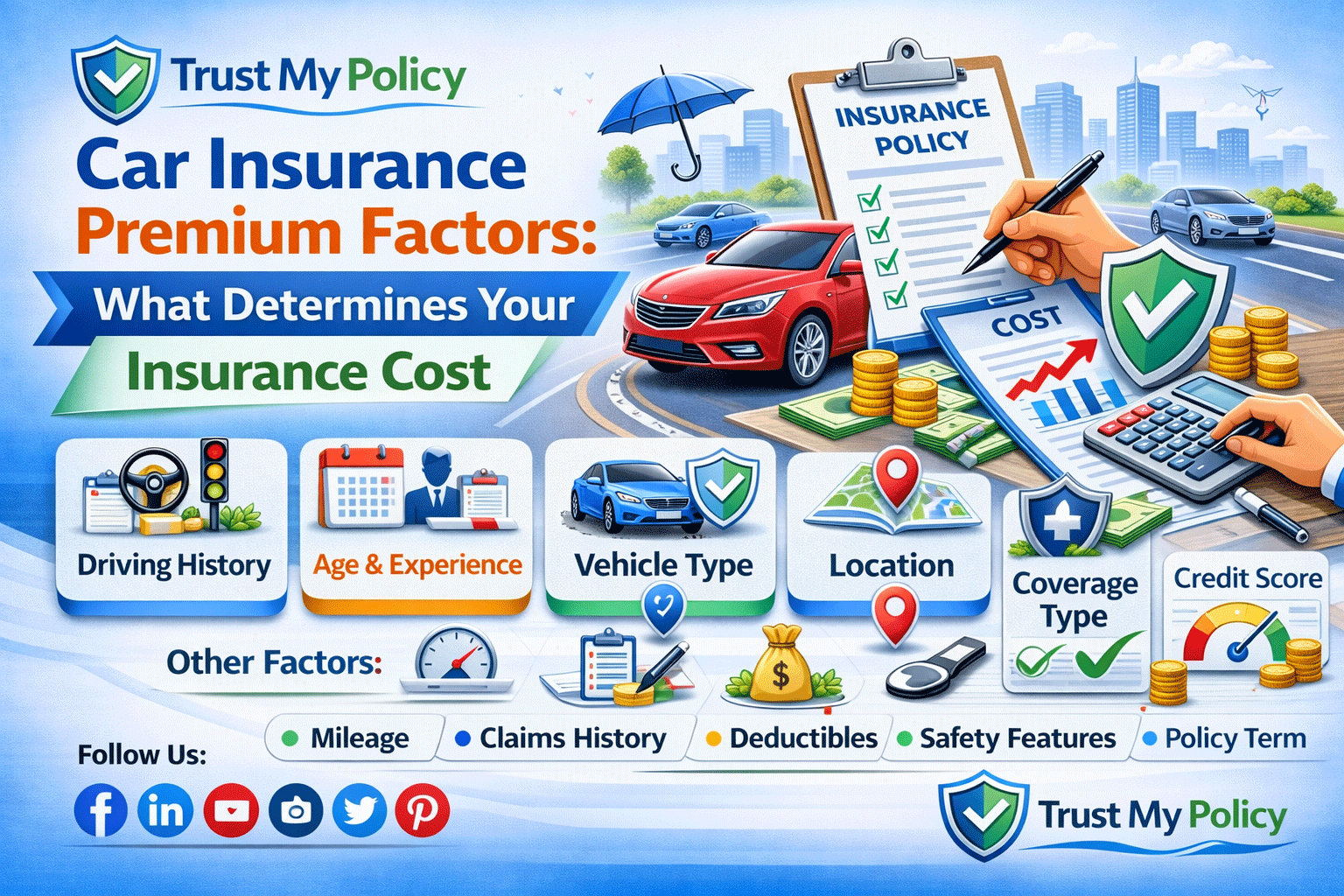
Car insurance premiums are calculated using a combination of personal factors including your age, driving record, credit-based insurance score, and location, and vehicle factors including your car’s make, model, age, and theft rate. Each factor is applied as a multiplier to a base rate. According to industry data, a poor credit-based insurance score can raise a US driver’s premium by up to 76% compared to a driver with an excellent score for the same coverage.
Table of Contents
ToggleCar Insurance Premium Factors
Owen Bradley, 30, was quoted $156 a month for car insurance in Memphis and had no idea why his rate was so much higher than his friend’s $89 a month in the same city. His friend drove a similar car and had a clean record. Owen hadn’t realized that three specific factors, his ZIP code within Memphis, his vehicle’s theft rate, and his credit-based insurance score, were each quietly adding to his rate.
Car Insurance Premium Factors in 2026 are the specific rating variables insurers use to calculate your individual premium, and they go well beyond the obvious ones like driving record and age. This guide breaks down every major factor in plain language, explains exactly how each one moves your premium, and identifies which ones you can realistically influence to lower your rate.
This article covers every major rating factor, how each one is typically weighted, real examples showing the dollar difference, and what you can actively do about the factors within your control. By the end, you’ll understand exactly what’s behind your specific premium.
Quick Summary Table
| Feature | Details |
| What it is | The specific variables insurers use to calculate an individual car insurance premium |
| Who it applies to | Every driver buying or renewing car insurance |
| Personal factors | Age, driving record, claims history, credit-based score, location, marital status |
| Vehicle factors | Make, model, age, safety rating, theft rate, repair cost |
| Policy factors | Coverage type, limits, deductible, usage-based program participation |
| Key benefit | Understanding the factors helps identify which ones you can realistically improve |
| Key limitation | Some factors like age and location aren’t controllable |
What Are Car Insurance Rating Factors?
Think of your car insurance premium like a price tag built from a series of multipliers stacked on top of each other. Your base rate is the floor price, and each rating factor adjusts it up or down depending on your specific profile. Some multipliers work in your favor, like a clean driving record or a high safety-rated vehicle; others work against you, like being under 25 or living in a high-theft ZIP code. Understanding which multipliers are affecting your rate tells you exactly where to focus your energy.
Car insurance rating factors are the specific variables an insurer measures and weights to calculate your individual premium. They fall into three categories: personal factors related to who you are and how you drive, vehicle factors related to what you drive, and policy factors related to the specific coverage choices you make. Anyone who wants to understand or lower their car insurance premium needs to understand all three categories.
How Rating Factors Are Actually Applied — 5 Steps
- The insurer starts with a base rate for your coverage type and region. This is the starting price before any individual adjustments are made.
- Personal factors are applied as multipliers. Age, driving record, claims history, credit-based score, location, and marital status each adjust the base rate up or down.
- Vehicle factors are layered on top of the personal adjustments. Your car’s make, model, age, safety rating, and theft rate each carry their own multiplier.
- Policy choices further adjust the final premium. Your deductible, coverage limits, and any usage-based program enrollment each affect the final number.
- The combined result of all multipliers becomes your quoted premium. This is why two drivers with similar profiles can still have meaningfully different rates based on a few specific factor differences.
The Major Car Insurance Premium Factors Explained
| Factor | Typical Impact | Controllable? |
| Driving record (at-fault accidents, violations) | Major — one at-fault claim can raise premium 20%–40% | Yes — over time with a clean record |
| Age (under 25 or over 70) | Major — young drivers often pay 50%–100% more than a 35-year-old | Partially — only improves with age |
| Credit-based insurance score (US) | Major — poor score can raise premium up to 76% vs. excellent score | Yes — improves with credit health |
| Location (ZIP code, region) | Significant — urban high-traffic areas cost more than rural | Partially — moving changes this |
| Vehicle make, model, theft rate | Significant — a high-theft vehicle costs more to insure | Yes — choosing a different vehicle changes this |
| Coverage type and limits chosen | Significant — full coverage costs roughly 50%–100% more than liability only | Yes — directly controlled by policy choices |
| Deductible amount | Moderate — raising deductible from $500 to $1,000 typically saves 10%–20% | Yes — directly controlled by policy choices |
| Annual mileage | Moderate — higher mileage raises rates, lower mileage can earn a discount | Partially — depends on driving habits |
| Usage-based telematics participation | Moderate — safe driving can earn 5%–20% discount | Yes — requires program enrollment |
| Continuous coverage history | Moderate — a lapse raises future premiums | Yes — maintained by keeping coverage active |
4 Real-Life Scenarios
Scenario 1: Owen, 30, driver in Memphis. Owen’s $156 vs. his friend’s $89 premium traced to three specific factors: his ZIP code had higher theft and accident rates, his vehicle had a higher theft rate, and his credit-based insurance score was in a lower tier. Verdict: multiple overlapping factors can compound into a significantly higher premium even for a similar driver. Action: Owen worked on his credit score, moved to a safer ZIP code the following year, and switched to a lower-theft vehicle at his next car purchase.
Scenario 2: A 21-year-old driver in London. Her premium was nearly double that of a 35-year-old colleague with an identical driving record, purely due to the age-based actuarial risk differential. Verdict: age is one of the largest single factors for young drivers and can’t be directly improved, only waited out. Action: she enrolled in a telematics program to partially offset her age-based loading.
Scenario 3: A driver in Dallas who improved his credit-based insurance score over 18 months. His premium dropped by $31 a month at his next renewal without any change in his driving record or vehicle. Verdict: credit-based insurance scores are one of the most impactful and controllable rating factors in most US states. Action: he now treats his credit health as a direct insurance cost factor and reviews it annually.
Scenario 4: A family in Phoenix who raised their deductible from $500 to $1,000. This single policy choice reduced their full coverage premium by 14% immediately. Verdict: deductible changes are the fastest and most direct policy lever available for lowering a premium. Action: the family kept the annual savings in a separate account specifically designated for a potential deductible payment.
Pros & Cons of How Rating Factors Work
| Pros | Cons |
| Understanding each factor helps identify which ones are worth targeting for improvement. | Some factors, like age and location, can’t be directly changed. |
| Controllable factors like credit score and driving record offer a genuine path to lower premiums. | Improving credit or building a clean driving record takes time. |
| Policy choices like deductibles and telematics programs offer immediate, actionable savings. | Credit-based insurance scoring isn’t allowed in all US states. |
| Knowing factor weightings helps you compare quotes more intelligently. | Multiple compounding factors can create a very high rate that’s hard to address quickly. |
| Telematics programs offer safe drivers a direct path to rewarded behavior. | Telematics programs require ongoing data sharing, which some drivers prefer not to provide. |
5 Common Mistakes People Make
- Not knowing their credit-based insurance score affects their premium. This happens because the connection between credit and car insurance isn’t obvious. What to do instead: in states where it’s allowed, improving your credit health can lower your auto premium meaningfully.
- Insuring a high-theft vehicle without checking its insurance cost first. This happens because people choose a vehicle based on purchase price, not insurance cost. What to do instead: get an insurance quote for any vehicle you’re considering before finalizing the purchase.
- Not asking for a mileage-based discount if they drive less than average. This happens because low-mileage discounts aren’t always automatically applied. What to do instead: tell your insurer your actual annual mileage, since this can qualify you for a meaningful discount.
- Not considering a telematics program as a safe driver. This happens because the data-sharing aspect feels like a privacy concern. What to do instead: weigh the specific data collected against a realistic discount estimate before rejecting the option entirely.
- Letting coverage lapse between policies when switching insurers. This happens because people cancel old coverage before new coverage is confirmed active. What to do instead: ensure your new policy starts before your old one ends, since even a one-day lapse can raise your future rate.
⚠️ WARNING: Never assume your credit score doesn’t affect your car insurance premium without checking whether your specific state allows this factor. In states where it’s permitted, a poor credit-based insurance score can raise your premium by far more than any driving violation.
Decision Table: Which Factors Can You Improve?
| Factor | Can You Improve It? | How |
| Driving record | Yes, over time | Maintain a clean record; violations fade after 3–5 years in most states |
| Credit-based insurance score | Yes | Improve overall credit health; check credit report for errors |
| Vehicle choice | Yes, at next purchase | Choose a lower-theft, higher-safety-rated model |
| Annual mileage | Yes | Report actual low mileage; consider a pay-per-mile program |
| Deductible | Yes, immediately | Raise deductible to reduce premium, if savings cushion allows |
| Telematics participation | Yes, immediately | Enroll in a usage-based program if you drive safely |
| Continuous coverage | Yes, starting now | Keep coverage active and never let it lapse |
| Age | No | Improves automatically with time for young drivers |
| Location (ZIP code) | Partially | Moving can improve this factor |
💡 TIP: The single golden rule for managing car insurance premium factors: focus first on the controllable ones, starting with your credit-based score and deductible, since these can produce the fastest measurable results.
Cost Table: How Individual Factors Change Real Premiums
| Scenario | Factor | Typical Premium Impact |
| Clean record vs. one at-fault accident | Driving record | +20%–40% after an at-fault accident |
| Age 21 vs. age 35, otherwise identical profile | Age | Young driver often pays 50%–100% more |
| Excellent vs. poor credit-based insurance score | Credit score | Up to +76% for poor score vs. excellent (per industry data) |
| Urban high-traffic ZIP vs. suburban lower-traffic ZIP | Location | +10%–30% for urban location |
| High-theft vehicle vs. low-theft vehicle, same age | Vehicle theft rate | +5%–20% for higher-theft model |
| $500 vs. $1,000 deductible | Deductible | Typically -10%–20% for the higher deductible |
| Telematics enrollment, safe driver | Usage-based program | -5%–20% discount based on tracked behavior |
Resources for Understanding Your Premium Factors
Your state insurance department (US) — Can confirm which rating factors are permitted in your specific state. Cost range: free. Best for: confirming whether credit-based scoring applies in your state. Rating: government regulatory body.
NAIC consumer resources (US) — Publishes plain-language guidance on how rating factors are typically structured across US states. Cost range: free. Best for: US consumers researching factor weightings. Rating: regulatory standards body.
Financial Conduct Authority (UK) — Sets standards for how UK insurers must use and disclose rating factors fairly. Cost range: free to consult guidance. Best for: UK consumers wanting to understand pricing factor rules. Rating: government regulatory body.
Independent insurance brokers — Brokers can request a specific breakdown of your rating factors from multiple insurers and identify which ones are most affecting your quote. Cost range: typically free. Best for: anyone wanting to understand exactly which factors are driving their specific premium. Rating: varies by broker, check licensing.
Policygenius (US) and Compare the Market (UK) — Comparison platforms useful for seeing how your specific profile is priced across multiple insurers. Cost range: free. Best for: comparing how different insurers weight the same factors. Rating: independent comparison services.
We recommend an independent broker as best overall because they can identify the specific factors driving your premium and compare how multiple insurers weight those same factors differently.
Frequently Asked Questions
What factors affect car insurance premiums?
Car insurance premiums are affected by personal factors like driving record, age, credit-based score, and location, vehicle factors like make, model, and theft rate, and policy choices like coverage limits and deductible.
Why does my credit score affect my car insurance?
In most US states, insurers use a credit-based insurance score as a rating factor because statistical data shows a correlation between credit patterns and claims likelihood.
Can I lower my car insurance by changing my vehicle?
Yes. Choosing a vehicle with a lower theft rate, higher safety rating, and lower repair cost can meaningfully lower your insurance premium.
What is the biggest single factor affecting young drivers’ premiums?
Age is typically the largest single factor for drivers under 25, often doubling the premium compared to a 35-year-old with an identical driving record.
How much does a clean driving record save on car insurance?
Maintaining a clean record over time can lower your premium by 20%–40% compared to a profile with recent at-fault accidents or violations.
Does where I live really affect my car insurance that much?
Yes, significantly. Urban high-traffic ZIP codes with higher theft and accident rates can add 10%–30% or more compared to quieter suburban or rural areas.
What is a credit-based insurance score?
A credit-based insurance score is a rating factor calculated from your credit history that some US state regulations allow insurers to use when pricing car insurance.
Does raising my deductible really lower my premium?
Yes. Raising your deductible from $500 to $1,000 typically lowers your premium by 10%–20%, though it increases your out-of-pocket cost if you file a claim.
Can I improve my car insurance premium without changing insurer?
Yes. Improving your credit score, maintaining a clean record, enrolling in a telematics program, or adjusting your deductible can all lower your premium with your existing insurer.
How do I find out which factors are most affecting my specific premium?
Ask your insurer or broker for a breakdown of your rating factors, since most can identify the main variables driving your specific quoted price.
Key Takeaways
- Focus on controllable factors first: credit-based score, driving record, deductible, and annual mileage.
- Check the insurance cost of any vehicle before purchasing, not just after.
- Report your actual annual mileage to confirm you’re not missing a low-mileage discount.
- Consider a telematics program if you’re a consistently safe driver.
- Never let coverage lapse between policies, even for a single day.
- Ask your insurer or broker which specific factors are most affecting your premium.
- Compare multiple insurers, since the same factors are weighted differently across companies.
This article is for informational purposes only. Always consult a licensed insurance professional before making coverage decisions. Trust My Policy does not sell insurance products or represent any insurer.






Reader Comments (3)
[…] based on factors including your postcode, age, vehicle, and claimed annual mileage; our guide on what drives your car insurance premium explains in full why two drivers with the same car and history can pay very different […]