

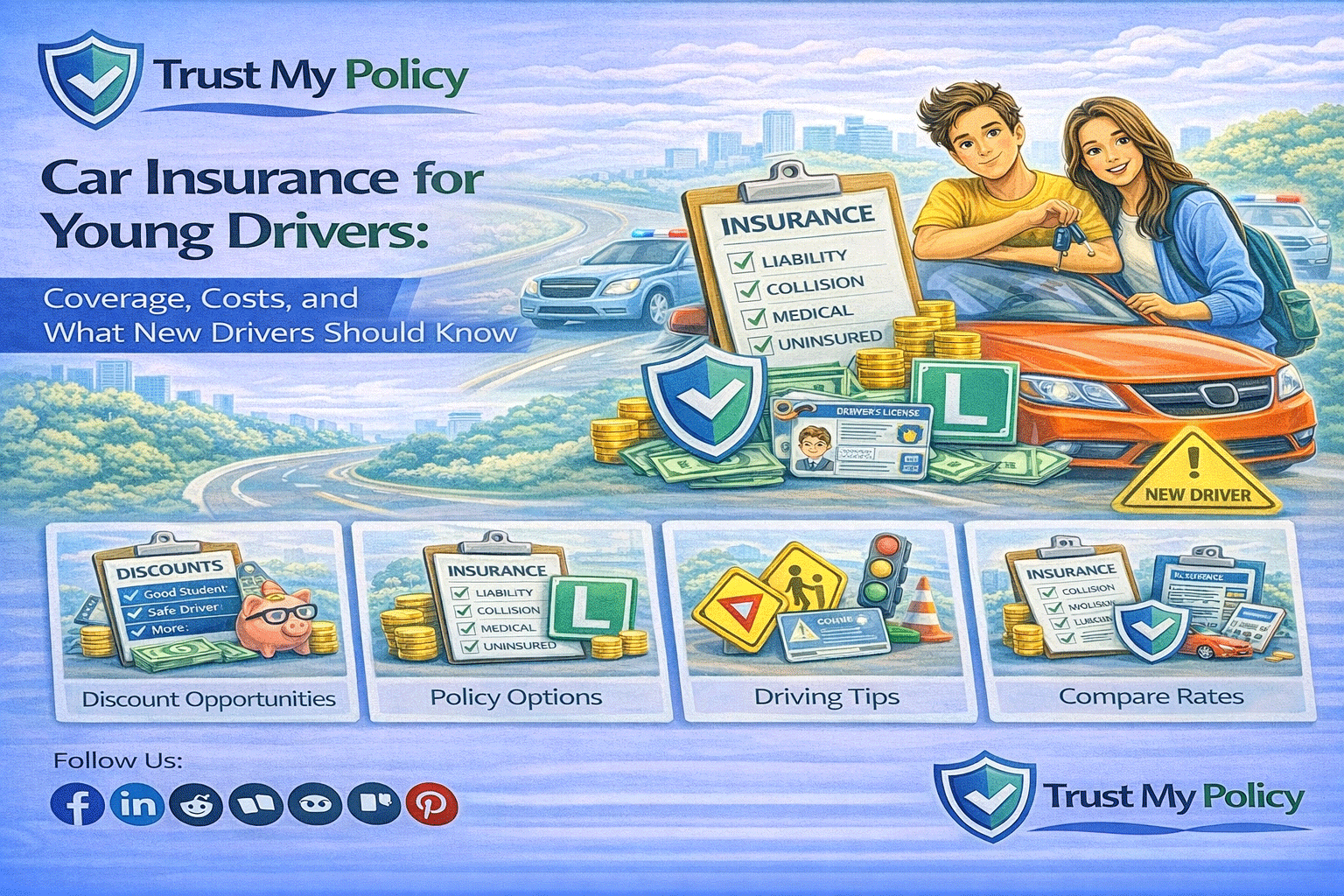
Car insurance for young drivers typically costs $200–$400 a month in the US or £1,500–£3,500 a year in the UK for a new licence holder, reflecting statistically higher accident rates for this age group. The most effective cost-reduction tactics are telematics (black box) policies, being added as a named driver on a parent’s policy first, choosing a lower-insurance-group vehicle, maintaining a clean record, and qualifying for a good student discount where available.
Table of Contents
ToggleCar Insurance for Young Drivers
Ella Barnett, 18, passed her driving test in Bristol and was quoted £2,800 a year for her own car insurance policy. Her parents suggested she look at a black box telematics policy and be added as a named driver on their car first — a combination that brought her first year’s cost down to £1,100 without compromising her ability to build her own no-claims record.
Car Insurance for Young Drivers in 2026 is expensive by design: statistically, drivers aged 17–25 are involved in accidents at a significantly higher rate than older drivers, which directly drives the elevated premiums. The most effective cost-reduction tactics — telematics policies, named driver arrangements, choosing the right vehicle, and good student discounts — are all specifically calibrated to this age group. This guide breaks down every major tactic with real numbers, so younger drivers and their parents can make the most cost-effective decisions.
This article covers why young driver insurance costs what it does, which tactics lower it most effectively, which providers are most competitive for this age group, and a clear action plan for building a lower-cost track record. By the end, you’ll know exactly what Ella knew before her second renewal.
Quick Summary Table
| Feature | Details |
| What it is | Car insurance priced for the elevated statistical risk of 17–25-year-old drivers |
| Who needs it | Any driver aged approximately 17–25, especially new licence holders |
| Typical US cost | $200–$400/month for a new licence holder |
| Typical UK cost | £1,500–£3,500/year for a new licence holder |
| Key cost tactics | Telematics policy, named driver arrangement, lower-group vehicle, good student discount |
| Key benefit | Builds a no-claims record that progressively lowers future premiums |
| Regulator | State insurance departments (US); Financial Conduct Authority (UK) |
Why Is Car Insurance So Expensive for Young Drivers?
Think of young driver insurance pricing like pricing a new restaurant with no reviews. The insurer has no personal track record from you to price against, so they rely entirely on the statistical record of everyone your age — which, for 17–25-year-olds, shows meaningfully higher accident rates than any other age group. The premium isn’t a judgement of your personally; it’s a reflection of your age group’s aggregate claims data.
Car insurance for young drivers is priced using the same risk-classification model as any other policy, but with age as one of the strongest single factors driving the premium upward. Actuarial data consistently shows that drivers aged 17–25, particularly in the first two years of driving, are involved in accidents at a higher rate than drivers in their 30s and 40s. The good news is that this premium reduces significantly with every year of clean driving, every no-claims bonus earned, and every effective tactic specifically available to this age group.
How Young Drivers Can Reduce Their Premium — 5 Steps
- Consider a telematics (black box) policy. These policies fit a device to your car or use a smartphone app to track driving behaviour — safe driving is directly rewarded with lower rates at renewal.
- Be added as a named driver on a parent’s or guardian’s policy first. This builds driving history and can reduce the cost of your own first policy compared to applying cold with zero history.
- Choose a car in a lower insurance group. Vehicle choice is one of the most controllable cost factors for young drivers — a lower-powered, lower-value car in a low insurance group can cost significantly less to insure.
- Maintain a clean driving record from day one. Every month of claim-free driving builds toward a no-claims discount that compounds meaningfully over the first three to five years of driving.
- Ask about a good student or good driver discount. In the US, many insurers offer these discounts to drivers who can demonstrate academic performance or completion of a driver training course.
Comparison: Standard Young Driver Policy vs. Telematics Policy
| Criteria | Standard Young Driver Policy | Telematics (Black Box) Policy |
| Basis for pricing | Age-based statistical risk classification | Actual tracked driving behaviour |
| Typical UK cost | £1,500–£3,500/year | £900–£2,000/year for safe drivers |
| Driving restrictions | None | Often includes a late-night curfew or mileage cap |
| Pros | No behaviour tracking or restrictions | Can be significantly cheaper for genuinely safe young drivers |
| Cons | Higher flat premium regardless of actual driving quality | Driving behaviour is monitored and can raise the rate if poor |
We recommend a telematics policy for most young drivers for most readers, since genuinely safe drivers consistently benefit from the lower rates, and the curfew restrictions are typically manageable for most lifestyles.
4 Real-Life Scenarios
Scenario 1: Ella, 18, new driver in Bristol. Ella’s combination of a telematics policy and a named driver arrangement on her parents’ car reduced her first year’s cost from £2,800 to £1,100. Verdict: stacking multiple tactics together produces the largest cost reduction for this age group. Action: Ella focuses on clean driving to maximise her telematics discount and no-claims bonus simultaneously.
Scenario 2: Marcus, 19, new driver in Texas. Marcus chose a 2018 Honda Civic over a newer sports car, reducing his full coverage premium from $340 to $210 a month for the same coverage limits. Verdict: vehicle choice is one of the most controllable cost factors for young drivers. Action: Marcus confirmed his specific vehicle’s insurance group rating before purchase, not after.
Scenario 3: A college student in Ohio qualifying for a good student discount. Maintaining a B average allowed her to qualify for a 15% discount on her parents’ multi-car policy, saving $45 a month on her portion of the premium. Verdict: good student discounts can provide meaningful savings for college-aged drivers still on a family policy. Action: she provides a copy of her academic transcript to her insurer at each renewal to confirm continued eligibility.
Scenario 4: A 22-year-old driver in Manchester who built three years of clean driving on a telematics policy. At renewal, she switched to a standard comprehensive policy and received a quote 40% lower than her original starting rate, reflecting three years of no-claims history and a clean driving record. Verdict: the telematics period builds the track record that unlocks significantly better standard rates. Action: she compared both telematics renewal and standard market quotes to find the most competitive option with her new history.
Pros & Cons of Young Driver Insurance Tactics
| Pros | Cons |
| Telematics policies can dramatically reduce premiums for safe drivers. | Telematics policies monitor driving behaviour continuously. |
| Vehicle choice can significantly and immediately reduce insurance costs. | Lower-group vehicles may be less appealing to some younger drivers. |
| Named driver arrangements build driving history before applying for a first policy. | Named driver arrangements don’t always build a no-claims bonus in the same way as the main policyholder. |
| Good student discounts can provide meaningful savings in the US. | These discounts typically require annual documentation of academic standing. |
| Each clean year of driving compounds toward a progressively lower future premium. | The early years of high premiums can feel discouraging before the savings kick in. |
5 Common Mistakes Young Drivers Make
- Choosing a high-powered or high-value car for a first vehicle. This happens because vehicle desirability and insurance group aren’t obviously connected. What to do instead: check a vehicle’s insurance group or rating specifically before purchasing as a young driver.
- Avoiding telematics policies because of privacy concerns without checking the actual savings. This happens because the monitoring element feels intrusive. What to do instead: compare a telematics quote against a standard quote for your specific profile — the gap is often large enough to make the trade-off clearly worthwhile.
- Being tempted by fronting — listing a parent as the main policyholder when the young driver is actually the primary user. This happens because it looks like a cheaper way to insure the car. What to do instead: never do this — fronting is insurance fraud and can void a claim entirely.
- Not checking whether a named driver arrangement builds a no-claims bonus. This happens because the arrangement sounds like it should work the same as a main policyholder policy. What to do instead: confirm specifically with your insurer whether named driver time builds a transferable no-claims bonus.
- Letting a first policy lapse at renewal instead of shopping alternatives. This happens because young drivers sometimes assume their high rate is permanent. What to do instead: shop multiple insurers at every renewal, since the rate actively improves each year with a clean record.
⚠️ WARNING: Never front an insurance policy by listing a parent or older driver as the main policyholder when the young driver is actually the primary user. This is a form of insurance fraud that can void your claim entirely and result in a criminal record.
Decision Table: What Should Young Drivers Do?
| Your Situation | Our Recommendation |
| You’re insuring your first car as a new driver | Yes — compare both telematics and standard quotes before deciding |
| You haven’t checked your vehicle’s insurance group | Yes — check it now, since it’s one of the most controllable cost factors |
| You’re considering fronting to lower your premium | No — this is insurance fraud; use a legitimate named driver arrangement instead |
| You qualify for a good student discount in the US | Yes — document your academic standing and claim it every renewal |
| You’ve been driving for 2+ years with a clean record | Yes — re-shop your insurance actively, since your rate should be meaningfully improving |
| You’re on a telematics policy with a night-time curfew | Yes — plan your driving to comply with it, since violations can raise your rate |
| You haven’t compared quotes from at least three insurers | Yes — do this before every renewal, since young driver pricing varies significantly |
💡 TIP: The single golden rule for young driver insurance: every month of clean, claim-free driving is an investment in a meaningfully lower premium — protect that record as though it’s money in the bank, because it genuinely is.
Cost Table: What Young Driver Insurance Actually Costs
| Scenario | Typical Cost | Notes |
| UK new driver, standard policy, age 18 | £2,000–£3,500/year | Baseline before any cost-reduction tactics |
| UK new driver, telematics policy, age 18, safe driving | £900–£1,800/year | Can be 30%–50% lower for genuinely safe drivers |
| US new driver, full coverage, age 18 | $250–$400/month | Reflects maximum age-related surcharge |
| US new driver, good student discount applied | $200–$340/month | Typically a 10%–15% reduction |
| US driver, age 22, 3 years clean record | $150–$220/month | Reflects meaningful improvement from early driving years |
| UK driver, age 25, 5 years no-claims bonus | £600–£900/year | Shows the full impact of a clean driving history |
| Young driver on parent’s multi-car policy (US) | $120–$200/month | Often the most affordable arrangement for the first year |
Best Providers for Young Drivers
GEICO (US) — Competitive on young driver rates with a strong good student discount programme and telematics options. Cost range: among the most competitive for young drivers nationally. Best for: US young drivers wanting competitive rates with clear discount options. Rating: AM Best A++.
State Farm (US) — Offers a Steer Clear programme specifically for drivers under 25, combining training and a discount for completion. Cost range: competitive with programme discounts applied. Best for: young US drivers wanting a structured route to lower premiums. Rating: AM Best A++.
Admiral (UK) — Offers both standard and black box telematics policies specifically designed for young drivers. Cost range: competitive UK young driver pricing. Best for: UK young drivers comparing telematics versus standard options. Rating: Defaqto 5 Star.
Marmalade (UK) — A UK specialist insurer focused specifically on young drivers, offering telematics policies with clear rewards for safe driving. Cost range: competitive specialist young driver pricing. Best for: UK new drivers aged 17–24 wanting a purpose-built telematics product. Rating: Defaqto 4 Star.
Compare the Market and The Zebra — Comparison platforms where young drivers can see multiple quotes across both telematics and standard policies side by side. Cost range: free to compare. Best for: young drivers wanting to compare both policy types in one place. Rating: FCA-regulated (UK) and independent (US) comparison services.
We recommend Marmalade for UK young drivers and State Farm for US young drivers as best overall, since both offer specific programmes built around the genuine needs and risk profile of new, younger drivers.
Frequently Asked Questions
Why is car insurance so expensive for young drivers?
Actuarial data consistently shows that drivers aged 17–25 are involved in accidents at a higher rate than older drivers, which directly drives the statistical risk-based premium upward for this age group.
What is a telematics or black box car insurance policy?
A telematics policy fits a device to your car or uses an app to track driving behaviour — safe driving is rewarded with lower rates at renewal, making it significantly cheaper than a standard policy for genuinely safe young drivers.
Is fronting legal for young driver insurance?
No. Fronting — listing a parent or older driver as the main policyholder when the young driver is the primary user — is insurance fraud and can void a claim and result in a criminal record.
What is a named driver arrangement?
Being added as a named driver on a parent’s or guardian’s policy allows you to drive their car legally while building some driving history, often at a lower cost than insuring your own vehicle from scratch.
How much does car insurance cost for a 17-year-old?
UK new drivers aged 17–18 typically pay £2,000–£3,500 a year on a standard policy, while US equivalent drivers pay $250–$400 a month, both reflective of the maximum age-based risk classification.
Does a telematics policy have restrictions?
Many telematics policies include a late-night driving curfew, a mileage cap, or other restrictions. Violations of these can raise your rate, so checking the specific terms before enrolling is essential.
How can I lower my young driver insurance cost?
The most effective tactics are choosing a telematics policy, selecting a lower insurance group vehicle, being added as a named driver on a parent’s policy first, and applying for a good student discount where available.
Does being a named driver build a no-claims bonus?
Not always in the same way as being the main policyholder. Confirm specifically with your insurer whether named driver time counts toward a transferable no-claims bonus before relying on this.
How long until young driver premiums start decreasing significantly?
Most young drivers see meaningful rate improvements after 2–3 years of clean driving, with the largest drops typically occurring between ages 22 and 25.
Should I stay on a parent’s policy or get my own?
Your own policy builds your personal no-claims history faster, which is more valuable long-term. A parent’s policy may be cheaper short-term. The best approach often depends on how quickly building your own record is prioritised.
Key Takeaways
- Compare both telematics and standard quotes before choosing your first policy.
- Check a vehicle’s insurance group before purchasing it as a young driver.
- Never front a policy — it’s insurance fraud with serious consequences.
- Ask about a good student discount in the US if you maintain a qualifying grade average.
- Build your own no-claims record as early as possible for long-term premium reduction.
- Re-shop your coverage actively at every renewal, since your rate improves with each clean year.
- Treat every month of claim-free driving as an investment in a significantly lower future premium.
This article is for informational purposes only. Always consult a licensed insurance professional before making coverage decisions. Trust My Policy does not sell insurance products or represent any insurer.



Reader Comments (1)
[…] multiple at-fault accidents, serious traffic violations like DUI, a lapse in coverage, or being a very young or very inexperienced driver. This guide breaks down which companies handle high-risk drivers best, […]