
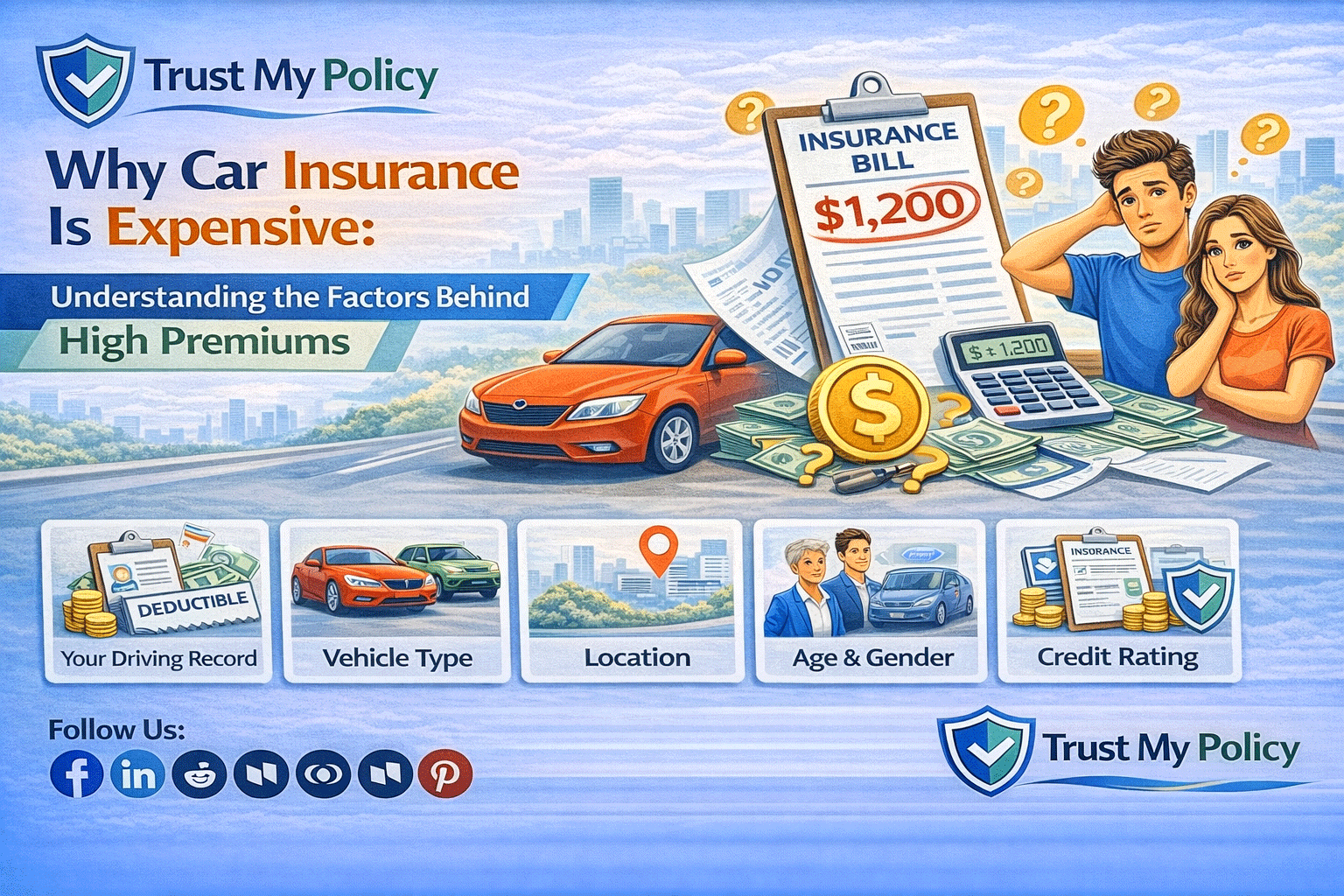
Car insurance is expensive in 2026 primarily because vehicle repair costs have risen sharply due to advanced car technology, medical costs from accident injuries continue to increase, litigation and legal settlements have grown larger, and urban areas carry higher theft, traffic density, and uninsured driver rates. These factors compound across an entire risk pool, meaning even clean-record drivers in high-cost regions pay significantly more than similar drivers in lower-cost areas.
Dominic Walsh, 31, moved from rural Ohio to Chicago and watched his car insurance premium jump from $94 to $189 a month for the same vehicle and the same clean driving record. His insurer explained the increase with a single word: location — but Dominic wanted to know what was actually inside that word driving twice the cost.
Why Car Insurance Is Expensive in 2026 comes down to several compounding industry-wide forces: vehicle repair costs have risen sharply due to advanced technology in modern cars, medical costs from accident-related injuries continue to climb, litigation and legal settlement costs have increased across the industry, and in urban areas, theft, traffic density, and uninsured driver rates all push premiums higher. These forces affect everyone in a region’s risk pool, not just individual high-risk drivers. This guide breaks down each driver so you understand exactly what you’re paying for.
This article covers the specific industry-wide and regional forces making car insurance more expensive, how they compound together, real scenarios with dollar figures, and what you can actually do to counteract them. By the end, you’ll understand why Dominic’s location added almost $1,140 a year to his bill.
| Feature | Details |
| What it is | A combination of repair, medical, litigation, and regional factors driving high car insurance costs |
| Who it affects | Every driver, regardless of personal record, though impact varies by location and vehicle |
| Main cost drivers | Repair cost inflation, medical cost inflation, litigation costs, regional theft and traffic rates |
| Personal cost factors | Age, driving record, vehicle type, credit-based score, coverage level |
| Key benefit (of understanding this) | Helps identify what you can and can’t control about your own premium |
| Key limitation | Industry-wide and regional forces can’t be avoided through personal behaviour alone |
| Regulator | State insurance departments (US); Financial Conduct Authority (UK) |
Think of car insurance cost like a restaurant bill with several separate line items. One line is the chef’s wages, another is the ingredients, another is the rent, and another is the local business rates. If all four go up simultaneously, the price on your menu goes up even if you order the exact same thing as last year. Car insurance works the same way: multiple underlying costs have risen simultaneously, and they show up together on your renewal notice as a single number.
Car insurance is expensive because several distinct cost components have risen simultaneously. Vehicle repair costs have increased sharply as modern cars incorporate advanced driver assistance systems, cameras, and sensors that cost significantly more to replace after a collision. Medical costs from accident-related injuries continue to rise independently of auto repair trends. Litigation costs, driven by larger legal settlements across the industry, add another layer. And in urban or high-density areas, theft rates, traffic frequency, and the proportion of uninsured drivers all push premiums higher for everyone on the road. Anyone trying to understand why their premium feels disconnected from their personal driving record needs to understand these structural forces.
| Criteria | Lower-Cost Environment (e.g., rural Midwest US) | Higher-Cost Environment (e.g., urban Northeast US or London UK) |
| Typical annual premium | $800–$1,400 | $1,800–$3,500+ |
| Traffic density | Lower, fewer claims per mile driven | Higher, more frequent collisions and theft |
| Uninsured driver rate | Generally lower | Often higher, raising uninsured motorist coverage costs |
| Repair cost variation | Less severe on average | Often higher due to luxury and technology-heavy vehicle mix |
| Pros for insurers | Predictable, lower-cost risk pool | Higher premiums offset higher claim frequency |
| Cons for drivers | Limited access to competitive insurer choice | Higher base premium regardless of personal record |
We recommend most readers use this comparison to understand that their location is often a larger premium driver than their personal behaviour, which explains why shopping multiple insurers in your specific area matters more than changing your habits.
Scenario 1: Dominic, 31, driver moving from rural Ohio to Chicago. His premium jumped from $94 to $189 a month for the same vehicle and the same clean record, reflecting higher urban theft, traffic density, and uninsured driver rates in Chicago. Verdict: location is frequently the largest single driver of premium differences for the same driver. Action: Dominic compared three Chicago-area insurers and found a $156/month rate with equivalent coverage.
Scenario 2: A driver in Manchester whose 2023 hatchback became significantly more expensive to insure than his 2018 model. The newer car’s parking sensors, lane-keeping cameras, and radar required specialist recalibration after even a minor rear bump, pushing repair costs, and therefore his premium, substantially higher. Verdict: modern vehicle technology has genuinely made car repairs more expensive at an industry level. Action: he checked insurance quotes before buying his next vehicle, comparing models with and without advanced sensor packages.
Scenario 3: A driver in Miami whose insurer specifically cited the state’s uninsured motorist rate as a factor in her premium. Florida has one of the highest rates of uninsured drivers in the US, which directly raises the cost of uninsured motorist coverage for every driver in the state. Verdict: high uninsured driver rates in a state directly raise costs even for fully insured drivers. Action: she confirmed her uninsured motorist limits were adequate given the regional risk.
Scenario 4: A UK driver whose premium rose 18% in a single year with no personal claims. Industry analysts cited rising repair costs from sensor-heavy vehicles and increased legal settlements from personal injury claims as the primary drivers. Verdict: UK motor insurance follows the same structural cost trends as the US, with repair and litigation cost inflation both contributing. Action: the driver compared five UK insurers and found a 14% lower rate with equivalent coverage elsewhere.
| Pros | Cons |
| Helps you separate what you can control from what you can’t. | Most structural cost drivers are outside any individual driver’s control. |
| Shopping multiple insurers can reveal meaningful pricing differences in the same area. | All insurers in a high-cost region absorb the same underlying costs. |
| Understanding vehicle technology costs helps you factor insurance into a car-buying decision. | Newer, safer vehicles often cost more to insure than older equivalents. |
| Knowing regional factors helps you benchmark whether your premium is competitive. | Moving to a cheaper-to-insure area isn’t practical purely for insurance savings. |
| Awareness of litigation trends explains premium increases that feel disconnected from claims. | Litigation and medical cost trends are long-term structural forces, not short-term corrections. |
⚠️ WARNING: Never assume your premium is uniquely expensive due to a personal error or insurer overcharging without comparing quotes first. Many drivers discover a 10%–25% price difference between insurers for identical coverage in the same area, purely from active comparison shopping.
| Your Situation | Our Recommendation |
| Your premium rose with no personal claims | Yes — ask your insurer which specific industry factors drove the increase |
| You haven’t compared other insurers in your area this year | Yes — compare at least three quotes before renewing |
| You’re buying a new car and haven’t checked insurance cost | Yes — check insurance quotes for specific models before purchasing |
| You drive in a high-uninsured-driver state | Yes — confirm your uninsured motorist coverage limits are adequate |
| You live in a high-cost urban area | Yes — accept that location is a major driver and focus on comparison shopping |
| You’ve increased your deductible to offset rising premiums | Yes — ensure your savings buffer matches the higher deductible |
| You’re a safe driver with telematics available | Yes — consider a usage-based programme to demonstrate your actual risk |
💡 TIP: The single golden rule for expensive car insurance: compare at least three insurers every renewal, since pricing differences between insurers in the same area are often larger than any savings you can achieve by changing your personal behaviour.
| Scenario | Typical Annual Premium | Key Cost Driver |
| Clean-record driver, rural Midwest, older sedan | $800–$1,200 | Low regional risk, older vehicle with lower repair costs |
| Same driver, urban Chicago or New York | $1,800–$3,000 | Traffic density, theft rates, higher uninsured driver exposure |
| Clean-record driver, sensor-heavy 2024 SUV, suburban | $1,400–$2,200 | Higher repair cost from advanced sensors and cameras |
| Same driver, 2018 basic sedan, suburban | $900–$1,400 | Lower repair cost from simpler vehicle technology |
| UK clean-record driver, rural area | £600–£900/year | Lower regional risk and traffic density |
| UK clean-record driver, London | £1,200–£2,500/year | High traffic density, theft rate, and legal settlement exposure |
| High-uninsured-driver state (e.g., Florida, Michigan) | 15%–30% higher than national average | Uninsured motorist coverage costs built into base premium |
Policygenius and The Zebra (US) — Comparison platforms showing real quotes from multiple insurers side by side for your specific location and vehicle. Cost range: free. Best for: US drivers wanting to benchmark their current premium against alternatives. Rating: independent comparison services.
Compare the Market and Confused.com (UK) — Leading UK comparison sites for motor insurance across multiple providers. Cost range: free. Best for: UK drivers comparing premiums in their specific area. Rating: FCA-regulated comparison services.
Progressive Snapshot and similar telematics programmes (US/UK) — Usage-based programmes that can demonstrate actual safe driving behaviour to earn discounts. Cost range: free to enrol. Best for: safe drivers in high-cost regions wanting to offset regional pricing. Rating: AM Best A+ (Progressive).
Your state insurance department (US) — Can confirm whether a specific rate increase is within approved filing guidelines. Cost range: free. Best for: US drivers questioning a large or unexpected increase. Rating: government regulatory body.
Independent insurance brokers — Brokers can explain which specific factors are driving your premium and compare across multiple insurers. Cost range: typically free for the consumer. Best for: anyone wanting a plain-language explanation of their specific cost drivers. Rating: varies by broker, check licensing.
We recommend a comparison platform as best overall first step because seeing competing quotes for your specific location and vehicle is the fastest way to determine whether your current premium is competitive.
Car insurance is expensive due to rising vehicle repair costs from advanced automotive technology, medical cost inflation, larger legal settlements from accident litigation, and regional factors like traffic density, theft rates, and uninsured driver levels.
Industry-wide factors — repair cost inflation, medical costs, litigation trends, and regional claims frequency — can raise premiums for everyone in a risk pool, regardless of personal claims history.
Urban areas have higher traffic density (more frequent collisions), higher theft rates, more uninsured drivers, and larger average legal settlements, all of which raise the base cost for every driver in that region.
Yes, significantly. Modern vehicles with advanced sensors, cameras, and driver assistance systems cost substantially more to repair after even minor incidents, which raises the premium for those vehicles.
Yes, consistently. Pricing varies meaningfully between insurers even for identical risk profiles in the same area, making comparison shopping one of the most effective tools for reducing cost.
State-level factors include uninsured driver rates, litigation environment, minimum coverage requirements, and regional weather and theft trends, all of which vary significantly between states.
Yes, for genuinely safe drivers, a telematics programme can demonstrate actual low-risk behaviour and earn a meaningful discount even in a high-cost region.
UK premiums reflect high traffic density in urban areas, rising repair costs from sensor-heavy vehicles, and a litigation environment that has driven up personal injury claim costs across the industry.
Directly, no — but you can offset them by comparing multiple insurers, choosing a higher deductible you can afford, considering telematics programmes, and reviewing your coverage levels annually.
Not necessarily. Regional and vehicle-based factors often contribute more to a high premium than personal driving history, which is why the same driver can pay very different premiums in different locations.
This article is for informational purposes only. Always consult a licensed insurance professional before making coverage decisions. Trust My Policy does not sell insurance products or represent any insurer.

Jagadeesh Gutha is the founder of TrustMyPolicy.com, an independent insurance information platform covering life, health, car, home, and business insurance for US and UK readers. He researches insurance products, policy structures, and consumer rights to help everyday people make informed coverage decisions without the jargon. All content on TrustMyPolicy is independently researched, fact-checked, and written to educate — not to sell.



Insurance Guides for UK, USA & Worldwide We are not an insurer or broker.
Reader Comments (0)