
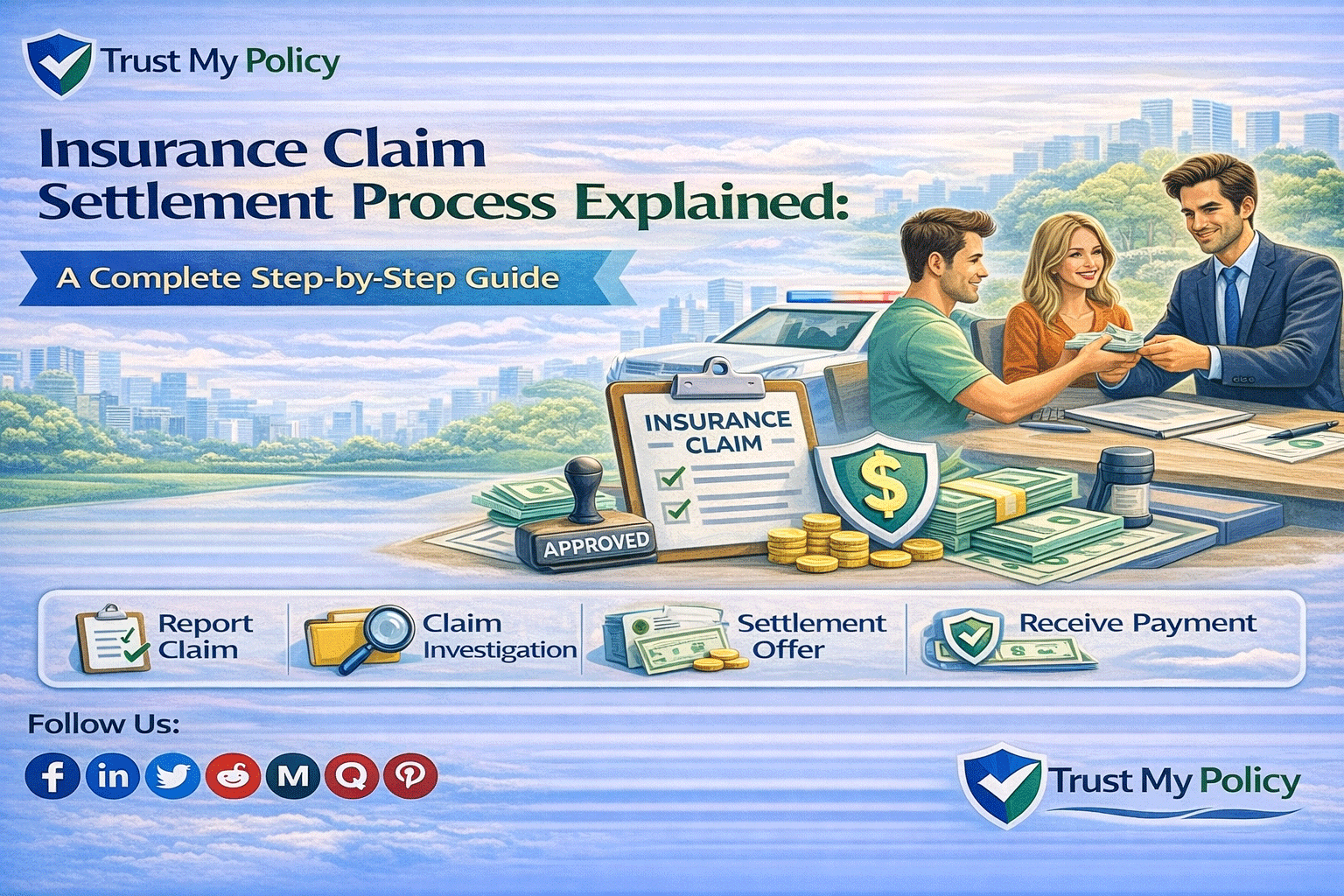
The insurance claim settlement process involves the insurer calculating an initial valuation based on your documentation and their own assessment, presenting that offer to you, and then either paying it if you accept or moving into negotiation or formal appraisal if you disagree. The first offer is often a starting point rather than a fixed final number, especially for larger or more complex claims, and many claimants successfully negotiate a higher settlement with additional documentation or professional support.
Heather Lombardi, 49, accepted her insurer’s first settlement offer of $14,000 for storm damage to her Tampa home, only to learn from a public adjuster afterward that a more thorough estimate would likely have supported a $21,000 payout. She’d assumed the first number offered was simply the correct, final amount, not the opening position in a negotiable process.
The Insurance Claim Settlement Process in 2026 typically follows four stages: the insurer’s initial valuation, your review and response to that offer, negotiation or formal appraisal if you disagree, and final payment once an amount is agreed upon. Understanding that the first offer is often a starting point, not a fixed final number, is one of the most valuable things any claimant can know before signing off on a settlement.
This article covers exactly how settlement amounts are calculated, how to negotiate effectively, real scenarios showing the financial stakes, and what tools exist if you and your insurer can’t agree. By the end, you’ll know what Heather wishes she’d known before accepting that first check.
| Feature | Details |
| What it is | The process of calculating, presenting, negotiating, and finalizing a claim payout amount |
| Who it applies to | Anyone with an approved claim awaiting a final settlement amount |
| Core stages | Initial valuation, your review, negotiation or appraisal, final payment |
| Key benefit | Understanding this process can result in a meaningfully higher, fairer settlement |
| Key limitation | Many claimants don’t realize the first offer is negotiable, leaving money unclaimed |
| Regulator | State insurance departments (US); Financial Conduct Authority (UK) |
Think of an initial settlement offer like the first number in a salary negotiation, not necessarily the company’s true maximum offer, but a starting position designed to be reasonable while leaving room for discussion. Many claimants, like Heather, accept the first offer the same way an inexperienced job candidate might accept the first salary number without ever countering.
The insurance claim settlement process is the stage where the insurer calculates and presents a specific dollar amount to resolve your approved claim. This typically starts with the insurer’s initial valuation, based on your documentation, any inspection findings, and standard cost data for repairs or replacement. You then review this offer and can accept it, negotiate for a higher amount with additional evidence, or pursue a formal appraisal process if a significant disagreement remains. Anyone receiving a settlement offer needs to understand that this number is often a starting point, not an immovable final figure.
| Criteria | Accepting the First Offer | Negotiating or Disputing the Offer |
| Speed | Fastest path to payment | Takes additional time, but can result in a higher final amount |
| Outcome | Whatever the insurer’s initial calculation determined | Often results in a more accurate reflection of your actual documented loss |
| Effort required | None beyond accepting | Requires gathering additional documentation or professional support |
| Pros | Quick resolution, no further effort needed | Frequently results in a meaningfully higher settlement for larger claims |
| Cons | May leave real money unclaimed if the offer was lowball | Takes time and sometimes requires hiring a public adjuster or appraiser |
We recommend reviewing every settlement offer critically before accepting, especially for larger claims, since many claimants successfully negotiate a higher amount with additional documentation.
Scenario 1: Heather, 49, homeowner in Tampa. Heather accepted a $14,000 initial offer for storm damage that a public adjuster later estimated should have been closer to $21,000 with a more thorough assessment. Verdict: the first offer is often a starting point, not a fixed final number, especially for property damage claims. Action: Heather now recommends getting an independent estimate before accepting any sizable settlement offer.
Scenario 2: Marcus, 33, driver in Dallas after a moderate collision. Marcus’s initial settlement offer for his vehicle’s diminished value after repair was low, but he successfully negotiated a higher amount by presenting comparable sale listings for similar undamaged vehicles. Verdict: presenting specific comparable evidence can meaningfully strengthen a negotiation. Action: Marcus’s negotiated settlement came in 22% higher than the original offer.
Scenario 3: A family in Manchester whose contents insurance settlement offer didn’t account for several specific high-value items. They successfully negotiated a revised offer after submitting receipts and appraisals the insurer hadn’t initially considered. Verdict: an incomplete initial offer can often be corrected with additional documentation. Action: the family now keeps detailed receipts specifically for higher-value items going forward.
Scenario 4: A small business owner in Houston whose business interruption settlement was significantly disputed. The disagreement was substantial enough to trigger the policy’s formal appraisal clause, with each side selecting an independent appraiser. Verdict: formal appraisal exists specifically for situations where negotiation alone can’t resolve a significant disagreement. Action: the umpire’s final determination resulted in a settlement between the two original positions, closer to the business’s claimed amount.
| Pros | Cons |
| Negotiating can often result in a meaningfully higher final settlement amount. | Negotiation takes time and additional effort compared to simply accepting the first offer. |
| Formal appraisal processes provide a structured path to resolve significant disagreements. | Hiring a public adjuster or appraiser can cost a percentage of the eventual payout. |
| Presenting specific comparable evidence strengthens your negotiating position. | Many claimants don’t realize the first offer is negotiable at all. |
| Independent estimates can correct an insurer’s initial undervaluation. | Disputed claims involving formal appraisal can extend the timeline significantly. |
| Understanding this process helps you avoid leaving real money on the table. | Comparing offers against independent documentation takes genuine effort. |
⚠️ WARNING: Never sign a settlement release without fully understanding it closes out your claim entirely. Once you accept and sign a final settlement, you typically can’t go back and request more money later, even if additional damage or costs surface afterward.
| Your Situation | Our Recommendation |
| You received a settlement offer for a small, straightforward claim | Yes — likely fine to accept if it matches your documented costs |
| You received an offer for a large or complex property claim | Yes — get an independent estimate before accepting |
| The offer seems to overlook specific items you submitted | Yes — request a revised calculation accounting for everything submitted |
| You and your insurer remain significantly apart after negotiation | Yes — check your policy for a formal appraisal clause |
| You’re unsure whether the offer reflects current repair costs | Yes — compare it against current local contractor or replacement estimates |
| You’re being asked to sign a final settlement release | Yes — confirm all damage and costs are fully accounted for before signing |
| You’re negotiating without any specific supporting evidence | Yes — gather comparable estimates or receipts before presenting a counter-offer |
💡 TIP: The single golden rule for claim settlements: treat the first offer as a starting point for larger claims, not a final number, and always compare it against your own independent documentation before accepting.
| Scenario | Initial Offer | Negotiated or Appraised Outcome |
| Storm damage claim with incomplete initial assessment | $14,000 | $21,000 after independent public adjuster assessment |
| Auto diminished value claim with comparable evidence presented | Initial offer often low or excluded entirely | 15%–25% increase common with strong comparable evidence |
| Contents claim missing specific high-value items | Original offer excludes unaccounted items | Revised offer after submitting receipts and appraisals |
| Business interruption claim, significant dispute | Initial offer substantially below claimed amount | Formal appraisal often results in a settlement between the two positions |
| Hiring a public adjuster for a large property claim | N/A | Typically costs 5%–15% of the final payout, often still a net gain |
| Straightforward, well-documented small claim | Matches documented costs | Usually accepted as-is without negotiation needed |
| Claim involving a formal appraisal clause | Disputed amount | Binding determination from an independent umpire |
Public adjusters (US, for property claims) — Licensed professionals who independently assess damage and negotiate settlements on your behalf, typically for a percentage of the payout. Cost range: 5%–15% of the claim payout. Best for: large or disputed property damage claims. Rating: state-licensed, not insurer-affiliated.
Independent contractors or appraisers — Can provide an independent estimate to compare against an insurer’s initial settlement offer. Cost range: varies, sometimes free for an initial estimate. Best for: any claimant wanting a second opinion on a property or auto damage valuation. Rating: varies by professional, check licensing.
Your state insurance department (US) — Can assist if you believe a settlement offer was calculated unfairly or improperly. Cost range: free to file a complaint. Best for: US policyholders facing an unresolved settlement dispute. Rating: government regulatory body.
Financial Ombudsman Service (UK) — An independent UK body that can review unresolved settlement disputes after an insurer’s internal process is exhausted. Cost range: free for consumers. Best for: UK policyholders with unresolved settlement concerns. Rating: independent statutory ombudsman.
An attorney specializing in insurance claims — Useful for significant, high-value disputes where formal appraisal or litigation may be necessary. Cost range: varies, often hourly or contingency-based. Best for: large or complex disputed settlements. Rating: varies by firm, check state bar standing.
We recommend getting an independent estimate before accepting any sizable settlement offer as best overall first step, since this single action is the most direct way to confirm whether the insurer’s number reflects your actual documented loss.
The settlement process is the stage where the insurer calculates and presents a specific payout amount for your approved claim, which you can then accept, negotiate, or formally dispute before final payment is issued.
No, especially for larger or more complex claims. The first offer is often a starting point, and many claimants successfully negotiate a higher amount with additional documentation or independent estimates.
Gather independent estimates, comparable evidence, or documentation the insurer may have overlooked, then present this information clearly to support a request for a revised, higher offer.
An appraisal clause allows each party to select an independent appraiser when there’s a significant disagreement over the settlement amount, with a neutral umpire resolving any remaining dispute between them.
For large or complex property claims, this can be worthwhile, since public adjusters often secure a higher settlement than the insurer’s initial offer, even after their fee is accounted for.
Signing a settlement release typically closes out your claim entirely, meaning you generally can’t request additional money later, even if further damage or costs are discovered afterward.
Straightforward claims can settle within days to a couple of weeks, while disputed or complex claims involving negotiation or formal appraisal can take several weeks to a few months.
Yes, getting an independent estimate from a contractor, appraiser, or public adjuster is a common and effective way to verify whether an insurer’s offer reflects your actual documented loss.
Check your policy for a formal appraisal clause, which provides a structured process for resolving significant disagreements through independent appraisers and a neutral umpire.
For very small claims, the time and effort of disputing may not be worthwhile, but for larger claims, even a modest negotiation effort can result in a meaningfully higher final amount.
This article is for informational purposes only. Always consult a licensed insurance professional before making coverage decisions. Trust My Policy does not sell insurance products or represent any insurer.

Jagadeesh Gutha is the founder of TrustMyPolicy.com, an independent insurance information platform covering life, health, car, home, and business insurance for US and UK readers. He researches insurance products, policy structures, and consumer rights to help everyday people make informed coverage decisions without the jargon. All content on TrustMyPolicy is independently researched, fact-checked, and written to educate — not to sell.


Insurance Guides for UK, USA & Worldwide We are not an insurer or broker.
Reader Comments (0)