
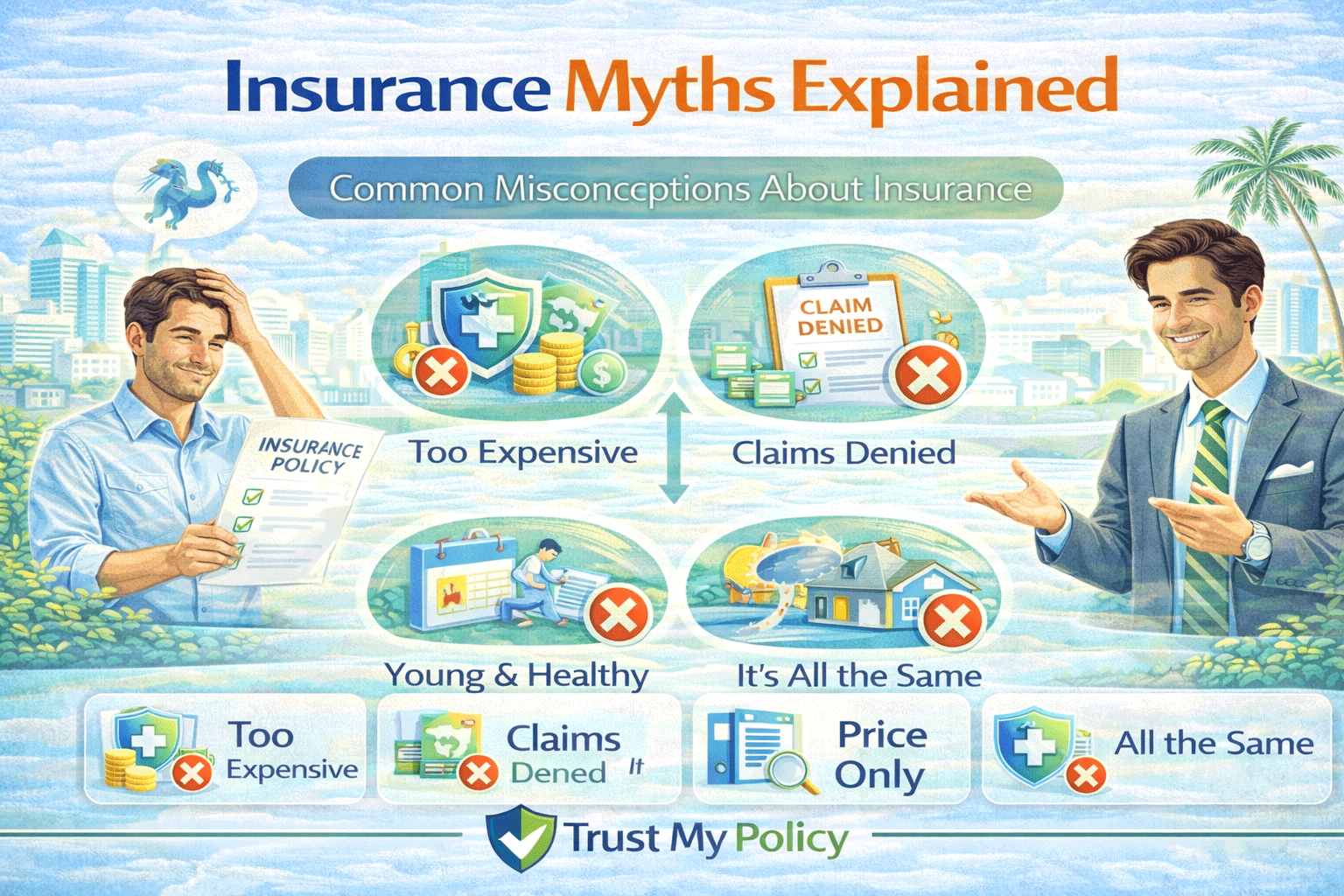
The most common insurance myths include the idea that red cars cost more to insure, that insurers deny most claims, that minimum coverage is always enough, and that young, healthy people don’t need life insurance. None of these hold up under real data — for example, US health marketplace insurers paid roughly 80% of in-network claims in 2024, according to KFF.
Derek Holloway, 39, avoided buying life insurance for years because his cousin once told him red cars cost more to insure and “insurance companies just find ways not to pay anyway.” When Derek finally compared real quotes after his daughter was born, he found a $500,000 term policy for $28 a month and discovered his cousin’s claim about red cars wasn’t even true.
Insurance Myths Explained for 2026 means separating outdated assumptions from how coverage actually works today. Many widely repeated claims, like the red car myth or the idea that insurers deny most claims, simply don’t hold up against real industry data. This guide debunks the 10 most common insurance myths with specific numbers, so you can make decisions based on facts instead of secondhand stories.
This article covers the most common myths about cost, claims, and coverage, why each one persists, real scenarios showing the actual numbers, and what to check before believing the next insurance “fact” you hear. By the end, you’ll know exactly which myths to ignore.
| Feature | Details |
| What it is | Common false beliefs about how insurance pricing, claims, and coverage work |
| Who it affects | Anyone shopping for or holding auto, home, health, or life insurance |
| Typical cost of believing a myth | Hundreds to tens of thousands of dollars in avoidable risk or overpayment |
| Most persistent myth | That insurers deny most claims as a default practice |
| Key benefit (of debunking) | Better coverage decisions based on real data, not folklore |
| Key limitation | Some myths contain a partial truth, which makes them harder to fully dismiss |
| Regulator | State insurance departments (US); Financial Conduct Authority (UK) |
Most insurance myths spread the same way old wives’ tales about colds do — repeated by people who sound confident, rarely checked against an actual source. They stick because insurance pricing genuinely is complex, which makes a simple, memorable “explanation” feel satisfying even when it’s wrong.
Insurance myths are widely repeated but inaccurate beliefs about how premiums are priced, how claims are handled, or how much coverage someone actually needs. Anyone shopping for auto, home, health, or life insurance needs to recognize these myths, because acting on a false belief can mean overpaying or being seriously underinsured.
| Criteria | The Myth | The Reality |
| Car color and premiums | “Red cars cost more to insure” | Insurers price based on make, model, and safety data, not color |
| Claim denials | “Insurers deny most claims” | US health marketplace insurers denied about 19% of in-network claims in 2024, per KFF |
| Minimum coverage | “State minimum coverage is always enough” | Minimum limits often fall far short of a serious accident’s real cost |
| Young, healthy people and life insurance | “I’m too young and healthy to need it” | Premiums are cheapest exactly when you’re young and healthy |
We recommend verifying any insurance claim against a named source for most readers, since myths often contain just enough truth to sound credible without holding up to scrutiny.
Scenario 1: Derek, 39, new father in Ohio. Derek delayed buying life insurance for years believing he was “too young to need it,” then found a $500,000, 20-year term policy for $28 a month. Verdict: the myth cost him years of unprotected risk for his family. Action: Derek bought the policy immediately after comparing three real quotes.
Scenario 2: Priya, 31, driver who avoided buying a red car over insurance cost fears. Priya later learned from her insurer directly that color isn’t a rating factor at all. Verdict: this myth had zero basis in actual underwriting criteria. Action: Priya bought the car she actually wanted and got the same quote regardless of color.
Scenario 3: Marcus, 27, who carried only Texas state-minimum auto liability. After causing a $42,000 accident, his $30,000 liability limit left him personally responsible for $12,000. Verdict: the “minimum coverage is enough” myth left him financially exposed. Action: Marcus raised his liability limits to $100,000 per person at his next renewal.
Scenario 4: A UK renter who assumed renters insurance was “a waste since landlords cover everything.” A kitchen fire destroyed £8,000 of her belongings, none of which her landlord’s building insurance covered. Verdict: landlord insurance never covers a tenant’s personal belongings. Action: she bought a £120-a-year contents policy the same week.
| Pros | Cons |
| Some commonly repeated advice (shop around, raise your deductible) is genuinely accurate. | Many “facts” people repeat, like the red car myth, have no basis in actual underwriting. |
| Checking myths against real data builds genuine confidence in your coverage choices. | Acting on a false belief about coverage limits can leave you seriously underinsured. |
| Asking your insurer directly is fast, free, and resolves most myths immediately. | Some myths persist because they contain a partial truth, making them harder to dismiss. |
| Comparison sites and regulators publish free, verifiable data to fact-check claims. | Outdated information can circulate online long after pricing rules have changed. |
| Understanding real pricing factors helps you actually lower your premium. | Believing insurers “always deny claims” can discourage people from filing valid ones. |
⚠️ WARNING: Never let an insurance myth talk you out of carrying adequate coverage. The myth that “minimum coverage is enough” is one of the most financially dangerous, since a single serious accident can easily exceed state-minimum liability limits.
| Your Situation | Our Recommendation |
| You heard a specific rating factor (car color, zodiac sign) affects price | No — verify with your insurer before assuming it’s true |
| You’re told insurers “always deny claims” | No — check real denial-rate data before accepting this as fact |
| You’re told minimum coverage is “always enough” | No — compare your limits against realistic local accident costs |
| You’re told you’re “too young” for life insurance | No — apply now while premiums are at their lowest |
| You’re told landlord insurance covers your belongings as a renter | No — get your own renters or contents policy |
| You heard shopping around saves money on premiums | Yes — this is genuinely accurate and worth doing annually |
| You heard raising your deductible lowers your premium | Yes — this is also accurate for most policy types |
💡 TIP: The single golden rule for insurance myths: if a claim sounds definitive but you can’t name the source, verify it with your insurer before making a coverage decision based on it.
| Scenario | Myth-Based Decision | Real Cost of Believing the Myth |
| Delaying life insurance “until you’re older” | Apply at 45 instead of 30 | Often 2–4x higher premium for identical coverage |
| Carrying only state-minimum auto liability | $25,000–$30,000 limit | Personal liability for the gap after a $40,000+ accident |
| Skipping renters insurance as a “waste” | $0 premium | Full out-of-pocket replacement cost after theft or fire |
| Avoiding a car model over color-pricing myths | No real savings | $0 difference, since color isn’t an underwriting factor |
| Assuming a denied claim is automatically final | No appeal filed | Forfeiting a claim that may have been overturned on appeal |
| Believing bundling never saves money | Separate policies kept | Missing a common 5%–15% multi-policy discount |
| Believing credit score never affects pricing | No credit improvement effort | Missing a meaningful rate reduction in states that allow this factor |
KFF (Kaiser Family Foundation) — A nonpartisan US research organization publishing detailed annual data on health insurance claims, denials, and coverage trends. Cost range: free public research. Best for: fact-checking US health insurance claims and denial myths. Rating: nonpartisan policy research organization.
NAIC (National Association of Insurance Commissioners) — Publishes consumer guides and real industry data on how US insurance pricing and regulation actually work. Cost range: free public resource. Best for: verifying US pricing and regulatory myths. Rating: regulatory standards body.
Financial Conduct Authority (UK) — The UK regulator publishing rules and guidance on how insurers must price and handle claims fairly. Cost range: free public guidance. Best for: verifying UK insurance claims and rules. Rating: government regulatory body.
Insurance Information Institute (US) — A nonprofit publishing consumer-facing, data-backed explainers on common insurance misconceptions. Cost range: free resource. Best for: quick, sourced answers to common US insurance myths. Rating: nonprofit research body.
Independent brokers — Licensed brokers can confirm or debunk a specific pricing claim against real, current underwriting guidelines. Cost range: typically free for the consumer. Best for: getting a direct, personalized answer to a specific myth. Rating: varies by broker, check licensing.
We recommend KFF or the NAIC as best overall starting point because both publish free, regularly updated data that directly fact-checks the most common claims and denial myths.
No. Insurers price auto insurance based on factors like make, model, safety ratings, and repair costs, not the color of the vehicle.
No. While denial rates vary by insurer and product, KFF’s 2024 analysis found US health marketplace insurers denied an average of 19% of in-network claims, meaning the large majority were paid.
Usually not. Minimum liability limits are often far lower than the real cost of a serious accident, leaving you personally responsible for the difference.
Insurance pricing and claims processes feel complex and opaque, which makes simple, confident-sounding explanations feel more satisfying than the real, data-driven answer.
No. Premiums are lowest precisely when you’re young and healthy, making early application the most cost-effective time to buy coverage.
No. Landlord or building insurance typically covers the structure itself, not a tenant’s personal belongings, which require a separate renters or contents policy.
Yes. This is one of the few widely repeated pieces of insurance advice that’s genuinely accurate, since risk classification varies meaningfully between insurers.
Often yes. Many denials cite fixable administrative or documentation issues, and appealing is typically free and faster than most people expect.
Yes, in most cases. A higher deductible shifts more small-claim risk to you, which typically lowers your premium meaningfully.
Ask your insurer or broker directly, or check a named, regulated source like the NAIC, KFF, or the Financial Conduct Authority before acting on it.
This guide reflects the latest 2026 insurance data.
This article is for informational purposes only. Always consult a licensed insurance professional before making coverage decisions. Trust My Policy does not sell insurance products or represent any insurer.

Jagadeesh Gutha is the founder of TrustMyPolicy.com, an independent insurance information platform covering life, health, car, home, and business insurance for US and UK readers. He researches insurance products, policy structures, and consumer rights to help everyday people make informed coverage decisions without the jargon. All content on TrustMyPolicy is independently researched, fact-checked, and written to educate — not to sell.



Insurance Guides for UK, USA & Worldwide We are not an insurer or broker.

Reader Comments (0)