
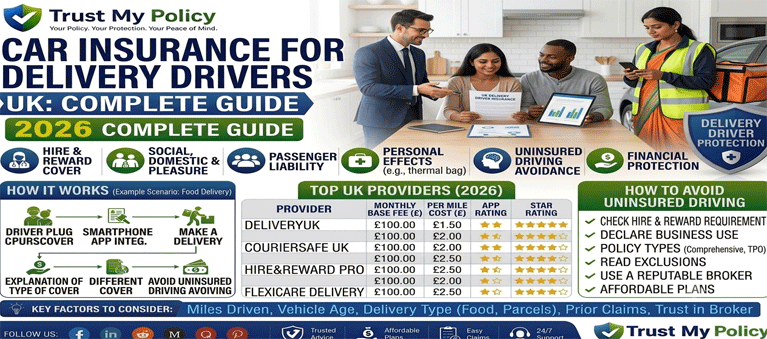
Delivery drivers in the UK need hire and reward insurance — a specific cover class that permits carrying goods for payment. Standard car insurance covers social, domestic, and pleasure use only and is voided during any delivery work. Hire and reward insurance costs GBP 800-GBP 2,500/year for a car, depending on vehicle, age, and claims history. The top UK providers in 2026 are Zego, Veygo, Staveley Head, and A-Plan. Gig economy platform drivers (Uber Eats, Deliveroo, Amazon Flex) can use fleet cover arranged by the platform or purchase individual hire and reward policies. All policies are regulated by the FCA.
When Ravi Sharma, 29, started delivering for Uber Eats using his personal Volkswagen Polo in August 2023, he assumed his existing comprehensive car insurance covered him during deliveries. It did not. Three weeks into the job, he had a minor collision while dropping off a takeaway order. His insurer confirmed the claim: denied. His policy covered social, domestic, and pleasure use only. The delivery work — carrying goods for payment — voided every claim arising during that use. He paid GBP 2,100 out of pocket for the other driver’s repairs.
Car insurance for delivery drivers in the UK in 2026 requires a specific class of cover called hire and reward insurance — because standard personal car insurance explicitly excludes any use where goods are carried for payment. This is one of the most misunderstood areas of UK motor insurance, affecting an estimated 1.5 million gig economy delivery workers who use their own vehicles, according to the Transport Research Laboratory (TRL) 2024. The same factors that make delivery driving a high-risk insurance category — high mileage, urban driving, time pressure — are the same ones that push car insurance premiums higher for working drivers compared to personal policyholders.
This guide covers exactly which cover class delivery drivers need, how hire and reward insurance works, which UK providers offer it in 2026, what it costs for cars, vans, and motorcycles, how it applies across Uber Eats, Deliveroo, Amazon Flex, and courier platform work, four real-life scenarios, the five most expensive mistakes delivery drivers make, a decision guide, a full cost table, and ten FAQs.
| Feature | Details |
| Cover Class Required | Hire and reward insurance (also called courier insurance or Class 3 business use) |
| Who Needs It | Any UK driver carrying goods or passengers for payment in their own vehicle |
| Standard Insurance Covers Delivery Work? | No — social, domestic, and pleasure use explicitly excludes hire and reward activity |
| Average Annual Cost (Car, Age 30, Standard Risk) | GBP 1,000-GBP 1,800/year fully comprehensive |
| Average Annual Cost (Motorcycle, Age 25) | GBP 600-GBP 1,400/year |
| Average Annual Cost (Van, Age 35) | GBP 1,200-GBP 2,500/year |
| Flexible Cover Available | Yes — Zego and Veygo offer pay-as-you-go hourly and weekly policies |
| Platform Fleet Cover (Uber Eats, Deliveroo) | Yes — available while logged into the platform app only; does not cover personal use or vehicle damage |
| Top UK Providers (2026) | Zego, Veygo, Staveley Head, A-Plan, INSHUR |
| Regulator | Financial Conduct Authority (FCA) |
UK car insurance divides into use classes. Class 1 covers social, domestic, and pleasure use — everyday personal driving. Class 2 adds business use for the policyholder’s own business activities, such as driving to client meetings, but excludes carrying goods or passengers for payment. Class 3 — hire and reward — specifically covers the act of being paid to transport goods, food, parcels, or passengers. Any driver who receives payment for any delivery, regardless of frequency or value, requires Class 3 hire and reward cover during that activity. Understanding how insurers calculate the risk premium for different driving activities explains why delivery driving commands a significantly higher premium than standard personal use — higher mileage, urban congestion, time pressure, and frequent stopping all increase the statistical claims frequency.
The reason standard insurance voids delivery work is underwriting risk. Delivery drivers cover significantly more miles than personal drivers, drive during peak traffic hours, navigate unfamiliar streets under time pressure, and stop and restart in locations that increase kerb and third-party collision exposure. Insurers price this additional risk separately — and they exclude it from personal policies precisely because it represents a materially different risk profile that is not reflected in the personal premium.
Hire and reward insurance applies across every type of paid delivery work: food delivery (Uber Eats, Deliveroo, Just Eat), parcel and courier delivery (Amazon Flex, DPD, Evri), same-day courier services, grocery and pharmacy delivery, and multi-drop B2B courier runs. The broader picture of insurance needs for self-employed and gig economy workers — including public liability and income protection alongside motor cover — is covered in our guide to insurance options for gig workers in the UK. The common thread is payment for the act of carrying — if someone pays you to move something from A to B in your vehicle, you need hire and reward cover for every mile of that journey.
Some gig economy platforms provide limited insurance cover to their delivery partners while actively logged in and completing a delivery. Uber Eats provides third-party liability cover during active trips. Deliveroo provides a similar third-party policy through its courier partner agreement. Amazon Flex provides commercial auto liability during active delivery periods. The critical limitations of platform cover: it covers third-party liability only, not your own vehicle damage; it applies only while actively on a logged-in delivery trip; and coverage amounts vary by platform and can change without individual driver notification.
Platform cover does not protect your own vehicle. If you cause an accident during a delivery, platform cover pays third-party damages only. Your own vehicle repairs — GBP 3,000-GBP 15,000 for a modern car — are your personal liability unless you hold comprehensive hire and reward cover. Platform cover also lapses the moment you log off, leaving any incident during transit to or from work, during a break, or during personal use entirely uninsured if your personal policy excludes delivery work.
| ⚠️ WARNING: Personal Insurance Is Void During Any Delivery Work
Using your personal car insurance policy while delivering goods or food for payment is not just inadequate — it actively voids your policy for any claim arising during that activity. Under the Consumer Insurance (Disclosure and Representations) Act 2012, using your vehicle for a purpose not declared to and accepted by your insurer constitutes a material non-disclosure. Your insurer can deny the claim, recover any third-party payments they have made from you personally, and in serious cases report the matter to the Motor Insurance Bureau. This applies even if you make only one delivery per week. Any paid delivery use requires hire and reward cover. |
| Cover Type | What It Covers and When to Use It |
| Annual Hire and Reward — Comprehensive | Full cover for vehicle damage, third-party liability, fire and theft, during both delivery and personal use. Best for full-time delivery drivers using the same vehicle for work and personal driving. |
| Annual Hire and Reward — Third Party Only | Third-party liability cover only during delivery and personal use. Cheapest option but leaves your own vehicle unprotected. Suitable only if your vehicle is low value (under GBP 2,000). |
| Flexible / Pay-As-You-Go Hire and Reward | Hourly or daily hire and reward cover activated via app. Personal comprehensive cover runs underneath; hire and reward layer activates when you start a shift. Best for part-time delivery drivers with fewer than 20 hours per week. |
| Fleet / Courier Fleet Insurance | Single policy covering multiple vehicles or drivers working for the same operator. Used by courier businesses, multi-driver food delivery operations, and Amazon Flex fleet operators. |
| Goods in Transit Insurance | Covers the goods being delivered against loss, theft, or damage. Not included in standard hire and reward policies. Required by most B2B courier contracts and strongly recommended for high-value parcel delivery. |
| Public Liability Insurance | Covers injury or property damage claims by third parties arising from delivery activity — separate from motor liability. Required by some platform contracts and B2B courier agreements. |
| Provider | Best For | Annual Cost (Car, Age 30) | Cover Type |
| Zego | Gig economy; flexible hourly/weekly; all platforms | GBP 900-GBP 1,600/year or from GBP 0.70/hour | Flexible + Annual H&R |
| Veygo (Admiral) | Part-time; app-based activation; under 20 hrs/week | GBP 850-GBP 1,500/year or hourly | Flexible + Annual H&R |
| Staveley Head | Full-time couriers; van drivers; complex risk | GBP 1,000-GBP 2,000/year | Annual H&R — specialist broker |
| A-Plan Insurance | Older drivers; previous claims; non-standard vehicles | GBP 1,100-GBP 2,200/year | Annual H&R — broker |
| INSHUR | Full-time professional drivers; Uber/Bolt platform work | GBP 950-GBP 1,700/year | Annual H&R |
Zego is the UK’s leading specialist insurer for gig economy delivery workers, covering Uber Eats, Deliveroo, Stuart, and courier platform drivers. It offers two products: an annual hire and reward policy providing continuous comprehensive cover for both delivery and personal use, and a flexible pay-as-you-go product where drivers activate hire and reward cover by the hour (from GBP 0.70/hour) using the Zego app. Zego integrates directly with major delivery platforms, confirming active delivery status automatically. FCA-authorised, underwritten by a panel of A-rated insurers. Annual cost: GBP 900-GBP 1,600 for a standard-risk 30-year-old car driver. Best for: food delivery drivers and gig economy workers of any mileage level wanting the most seamless platform-integrated hire and reward insurance in the UK market.
Veygo is a digital insurance brand operated by Admiral Group — one of the UK’s largest motor insurers. Its pay-as-you-go hire and reward product allows part-time delivery drivers to activate cover for as little as one hour at a time via smartphone. Your existing personal comprehensive policy continues during non-delivery periods. Defaqto 4-star rated. Annual cost if using only for part-time delivery: GBP 100-GBP 400/year depending on delivery hours. Annual continuous policy: GBP 850-GBP 1,500. If you are a young driver also navigating the general complexities of finding affordable car insurance as a new driver under 25, Veygo’s flexible model is worth comparing against annual policies before committing. Best for: drivers delivering fewer than 20 hours per week alongside regular employment.
Staveley Head is a specialist courier and commercial vehicle insurance broker with over 30 years of experience arranging hire and reward and goods-in-transit cover for UK couriers. It accesses specialist underwriters not available on standard comparison sites — making it the strongest option for drivers declined by mainstream insurers, those with complex claims history, high-mileage courier routes, or vans above 3.5 tonnes. Staveley Head can also arrange goods-in-transit cover and public liability alongside motor cover in a single package. Annual cost: GBP 1,000-GBP 2,000 for a standard-risk car; GBP 1,200-GBP 2,500 for a van. Best for: full-time couriers, multi-drop parcel delivery drivers, Amazon Flex van operators, and drivers declined by standard providers.
A-Plan is one of the UK’s largest independent broker networks, with over 100 offices and access to specialist courier and hire and reward underwriters across Lloyd’s and company markets. It works individually with drivers to find the most competitive quote for their specific risk — particularly valuable for older drivers (over 60), drivers with previous claims or convictions, unusual vehicle types, and multi-vehicle operators. Annual cost: GBP 1,100-GBP 2,200 for cars. Best for: drivers who have received high quotes or declines from digital providers, and those with complex situations. When reviewing any quote from any provider, it is always worth understanding how to compare car insurance effectively beyond the headline premium — coverage limits, excess levels, and claims handling quality matter as much as price for delivery drivers who claim more frequently than personal policyholders.
We recommend Zego as the best overall UK delivery driver insurance provider in 2026 — the only provider that directly integrates with the major gig economy platforms, offers both flexible hourly and full annual cover in one product, and has built its entire business around the specific risk profile of UK delivery drivers. For part-time drivers, Veygo’s hourly product from GBP 0.70/hour is the most cost-efficient option for drivers covering fewer than 20 delivery hours per week.
| Platform | Platform Cover Provided | Additional Cover Needed |
| Uber Eats | Third-party liability during active delivery only | Comprehensive hire and reward for own vehicle protection and off-trip gaps |
| Deliveroo | Third-party liability via courier agreement during active delivery | Comprehensive hire and reward for vehicle damage and off-trip cover |
| Just Eat (self-employed) | No platform cover for self-employed drivers | Full hire and reward policy required before first delivery |
| Amazon Flex | Commercial auto liability during active delivery block | Comprehensive hire and reward for vehicle damage and personal use gaps |
| Stuart / Gophr | Third-party liability during active bookings only | Comprehensive hire and reward for vehicle and off-booking cover |
| DPD / Evri / Yodel (own vehicle) | No platform cover for owner-drivers | Full hire and reward required; goods-in-transit strongly recommended |
| Independent courier (no platform) | None | Full hire and reward + goods in transit + public liability |
Ravi used his personal comprehensive policy while delivering for Uber Eats. After a minor at-fault collision causing GBP 2,100 in third-party damage, his insurer denied the claim because his policy excluded hire and reward use. Uber Eats’ platform cover paid the third-party claim — but Ravi remained liable to his insurer for the administrative cost and faced a potential fraud referral. He switched to Zego’s annual policy at GBP 1,240/year. His previous personal premium: GBP 680/year. The additional cost: GBP 560/year for proper protection. Verdict: One denied claim cost more than an entire year of correct cover. Action: Any driver doing any paid delivery work must have hire and reward cover before their first shift — not after the first incident.
Priya delivered for Deliveroo for 12-15 hours per week alongside her full-time job. An annual hire and reward policy was quoted at GBP 1,380/year. She switched to Veygo’s flexible product at GBP 0.85/hour, keeping her existing personal comprehensive policy (GBP 720/year) running underneath. At 13 hours per week over 48 working weeks, her Veygo cost was GBP 530/year. Total insurance cost: GBP 1,250/year — GBP 130 cheaper than the annual hire and reward policy. The excess on each policy also needed careful consideration — our explanation of how compulsory and voluntary excess work on UK car insurance is useful here, because hire and reward policies often carry higher compulsory excess than standard personal policies. Verdict: Flexible hourly cover saved Priya GBP 130/year for part-time delivery hours. Action: Calculate your actual weekly delivery hours and multiply by 52 before committing to an annual policy — hourly cover frequently wins below 20 hours per week.
Mohammed used his own Ford Transit Custom for Amazon Flex delivery blocks. Standard Amazon Flex commercial liability applied during active blocks only. His standard van insurance excluded hire and reward use. Staveley Head arranged a hire and reward van policy with goods-in-transit cover for GBP 1,680/year. Previous van insurance: GBP 920/year. Additional cost: GBP 760/year. In his first year, a parcel worth GBP 1,200 was stolen from his van. His goods-in-transit cover paid out in full after a GBP 150 excess. The broader insurance requirements for self-employed delivery workers — including income protection if unable to drive — are covered in our guide to insurance options for gig economy and self-employed workers in the UK. Verdict: The goods-in-transit add-on (approximately GBP 180/year of the premium) paid for itself in a single claim. Action: Van-based courier drivers should always combine hire and reward with goods-in-transit cover — parcel theft is a frequent and significant risk.
Sophie worked across Uber Eats, Deliveroo, and Just Eat simultaneously using her Honda CB500. Her existing motorcycle insurance (GBP 480/year) excluded hire and reward. Zego’s annual motorcycle hire and reward policy cost GBP 890/year — a difference of GBP 410. She worked 25 hours per week year-round, covering approximately 18,000 miles per year on deliveries. An hourly policy was uncompetitive at that mileage level. Verdict: High-mileage delivery riders covering 15,000+ miles per year should always choose an annual hire and reward policy — the economics of hourly cover break down above 15 hours per week. Action: One annual hire and reward policy covers all platforms simultaneously — there is no need to hold separate policies for each platform you work for.
| Factor | Pros | Cons |
| Legal Compliance | Puts you on the right side of the Road Traffic Act 1988 and the Consumer Insurance Act 2012 | Hire and reward premiums are significantly higher than standard personal car insurance |
| Comprehensive Cover | Your own vehicle is protected during delivery work — platform cover alone does not provide this | Annual policies commit you to a full year even if you stop delivering mid-term |
| Flexible Options | Hourly and daily cover from Zego and Veygo means part-time drivers pay only for delivery hours | Flexible cover requires manual app activation — forgetting to activate leaves you uninsured during delivery |
| Goods in Transit | Add-on protects goods you carry against theft or damage — often required by courier contracts | Goods-in-transit is an additional premium on top of the hire and reward motor policy |
| Multi-Platform Cover | A single annual policy covers you across all delivery platforms simultaneously | Some specialist providers have limited online access — broker arrangements take longer than digital purchases |
Mistake 1: Assuming existing comprehensive insurance covers delivery work. This is the most common and most costly mistake. The word ‘comprehensive’ refers to the coverage scope — not the use class. A comprehensive policy covering social, domestic, and pleasure use is completely void for any claim arising during paid delivery activity. The coverage class and the coverage scope are two entirely separate things that must both be correct simultaneously.
Mistake 2: Relying on platform cover alone. Platform cover provides third-party liability only, and only while actively logged in and on a delivery trip. It does not cover your own vehicle, it does not cover you while waiting for an order, and it lapses the moment you log off. Every delivery driver who uses their own vehicle needs personal hire and reward cover in addition to whatever the platform provides. This is the same principle that applies when comparing any two car insurance policies on equal terms — the headline coverage description rarely tells the full story of what is and is not included.
Mistake 3: Not activating flexible cover before starting a shift. Drivers using Zego or Veygo’s hourly products must manually activate hire and reward cover in the app before starting each delivery session. Drivers who forget — or who begin driving to the collection point before activating — are uninsured during that gap. Set a fixed habit: open the app and activate cover before starting the engine for every delivery shift, without exception.
Mistake 4: Under-declaring delivery mileage to reduce the premium. Hire and reward insurers ask for both annual delivery mileage and annual personal mileage. Under-declaring delivery mileage to obtain a lower premium is a material non-disclosure under the Insurance Act 2015. If a claim is investigated and actual mileage significantly exceeds the declared figure, the insurer can proportionally reduce the claim payout or void the policy entirely.
| ⚠️ WARNING: Switching Platforms Mid-Policy Requires Notification
If you add a new delivery platform during an existing hire and reward policy — for example, starting Amazon Flex deliveries while already covered for Uber Eats — you must notify your insurer. Some policies specify the exact platforms covered. Adding a new platform with a different vehicle use profile may require a policy endorsement or a new quote. Failing to notify is a material non-disclosure under the Insurance Act 2015 and can void your claim for an incident occurring while working for the undisclosed platform. |
Mistake 5: Not including goods-in-transit cover for parcel delivery work. Food delivery drivers carry low-value items and face minimal goods-in-transit risk. Parcel and courier delivery drivers regularly carry goods worth GBP 500-GBP 5,000 per load. Standard hire and reward policies do not cover the goods themselves. If you also carry out any delivery work as a self-employed contractor rather than a gig worker, our guide on public liability insurance for freelancers and self-employed workers in the UK covers the additional liability protections that courier contracts typically require alongside motor cover.
| Your Situation | Our Recommendation |
| I deliver food part-time (under 20 hours/week) for one platform | Yes — Veygo or Zego hourly hire and reward; personal policy remains for non-delivery use |
| I deliver food full-time (20+ hours/week) | Yes — annual Zego hire and reward policy; covers all platforms simultaneously |
| I deliver parcels in my own car for Amazon Flex or DPD | Yes — annual hire and reward; add goods-in-transit cover; Staveley Head or A-Plan for van |
| I work across multiple food platforms simultaneously | Yes — one annual hire and reward policy covers all three; no separate policy per platform needed |
| I am a motorcycle rider delivering food | Yes — hire and reward motorcycle policy; Zego is the most competitive for riders in 2026 |
| I only do occasional deliveries — once or twice a month | Yes — Zego or Veygo hourly cover for each session; annual policy not cost-effective at this frequency |
| My delivery platform says I am covered — is that enough? | No — platform cover is third-party only, on-trip only; comprehensive hire and reward needed for vehicle damage |
| I want to use my vehicle for personal use AND deliveries | Yes — annual comprehensive hire and reward covers both; do not maintain two separate policies |
| 💡 TIP: The Golden Rule for Delivery Driver Insurance
Before you drive a single mile for payment, check your policy schedule for these exact words: ‘hire and reward’ or ‘carriage of goods for hire and reward.’ If those words are absent, your policy does not cover delivery work — regardless of how comprehensive or expensive it is. Call your insurer, confirm in writing, and switch to a hire and reward policy the same day if needed. The cost difference between a denied claim and a correct policy is always in the tens of thousands of pounds. |
| Scenario | Annual Cost | Notes |
| Car, Age 21, food delivery, no claims | GBP 1,400-GBP 2,200/year | Young driver loading applies; annual policy most cost-effective over 20hrs/week |
| Car, Age 28, food delivery, 1 year NCD | GBP 1,000-GBP 1,600/year | Standard risk; Zego annual most competitive |
| Car, Age 35, parcel delivery, 3 years NCD | GBP 900-GBP 1,400/year | Lower risk profile; goods-in-transit add-on GBP 150-GBP 300 extra |
| Car, Age 45, multi-drop courier, 5 years NCD | GBP 800-GBP 1,200/year | Experienced driver discount; high mileage may increase cost |
| Motorcycle, Age 22, food delivery, no claims | GBP 900-GBP 1,500/year | Higher actuarial risk; Zego motorcycle product recommended |
| Motorcycle, Age 30, food delivery, 2 years NCD | GBP 600-GBP 1,000/year | NCD significantly reduces motorcycle hire and reward premiums |
| Van (under 3.5t), Age 30, parcel delivery | GBP 1,200-GBP 1,800/year | Van hire and reward; goods-in-transit essential for parcel work |
| Van (3.5t), Age 35, Amazon Flex | GBP 1,500-GBP 2,500/year | Heavier vehicle loading; Staveley Head or A-Plan for best rate |
| Flexible (hourly), Car, food delivery 10hrs/week | GBP 350-GBP 550/year (Zego/Veygo) | Plus existing personal policy; total combined cost GBP 1,050-GBP 2,050/year |
| Flexible (hourly), Motorcycle, food delivery 15hrs/week | GBP 550-GBP 850/year (Zego) | Plus existing personal policy; total cost lower than annual for under 20hrs/week |
Yes. You need hire and reward insurance — a specific use class that permits carrying goods for payment. Your standard car insurance policy, regardless of its comprehensiveness, excludes hire and reward use. This applies to every food delivery platform including Uber Eats, Deliveroo, and Just Eat. Driving on a standard personal policy while delivering food voids your insurance for any claim arising during that delivery, even if the accident had nothing to do with the food itself.
Hire and reward insurance is the UK motor insurance class that covers drivers who carry goods or passengers for payment. It is also called Class 3 business use, courier insurance, or delivery driver insurance. It covers the same perils as a standard comprehensive policy (fire, theft, accidental damage, third-party liability) but specifically includes the hire and reward use class that standard personal policies exclude. All UK providers must be FCA-authorised.
Both provide limited third-party liability cover through their platform agreements while a driver is actively on a delivery trip. This cover does not protect your own vehicle against damage, does not apply while waiting for orders or travelling to collection points, and lapses immediately when you log off. Every driver who uses their own vehicle needs personal hire and reward insurance in addition to platform cover. Platform cover is a supplement, not a substitute.
For a car, hire and reward insurance costs GBP 800-GBP 2,200/year depending on age, vehicle, claims history, and annual mileage. For motorcycles, GBP 600-GBP 1,500/year. For vans under 3.5 tonnes, GBP 1,200-GBP 1,800/year. Part-time drivers using Zego or Veygo’s flexible hourly product pay from GBP 0.70-GBP 0.85/hour for hire and reward cover, with their personal policy running underneath. For a driver delivering 12 hours per week, the annual flexible cost is typically GBP 400-GBP 550.
Some standard insurers offer a hire and reward extension to an existing personal policy. If your insurer offers it, this is legitimate — but you must obtain written confirmation that the extension specifically covers hire and reward use and not just standard business use. The majority of mainstream UK car insurers do not offer hire and reward extensions and will direct you to a specialist provider. Never assume your policy covers delivery work without checking the policy schedule for the specific words ‘hire and reward.’
Goods-in-transit insurance is not legally required but is strongly recommended for parcel, courier, and B2B delivery drivers. It covers the goods you transport against loss, theft, or damage. Most parcel delivery courier contracts require goods-in-transit cover as a contractual condition. Food delivery drivers face minimal goods exposure and typically do not need it. If you regularly carry third-party goods worth more than GBP 500 per load, goods-in-transit is worth the additional GBP 150-GBP 300/year. Self-employed courier drivers may also need to review broader protection, including what the public liability insurance for freelancers guide covers regarding contractor liability on delivery jobs.
Your personal policy will deny the claim. The third-party’s insurer will pursue you personally for their costs through the Motor Insurance Bureau. You will be personally liable for all repair costs to your own vehicle, all third-party property damage and injury costs not covered by platform insurance, and potential legal costs if the third party sues. In serious cases involving injury, personal financial liability can reach GBP 50,000-GBP 500,000+. For a full understanding of how a UK car insurance claim works from incident to settlement — including what happens when a claim is denied — that guide covers the complete process.
Yes — specialist brokers including Staveley Head and A-Plan access underwriters who cover higher-risk delivery drivers. Mainstream direct providers (Zego, Veygo) apply automated underwriting that may decline applicants with SP30 (speeding), IN10 (no insurance), or multiple at-fault claims. A specialist broker can find cover for most drivers declined elsewhere, though premiums will be higher. Always declare all convictions and claims accurately — non-declaration is a criminal offence under the Road Traffic Act 1988.
For young riders the actuarial risk of motorcycle delivery is higher than car delivery due to injury severity in accidents. A 22-year-old motorcycle rider pays GBP 900-GBP 1,500/year for hire and reward cover. For experienced riders over 30 with a clean record, motorcycle hire and reward can be GBP 600-GBP 1,000/year — comparable to or cheaper than an equivalent car policy. Zego is the most competitive specialist provider for motorcycle hire and reward in the UK in 2026.
No — hire and reward policies insure a named driver in a specific vehicle. If you drive a colleague’s vehicle, a rented vehicle, or a borrowed vehicle for deliveries, you need either a named driver endorsement on that vehicle’s hire and reward policy or a short-term hire and reward policy for the specific vehicle. Driving another person’s vehicle for paid delivery work without specific cover for that vehicle is uninsured, even if you hold your own annual hire and reward policy on a different car.
This guide reflects the latest 2026 insurance data.
| ℹ️ Disclaimer
This article is for informational purposes only. Always consult a licensed insurance professional before making coverage decisions. Trust My Policy does not sell insurance products or represent any insurer. |

Jagadeesh Gutha is the founder of TrustMyPolicy.com, an independent insurance information platform covering life, health, car, home, and business insurance for US and UK readers. He researches insurance products, policy structures, and consumer rights to help everyday people make informed coverage decisions without the jargon. All content on TrustMyPolicy is independently researched, fact-checked, and written to educate — not to sell.



Insurance Guides for UK, USA & Worldwide We are not an insurer or broker.

Reader Comments (0)