
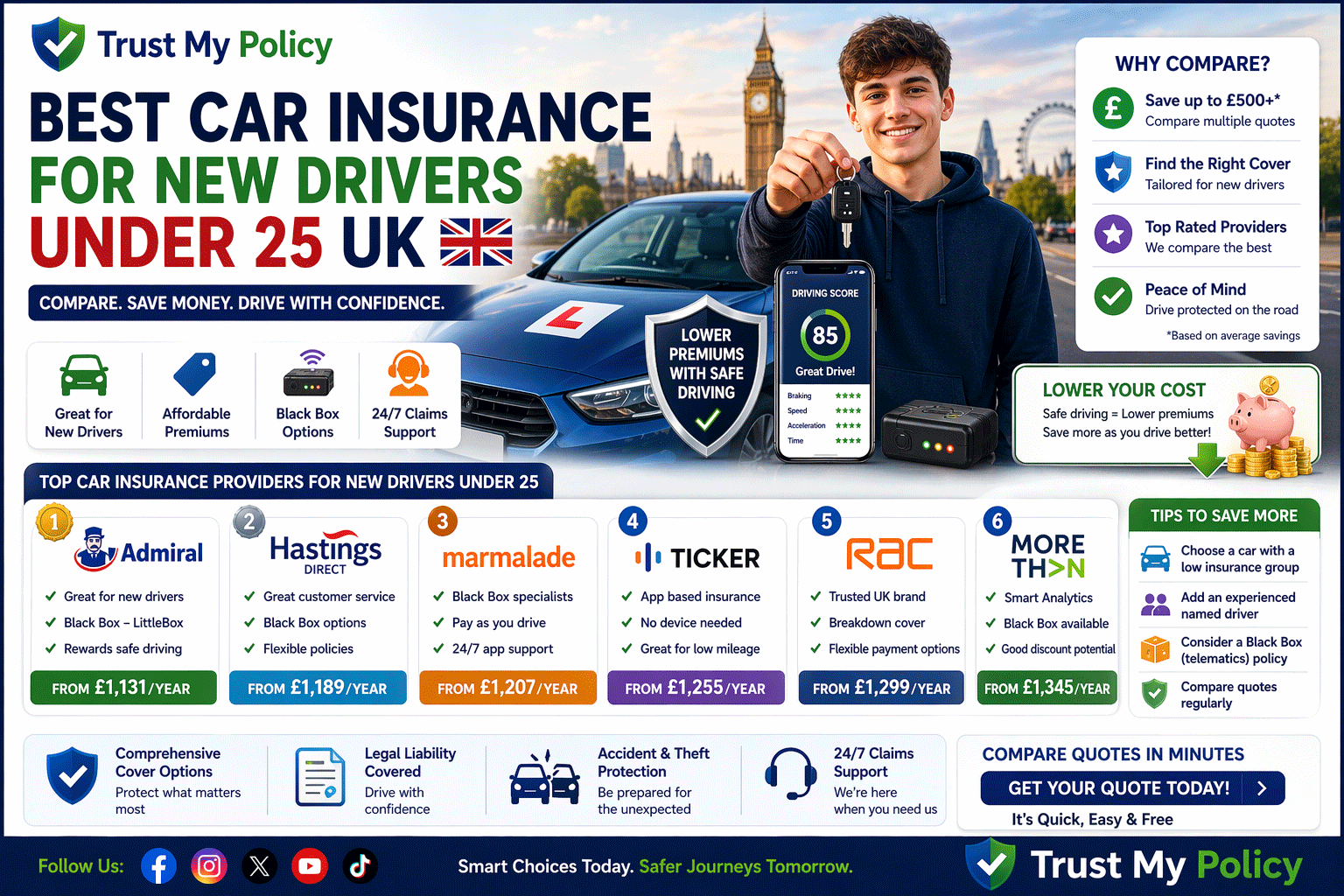
Best car insurance for new drivers under 25 UK in 2026 starts at £504/year (Hastings Direct YouDrive, 10% of under-26 customers, December 2025). Average premium for 17–24 year olds: £1,121/year (Quotezone Q4 2025) — down from £2,100+ at the 2024 peak. 78% of 17–20 year olds save money with a black box policy, averaging £379/year saved. Best providers: Hastings Direct (cheapest entry), Admiral (most trusted), Aviva (best comprehensive), Marmalade (best for under-20s).
Josh, 19, passed his driving test in March. His first insurance quote was £1,950 for a 2013 Ford Fiesta. His mum suggested he check whether he was on the wrong car. He switched his search to a Vauxhall Corsa 1.0 (insurance group 4) and enabled the black box filter on GoCompare. His best quote: £987. The car cost £200 more to buy. The insurance saving in year one: £963.
The best car insurance for new drivers under 25 UK in 2026 is the combination of the right car, the right policy type, and the right provider — not just finding the cheapest quote on any single comparison site. The average premium for 17–24 year olds has fallen significantly from the 2024 peak: Q4 2025 data from Quotezone shows the average is now £1,121 for this age group, down from over £2,100 at worst.
This guide covers the complete strategy for finding the best and cheapest car insurance as a new driver under 25 in the UK in 2026: what drives your premium, which cars cost the least to insure, which providers offer the best deals, how black box policies save money, and the eight most effective ways to cut your premium by hundreds of pounds this year.
| Feature | Details |
| Average annual premium (17–24 year olds) | £1,121/year — down from over £2,100 at the 2024 peak (Quotezone Q4 2025) |
| Cheapest documented entry price | £504/year (Hastings Direct YouDrive, 10% of under-26 customers, December 2025) |
| Average cost with black box (17–24) | £1,313/year comprehensive (Compare the Market, March 2026) |
| Black box saving for 17–20 year olds | Average £379/year. 78% of this group pay less with telematics. |
| Cheapest cars to insure | Hyundai i10 (group 1), Volkswagen Polo (group 3), Kia Picanto (group 4), Skoda Fabia (group 4) |
| Biggest premium reducer | Car choice — a group 3 vs group 12 car saves £600–£800/year for the same driver |
| Best time to buy | 21–26 days before policy start date — saves average £346 vs buying on renewal day (MoneySavingExpert) |
| Regulated by | Financial Conduct Authority (FCA) — all UK providers must be FCA-authorised |
According to Department for Transport data, drivers aged 17–24 represent just 7% of UK licence holders but are involved in 22% of fatal collisions. Male drivers in this age group have a killed or seriously injured rate four times higher than drivers aged 25 and over. Insurers price policies to reflect statistical risk — and this group’s statistics are the worst of any age cohort.
The good news: the premium gap closes fast with clean records. After one year with no claims, your no-claims bonus (NCB) reduces your next premium by 20–30%. After five years, the total NCB discount can reach 60–75%. The first year is the most expensive — and the most important to get right.
The four variables you control: (1) Car choice — the single most powerful lever. (2) Policy type — black box vs standard. (3) Provider — prices for the same car and driver vary by hundreds between insurers. (4) Timing — buying 21–26 days early saves an average of £346. Everything else (your age, your location, your licence history) is fixed. Optimise the variables you can control.
Car choice is the single most powerful premium reducer available to a new driver. The annual insurance saving between a group 3 car and a group 12 car for the same 19-year-old driver is £600–£800. Over three years, this exceeds the purchase price premium of most lower-group vehicles.
| Car | Insurance Group | Why It’s Cheap | Typical Annual Premium (18-yr-old, black box) |
| Hyundai i10 (1.0 AMT) | Group 1 | Lowest repair costs; factory security; low engine power | £700–£1,100 |
| Kia Picanto (1.0, ‘2’ trim) | Group 4 | 7-year warranty; strong safety; low repair cost | £750–£1,150 |
| Volkswagen Polo (1.0 MPI) | Group 3 | 5-star Euro NCAP; popular parts; strong resale | £800–£1,200 |
| Skoda Fabia (1.0 MPI) | Group 4 | VW platform reliability; large boot; affordable parts | £800–£1,200 |
| Vauxhall Corsa (1.0 Turbo) | Group 4–6 | One of the most popular first cars; good parts availability | £900–£1,300 |
| Ford Focus (1.0 EcoBoost, ST-Line) | Group 10–12 | Family-sized with manageable insurance; popular parts | £1,100–£1,600 |
| AVOID: BMW 1 Series, Audi A3, any sports/turbo | Group 20–35+ | Expensive parts; theft targets; higher power = higher risk | £2,500–£4,000+ |
| 💡 TIP: Always Check the Insurance Group Before You Buy the Car
Use the ABI insurance group checker (the.thatcham.org) to look up the insurance group of any specific make, model, trim, and engine variant before buying. Different versions of the same model can be in completely different groups. The base-spec Hyundai i10 with the AMT gearbox is group 1 — the manual version is group 2. Always check the specific variant. |
The group 3 vs group 12 saving is £600–£800/year for the same new driver. Over three years, the total saving exceeds £2,400 — enough to buy a better car. The car decision is your biggest financial lever, and it must be made before you buy, not after.
78% of drivers aged 17–20 pay less with a telematics policy. Average saving: £379/year. A year of high telematics scores becomes your driving history for future renewals — even when you switch to a standard policy. This is the most effective cost reduction tool available to new drivers with no NCB.
MoneySavingExpert analysis of 1 million+ quotes found the optimal buying window is 21–26 days before the policy start date. The average saving vs buying on the day: £346. A 25-day lead time cuts the average under-25 annual policy from £723 (renewal day) to £377 (25 days early). Set a calendar alert. Compare. Buy immediately at the optimal window.
Adding a parent or experienced driver as a named driver — not as the main driver — can reduce your premium by 10–20%. The insurer calculates a blended risk across all drivers on the policy. This is legal and common. Fronting — listing the experienced driver as the main driver when the young driver actually drives more — is insurance fraud and can void your policy at the worst possible moment.
Different comparison sites have different insurer panels. GoCompare compares 175 insurers (as of April 2026). Compare the Market and MoneySupermarket have similar breadth. Running the same quote on three sites and checking directly with your shortlisted insurers takes 30 extra minutes and can find savings of hundreds of pounds. Never buy from the first comparison site result.
Monthly car insurance for a new driver under 25 adds 10–20% to the total annual cost due to interest charges on the credit arrangement. If the annual premium is £1,200, monthly payments can add £120–£240/year. Pay annually if possible. If you can’t afford the lump sum, use a 0% purchase credit card and repay monthly at zero interest — cheaper than the insurer’s monthly plan.
Increasing your voluntary excess from £250 to £500 typically saves £100–£250/year for a new driver. Only increase the excess to an amount you can genuinely afford to pay if you need to claim. An excess you can’t pay in practice is a coverage gap.
If you genuinely drive fewer miles than the insurer’s default estimate (usually 10,000–12,000 miles/year), declare this accurately. Lower declared mileage reduces your premium. On a black box policy, the insurer can verify your actual mileage throughout the year — so only declare a limit you’ll stay within.
Car: Vauxhall Corsa 1.0 (group 4). Black box policy, 21-26 day early purchase, £500 voluntary excess.
Standard quote: £1,950. Optimised quote: £987 (GoCompare, Admiral black box). Annual saving: £963.
Key decisions: Choosing group 4 vs original group 12 choice saved ~£600. Black box saved a further ~£250. Buying 25 days early saved ~£100.
Verdict: Josh’s three decisions — right car, black box, early purchase — combined to nearly halve his premium. Each decision worked independently; together they compound. The car decision was the most valuable single choice.
Car: Hyundai i10 1.0 AMT (group 1). Marmalade black box. Mum added as named driver.
Quote: £893/year — under £1,000 despite being 17 in Edinburgh. Achieved through: group 1 car, black box, named experienced driver, low declared mileage (4,000/year).
Verdict: Under £1,000 is achievable for a 17-year-old in 2026 with the right combination. The four factors that make it possible: group 1 car, telematics, named experienced driver, low mileage declaration. All four must be optimised simultaneously.
Situation: 3 years NCB, clean record, standard Vauxhall Astra (group 12). Choosing between standard and black box policy for year 4.
Analysis: With 3 years NCB, Mohammed’s standard comprehensive quote: £680. His best black box quote: £640. Gap has narrowed to £40/year — not worth the monitoring constraints at this stage.
Verdict: Black box is most valuable in the first 1–2 years when no NCB exists. By year 3–4 with a clean record, the NCB discount often makes standard policies equally competitive. Mohammed should review both every renewal but is unlikely to need telematics by year 4.
Situation: Drives a Polo (group 3) based at university in Bristol. Uses car infrequently — term time mostly walking/cycling. Declared 4,000 miles/year.
Best option: Hastings Direct YouDrive black box with low declared mileage. Annual premium: £870. Without black box: £1,250.
Verdict: Students who drive infrequently benefit most from low mileage + black box. The combination consistently achieves sub-£1,000 premiums for 20–22 year olds in low-group cars in non-London postcodes.
Why recommended: 10% of customers under 26 paid £504 or less in December 2025. Defaqto 5-star rated. 99% motor claims acceptance rate 2024. YouDrive black box product uses app-only tracking — no device installation. Easy digital policy management. 24/7 emergency claims helpline.
Cost: From £504/year (10th percentile, under-26, December 2025). Average for young drivers: £1,100–£1,400.
Best for: Budget-conscious new drivers under 25 who want the best documented entry price with app-based telematics.
Why recommended: Admiral is the UK’s largest private motor insurer and offers comprehensive coverage with a well-established LittleBox telematics product for young drivers. Defaqto 5-star rated. Strong claims service. MultiCar discount for families adding young drivers to an existing Admiral household policy.
Cost: Competitive — typically in the cheapest quartile for new drivers with telematics. MultiCar household discounts can be substantial.
Best for: Young drivers from households with existing Admiral policies. Best overall combination of price, cover quality, and brand trust.
Why recommended: Aviva offers a strong all-round comprehensive policy with multiple add-on options. Their Drive (telematics) product tracks driving via app. Aviva is one of the UK’s most financially stable insurers and consistently rated highly for claims satisfaction.
Cost: Mid-range for new drivers — not always the cheapest but strong value for the quality of comprehensive cover.
Best for: Young drivers who want strong comprehensive cover quality alongside competitive telematics pricing and Aviva’s financial strength.
Why recommended: Marmalade has specifically designed its entire proposition around young and learner drivers. Lightweight tag device rather than full black box. Learner driver insurance that builds NCB before passing the test. Particularly popular with 17–20 year olds and their parents. Parental visibility of driving scores is a unique feature in this market.
Cost: Among the cheapest options for 17–19 year olds — particularly in low-insurance-group cars outside London.
Best for: Drivers aged 17–20, learner drivers building NCB pre-test, and parents wanting to monitor early driving.
Why: No single insurer is consistently cheapest for every new driver profile. The gap between the cheapest and most expensive insurer for the same 19-year-old in the same car can exceed £700/year. GoCompare compares 175 active insurers (April 2026). Compare the Market and MoneySupermarket also cover 100+ each. Running all three takes 45 minutes and consistently finds quotes 20–40% cheaper than going direct to any single insurer.
Rule: Always compare on at least 3 sites plus check direct with your shortlisted 2–3 insurers. Never buy from the first comparison result without checking competitors.
👉 We recommend Hastings Direct YouDrive as the best starting point for most UK new drivers under 25 because it has the best documented entry pricing (from £504), app-only tracking with no installation, and Defaqto 5-star cover. Compare on GoCompare, Compare the Market, and MoneySupermarket alongside it — the cheapest quote varies by individual profile.
The average annual premium for drivers aged 17–24 is £1,121/year as of Q4 2025 (Quotezone data), down from over £2,100 at the 2024 peak. Drivers aged 17–20 on standard policies average approximately £1,561/year (Confused.com Q4 2025–Q1 2026). With a black box policy, the average drops to approximately £1,313/year (Compare the Market, March 2026). The cheapest documented quotes start from £504/year (Hastings Direct YouDrive, 10th percentile, December 2025).
Yes — it is possible but requires optimising all variables simultaneously: a group 1–3 car (Hyundai i10, Kia Picanto, or Volkswagen Polo base spec), a black box policy, low declared annual mileage (3,000–5,000), an added experienced named driver, and buying 21–26 days before the policy start date. Drivers in the South West of England are most likely to achieve sub-£1,000 premiums. In London, premiums are typically 30–50% higher.
The Hyundai i10 (1.0 AMT, group 1) is the cheapest car to insure for new drivers in the UK in 2026 and is consistently recommended by RAC Drive and AutoHit. The Kia Picanto and Volkswagen Polo (group 3–4) are close alternatives with more widespread availability. Annual insurance savings between a group 1–3 car and a group 10–12 car are £600–£800 for the same new driver — making the car choice the single most impactful financial decision.
For young drivers who only occasionally use the parent’s car, being added as a named driver on a parent’s policy is often cheaper than having their own policy — provided the parent remains the genuine main driver. Any claims affect the parent’s no-claims bonus. If the young person is the main driver of the car, they must be the policyholder — listing the parent as main driver when the young person drives most is fronting, which is insurance fraud and voids the policy entirely.
Not usually. Comprehensive car insurance is often the same price or cheaper than third-party only or TPFT for young drivers in the UK. Insurers view buyers who choose comprehensive as statistically lower risk — and this affects their pricing. Always compare all three levels of cover when getting quotes. Do not assume TPFT is cheaper because it provides less coverage.
Not immediately — in fact, a new licence holder’s first premium is the highest of their driving life. Car insurance gets progressively cheaper with: (1) no-claims bonus accumulation — 20–30% off in year 1, up to 60–75% after 5 claim-free years; (2) age — rates fall notably at 21, 25, and again at 30; (3) driving history — clean records earn better renewal rates. The first three years are the most expensive; the investment in a good first-year record pays dividends for a decade.
For black box insurance specifically, our best black box insurance for young drivers UK guide covers every telematics provider in depth. For delivery driver young workers needing hire and reward cover, see our car insurance for delivery drivers UK guide.
| 📋 Disclaimer
This article is for informational purposes only. Always check with your insurer for exact terms, conditions, and current pricing. Trust My Policy does not sell insurance products or represent any insurer. |

Jagadeesh Gutha is the founder of TrustMyPolicy.com, an independent insurance information platform covering life, health, car, home, and business insurance for US and UK readers. He researches insurance products, policy structures, and consumer rights to help everyday people make informed coverage decisions without the jargon. All content on TrustMyPolicy is independently researched, fact-checked, and written to educate — not to sell.


Insurance Guides for UK, USA & Worldwide We are not an insurer or broker.
Reader Comments (0)