

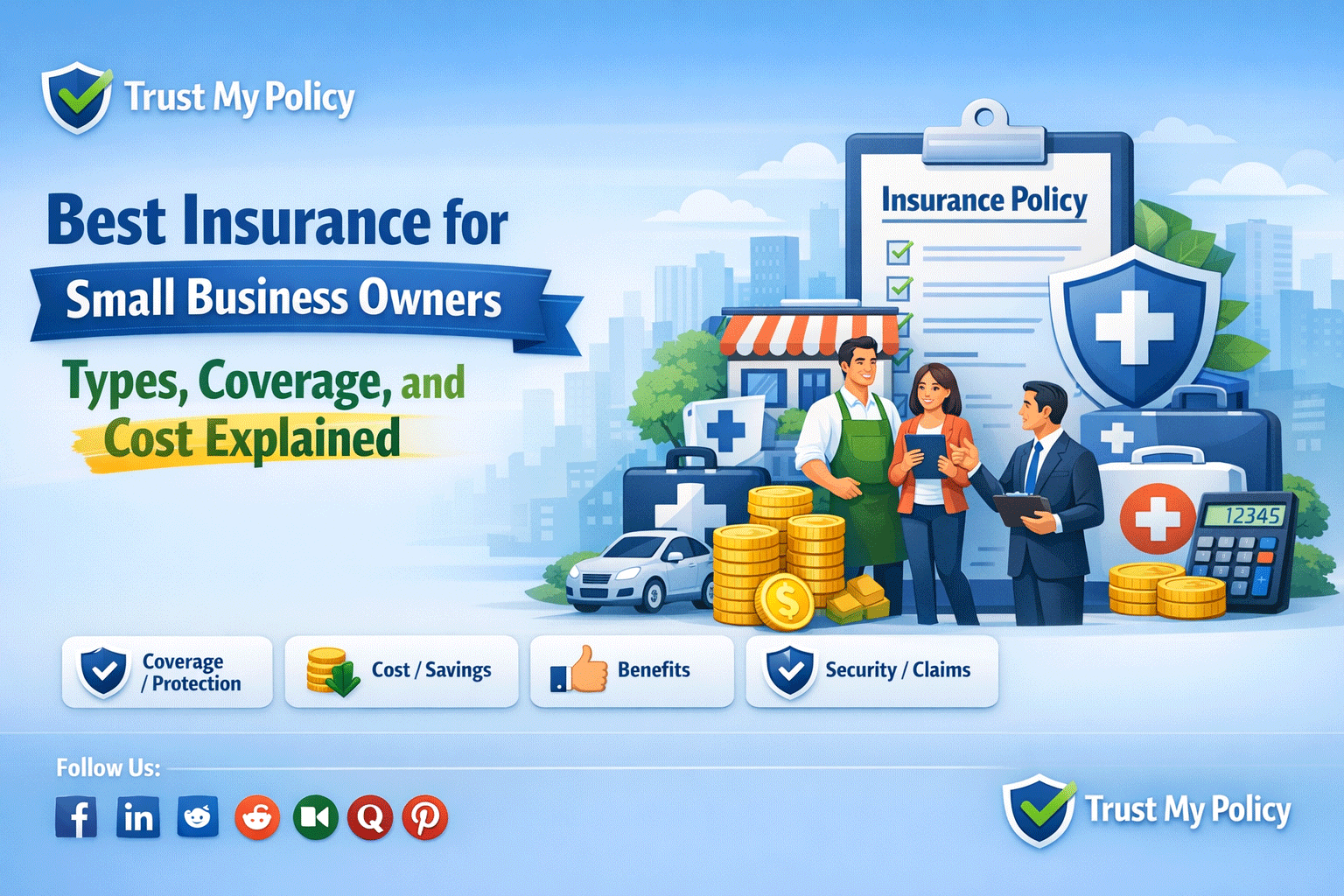
Best insurance for most small business owners starts with general liability insurance (public liability in the UK), property coverage, and often a business owner’s policy (BOP) bundling both affordably. Businesses with employees typically also need workers’ compensation in the US or employers’ liability insurance in the UK, and service-based businesses should add professional indemnity or errors and omissions coverage.
Table of Contents
ToggleBest Insurance for Small Business Owners: Complete 2026 Guide
Renata Souza, 38, opened a small bakery in Manchester and assumed her landlord’s building insurance covered her equipment and any customer accidents inside. A slip-and-fall claim from a customer two months later, totaling £18,000 in damages and legal costs, taught her otherwise — and that public liability insurance should have been her very first purchase.
Best Insurance for Small Business Owners in 2026 almost always starts with general liability (called public liability in the UK), property coverage for equipment and inventory, and often a business owner’s policy that bundles both affordably. Beyond that core, the right additional coverage depends heavily on your specific industry, whether you have employees, and what professional risks you face. This guide breaks down exactly which policies matter most and which providers handle small business risk well.
This article covers the core policies every small business should consider, industry-specific add-ons, real scenarios with dollar figures, and the best providers to compare. By the end, you’ll know exactly where to start building your coverage.
Quick Summary Table
| Feature | Details |
| What it is | A combination of liability, property, and often employee-related coverage for a business |
| Who needs it | Any small business owner with customers, employees, equipment, or premises |
| Typical US cost | $40–$120/month for general liability; $500–$3,000+/year for a full BOP |
| Typical UK cost | £150–£500+/year for public liability; varies by industry and turnover |
| Key benefit | Protects against lawsuits, property loss, and employee-related claims that could otherwise be ruinous |
| Key limitation | Standard policies often exclude professional errors, requiring separate coverage for service businesses |
| Regulator | State insurance departments (US); Financial Conduct Authority (UK) |
What Insurance Does a Small Business Actually Need?
Think of small business insurance like building foundations before adding rooms onto a house. General liability and property coverage are the foundation nearly every business needs first, while additional coverage types, like professional indemnity or commercial auto, get added on top based on your specific operations.
The best insurance for small business owners typically starts with general liability insurance, which covers third-party injury or property damage claims, and property insurance, which covers your equipment, inventory, and physical space. Many small businesses combine these affordably through a business owner’s policy. Beyond that foundation, businesses with employees, service-based risk, or commercial vehicles need to layer on specific additional coverage matched to those exposures.
How to Build the Right Coverage — 5 Steps
- Start with general liability or public liability insurance. This protects against the most common risk nearly every business faces: a customer or third-party injury or property damage claim.
- Add property insurance for your equipment, inventory, and premises. This covers physical losses from fire, theft, or weather damage to your business assets.
- Add workers’ compensation (US) or employers’ liability insurance (UK) if you have employees. This is legally required in most US states and is a legal requirement in the UK for almost all employers.
- Layer on industry-specific coverage based on your actual risk. Service businesses often need professional indemnity or errors and omissions coverage; businesses with vehicles need commercial auto coverage.
- Review and adjust coverage annually as your business grows. New equipment, new locations, or new services should each trigger a coverage review.
Comparison: Business Owner’s Policy vs. Buying Coverage Separately
| Criteria | Business Owner’s Policy (BOP) | Separate Individual Policies |
| Cost | Often more affordable when bundled | Can cost more when purchased individually |
| Convenience | Single policy, single renewal | Multiple policies to manage and renew |
| Coverage flexibility | Standardized bundle, sometimes less customizable | Fully customizable to specific business needs |
| Best for | Most small businesses with standard liability and property needs | Businesses with unusual or highly specific risk profiles |
| Pros | Simpler to manage, often genuinely cheaper | Allows precise matching of coverage to unique risks |
We recommend a business owner’s policy as the starting point for most small businesses, then layering on specific additional coverage based on your actual operations.
4 Real-Life Scenarios
Scenario 1: Renata, 38, bakery owner in Manchester. Renata’s £18,000 customer slip-and-fall claim was covered under public liability insurance she purchased immediately after the incident, protecting her from paying out of pocket for any future similar claim. Verdict: public liability insurance addresses one of the most common small business risks. Action: Renata now reviews her coverage limits annually as her bakery’s foot traffic has grown.
Scenario 2: A freelance accountant in Chicago facing a client lawsuit over an alleged filing error. Her professional indemnity (errors and omissions) policy covered her legal defense costs and the eventual settlement. Verdict: standard general liability wouldn’t have covered this specific professional risk. Action: she now recommends professional indemnity coverage to every other freelance accountant she knows.
Scenario 3: A small landscaping business in Texas with three employees. A workplace injury claim was covered under the business’s workers’ compensation policy, which is legally required for most Texas employers with employees. Verdict: workers’ compensation is essential, not optional, for businesses with staff. Action: the owner confirmed his policy covered all current employees after recently expanding his team.
Scenario 4: A small retail shop in Leeds with valuable inventory. A burst pipe damaged £12,000 of stock, fully covered under the business’s property insurance bundled within its BOP-equivalent UK package. Verdict: property coverage for inventory is essential for any business holding physical stock. Action: the shop owner updated his coverage limit after a recent inventory expansion.
Pros & Cons of Small Business Insurance
| Pros | Cons |
| Protects against lawsuits and property losses that could otherwise be ruinous. | Multiple coverage types can add up to a meaningful annual cost. |
| Bundled business owner’s policies often reduce overall cost versus separate policies. | Standard bundles may not cover every specific risk your business faces. |
| Workers’ compensation and employers’ liability protect both employees and the business. | Legally required coverage isn’t optional, regardless of budget constraints. |
| Professional indemnity coverage addresses risks general liability doesn’t reach. | Identifying which specific add-ons your business needs takes some research. |
| Annual review helps ensure coverage keeps pace with business growth. | Underinsuring as a business grows is a common, costly mistake. |
5 Common Mistakes Small Business Owners Make
- Assuming a landlord’s insurance covers business contents or liability. This happens because business owners conflate the building’s insurance with their own operational risk. What to do instead: buy your own liability and property coverage regardless of what your landlord carries.
- Skipping professional indemnity coverage for service-based work. This happens because general liability feels comprehensive enough at first glance. What to do instead: add professional indemnity or errors and omissions coverage if you provide professional advice or services.
- Underinsuring equipment or inventory as the business grows. This happens because coverage limits are often set once and forgotten. What to do instead: review and update your property coverage limits annually as your business expands.
- Not securing workers’ compensation or employers’ liability promptly after hiring. This happens because new employers focus on hiring logistics over compliance. What to do instead: confirm this coverage is active before, not after, your first employee starts work.
- Choosing the cheapest policy without checking specific exclusions. This happens because price is the most visible number when comparing quotes. What to do instead: compare what’s specifically excluded, not just the premium, before choosing a policy.
⚠️ WARNING: Never operate with employees before securing workers’ compensation (US) or employers’ liability insurance (UK). This coverage is legally required in nearly every circumstance, and operating without it can expose you to significant legal and financial consequences beyond the cost of the policy itself.
Decision Table: What Coverage Does Your Business Need?
| Your Situation | Our Recommendation |
| You have any customer-facing business operations | Yes — get general liability or public liability insurance immediately |
| You hold business equipment, inventory, or a physical location | Yes — add property insurance, ideally through a bundled BOP |
| You have any employees | Yes — secure workers’ compensation (US) or employers’ liability (UK) before they start work |
| You provide professional advice or services | Yes — add professional indemnity or errors and omissions coverage |
| You use vehicles for business purposes | Yes — add commercial auto coverage, since personal policies typically exclude business use |
| You’re relying solely on your landlord’s building insurance | No — buy your own liability and property coverage regardless |
| You haven’t reviewed your coverage limits in over a year | Yes — review and adjust as your business has likely grown |
💡 TIP: The single golden rule for small business insurance: start with general liability and property coverage as your foundation, then add the specific coverage type that matches your actual highest risk, whether that’s professional advice, employees, or commercial vehicles.
Cost Table: What Small Business Insurance Actually Costs
| Scenario | Cost | Notes |
| US general liability insurance, small service business | $40–$80/month | Among the most essential and affordable core policies |
| US business owner’s policy (BOP), small retail business | $50–$120/month | Bundles general liability and property coverage |
| US workers’ compensation, small business with 3 employees | Varies significantly by state and industry | Often calculated per $100 of payroll |
| US professional indemnity/E&O insurance, service business | $40–$100/month | Varies by profession and coverage amount |
| UK public liability insurance, small business | £150–£500/year | Varies by industry and turnover |
| UK employers’ liability insurance | Often bundled with public liability | Legally required for nearly all UK employers |
| UK professional indemnity insurance, service business | £200–£600/year | Varies by profession and coverage amount |
Best Providers to Compare
The Hartford (US) — A leading US small business insurer offering BOPs, workers’ compensation, and professional liability options. Cost range: competitive across multiple coverage types. Best for: US small businesses wanting a single insurer for multiple policies. Rating: AM Best A+.
Progressive Commercial (US) — Strong for small businesses needing commercial auto coverage alongside general liability. Cost range: competitive US commercial pricing. Best for: businesses with delivery vehicles or company cars. Rating: AM Best A+.
Next Insurance (US) — A digital-first small business insurer known for fast online quotes across general liability and professional coverage. Cost range: competitive for straightforward small business profiles. Best for: solo and small service-based businesses wanting fast digital setup. Rating: varies, check current AM Best rating.
Simply Business (UK) — A leading UK small business insurance comparison platform covering public liability, professional indemnity, and property. Cost range: competitive across multiple UK insurers. Best for: UK small businesses wanting to compare several providers quickly. Rating: independent comparison platform.
AXA (UK) — A major UK insurer offering public liability, employers’ liability, and professional indemnity for small businesses. Cost range: competitive UK commercial pricing. Best for: UK small businesses wanting a single, financially stable insurer. Rating: Defaqto 5 Star.
We recommend The Hartford for US readers and Simply Business for UK readers as best overall starting point because both make it easy to compare and bundle the core coverage types most small businesses need.
Frequently Asked Questions
What insurance do small business owners need most?
Most small business owners need general liability or public liability insurance and property coverage as a foundation, often bundled affordably through a business owner’s policy.
Is workers’ compensation insurance required for small businesses?
In the US, it’s required in most states for businesses with employees, and in the UK, employers’ liability insurance is a legal requirement for nearly all employers.
Do I need professional indemnity insurance if I provide services?
Yes, in most cases, since general liability insurance typically doesn’t cover claims related to professional advice, errors, or omissions in service delivery.
Does a landlord’s insurance cover my business’s contents or liability?
No. A landlord’s policy typically only covers the building structure, not your business’s equipment, inventory, or liability exposure, so you need your own coverage regardless.
How much does small business insurance typically cost?
Costs vary significantly by industry and coverage type, but general liability insurance often starts around $40–$80 a month in the US or £150–£500 a year in the UK.
Is a business owner’s policy (BOP) cheaper than separate policies?
Often yes. Bundling general liability and property coverage through a BOP is typically more affordable than purchasing each policy separately.
Do I need commercial auto insurance if I use my personal car for business?
Yes, in most cases. Personal auto policies typically exclude business use, so a commercial auto policy or endorsement is needed to close that gap.
How often should I review my small business insurance coverage?
At least annually, and immediately after any significant business change, like new equipment, new locations, new services, or new employees.
What happens if I operate without required employee insurance?
Operating without legally required workers’ compensation (US) or employers’ liability insurance (UK) can expose you to significant legal and financial consequences beyond the cost of the policy.
Should I choose the cheapest small business insurance quote?
Not necessarily. Compare specific exclusions and coverage limits alongside price, since the cheapest policy may leave meaningful gaps in your actual risk profile.
Key Takeaways
- Start with general liability or public liability insurance as your foundation.
- Add property coverage for equipment and inventory, ideally through a bundled BOP.
- Secure workers’ compensation or employers’ liability insurance before hiring any employee.
- Add professional indemnity coverage if your business provides advice or services.
- Never rely on a landlord’s insurance to cover your own business contents or liability.
- Review your coverage limits annually as your business grows.
- Compare specific exclusions, not just price, when choosing between insurers.
This article is for informational purposes only. Always consult a licensed insurance professional before making coverage decisions. Trust My Policy does not sell insurance products or represent any insurer.



Reader Comments (1)
[…] different from those of a Series A company with a board, investors, and thousands of users. General liability and basic property coverage form the earliest foundation, directors and officers insurance becomes […]