
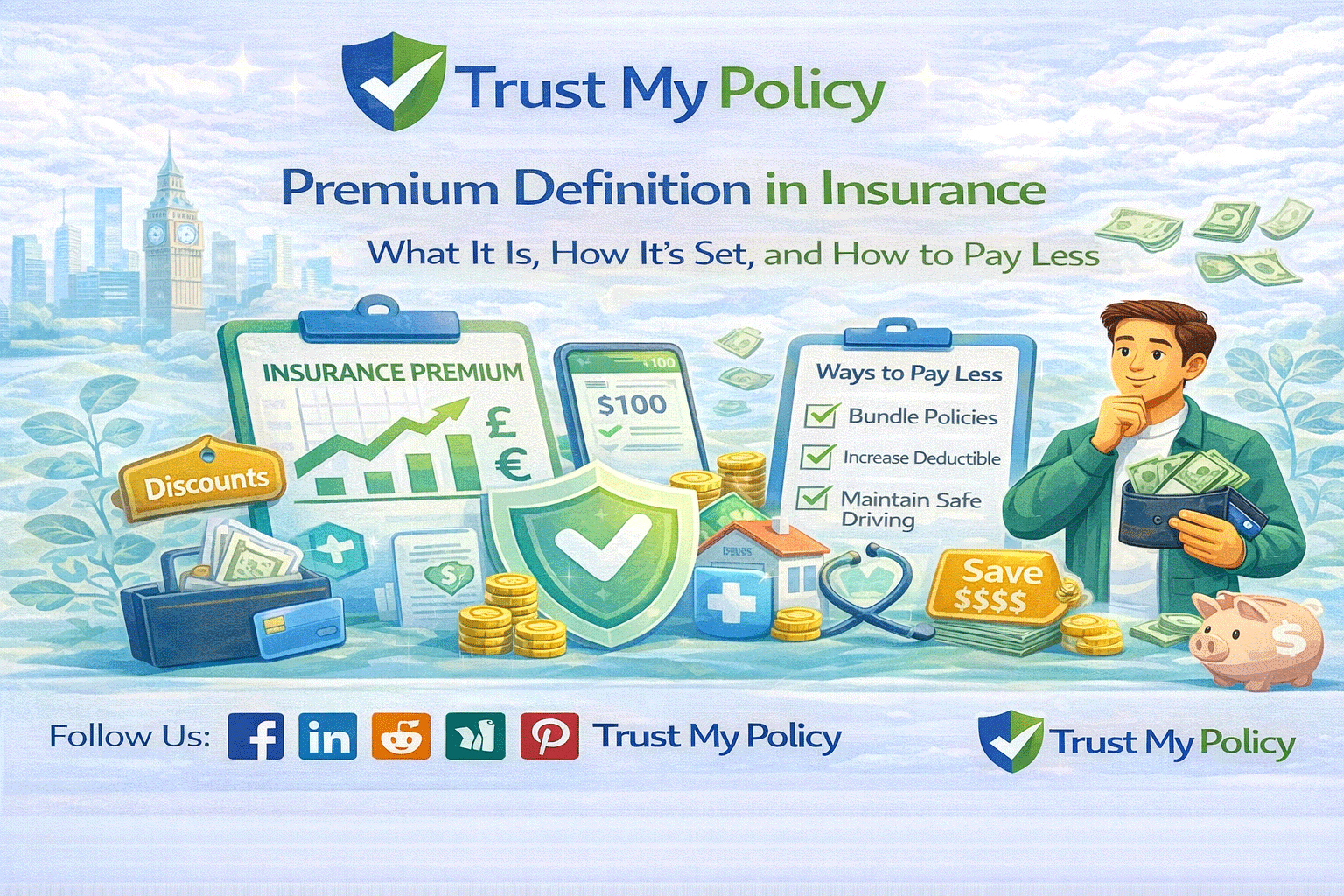
An insurance premium is the amount of money you pay to an insurance company in exchange for the coverage provided by an insurance policy. Premiums are typically paid monthly or annually. The premium amount is determined by the insurer’s assessment of the risk you represent — the higher the statistical probability that you will make a claim, and the larger the expected claim, the higher your premium.
In plain terms: the premium is the price of your insurance. You pay it regularly — whether or not you ever make a claim — to keep your coverage active. If you stop paying, the coverage lapses and the insurer has no obligation to pay any future claims.
The premium covers three things from the insurer’s perspective: (1) the expected cost of claims from policyholders in your risk category; (2) the insurer’s operating expenses; and (3) a profit margin. Competition between insurers and the regulatory environment determine how much of that margin remains.
When Amanda renewed her car insurance, she noticed her premium had jumped 23% despite making no claims and committing no driving offences. Her car was the same. Her address was the same. She hadn’t changed anything. Yet she was being asked to pay £189 more per year. She called her insurer and was told market-wide repair costs had increased. She called a comparison site, found a new insurer at her previous year’s price, and switched. Her premium returned to its previous level immediately.
Your insurance premium is what you pay for your coverage. It is the most visible number on your policy — and yet most people have little idea how it’s calculated, why it changes, or what they can legally do to reduce it.
This guide explains what an insurance premium is, how insurers calculate it across different types of insurance, what factors drive it up or down, and the most effective strategies for reducing yours.
Every insurer uses actuarial models — statistical analyses of large amounts of historical data — to estimate the probability and likely cost of a claim from any given policyholder profile. The premium is set to reflect this expected risk.
The insurer gathers information about you — your age, health, location, driving record, claims history, credit score (where permitted), and the specific thing being insured. This information is run against actuarial tables that translate risk factors into a statistical probability of a claim and an expected claim size.
The base rate is the starting premium for someone with your profile. Insurers build their base rates from statistical models derived from hundreds of thousands of policyholders with similar characteristics. Your base rate reflects where you sit in the risk distribution for your demographic.
Your base rate is then adjusted upward or downward based on specific factors that distinguish you from the average person in your demographic: your claims history, any additional risk factors (smoking, high-risk hobbies), and any discounts you qualify for (no-claims bonus, multi-policy bundle, safe driving programme).
‘Loading’ is an upward adjustment for elevated risk — a cancer history in life insurance, a claim last year in car insurance. Discounts are downward adjustments for reduced risk — a no-claims bonus, a good student discount, a black box/telematics programme result.
| Factor | Direction | Notes |
| Age | Typically higher when very young and when very old | Young drivers and elderly policyholders pay the highest car insurance premiums; life insurance increases with age |
| Health history | Higher with health conditions | Pre-existing conditions increase life, health, and income protection premiums; degree of control matters |
| Smoking status | Higher (50–100% for life insurance) | UK and US life insurers both apply significant smoker loadings; vaping treated as smoking in most UK policies |
| Claims history | Higher after claims | A single at-fault accident can raise car insurance 20–40% for 3–5 years |
| Location | Varies — urban typically higher | Postcodes/zip codes with higher crime, accident, or flood risk carry higher premiums |
| Credit score (UK: limited; USA: most states) | Lower credit = higher premium | UK insurers have limited use of credit scores; most US states allow credit-based insurance scores |
| Coverage amount (sum assured) | Higher sum = higher premium | Directly proportional — twice the coverage costs approximately twice the premium |
| Deductible / excess | Higher excess = lower premium | Choosing a higher voluntary excess transfers more risk to you; reduces the insurer’s expected payout |
| No-claims bonus (UK) / claims-free history (USA) | Lower with clean record | 5-year no-claims bonus in UK car insurance can reduce premium 60–75% |
| Policy term | Longer term locks in current age rates (term life) | Beneficial for life insurance — locks in a younger, healthier rate for the duration |
| Occupation and lifestyle | Higher for high-risk occupations and hobbies | Construction workers, miners, divers, pilots all pay more; extreme sports may add loadings |
| Insurance Type | Key Premium Drivers | Typical Range (UK, 2025–26) | Typical Range (USA, 2025–26) |
| Car insurance | Age, location, car model, driving record, mileage | £400–£900/year average; young drivers £1,500–£3,000+ | $1,542–$2,611/year average; teen drivers $5,000–$10,000+ |
| Home / buildings insurance | Property value, location, claims history, security | £200–£500/year typical | $1,500–$3,000/year average |
| Life insurance | Age, health, smoker status, sum assured, term | £10–£30/month (30s, non-smoker, £250k, 20-yr term) | $20–$50/month (30s, non-smoker, $500k, 20-yr term) |
| Health / PMI | Age, location, cover level, underwriting type | £35–£90/month (individual) | $400–$700/month (individual, no subsidy) |
| Income protection | Age, occupation, income, deferral period, definition | £15–£60/month (depends heavily on all factors) | $50–$150/month typically |
| Term | Definition | Example |
| Premium | The amount you pay to keep the policy active — your ongoing cost | £50/month car insurance premium |
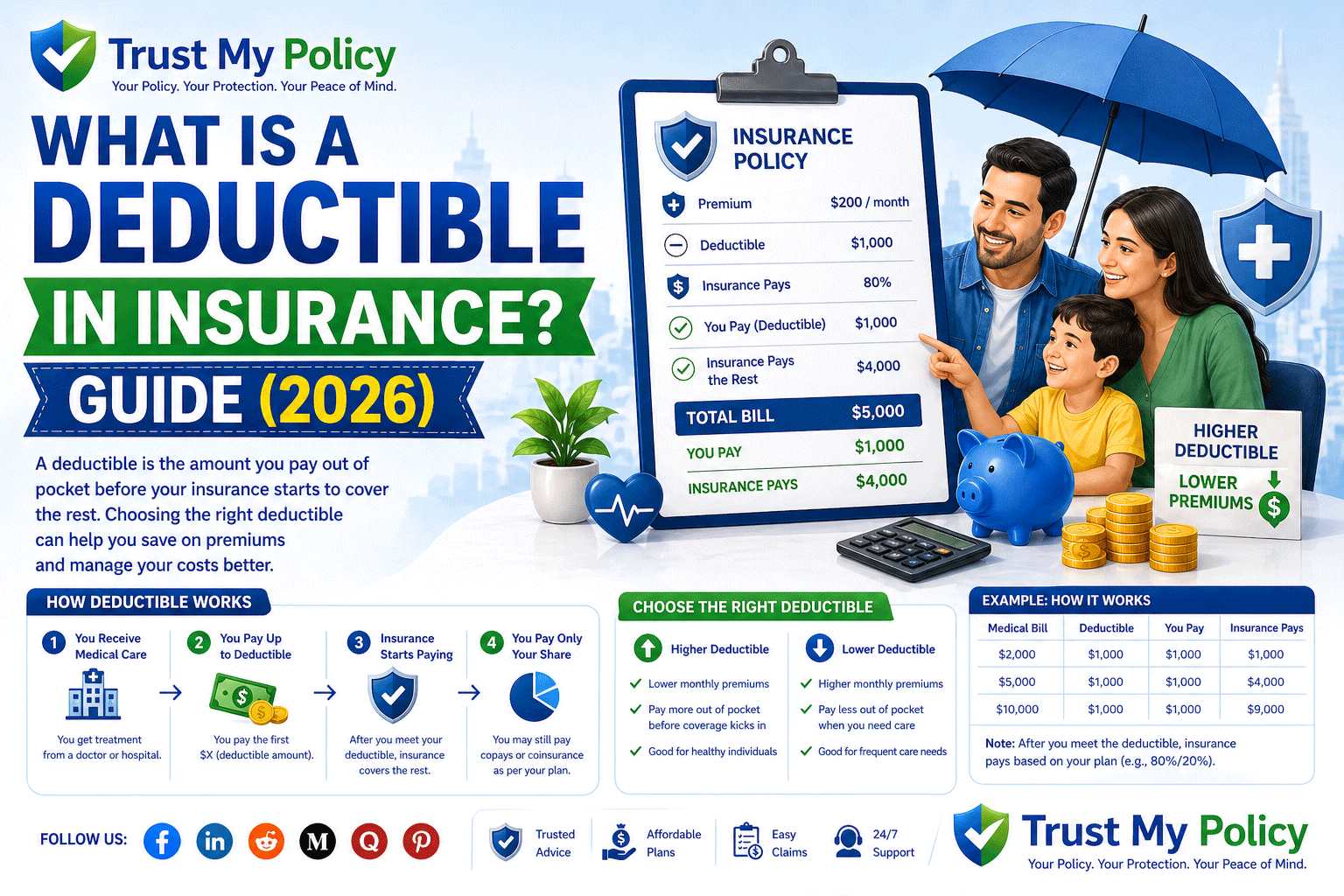
| Excess (UK) / Deductible (USA) | The amount you pay first in the event of a claim before the insurer contributes — a one-time cost per claim | £250 excess on home insurance; if you claim for £3,000 of damage, you pay £250 and the insurer pays £2,750 |
| Sum assured / Coverage limit | The maximum amount the insurer will pay for a covered loss | £250,000 life insurance death benefit; $500,000 car liability per accident limit |
| Total annual cost | Premium × 12 (monthly) or annual premium + any claims costs | If you pay £50/month and claim once with a £250 excess: £600 + £250 = £850 total cost for the year |
| 💡 Premium vs Excess: The Trade-Off
Choosing a higher voluntary excess reduces your premium. For example, raising your home insurance excess from £100 to £500 might reduce your annual premium from £480 to £400 — a saving of £80/year. But if you make a claim, you pay £500 instead of £100 — an extra £400. The break-even: it takes 5 claim-free years to ‘earn back’ that higher excess cost. Choose an excess that reflects how often you expect to claim AND what you can genuinely afford to pay if you do. |
Insurance premiums change at renewal for several reasons, even when nothing has changed about you:
| ⚠️ Always Shop Around at Renewal
FCA regulations in the UK (since 2022) prohibit insurers from charging existing customers more than equivalent new customers for the same risk. However, your risk profile itself may have changed, and market premiums may have risen. The most effective action at renewal is always to get comparative quotes — even from your current insurer as a ‘new customer’ — and negotiate or switch if you find a better price. |
An insurance premium is the amount you pay — monthly or annually — to keep an insurance policy active. It is the price of your coverage. You pay premiums regardless of whether you make a claim. In return, the insurer promises to pay specified benefits or cover specified losses during the policy period, subject to the terms and conditions of the policy.
Not necessarily. A higher premium usually means more coverage, lower excess, or broader terms — but not always. Two policies at different premiums might offer identical coverage with the difference being purely the insurer’s pricing strategy for your profile. Always compare the coverage terms (exclusions, limits, excess) alongside the premium. The cheapest premium with adequate coverage is usually better than the most expensive premium with the same coverage.
Premiums increase at renewal for multiple reasons: (1) You’re a year older — higher actuarial risk; (2) Claims you’ve made reduce your no-claims bonus; (3) Market-wide cost inflation in the insured sector (repair costs, medical costs, legal fees); (4) Insurer recalibration of pricing models; (5) Changes to your declared information (new address, new car). Always shop around at renewal — switching is usually more effective than simply accepting the increase.
Yes — paying monthly car, home, or health insurance typically costs 10–25% more than paying annually upfront. Monthly payments are treated as a credit arrangement, and the insurer (or a partnering credit company) charges interest (APR). The cheapest approach is always to pay annually. If you can’t afford the lump sum, use a 0% purchase credit card to pay annually and repay the card over 12 months at zero interest.
In practice, yes — competition does the negotiating for you. Comparing quotes from multiple insurers at renewal and informing your current insurer of a better price often prompts a matching offer. Some insurers, particularly in the UK car and home markets, will match or beat a like-for-like competitor quote to retain your business. Always get comparative quotes before accepting any renewal premium.
To understand how your premium relates to your policy, see our insurance policy definition guide. For guidance on what triggers a claim that affects future premiums, see our what is an insurance claim article.
| 📋 Disclaimer
This article is for informational purposes only and does not constitute financial or insurance advice. Always consult a licensed insurance professional for guidance specific to your situation. TrustMyPolicy.com does not sell insurance products or represent any insurer. |

Jagadeesh Gutha is the founder of TrustMyPolicy.com, an independent insurance information platform covering life, health, car, home, and business insurance for US and UK readers. He researches insurance products, policy structures, and consumer rights to help everyday people make informed coverage decisions without the jargon. All content on TrustMyPolicy is independently researched, fact-checked, and written to educate — not to sell.



Insurance Guides for UK, USA & Worldwide We are not an insurer or broker.


Reader Comments (0)