
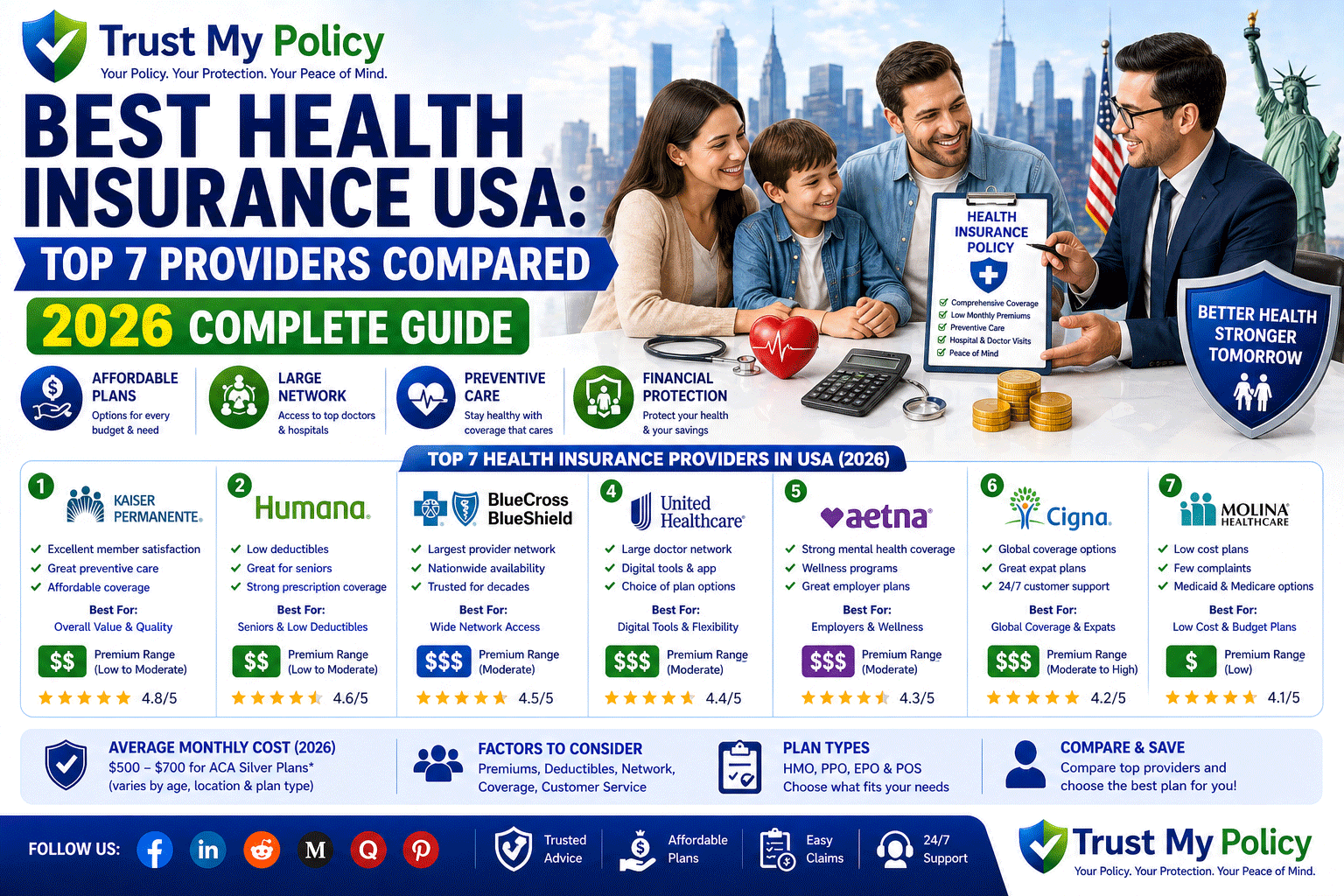
Best health insurance USA in 2026 depends on your situation. Kaiser Permanente ranks #1 overall for six consecutive years (Insure.com 2026, 4.42 stars). Blue Cross Blue Shield is best for nationwide network access (90% of US doctors). Oscar Health offers the lowest ACA marketplace premiums on average. The average Silver plan costs $752/month unsubsidised — but with ACA tax credits, eligible enrollees pay an average of $50/month for the lowest-cost plan.
Maria, 34, a freelance graphic designer in Austin, Texas, was uninsured for two years after leaving her corporate job. She assumed marketplace insurance would be too expensive. Then she fell off a ladder at a client shoot. The ER bill: $14,200. She was wrong about the cost. A Silver plan on HealthCare.gov for her income would have cost her $87/month after the ACA subsidy. She paid $14,200 for two hours of emergency care instead.
The best health insurance USA options in 2026 are more varied — and in many cases more affordable — than most Americans realise. The average ACA marketplace Silver plan costs $752/month at full price, but 22 out of 24 million marketplace enrollees receive tax credits that slash that number dramatically. At Maria’s income level, a Silver plan costs $87/month. Knowing which provider, which plan tier, and what subsidies you qualify for is the difference between going uninsured and being protected.
This guide covers the seven best health insurance providers in the USA for 2026 — compared by cost, network, plan types, and who each suits best — alongside a plain-English breakdown of plan tiers, subsidies, key 2026 changes, and a decision framework for choosing the right plan for your specific situation.
| Feature | Details |
| Average Silver plan cost (2026) | $752/month unsubsidised for a 40-year-old (MoneyGeek/ValuePenguin 2026) |
| Average after ACA tax credits | $50/month for the lowest-cost plan (CMS 2026 fact sheet) |
| Premium increase 2026 vs 2025 | 26% average increase — largest since 2018 (KFF/Peterson-KFF analysis) |
| Main cause of 2026 increases | Expiration of enhanced ACA premium tax credits + rising hospital costs + GLP-1 drug costs |
| Open enrollment period | November 1, 2025 – January 15, 2026 (HealthCare.gov states) |
| Plan tiers available | Bronze, Silver, Gold, Platinum, Catastrophic (under-30 or hardship exemption) |
| Best overall insurer | Kaiser Permanente — #1 for 6 consecutive years (Insure.com 2026, 4.42/5 stars) |
| Regulated by | State insurance commissioners; NAIC; ACA/CMS for marketplace plans |
Think of health insurance as a risk-sharing contract between you and an insurer. You pay a monthly premium whether or not you use any healthcare. In return, the insurer covers a portion of your medical costs when you do need care. The ACA requires all marketplace plans to cover 10 essential health benefits, from emergency care to prescription drugs to mental health services.
Health insurance in the USA is a contract between you and an insurance company. You pay monthly premiums; the insurer pays a defined share of your covered medical costs. Plans vary by how much you pay upfront (deductible), what percentage the insurer covers after that (coinsurance), and which doctors and hospitals are in the network.
Who needs it: Every American without coverage through an employer or government programme (Medicare, Medicaid, CHIP, VA). The 2026 marketplace serves approximately 24 million enrollees — self-employed workers, gig economy workers, freelancers, early retirees under 65, people between jobs, and those whose employer does not offer affordable group coverage.
Every ACA marketplace plan comes in one of four metal tiers. The tier determines how costs are split between you and your insurer — not the quality of care or which doctors you can see.
| Criteria | Bronze | Silver | Gold | Platinum |
| Monthly premium (avg, 40-yr-old, 2026) | $573/month | $752/month | ~$900/month | $1,012/month |
| Insurer pays (actuarial value) | 60% of covered costs | 70% of covered costs | 80% of covered costs | 90% of covered costs |
| Average deductible | $6,000–$8,000/year | $3,000–$5,000/year | $1,000–$2,000/year | $0–$500/year |
| Cost-sharing reductions (CSR) | Not eligible | Only tier eligible for CSR subsidies | Not eligible | Not eligible |
| HSA-eligible in 2026 | Yes (new in 2026) | Some plans | No | No |
| Best for | Healthy people who rarely need care; want low premium + HSA | Most people — especially those eligible for CSR subsidies | Regular healthcare users; chronic conditions; prescriptions | Highest users; predictable out-of-pocket; rarely worth the premium jump |
| Winner | Best for HSA strategy | Best overall value — ESPECIALLY if income qualifies for CSR | Best if you expect $10k+ in annual medical costs | Rarely the best financial choice for most buyers |
We recommend Silver for most Americans because it is the only tier eligible for cost-sharing reductions (CSR) — and for qualifying income levels, a CSR Silver plan can have Gold-equivalent deductibles at Silver premiums. Always run the numbers at your specific income level before choosing Bronze.
| ⚠️ WARNING: The Enhanced ACA Tax Credit Has Expired
The enhanced premium tax credits introduced during COVID-19 (American Rescue Plan Act 2021, extended through 2025) expired at the end of 2025. If you previously received these enhanced subsidies, your 2026 premiums may have increased by an estimated 75%+ over what you paid in 2025. KFF estimates this adds an average of $1,016/year to out-of-pocket premium payments. Log in to HealthCare.gov or your state marketplace to recalculate your current subsidy and compare 2026 plans immediately. |
Why #1: Kaiser Permanente has been rated the #1 health insurance company nationally for six consecutive years by Insure.com (2026 rating: 4.42/5 stars, up from 4.17 in 2025). Kaiser earned top marks in customer satisfaction, ease of payment, and affordability. It scored 5/5 stars from CMS for overall quality of care — one of only a handful of insurers to achieve this. Forbes ranked it #1 in America’s Best Brands for Value in healthcare.
How it works: Kaiser is an integrated care model — its doctors, hospitals, and insurance are all part of the same organisation. You see a Kaiser doctor at a Kaiser facility; your records, prescriptions, and specialist referrals all flow within one system. This integration reduces errors, speeds referrals, and simplifies billing.
| Feature | Details |
| Plan types | HMO (primary model); some PPO-equivalent plans in select markets |
| States available | California, Colorado, Georgia, Hawaii, Maryland/DC/Virginia, Oregon/Washington, Pacific Northwest |
| Network | Closed — Kaiser doctors and facilities only; no out-of-network coverage except emergencies |
| Insure.com 2026 rating | 4.42/5 — #1 nationally for 6 consecutive years |
| CMS quality rating | 5/5 stars — highest tier |
| Average monthly premium | Competitive; often among lowest in markets where available |
| Best for | Families and individuals in Kaiser’s service areas who want integrated care, top-rated quality, and strong customer service |
| Biggest limitation | Geographic restriction — available in 8 states and DC; not an option for most of the country |
Why recommended: BCBS is the largest and most geographically comprehensive health insurer in the USA. It covers 90% of US hospitals and doctors — the widest network of any insurer. If you travel frequently, live in a rural area, or want maximum choice of provider, no insurer comes close to BCBS’s reach. BCBS operates as a federation of 36 independent companies, meaning the quality and pricing varies by state.
| Feature | Details |
| Plan types | HMO, PPO, EPO, HDHP/HSA — varies by state affiliate |
| States available | All 50 states + DC |
| Network | 90% of US hospitals and doctors — largest in the country |
| AM Best rating | Varies by affiliate — most are A or A+ rated |
| J.D. Power | Varies by regional affiliate; California, Michigan, and Texas affiliates consistently rate well |
| Average monthly premium | Mid-range; varies significantly by state affiliate and plan type |
| Best for | People who travel, live in rural areas, need out-of-state coverage, or want the widest possible provider choice |
| Biggest limitation | Quality and pricing inconsistent across state affiliates — research your specific state’s BCBS affiliate |
Why recommended: UnitedHealthcare (UHC) is the largest health insurer in the USA by market share, controlling over 16% of the market with approximately $269.45 billion in direct written premiums. UHC has the widest network of all traditional carriers — over 1.3 million physicians and 6,700 hospitals. Named best health insurer for self-employed individuals in 2026 by InsuredBetter.com for its streamlined digital management system.
| Feature | Details |
| Plan types | HMO, PPO, EPO, HDHP, Medicare Advantage, Medicaid |
| States available | All 50 states |
| Network | 1.3 million+ physicians; 6,700 hospitals |
| AM Best rating | A (Excellent) |
| J.D. Power | 730/1,000 — above industry average |
| Average monthly premium | Mid-to-high range; strong network justifies premium |
| Best for | Self-employed individuals, frequent travellers, people needing consistent national coverage |
| Biggest limitation | NAIC complaint index above average for some plan types; claims denials have received media scrutiny |
Why recommended: Oscar consistently offers the lowest Silver plan premiums among ACA marketplace insurers, according to NerdWallet’s 2026 analysis of 2,300+ plans across 15 states. NerdWallet named Oscar a top pick for individual health insurance for its competitive pricing and relatively low consumer complaint rates. Oscar is a tech-forward insurer with strong digital tools and telemedicine integration.
| Feature | Details |
| Plan types | HMO, EPO — digital-first model |
| States available | 18 states including CA, NY, TX, FL, GA, TN, AZ and others |
| Network | In-network only; no out-of-network coverage except emergencies |
| NCQA rating | Varies by market; competitive in most regions |
| NerdWallet 2026 | Top pick for lowest Silver plan premiums nationally |
| Average monthly premium | Often lowest Silver premium in markets where available |
| Best for | Young adults, healthy individuals, budget-conscious buyers who prefer digital tools and don’t need out-of-network access |
| Biggest limitation | Denies more in-network claims than average (NerdWallet analysis); government quality ratings not always the highest |
Why recommended: Ambetter is the marketplace brand of Centene Corporation, which holds a 6.74% US market share and specialises in Medicaid and low-income marketplace coverage. Ambetter plans are specifically designed for ACA marketplace buyers who qualify for subsidies and cost-sharing reductions. They are consistently among the most affordable plans for qualifying income levels, particularly for buyers earning 100–250% of the Federal Poverty Level (FPL).
| Feature | Details |
| Plan types | HMO, EPO; focus on marketplace Silver plans with CSR |
| States available | 30+ states |
| Network | Varies by state; generally adequate for primary and specialist care |
| AM Best rating | A- (Excellent) — Centene Corporation |
| Best for income levels | 100–250% FPL — maximises CSR Silver plan savings |
| Average monthly premium (after subsidies) | Among lowest available for qualifying income levels |
| Best for | Lower-income individuals and families who qualify for ACA subsidies and cost-sharing reductions |
| Biggest limitation | Network depth varies significantly by state; fewer PPO options; limited out-of-network access |
Why recommended: Cigna brings a strong international background into the US market, making it particularly valuable for multinational employees and frequent international travellers. It is widely used by large employers for group plans and is known for chronic disease management, behavioural health programmes, and pharmacy integration. Cigna’s combined pharmacy (Express Scripts) model creates cost savings on prescription coverage.
| Feature | Details |
| Plan types | HMO, PPO, HDHP; employer and individual plans |
| States available | Marketplace plans in select states; employer plans nationwide |
| Network | Extensive US and international provider network |
| AM Best rating | A (Excellent) |
| J.D. Power | 729/1,000 — competitive with industry average |
| Average monthly premium | Mid-to-high range; competitive for employer group plans |
| Best for | Employees with large employer plans, international workers, people with chronic conditions needing coordinated care |
| Biggest limitation | Marketplace individual plan availability more limited than BCBS or UHC |
Why recommended: Molina Healthcare specialises in serving low-income and government-programme members, making it an excellent option for buyers near the Medicaid threshold who still qualify for marketplace plans. Molina is known for affordability and simplicity — straightforward plans without complexity. It consistently ranks among the lowest-premium options in the states where it operates.
| Feature | Details |
| Plan types | HMO, EPO; Medicaid and marketplace Silver plans |
| States available | 19 states |
| Network | Primarily in-network; adequate for essential and preventive care |
| AM Best rating | B++ (Good) |
| Average monthly premium | Among lowest nationally for qualifying low-income buyers |
| Best for | Individuals and families at 100–200% FPL who want the most affordable monthly premium after subsidies |
| Biggest limitation | Network is narrower than national carriers; limited specialist access in some regions |
👉 We recommend Kaiser Permanente as the best overall for most Americans who live in its service area. For those outside Kaiser’s coverage area, Blue Cross Blue Shield offers the widest network access. For budget-conscious ACA buyers, Oscar and Ambetter consistently deliver the lowest after-subsidy premiums.
Situation: Self-employed, no employer plan. Previously uninsured due to assumed cost. ER visit: $14,200 out of pocket.
What she qualifies for: At $42,000/year (approximately 270% FPL for a single adult in 2026), Maria qualifies for ACA premium tax credits. Without enhanced subsidies (expired end of 2025), her Silver plan benchmark premium after basic tax credits: approximately $87/month.
Best plan: Ambetter Silver (Texas) or Oscar Silver (Texas) — both consistently offer competitive Silver premiums in the Texas marketplace. With CSR eligibility at her income, her Silver plan deductible drops from $3,000–$5,000 to approximately $1,200.
Verdict: Maria’s $14,200 ER bill was entirely avoidable. At $87/month — $1,044/year — she would have had full coverage with a manageable deductible. Every uninsured American who assumes marketplace insurance is too expensive should check their actual subsidy eligibility at HealthCare.gov before making that assumption. The calculator takes 5 minutes.
Situation: Family of four. One parent self-employed, one works part-time without employer coverage. Evaluating family marketplace plan.
What they qualify for: $75,000/year is approximately 270% FPL for a family of four in 2026. Basic ACA tax credits apply. Full family Silver plan unsubsidised: approximately $2,230/month (MoneyGeek 2026). After basic tax credits at their income level: approximately $680–$750/month.
Best plan: Kaiser Permanente (available in Colorado). Given Kaiser’s 5-star CMS rating, integrated care model, and competitive family plan pricing in Colorado, Kaiser is the clear choice for a family prioritising quality and coordination over maximum provider choice.
Verdict: The Ramirez family should also investigate whether one parent’s self-employment allows Health Reimbursement Arrangement (HRA) or HSA contributions to reduce net healthcare costs. A Gold Kaiser plan may be more cost-effective than a Silver if the family expects significant annual healthcare use — run the maths at 80% vs 70% actuarial value.
Situation: Offered employer health plan. Employer pays $630/month; James’s share: $120/month for an individual Silver-equivalent plan. Debating whether to use employer plan or explore marketplace.
Analysis: The employer plan is almost certainly the right choice. James pays $120/month vs $752/month unsubsidised (or $200–$400/month after basic subsidies — if he even qualifies, since employer coverage that meets ACA minimum standards makes him ineligible for marketplace subsidies). Employer plan also uses pre-tax dollars.
Best plan: Accept the employer plan. UnitedHealthcare or Cigna employer plans in the Pacific Northwest consistently offer strong networks. James should maximise his HSA contribution ($4,300 individual limit in 2026) if the employer plan is HSA-eligible.
Verdict: Employer health insurance is almost always the better financial deal. Your employer pays 80–85% of the total premium. Walking away from that contribution to buy marketplace coverage makes financial sense only when employer coverage is genuinely unaffordable (over 9.02% of your household income for 2026) or the network is severely limited for your needs.
Situation: Retired early at 62. Not yet eligible for Medicare (age 65). Needs marketplace coverage for 3 years.
What she qualifies for: At $28,000/year (approximately 175% FPL for a single adult in 2026), Linda qualifies for strong ACA tax credits AND cost-sharing reductions on a Silver plan. Her estimated monthly premium after basic tax credits: $35–$80/month depending on Arizona plan options.
Best plan: Silver plan with CSR — Linda’s income qualifies her for CSR subsidies on Silver tier only. This gives her a Silver plan with Gold-equivalent deductibles ($500–$1,500 instead of $3,000–$5,000). Blue Cross Blue Shield of Arizona or Ambetter Arizona both consistently offer competitive Silver plans in the Phoenix market.
Verdict: Early retirees aged 62–64 have the most to gain from ACA marketplace planning. At 175% FPL, Linda’s Silver plan becomes dramatically cheaper with CSR subsidies — essentially Gold-tier coverage at a fraction of Gold-tier cost. This window of affordable marketplace coverage is a critical bridge to Medicare at 65.
| Pros | Cons |
| No insurer can deny you for pre-existing conditions — guaranteed issue for all ACA plans | Premiums have risen 26% in 2026 — the largest increase since 2018 (KFF analysis) |
| ACA tax credits can reduce premiums dramatically — 22 of 24 million marketplace enrollees receive subsidies | Enhanced ACA tax credits expired at end of 2025 — many enrollees face sharp premium increases in 2026 |
| All plans cover 10 essential health benefits — emergency care, prescriptions, mental health, preventive care, maternity | High deductibles on Bronze plans ($6,000–$8,000) mean significant out-of-pocket costs before coverage kicks in |
| Cost-sharing reductions on Silver plans give lower-income buyers near-Gold coverage at Silver prices | Network restrictions (HMOs and EPOs) limit which doctors and hospitals you can use affordably |
| Open enrollment and Special Enrollment Periods ensure access when life changes | Out-of-pocket maximums ($9,200 individual / $18,400 family in 2026) still represent significant potential financial exposure |
| Employer plans average $120/month employee share — far cheaper than marketplace for those with access | The uninsured gap: those earning under 100% FPL in states that haven’t expanded Medicaid fall into the coverage gap |
At Maria’s income level ($42,000 for a single adult), a Silver plan costs $87/month after basic ACA tax credits. Millions of Americans are uninsured because they’ve assumed the cost without ever visiting HealthCare.gov to check their actual subsidy. The calculator takes 5 minutes. Check it before deciding you can’t afford coverage.
| ⚠️ WARNING: Choosing the Cheapest Plan by Premium Alone Is a High-Risk Strategy
A Bronze plan at $573/month sounds great until you face a $7,500 deductible before insurance pays anything. For a buyer with a single emergency visit or one surgical procedure, a Bronze plan’s lower premium is instantly wiped out by the first out-of-pocket claim. Always calculate total expected annual cost — premium + likely out-of-pocket use — not just monthly premium. For anyone with regular healthcare needs, Silver or Gold almost always wins on total cost. |
If your 2026 income is below 138% of the Federal Poverty Level (approximately $20,783 for a single adult) AND your state has expanded Medicaid, you qualify for Medicaid — which is free or near-free. Buying a marketplace plan when you qualify for Medicaid means paying premiums you don’t need to pay. Check Medicaid eligibility at HealthCare.gov alongside marketplace plans.
Cost-sharing reductions (CSRs) are only available on Silver tier plans, and only for buyers earning 100–250% FPL. A Silver plan with CSR gives you Gold or Platinum-equivalent deductibles at Silver-tier premiums. This is one of the most underutilised opportunities in US health insurance. If your income qualifies, buying Bronze to save on the monthly premium and missing CSR is a significant financial mistake.
In an HMO or EPO plan, using an out-of-network doctor — even for an emergency referral — can leave you responsible for the full bill. Always verify that your specific doctor, specialist, and preferred hospital are in-network before enrolling in a plan. Use the insurer’s online provider search with your exact zip code. Do not rely on the doctor’s office to confirm — call the insurer directly.
Open enrollment runs November 1 – January 15 for HealthCare.gov states. Missing it without a qualifying life event means you’re uninsured until next year. Life events that trigger a Special Enrollment Period: job loss, marriage, divorce, birth of a child, moving to a new state. If you miss open enrollment without a qualifying event, a short-term health plan (limited coverage, does not meet ACA standards) may bridge the gap — but understand its severe limitations before buying.
| Your Situation | Our Recommendation |
| You have employer coverage and it costs under 9.02% of your income | Yes — take the employer plan. Your employer pays 80%+ of the premium. You cannot beat this on the marketplace |
| You’re self-employed with income 100–250% FPL | Yes — Silver plan with CSR on ACA marketplace. Equivalent to Gold coverage at Silver price |
| You’re under 30, healthy, rarely see a doctor | Bronze or Catastrophic plan. Low premium, high deductible. Pair with an HSA (now available on all Bronze plans in 2026) |
| You have a chronic condition or expect significant annual healthcare use | Gold or Silver CSR plan. Lower deductible means insurance pays sooner. Do the total-cost maths |
| Your income is below 138% FPL (Medicaid expansion state) | Apply for Medicaid — free comprehensive coverage. Do not buy a marketplace plan until eligibility is checked |
| You’re 62–64, early retiree, bridging to Medicare | ACA marketplace Silver with CSR. Best bridge option; locks in premium tax credits until Medicare eligibility at 65 |
| You need coverage in multiple states or travel frequently | Blue Cross Blue Shield (PPO plan). Widest national network; out-of-network access in emergencies |
| You want the highest-rated insurer available to you | Kaiser Permanente if in CA, CO, GA, HI, MD, OR, VA, or WA. Otherwise BCBS or UHC for nationwide quality |
| 💡 TIP: Always Shop the Silver Plan First
Silver is the only metal tier eligible for cost-sharing reductions. At income levels of 100–250% FPL, a Silver plan with CSR effectively becomes a Gold plan — dramatically lower deductible and out-of-pocket maximum at a Silver price point. Run your specific income through HealthCare.gov or the KFF subsidy calculator before choosing any other metal tier. The difference can be thousands of dollars per year. |
| Profile | Plan Type | Monthly Cost (Unsubsidised) | Est. Monthly After Tax Credits | Notes |
| Single adult, 30, healthy | Bronze (Oscar or Ambetter) | $573 | $30–$80 (income-dependent) | Lowest premium; $6,000+ deductible before coverage |
| Single adult, 40, average health | Silver (BCBS or Oscar) | $752 | $87–$200 (income-dependent) | Most common choice; CSR available if income qualifies |
| Single adult, 60, pre-Medicare | Silver (BCBS or Ambetter) | $1,050+ | $100–$300 (income-dependent) | Age adds significant premium; CSR maximises value |
| Family of 4, parents 35/37 | Silver family plan | $2,230 | $600–$900 (income-dependent) | Out-of-pocket max $18,400; CSR reduces this significantly |
| Employer plan, single adult | Employer Silver-equivalent | $120/month employee share | N/A — employer pays $630/month | Best financial deal for those with access; pre-tax dollars |
| Medicaid (income under 138% FPL) | Medicaid | $0 | $0 | Free; contact your state Medicaid office |
| Cheapest unsubsidised option | Bronze (Oscar/Ambetter) | $573/month avg | No subsidy if income >400% FPL | High deductible — not recommended for regular healthcare users |
| Most expensive (unsubsidised, 64-yr-old) | Platinum (urban markets) | $1,448–$1,700+/month | Subsidy may apply | ACA caps premiums at 3x the youngest adult rate |
Source: MoneyGeek 2026 health insurance cost analysis; ValuePenguin 2026 Silver plan average ($752/month for 40-year-old); CMS 2026 Marketplace Plans and Prices Fact Sheet ($50/month average lowest-cost plan after tax credits for eligible enrollees).
| Provider | Best For | States | AM Best | Avg. Premium | Star Rating | Network Size |
| Kaiser Permanente | Best overall quality | 8 states + DC | A+ (Excellent) | Competitive | 5/5 (CMS) | Integrated — Kaiser facilities only |
| Blue Cross Blue Shield | Widest network | All 50 states | Varies (A–A+) | Mid-range | Varies by state affiliate | 90% of US doctors and hospitals |
| UnitedHealthcare | Self-employed, national | All 50 states | A (Excellent) | Mid-to-high | 730/1,000 (J.D. Power) | 1.3M+ physicians; 6,700 hospitals |
| Oscar Health | Lowest ACA premiums | 18 states | A- (Excellent) | Lowest Silver avg | Above average (NerdWallet) | In-network only; strong digital tools |
| Ambetter (Centene) | Low-income/subsidy buyers | 30+ states | A- (Excellent) | Lowest after subsidies | Adequate | State-by-state; adequate for primary care |
| Cigna | Employer plans, international | Nationwide (employer) | A (Excellent) | Mid-to-high | 729/1,000 (J.D. Power) | Extensive US + international |
| Molina Healthcare | Budget/Medicaid-adjacent | 19 states | B++ (Good) | Lowest overall | Varies | Narrow — essential and preventive focus |
Kaiser Permanente is ranked the best health insurance company in the USA overall for 2026, receiving 4.42/5 stars from Insure.com — #1 for six consecutive years. Kaiser scored 5/5 stars from CMS for quality of care. However, Kaiser is only available in 8 states and DC. For nationwide access, Blue Cross Blue Shield (90% of US doctors and hospitals) is the best option. For lowest ACA marketplace premiums, Oscar Health and Ambetter consistently deliver the cheapest Silver plans.
The average ACA marketplace Silver plan costs $752/month unsubsidised for a 40-year-old in 2026 — a 21–26% increase from 2025, the largest in nearly a decade. After ACA premium tax credits, the average lowest-cost plan costs $50/month for eligible enrollees (CMS 2026 fact sheet). Employer plans average $120/month for the employee share, with employers covering the remaining $630/month. Children average $425/month; seniors (60+) average $1,448/month on the unsubsidised marketplace.
ACA Marketplace premiums rose approximately 26% in 2026 — the largest single-year increase since 2018. The main causes: expiration of the enhanced ACA premium tax credits (which insurers attributed to 4 percentage points of additional increases); rising hospital costs; dramatically increased use of expensive GLP-1 drugs like Ozempic and Wegovy; and general medical cost inflation including labour costs and tariff pressures. The premium increase does not affect subsidised buyers proportionally — 22 million of 24 million marketplace enrollees receive tax credits that cap their out-of-pocket premium as a percentage of income.
Medicaid is free for eligible individuals — available to adults earning under 138% of the Federal Poverty Level in the 40 states that have expanded Medicaid. On the ACA marketplace, Bronze plans average $573/month unsubsidised — the cheapest metal tier. After subsidies, Oscar and Ambetter Silver plans are often the lowest-cost options for qualifying buyers. The CMS 2026 fact sheet shows the average lowest-cost plan costs $50/month after tax credits for eligible enrollees.
HMO (Health Maintenance Organisation) requires you to choose a primary care physician and get referrals to see specialists; no out-of-network coverage except emergencies. PPO (Preferred Provider Organisation) allows you to see any doctor in or out of network without a referral; out-of-network care costs more but is covered. EPO (Exclusive Provider Organisation) is a hybrid — no referrals needed, but coverage is in-network only with no out-of-network coverage (like an HMO without the referral requirement). PPOs cost more than HMOs and EPOs; EPOs offer the middle ground.
Basic ACA premium tax credits are available to individuals and families earning between 100% and 400% of the Federal Poverty Level (approximately $15,060–$60,240 for a single adult in 2026) who are not eligible for affordable employer-sponsored insurance or government programmes. Cost-sharing reductions (CSRs) are additionally available for buyers earning 100–250% FPL who choose a Silver plan. Note: the enhanced subsidies that previously extended eligibility to higher incomes expired at the end of 2025. Check your specific eligibility at HealthCare.gov or the KFF subsidy calculator.
Generally no — unless you experience a qualifying life event that triggers a Special Enrollment Period (SEP). Qualifying events include: losing employer coverage, getting married or divorced, having a baby or adopting a child, moving to a new state, or leaving incarceration. SEPs typically give you 60 days from the qualifying event to enrol in a new marketplace plan. Outside of open enrollment and SEPs, your only market options are short-term health plans (which do not meet ACA standards and exclude pre-existing conditions) or joining an employer plan if you become employed.
Employer health insurance is almost always the better financial deal if your employer’s contribution makes the plan affordable. Your employer pays an average of $630/month toward your premium — you pay $120/month. The same marketplace coverage could cost $200–$752/month. However, if employer coverage costs more than 9.02% of your household income for 2026 (the ACA affordability threshold), you may qualify for marketplace subsidies instead. Evaluate both options using your specific numbers.
Cost-sharing reductions (CSRs) are a subsidy that reduces your deductible, copays, and out-of-pocket maximum — separate from the premium tax credit that reduces your monthly premium. CSRs are ONLY available on Silver tier plans and ONLY for buyers earning 100–250% of the Federal Poverty Level. At 100–150% FPL, a Silver CSR plan functions like a Platinum plan (10% coinsurance, $500–$900 out-of-pocket maximum). This is one of the most powerful financial tools in US health insurance and is frequently overlooked.
Even comprehensive ACA plans have exclusions and limitations. Common coverage gaps: cosmetic procedures, elective procedures that are deemed not medically necessary, most dental and vision care (separate plans), long-term care, alternative medicine (acupuncture, chiropractic varies by plan), weight loss surgery (varies by plan), fertility treatments (varies by state and plan). Always read your plan’s Summary of Benefits and Coverage (SBC) before enrolling to understand specific exclusions.
The ACA out-of-pocket maximum for 2026 is $9,200 for individuals and $18,400 for families. This is the most you will pay in a year for in-network covered services. After hitting this limit, your insurer covers 100% of covered in-network costs for the rest of the calendar year. This limit applies to all ACA-compliant plans. Non-ACA-compliant plans (short-term health insurance) do not have this protection.
For self-employed Americans exploring all coverage options, see our health insurance for self-employed low income USA guide. For families of four evaluating the best marketplace plans, our best health insurance for families of 4 USA guide covers detailed family plan analysis.
| 📋 Disclaimer
This article is for informational purposes only. Health insurance rules, premiums, and subsidies change frequently. Always verify current rates and eligibility at HealthCare.gov or with a licensed insurance professional before enrolling. Trust My Policy does not sell insurance products or represent any insurer. |

Jagadeesh Gutha is the founder of TrustMyPolicy.com, an independent insurance information platform covering life, health, car, home, and business insurance for US and UK readers. He researches insurance products, policy structures, and consumer rights to help everyday people make informed coverage decisions without the jargon. All content on TrustMyPolicy is independently researched, fact-checked, and written to educate — not to sell.



Insurance Guides for UK, USA & Worldwide We are not an insurer or broker.

Reader Comments (0)