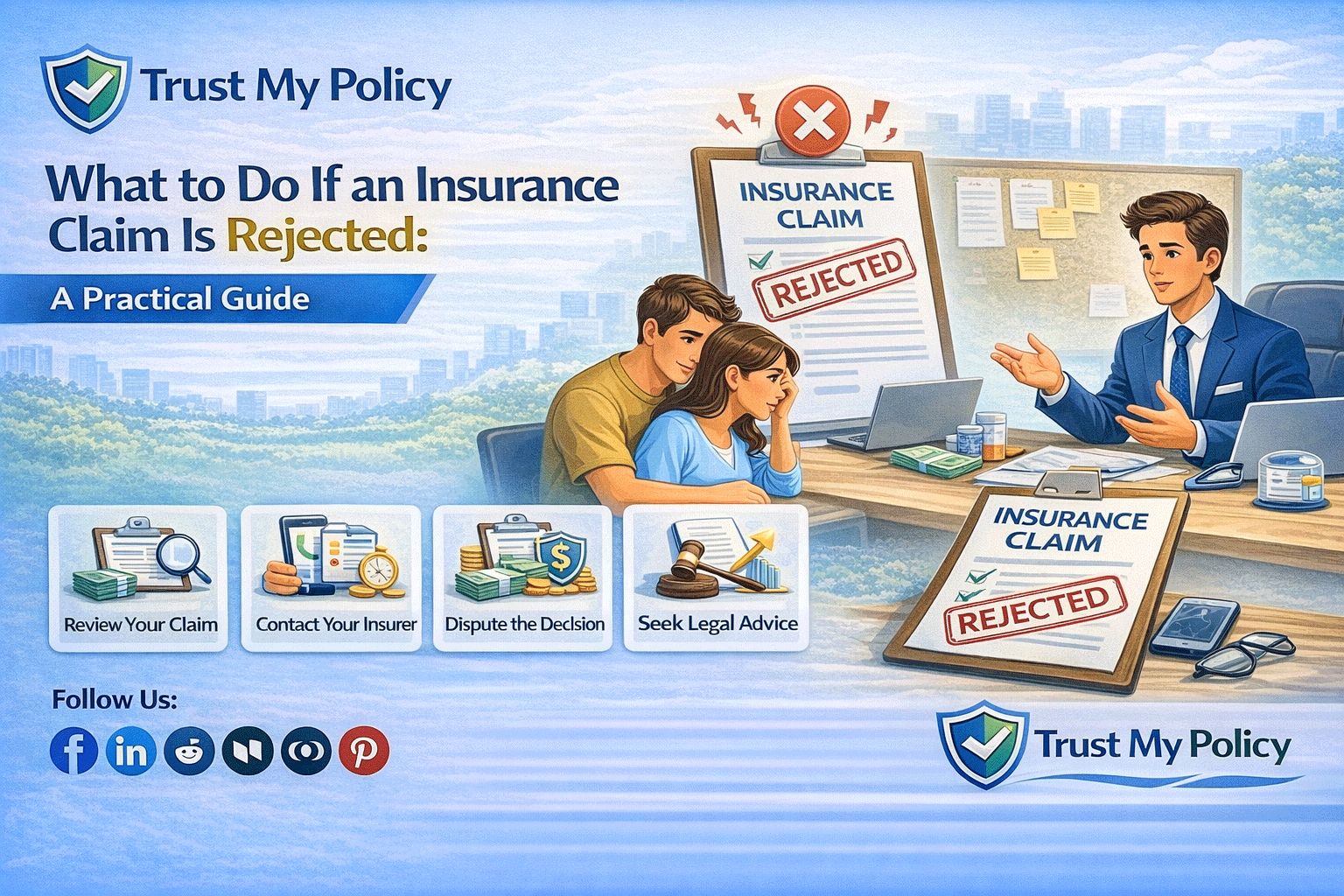
What to Do If an Insurance Claim Is Rejected: A Practical Guide
Insurance is designed to provide financial protection when unexpected events occur. People rely on insurance policies to help cover expenses related to accidents, medical emergencies, property damage, or other losses. However, sometimes a policyholder may receive unexpected news — an insurance claim rejection.
When a claim is rejected, it can create confusion and frustration. Many people are unsure about what steps to take next, whether the decision can be challenged, or if there are ways to resolve the issue. Understanding what to do if an insurance claim is rejected can help policyholders respond calmly and make informed decisions.
Insurance claims may be rejected for several reasons, including incomplete documentation, policy exclusions, missed deadlines, or misunderstandings about coverage terms. In many situations, a rejection does not necessarily mean the issue cannot be reviewed or clarified.
This guide explains the possible reasons for claim rejection and outlines the practical steps policyholders can take after receiving a rejection notice. It also covers common mistakes, real-life examples, and frequently asked questions to help readers better understand the claims process.
What to Do If an Insurance Claim Is Rejected
| Step | Action | Purpose |
|---|---|---|
| Step 1 | Review the rejection letter carefully | Understand the reason for denial |
| Step 2 | Check your policy document | Verify coverage terms and exclusions |
| Step 3 | Gather supporting documents | Strengthen your claim explanation |
| Step 4 | Contact the insurer for clarification | Resolve misunderstandings |
| Step 5 | Submit an appeal or reconsideration request | Request claim review |
| Step 6 | Seek external dispute resolution if needed | Use regulatory or mediation channels |
, benefits, and financial protection options available to policyholders. Many readers compare multiple guides before selecting a plan so they can clearly evaluate premiums, claim procedures, and long‑term advantages. A useful resource to explore is Home Insurance Coverage Types, which explains how this insurance policy works, the key benefits it offers, and situations where it may be the most suitable option. By reviewing this guide, you can gain deeper insights into coverage features, eligibility requirements, and practical tips that help individuals and families make smarter insurance decisions.
Understanding Insurance Claim Rejection
Insurance claim rejection occurs when an insurer determines that a claim does not meet the conditions specified in the policy. This decision may happen after the insurer reviews documents, evaluates the incident, and checks policy coverage.
Claim rejection does not always mean the claim is invalid. In some cases, it may result from incomplete information or incorrect assumptions about coverage.
Understanding the reasons behind a rejection helps policyholders determine the appropriate next steps.
Common Reasons Insurance Claims Are Rejected
Policy Exclusions
Most insurance policies contain exclusions, which are situations or conditions not covered by the policy.
Examples may include:
-
Certain natural disasters
-
Intentional damage
-
High-risk activities
-
Uncovered medical treatments
If the claim falls under an exclusion, the insurer may reject the request.
Incomplete Documentation
Insurance claims often require specific documents such as:
-
Medical reports
-
Repair estimates
-
Incident reports
-
Photographic evidence
Missing documents may cause delays or rejections.
Missed Reporting Deadlines
Policies usually require that claims be reported within a certain time frame after the incident occurs.
Late reporting can lead to claim rejection in some cases.
Incorrect or Inconsistent Information
If the information provided during the claim process differs from the original policy application or incident details, insurers may investigate further or reject the claim.
Policy Lapse
If premium payments were missed and the policy became inactive before the incident occurred, the insurer may deny the claim.
, benefits, and financial protection options available to policyholders. Many readers compare multiple guides before selecting a plan so they can clearly evaluate premiums, claim procedures, and long‑term advantages. A useful resource to explore is Life Insurance With No Medical Exam, which explains how this insurance policy works, the key benefits it offers, and situations where it may be the most suitable option. By reviewing this guide, you can gain deeper insights into coverage features, eligibility requirements, and practical tips that help individuals and families make smarter insurance decisions.
Steps to Take If Your Insurance Claim Is Rejected
Receiving a rejection notice can be stressful, but there are several steps policyholders can take to address the situation.
Step 1: Carefully Review the Rejection Letter
The rejection notice usually explains the reason for denial.
Pay attention to:
-
Policy clauses referenced
-
Missing documentation
-
Specific coverage limitations
Understanding the reason is essential before taking further action.
Step 2: Review Your Insurance Policy
The next step is to carefully review the policy document.
Focus on:
-
Coverage terms
-
Exclusions
-
Conditions for claims
-
Policy limits
This review helps determine whether the claim may still qualify under certain conditions.
Step 3: Gather Supporting Evidence
If the rejection occurred due to missing information, gathering additional documents may help clarify the situation.
Supporting materials may include:
-
Medical records
-
Police reports
-
Repair invoices
-
Photographs of damage
-
Witness statements
Providing additional evidence may strengthen the request for reconsideration.
Step 4: Contact the Insurance Provider
Policyholders can contact the insurer to request clarification about the rejection.
Questions to ask may include:
-
Which policy clause caused the rejection?
-
Is additional documentation required?
-
Can the claim be reviewed again?
Sometimes misunderstandings can be resolved through communication.
Step 5: Submit an Appeal or Reconsideration Request
Many insurance companies allow policyholders to submit an appeal if they disagree with the claim decision.
An appeal may include:
-
Written explanation of the situation
-
Additional documentation
-
Clarification of policy coverage
The insurer will review the appeal and may reconsider the decision.
Step 6: Seek External Dispute Resolution
If the claim remains unresolved, policyholders may consider external dispute resolution options.
Depending on the country, these may include:
-
Insurance regulatory authorities
-
Consumer protection agencies
-
Insurance ombudsman services
-
Mediation or arbitration programs
These organizations may help review disputes between policyholders and insurers.
, benefits, and financial protection options available to policyholders. Many readers compare multiple guides before selecting a plan so they can clearly evaluate premiums, claim procedures, and long‑term advantages. A useful resource to explore is Cheap Full Coverage Car Insurance, which explains how this insurance policy works, the key benefits it offers, and situations where it may be the most suitable option. By reviewing this guide, you can gain deeper insights into coverage features, eligibility requirements, and practical tips that help individuals and families make smarter insurance decisions.
Detailed Comparison: Claim Rejection vs Claim Appeal
| Aspect | Claim Rejection | Claim Appeal |
|---|---|---|
| Meaning | Insurer denies claim request | Policyholder requests reconsideration |
| Purpose | Explain why claim was denied | Provide additional evidence or clarification |
| Timing | Happens after claim review | Happens after rejection |
| Documents Required | Original claim documents | Additional supporting materials |
| Outcome | Claim remains denied | Claim may be reconsidered |
Pros and Cons of Appealing a Rejected Claim
Advantages
-
Provides an opportunity to clarify misunderstandings
-
Allows submission of additional documents
-
Helps ensure policy terms were applied correctly
-
May result in claim approval after review
Limitations
-
Appeals may require time and documentation
-
Some rejections are based on clear policy exclusions
-
Outcome may still remain unchanged
Despite these limitations, reviewing the rejection carefully can help policyholders understand available options.
Real-Life Examples
Example 1: Missing Documents
A homeowner submits a claim for property damage but forgets to include a repair estimate.
The insurer rejects the claim due to incomplete documentation.
After submitting the required repair report, the claim is reviewed again.
Example 2: Policy Exclusion
A traveler files a claim for a situation that is listed as an exclusion in the policy.
The insurer rejects the claim based on policy terms.
Reviewing policy documents helps clarify why the claim cannot be approved.
Example 3: Incorrect Information
A policyholder submits a claim with inconsistent information about the date of an accident.
After providing corrected documents, the insurer reassesses the claim.
, benefits, and financial protection options available to policyholders. Many readers compare multiple guides before selecting a plan so they can clearly evaluate premiums, claim procedures, and long‑term advantages. A useful resource to explore is Insurance Myths Explained, which explains how this insurance policy works, the key benefits it offers, and situations where it may be the most suitable option. By reviewing this guide, you can gain deeper insights into coverage features, eligibility requirements, and practical tips that help individuals and families make smarter insurance decisions.
Common Mistakes After a Claim Rejection
Many people react quickly after a rejection without reviewing the details.
Ignoring the Reason for Rejection
Understanding the explanation is the first step in deciding what to do next.
Not Reviewing the Policy Document
Policies contain detailed coverage terms that may explain the decision.
Failing to Provide Additional Evidence
Supporting documents can sometimes resolve misunderstandings.
Delaying the Appeal Process
Some policies allow appeals only within a limited time period.
Frequently Asked Questions
Why do insurance claims get rejected?
Insurance claims may be rejected due to policy exclusions, missing documentation, missed deadlines, or policy lapses.
Can a rejected insurance claim be appealed?
In many cases, yes. Policyholders may submit an appeal with additional documentation or clarification.
How long does an insurance claim appeal take?
The timeline varies depending on the insurer and the complexity of the claim.
What documents are needed for an appeal?
Common documents include incident reports, medical records, photographs, repair estimates, and written explanations.
Can external authorities review rejected claims?
In some regions, regulatory agencies or insurance ombudsman services may review disputes between insurers and policyholders.
Does a claim rejection affect future insurance policies?
Claim rejections may be recorded in claim history but do not necessarily prevent obtaining future coverage.
What is the most common reason for claim rejection?
Incomplete documentation and policy exclusions are among the most common reasons.
Conclusion
Receiving a rejected insurance claim can be challenging, but understanding the reasons behind the decision helps policyholders respond effectively.
Most claim rejections occur due to issues such as missing documents, policy exclusions, or reporting errors. By carefully reviewing the rejection notice, checking policy details, and gathering additional evidence, policyholders may be able to clarify misunderstandings or request reconsideration.
Communication with the insurer and following the correct appeal procedures can help resolve many claim disputes. If necessary, external dispute resolution options may also be available depending on local regulations.
Learning what to do if an insurance claim is rejected allows individuals to navigate the claims process more confidently and make informed decisions when dealing with insurance matters.
, benefits, and financial protection options available to policyholders. Many readers compare multiple guides before selecting a plan so they can clearly evaluate premiums, claim procedures, and long‑term advantages. A useful resource to explore is How to Get Cheap Car Insurance, which explains how this insurance policy works, the key benefits it offers, and situations where it may be the most suitable option. By reviewing this guide, you can gain deeper insights into coverage features, eligibility requirements, and practical tips that help individuals and families make smarter insurance decisions.
Disclaimer
Disclaimer: This article is for educational purposes only. Trust My Policy is an independent informational platform and does not sell insurance products or represent any insurance provider. Readers should consult official policy documents or licensed professionals for personalized advice.