

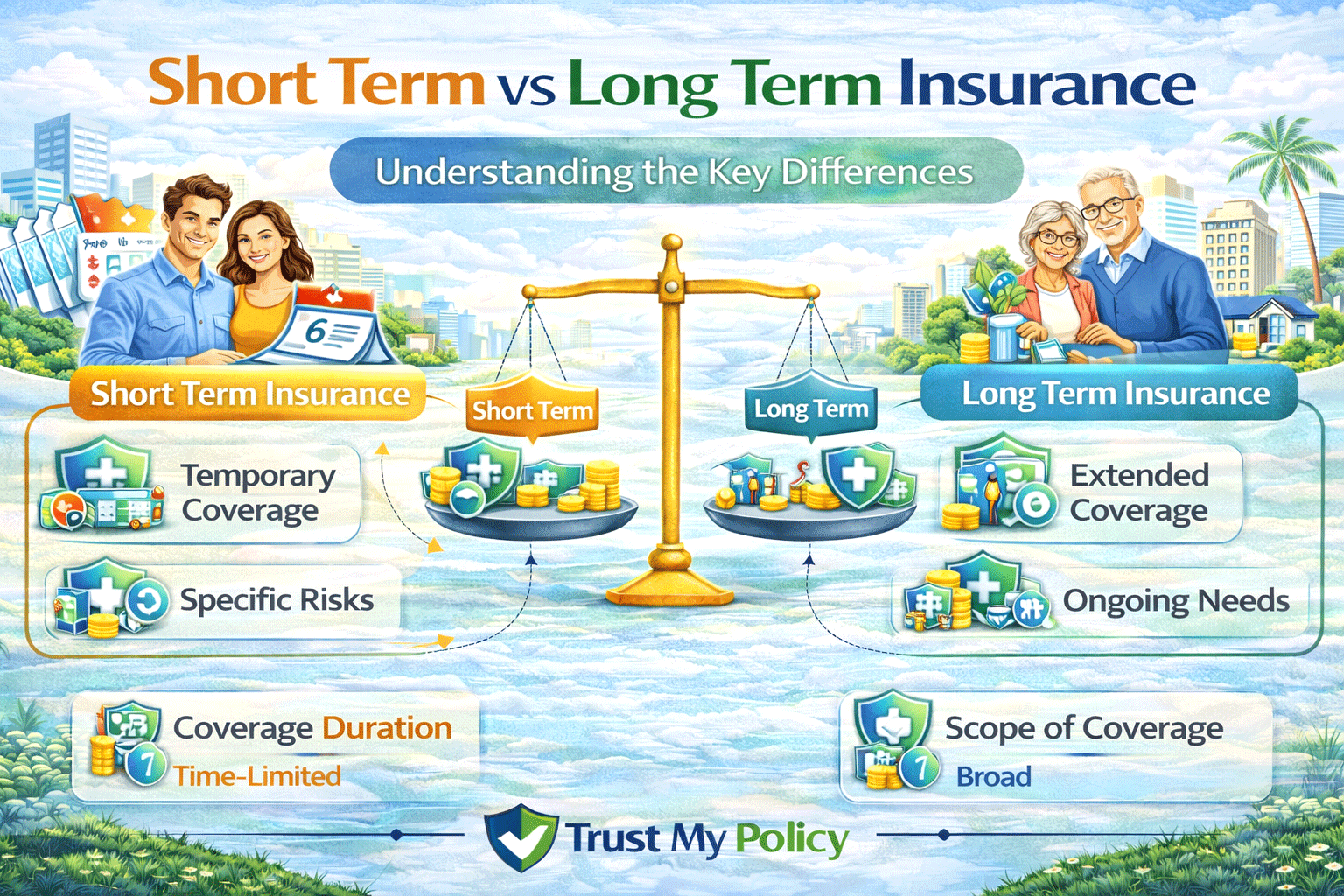
Short-term insurance provides temporary coverage for a limited period, often 30 days to 12 months, typically with lower cost but more exclusions, including pre-existing conditions. Long-term insurance provides comprehensive, ongoing protection, such as ACA major medical health plans or long-term disability insurance lasting until retirement age, usually at a higher but more complete cost.
Table of Contents
ToggleShort Term vs Long Term Insurance: Complete 2026 Guide
Kevin Brooks, 36, took a three-month gap between jobs in Denver and bought a short-term health plan to bridge the gap, assuming it worked just like his old employer coverage. When a pre-existing back issue flared up, he learned the hard way that short-term plans don’t have to cover pre-existing conditions the way long-term major medical coverage does.
Short Term vs Long Term Insurance in 2026 applies most commonly to health insurance and disability insurance, and in both cases the core difference is the same: short-term policies provide temporary, limited coverage for a defined period, while long-term policies provide comprehensive, ongoing protection with fewer exclusions. This guide breaks down exactly how short-term and long-term options differ for both health and disability coverage, so you choose the right bridge or the right permanent protection.
This article covers what short-term and long-term coverage actually include, when each makes sense, real scenarios with dollar figures, and a clear decision framework. By the end, you’ll know exactly which one fits your situation.
Quick Summary Table
| Feature | Details |
| What it is | Short-term insurance bridges temporary gaps; long-term insurance provides comprehensive, ongoing protection |
| Who needs short-term coverage | Anyone between jobs, waiting for enrollment, or needing a brief bridge |
| Who needs long-term coverage | Anyone wanting comprehensive, ongoing protection without major exclusions |
| Typical cost | $100–$250/month short-term health; $400–$700/month long-term major medical |
| Key benefit | Short-term is cheap and fast; long-term covers pre-existing conditions and major illness |
| Key limitation | Short-term plans don’t have to cover pre-existing conditions |
| Regulator | State insurance departments (US); Financial Conduct Authority (UK) |
What’s the Real Difference Between Short Term and Long Term Coverage?
Think of short-term insurance like a rental car you grab for a week between trips — useful, available fast, but with real limitations on what it can do for you. Long-term insurance is more like owning your own car outright — more comprehensive, more reliable, but a bigger ongoing commitment.
Short-term insurance is designed to provide temporary coverage for a defined period, commonly used to bridge a gap between jobs or enrollment periods, and it typically excludes pre-existing conditions and caps total benefits. Long-term insurance is designed for comprehensive, ongoing protection, like ACA major medical health plans or long-term disability insurance that can pay benefits until retirement age. Anyone facing a coverage gap, or deciding on permanent protection, needs to understand this distinction clearly.
How to Choose Between Short Term and Long Term Coverage — 5 Steps
- Identify how long you actually need coverage for. A gap of a few weeks to a few months often points toward short-term coverage; ongoing needs point toward long-term.
- Check whether you have any pre-existing conditions. Short-term plans typically exclude these, which can leave significant gaps if you have ongoing health needs.
- Compare the cost difference against your risk tolerance. Short-term coverage is cheaper, but the savings come with real coverage limitations you need to accept knowingly.
- Check enrollment windows for long-term options. US health marketplace long-term plans have specific enrollment periods, so timing matters if you’re choosing between the two.
- Reassess once your situation stabilizes. Short-term coverage should be treated as temporary by design, with a plan to move to long-term coverage once your situation allows.
Comparison: Short-Term vs. Long-Term Insurance
| Criteria | Short-Term Insurance | Long-Term Insurance |
| Cost | $100–$250/month (health); lower premium for disability | $400–$700/month (major medical health); higher premium for disability |
| Duration | 30 days to 12 months, sometimes renewable | Ongoing, often until a policy term ends or retirement age for disability |
| Pre-existing conditions | Typically excluded | Typically covered under ACA-compliant plans |
| Best for | Bridging a temporary gap | Comprehensive, ongoing protection |
| Pros | Fast to obtain, lower cost | Fewer exclusions, more comprehensive protection |
| Cons | Limited benefits, exclusions for pre-existing conditions | Higher ongoing cost |
We recommend short-term insurance only as a genuine bridge for most readers, and long-term insurance as the right choice whenever you need ongoing, comprehensive protection.
4 Real-Life Scenarios
Scenario 1: Kevin, 36, between jobs in Denver. Kevin’s short-term health plan excluded his pre-existing back condition, leaving him to pay $2,800 out of pocket for treatment during his three-month gap. Verdict: short-term plans are not a safe substitute for ongoing conditions. Action: Kevin now applies for a marketplace plan immediately during any future employment gap instead of defaulting to short-term coverage.
Scenario 2: Sarah, 41, freelance photographer in Bristol with long-term income protection insurance. Sarah’s long-term disability policy paid a portion of her income for over a year after a serious injury prevented her from working. Verdict: long-term coverage provided real, sustained financial protection during an extended recovery. Action: Sarah maintains her long-term policy as a fixed business cost going forward.
Scenario 3: A recent graduate in Texas needing coverage for six weeks before a new job’s benefits started. He bought a short-term health plan for $140 a month, knowing he had no pre-existing conditions to worry about. Verdict: short-term coverage was a reasonable, low-risk bridge in his specific situation. Action: he canceled the short-term plan the moment his employer coverage began.
Scenario 4: A small business owner in Manchester comparing short-term and long-term income protection. He initially bought a cheaper short-term policy, then realized it would only pay benefits for 12 months if he became unable to work. Verdict: a long-term illness or injury could have left him without income after that first year. Action: he switched to a long-term income protection policy paying benefits until retirement age.
Pros & Cons of Each Coverage Type
| Pros | Cons |
| Short-term insurance is fast to obtain and lower cost. | Short-term plans typically exclude pre-existing conditions entirely. |
| Long-term insurance provides comprehensive, ongoing protection. | Long-term insurance costs significantly more per month. |
| Short-term coverage is useful for genuinely temporary gaps. | Short-term plans often cap total benefits paid out. |
| Long-term disability insurance can pay benefits for years or until retirement. | Long-term coverage requires a bigger ongoing financial commitment. |
| Both types can be combined strategically during a transition period. | Relying on short-term coverage long-term leaves real protection gaps. |
5 Common Mistakes People Make
- Treating short-term insurance as a long-term solution. This happens because the lower cost feels appealing to extend indefinitely. What to do instead: set a firm deadline to transition to long-term coverage and stick to it.
- Assuming short-term health plans cover pre-existing conditions. This happens because the coverage feels comprehensive at a glance. What to do instead: review the exclusions list carefully before relying on a short-term plan if you have any ongoing health condition.
- Choosing short-term disability coverage without checking the maximum benefit period. This happens because the lower premium looks attractive without checking the fine print. What to do instead: confirm exactly how many months or years benefits would be paid before a long-term illness or injury.
- Missing long-term health plan enrollment windows while relying on short-term coverage. This happens because people lose track of enrollment deadlines while using a temporary plan. What to do instead: calendar your long-term enrollment window well before your short-term coverage expires.
- Not comparing the total cost of short-term renewals against a single long-term policy. This happens because each short-term renewal feels individually cheap. What to do instead: calculate the cumulative cost of repeated short-term coverage against a long-term plan over the same period.
⚠️ WARNING: Never rely on short-term insurance if you have a known pre-existing condition requiring ongoing care. Most short-term plans are legally allowed to exclude these conditions entirely, leaving you fully exposed to those specific costs.
Decision Table: Which Coverage Do You Need?
| Your Situation | Our Recommendation |
| You have a coverage gap of a few weeks to a few months with no pre-existing conditions | Yes — short-term insurance is a reasonable bridge |
| You have a pre-existing condition requiring ongoing care | No — avoid short-term plans, apply for long-term coverage instead |
| You’re comparing short-term and long-term disability insurance | Yes — choose long-term if you want protection beyond 12 months |
| You’re using short-term coverage as a permanent solution | No — set a deadline to transition to long-term coverage |
| You missed your long-term enrollment window | Yes — use short-term coverage temporarily while waiting for the next window |
| You’re a small business owner without income protection | Yes — long-term disability insurance is worth the higher cost for real protection |
| You’re unsure how long a coverage gap will actually last | Yes — lean toward long-term coverage if there’s any meaningful chance the gap extends |
💡 TIP: The single golden rule for choosing between these two: use short-term insurance only as a genuine, time-limited bridge, and always have a specific plan to move to long-term coverage before it expires.
Cost Table: What Each Type Actually Costs
| Scenario | Cost | Notes |
| Short-term health insurance, individual | $100–$250/month | Excludes pre-existing conditions in most cases |
| Long-term (ACA major medical) health insurance, unsubsidized | $400–$700/month | Covers pre-existing conditions under ACA rules |
| Long-term (ACA major medical) health insurance, subsidized | $0–$240/month | Varies by income and household size |
| Short-term disability insurance | $20–$40/month | Typically pays benefits for a few months up to about a year |
| Long-term disability insurance | $40–$80/month | Can pay benefits for years or until retirement age |
| UK short-term income protection | £15–£30/month | Limited benefit period, typically under two years |
| UK long-term income protection | £25–£60/month | Can pay benefits until retirement age |
Best Providers to Compare
UnitedHealthcare (US) — Offers both short-term bridge plans and long-term ACA marketplace health insurance. Cost range: competitive across both categories. Best for: US individuals needing flexibility between short and long-term coverage. Rating: AM Best A.
Pivot Health (US) — Specializes in short-term health insurance plans designed for coverage gaps. Cost range: competitive short-term pricing. Best for: US individuals needing a temporary bridge plan. Rating: independently underwritten through partner insurers.
Guardian Life (US) — A major provider of both short-term and long-term disability insurance. Cost range: competitive across both disability product types. Best for: US employees and business owners comparing disability coverage lengths. Rating: AM Best A++.
Aviva (UK) — Offers both short-term and long-term income protection insurance products. Cost range: competitive UK pricing. Best for: UK residents comparing income protection lengths. Rating: Defaqto 5 Star.
Legal & General (UK) — A leading UK provider of long-term income protection insurance with strong financial backing. Cost range: competitive UK pricing. Best for: UK residents wanting comprehensive, ongoing income protection. Rating: Defaqto 4-5 Star.
We recommend UnitedHealthcare for US health coverage and Aviva for UK income protection as best overall because both offer a clear, comparable path between short-term and long-term options under one provider.
Frequently Asked Questions
What is the difference between short-term and long-term insurance?
Short-term insurance provides temporary coverage for a limited period, often with exclusions for pre-existing conditions, while long-term insurance provides comprehensive, ongoing protection with fewer restrictions.
Is short-term health insurance worth it?
It can be, specifically as a bridge during a brief gap in coverage, but it’s not a safe substitute for long-term coverage if you have pre-existing conditions or expect an extended gap.
Does short-term insurance cover pre-existing conditions?
Usually not. Most short-term health plans are legally allowed to exclude pre-existing conditions, unlike ACA-compliant long-term major medical plans.
How long can short-term health insurance last?
Short-term health insurance typically lasts from 30 days up to 12 months, depending on your state and insurer, and some plans offer limited renewability.
What’s the difference between short-term and long-term disability insurance?
Short-term disability insurance typically pays benefits for a few months up to about a year, while long-term disability insurance can pay benefits for years or until retirement age.
Should I choose short-term or long-term disability insurance?
Long-term disability insurance generally offers more meaningful protection, since a serious illness or injury can prevent you from working far longer than most short-term policies cover.
Can I switch from short-term to long-term insurance later?
Yes, though you’ll need to apply for long-term coverage separately, and timing matters if you’re relying on a specific enrollment window for health insurance.
Is short-term insurance cheaper than long-term insurance?
Yes, generally. Short-term insurance is significantly cheaper per month, but that lower cost reflects real limitations in what it covers.
How do I know if my coverage gap qualifies for short-term insurance?
If your gap is brief, you have no significant pre-existing conditions, and you have a clear plan to transition to long-term coverage, short-term insurance is usually a reasonable fit.
Why do long-term policies cost more than short-term policies?
Long-term policies cost more because they cover a broader range of conditions, extend over a much longer period, and carry fewer exclusions than short-term plans.
Key Takeaways
- Use short-term insurance only as a genuine, time-limited bridge, not a long-term solution.
- Avoid short-term health plans entirely if you have a pre-existing condition requiring ongoing care.
- Choose long-term disability insurance over short-term if you want protection beyond about a year.
- Calendar your long-term enrollment window before your short-term coverage expires.
- Calculate the cumulative cost of repeated short-term renewals against a single long-term policy.
- Confirm the maximum benefit period on any disability policy before assuming it’s adequate.
- Set a specific deadline to transition from short-term to long-term coverage and stick to it.
This guide reflects the latest 2026 insurance data.
This article is for informational purposes only. Always consult a licensed insurance professional before making coverage decisions. Trust My Policy does not sell insurance products or represent any insurer.




Reader Comments (0)