
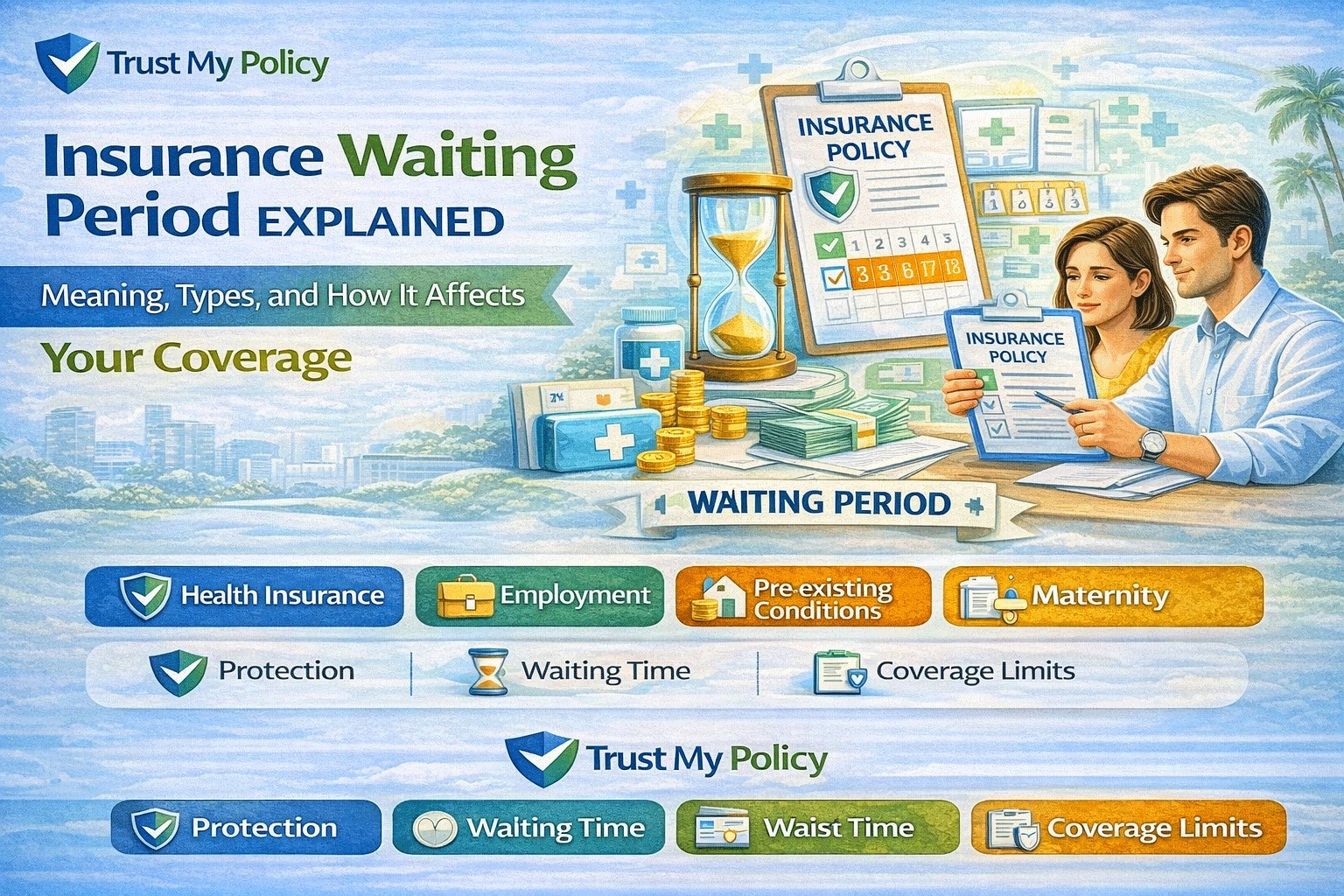
An insurance waiting period is a specific span of time after your policy starts during which certain benefits aren’t yet active, even though the policy itself is in force. Common examples include 30-day waiting periods for some health insurance enrollment, 6-12 month waiting periods for major dental work, and waiting periods for disability and long-term care insurance benefits. Auto and standard home insurance typically have no waiting period at all.
Howard Liu, 58, bought a dental insurance plan in Chicago expecting to use it for a major procedure within the month, only to learn major dental work was subject to a 12-month waiting period before coverage applied. He’d assumed coverage started the moment his policy became active, the same way his auto insurance always had.
An Insurance Waiting Period is a specific span of time after your policy starts during which certain coverage isn’t yet active, even though your policy is technically in force. Waiting periods are common for dental, disability, long-term care, and some health insurance benefits, often ranging from 30 days to 12 months depending on the specific coverage. This guide breaks down exactly which policy types have waiting periods, how long they typically last, and how to plan around them.
This article covers what a waiting period actually means, which insurance types commonly include one, real scenarios showing the practical impact, and how to plan your coverage timing around them. By the end, you’ll know exactly when your coverage actually starts working.
| Feature | Details |
| What it is | A specific delay after policy start before certain benefits become active |
| Who it applies to | Dental, disability, long-term care, and some health insurance policyholders |
| Typical range | 30 days to 12 months, depending on the specific coverage |
| Key benefit | Helps insurers prevent people from buying coverage only after a known need arises |
| Key limitation | You may not have access to certain benefits exactly when you first expect to need them |
| Regulator | State insurance departments (US); Financial Conduct Authority (UK) |
Think of a waiting period like a new gym membership that includes free personal training sessions only after your first month — you’re a member from day one, but a specific benefit doesn’t kick in immediately. Insurance waiting periods work the same way: your policy is active, but a specific benefit isn’t available until the waiting period passes.
An insurance waiting period is a defined span of time after your policy’s effective date during which certain coverage isn’t yet available, even though the policy itself is in force for other purposes. Insurers use waiting periods primarily to prevent adverse selection — people buying coverage specifically because they already know they’ll need a particular benefit soon. Anyone buying dental, disability, long-term care, or certain health insurance products needs to check for this specifically.
| Criteria | Policy Types Commonly With Waiting Periods | Policy Types Typically Without |
| Examples | Dental (major work), disability insurance, long-term care insurance, some maternity benefits | Auto insurance, standard home insurance, most emergency health coverage |
| Typical length | 30 days to 12 months | None, coverage is typically active from the policy start date |
| Reason for the waiting period | Prevents buying coverage only after a known need arises | Less risk of adverse selection for these coverage types |
| Pros | Helps keep premiums lower for the broader risk pool | None directly for the policyholder during the wait |
| Cons | Delays access to benefits you may need sooner than the wait allows | Can create a real gap if you didn’t plan around the waiting period |
We recommend checking for a waiting period before buying any dental, disability, or long-term care policy for most readers, since these are the categories most likely to include one.
Scenario 1: Howard, 58, in Chicago. Howard’s 12-month waiting period for major dental work meant he had to delay his planned procedure or pay entirely out of pocket. Verdict: not checking for a waiting period before buying led to a real timing mismatch with his actual need. Action: Howard now reads the waiting period section of any new policy before assuming coverage starts immediately.
Scenario 2: A new employee in Leeds enrolling in a workplace disability insurance plan. A 90-day waiting period meant a short-term disability claim filed in week six wasn’t covered. Verdict: disability insurance waiting periods can create a meaningful coverage gap right after a new policy starts. Action: she asked her employer whether prior coverage credit could reduce the waiting period given her previous job’s similar plan.
Scenario 3: A family in Texas buying long-term care insurance for an aging parent. A 90-day waiting period applied before benefits could begin, which they hadn’t anticipated when planning for an imminent care need. Verdict: long-term care waiting periods can directly affect urgent planning timelines. Action: they arranged temporary private-pay care to bridge the waiting period before benefits activated.
Scenario 4: A self-employed worker in the UK buying income protection insurance. A chosen waiting period of 13 weeks (sometimes called a “deferred period” in the UK) lowered his premium significantly compared to a 4-week option. Verdict: choosing a longer waiting period can meaningfully reduce the premium if you have enough savings to bridge the gap. Action: he confirmed he had sufficient personal savings to cover the 13-week gap before choosing that option.
| Pros | Cons |
| Helps keep premiums lower by reducing adverse selection in the risk pool. | Can create a real gap between when you buy coverage and when a specific benefit becomes active. |
| Choosing a longer waiting period (where optional) can lower your premium. | Choosing too long a waiting period can leave you financially exposed if you can’t bridge the gap. |
| Some insurers offer credit for prior coverage to reduce a new waiting period. | Not all insurers offer this credit, so switching can sometimes reset the clock. |
| Clearly defined waiting periods give you a predictable timeline to plan around. | Many people don’t check for a waiting period until they try to use the benefit. |
| Waiting periods are usually clearly disclosed in policy documents if you look. | The terminology varies (waiting period, elimination period, deferred period), which can cause confusion. |
⚠️ WARNING: Never assume a specific benefit is active simply because your policy itself has started. Waiting periods apply separately from your policy’s effective date, and using a benefit before the waiting period ends typically results in a denied claim, even though your policy is otherwise fully in force.
| Your Situation | Our Recommendation |
| You’re buying a dental plan and expect to need major work soon | Yes — check the specific waiting period before assuming coverage applies right away |
| You’re switching insurers for disability or long-term care coverage | Yes — ask about prior coverage credit to potentially reduce a new waiting period |
| You’re choosing a waiting period length to optimize your premium | Yes — only choose a longer period if you can genuinely bridge that gap financially |
| You assume your new policy covers everything from day one | No — check specifically for any waiting periods buried in the policy details |
| You’re planning long-term care for an aging family member with an imminent need | Yes — plan a bridge solution for the waiting period before benefits activate |
| You’re confusing a waiting period with a grace period | Yes — clarify the distinction directly with your insurer if you’re unsure |
| You have predictable future coverage needs (like planned dental work) | Yes — buy coverage well ahead of that need to clear the waiting period in advance |
💡 TIP: The single golden rule for waiting periods: buy coverage for predictable future needs well before you actually need it, since the waiting period clock only starts once your policy begins.
| Scenario | Typical Waiting Period | Notes |
| Dental insurance, basic preventive care | Often none or very short | Cleanings and checkups are typically available quickly |
| Dental insurance, major work (crowns, root canals) | 6–12 months | Common across many standalone dental plans |
| Disability insurance, new employer plan | 30–90 days | Reflects standard workplace benefit waiting periods |
| Long-term care insurance | Often around 90 days | Sometimes called an “elimination period” |
| UK income protection insurance, deferred period | 4–52 weeks (your choice) | Longer deferred periods typically lower the premium |
| Maternity benefits under some health plans | Often 9-12 months in plans that include this waiting period | Less common since many reforms removed this for standard plans |
| Auto and standard home insurance | None in most cases | Coverage is typically active from the policy’s effective date |
Your insurer’s policy documents — The definitive source for the exact waiting period length applicable to each specific benefit. Cost range: free to review. Best for: confirming your exact terms before assuming coverage applies. Rating: not applicable, primary source document.
Independent insurance brokers — Brokers can compare waiting period lengths across insurers and identify any prior coverage credit options. Cost range: typically free for the consumer. Best for: anyone planning around a predictable future need. Rating: varies by broker, check licensing.
NAIC consumer resources (US) — Publishes plain-language guidance on waiting periods across different US insurance types. Cost range: free public resource. Best for: US consumers researching specific coverage timing rules. Rating: regulatory standards body.
Financial Conduct Authority (UK) — Sets standards for how UK insurers must clearly disclose deferred or waiting periods to consumers. Cost range: free to consult guidance. Best for: UK consumers wanting to understand disclosure requirements. Rating: government regulatory body.
HR or benefits administrators (for workplace plans) — Can clarify specific waiting periods for employer-provided disability, dental, or health benefits. Cost range: free for employees. Best for: anyone enrolling in a new workplace benefits plan. Rating: not applicable, internal resource.
We recommend reviewing your own policy documents directly as best overall, since waiting period lengths vary significantly by insurer, benefit type, and country.
An insurance waiting period is a specific span of time after your policy starts during which certain benefits aren’t yet active, even though your policy itself is in force.
Dental insurance (for major work), disability insurance, long-term care insurance, and some specialized health insurance benefits commonly include waiting periods.
Typically not. Most auto and standard home insurance policies provide coverage from the policy’s effective date with no waiting period.
In some cases, yes, if you can show prior continuous coverage with a similar plan, some insurers will credit that time and reduce or waive a new waiting period.
The claim is typically denied, even though your policy is otherwise in force, since the specific benefit isn’t yet active until the waiting period passes.
Yes, “deferred period” is a term commonly used in the UK, particularly for income protection insurance, and works the same way as a waiting period.
Only if you have sufficient savings to comfortably bridge that gap, since a longer waiting period directly increases your financial exposure during that time.
Major dental work like crowns or root canals often carries a 6–12 month waiting period, while preventive care like cleanings is typically available much sooner.
It can, unless the new insurer offers credit for prior continuous coverage, so it’s worth asking directly before switching if a waiting period is a concern.
Buy the relevant coverage as early as possible, ideally well before your anticipated need, so the waiting period clears before you actually require the benefit.
This article is for informational purposes only. Always consult a licensed insurance professional before making coverage decisions. Trust My Policy does not sell insurance products or represent any insurer.

Jagadeesh Gutha is the founder of TrustMyPolicy.com, an independent insurance information platform covering life, health, car, home, and business insurance for US and UK readers. He researches insurance products, policy structures, and consumer rights to help everyday people make informed coverage decisions without the jargon. All content on TrustMyPolicy is independently researched, fact-checked, and written to educate — not to sell.


Insurance Guides for UK, USA & Worldwide We are not an insurer or broker.
Reader Comments (0)