
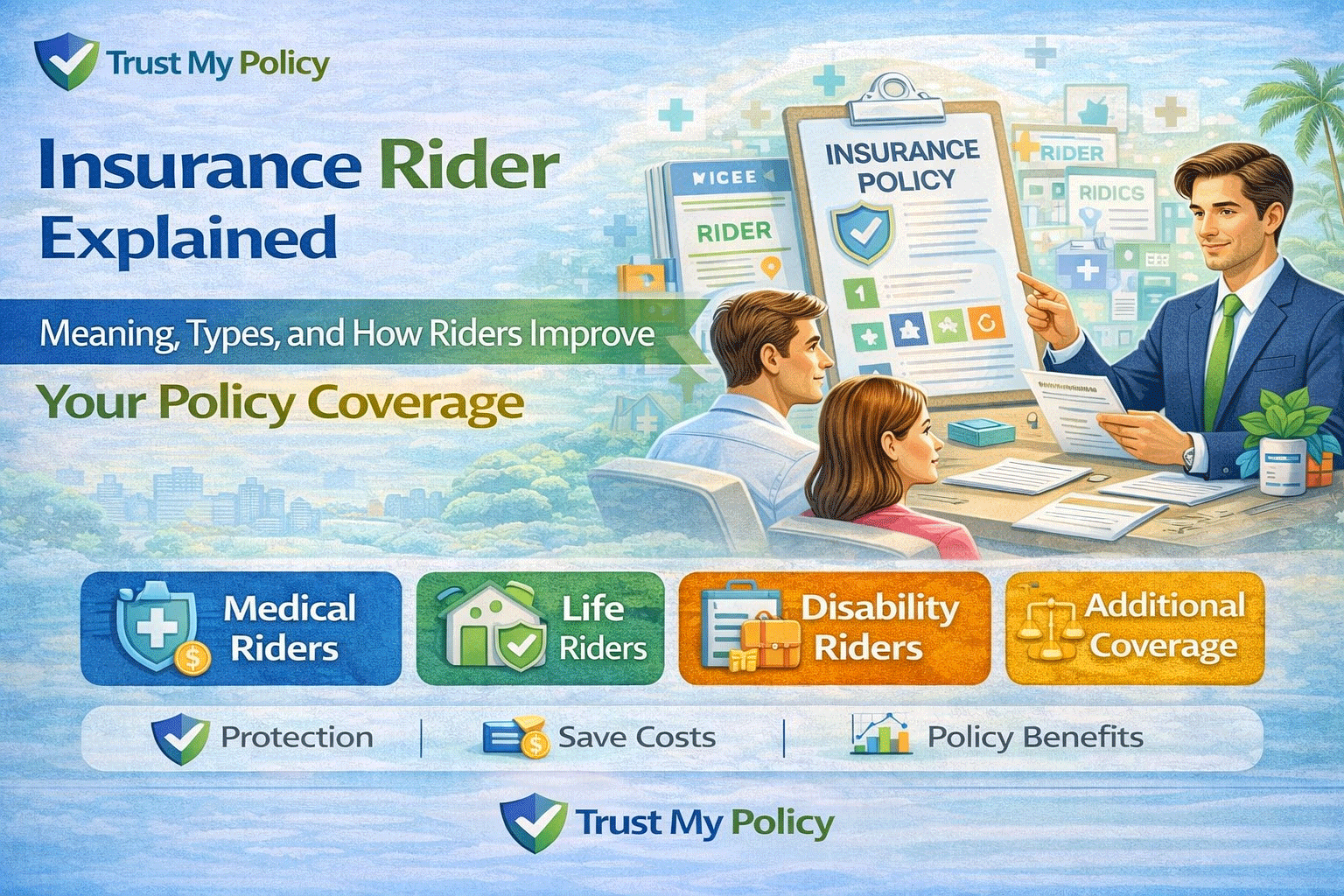
An insurance rider is an optional add-on that modifies a base policy, either adding a new benefit, increasing a coverage limit, or covering a specific situation not otherwise included. Common examples include a critical illness rider on life insurance, a waiver of premium rider on disability cases, and a rideshare endorsement on auto insurance. Riders typically cost $5–$50 a month depending on the specific benefit added.
Olivia Brennan, 30, bought a term life insurance policy in Dublin-adjacent Liverpool and almost skipped past a single checkbox offering a “critical illness rider” for an extra £8 a month. Eighteen months later, a cancer diagnosis triggered that exact rider, paying her a lump sum while she was still alive to use it, separate entirely from her policy’s death benefit.
Insurance Rider Explained simply: a rider is an optional add-on to an insurance policy that modifies its coverage, either by adding a benefit, expanding a limit, or covering a specific situation the base policy wouldn’t otherwise handle. Riders are common on life, health, home, and auto policies, and typically cost a small additional premium for a specific, targeted benefit. This guide breaks down exactly how riders work and which ones are genuinely worth adding.
This article covers what a rider actually does, the most common types across different insurance lines, real scenarios showing their value, and a clear framework for deciding which ones to add. By the end, you’ll know exactly when that checkbox is worth checking.
| Feature | Details |
| What it is | An optional add-on that modifies or expands a base insurance policy |
| Who uses riders | Life, health, home, and auto policyholders wanting targeted extra coverage |
| Typical cost | $5–$50/month depending on the specific rider and coverage amount |
| Common types | Critical illness, waiver of premium, accidental death, rideshare, scheduled property |
| Key benefit | Lets you customize a policy for a specific risk without buying an entirely separate policy |
| Key limitation | Each rider has its own specific terms, exclusions, and sometimes its own underwriting |
| Regulator | State insurance departments (US); Financial Conduct Authority (UK) |
Think of a rider like adding toppings to a base pizza order. The base policy is the standard pizza everyone gets, but a rider lets you add something specific you actually need, whether that’s extra cheese or, in insurance terms, critical illness coverage or a higher jewelry limit.
An insurance rider, sometimes called an endorsement, is an optional amendment to a base policy that adds a benefit, expands a coverage limit, or addresses a specific situation the standard policy wouldn’t otherwise cover. Riders are available across life, health, home, and auto insurance, each with their own specific purpose and cost. Anyone with a unique risk, like a valuable item, a rideshare side job, or a family history of critical illness, should review which riders might genuinely apply to their situation.
| Criteria | Life Insurance Riders | Property & Auto Insurance Riders |
| Common examples | Critical illness, waiver of premium, accidental death, child term | Scheduled property (jewelry, art), rideshare endorsement, water backup |
| Typical cost | $5–$40/month depending on rider and coverage amount | $5–$30/month depending on rider and coverage amount |
| Best for | Those wanting living benefits or extra protection beyond a death payout | Those with high-value items or specific risk exposures like gig driving |
| Pros | Can provide payouts while still alive, unlike a standard death benefit | Closes specific coverage gaps without buying an entirely separate policy |
| Cons | Some riders require separate underwriting or health questions | Adds incremental cost for what can be a narrow, specific benefit |
We recommend reviewing your base policy’s actual gaps before adding any rider for most readers, since riders are most valuable when they address a real, specific risk you actually face.
Scenario 1: Olivia, 30, policyholder in Liverpool. Olivia’s £8/month critical illness rider paid out a lump sum after a cancer diagnosis, separate from her policy’s death benefit, while she was still alive to use the money. Verdict: living benefit riders can provide meaningful value precisely when you need it most. Action: Olivia used the payout to cover treatment costs and reduced work hours during recovery.
Scenario 2: Marcus, 26, rideshare driver in Dallas. Marcus added a rideshare endorsement to his personal auto policy for $14 a month, closing a gap his standard policy excluded during active rideshare trips. Verdict: gig economy riders address a real, common coverage gap. Action: Marcus confirmed the endorsement was active before accepting his first rideshare trip.
Scenario 3: A homeowner in Chicago with a valuable jewelry collection. Her standard homeowners policy capped jewelry coverage at $1,500, far below her collection’s actual value, until she added a scheduled property rider covering each piece individually. Verdict: standard policy limits often fall short for specific high-value items. Action: she had her jewelry professionally appraised to support the rider’s coverage amount.
Scenario 4: A father of two in Leeds adding a child term rider to his own life insurance policy. For a small additional premium, the rider provided a modest death benefit for each of his children, convertible to their own policy later without new underwriting. Verdict: this rider provided affordable coverage and a future option without requiring separate policies. Action: he plans to help his children convert their coverage to standalone policies once they’re adults.
| Pros | Cons |
| Lets you customize a policy for a specific risk without buying a separate policy. | Each rider adds incremental cost on top of your base premium. |
| Living benefit riders can provide payouts while you’re still alive to use them. | Some riders require their own underwriting, which can delay approval. |
| Riders can close common gaps, like rideshare driving or high-value items. | Riders have their own specific terms and exclusions separate from the base policy. |
| Often more cost-effective than purchasing an entirely separate specialty policy. | Reviewing every available rider option can feel overwhelming during initial purchase. |
| Some riders, like waiver of premium, protect your coverage during hardship. | Not all riders are available to add after the policy is already in force. |
⚠️ WARNING: Never assume a rider provides unlimited or automatic coverage just because it sounds comprehensive. Always read the rider’s specific terms and conditions, since most riders apply only to a narrowly defined situation.
| Your Situation | Our Recommendation |
| You have a family history of critical illness | Yes — consider a critical illness rider on your life insurance policy |
| You drive for a rideshare or delivery service | Yes — add a rideshare endorsement to your personal auto policy |
| You own high-value jewelry, art, or collectibles | Yes — add a scheduled property rider with updated appraisals |
| You want your life insurance to also help your children’s future coverage | Yes — consider a child term rider, if available and affordable |
| You’re concerned about being unable to pay premiums during a disability | Yes — consider a waiver of premium rider |
| You’re being offered a rider that doesn’t address any risk you actually face | No — skip it and keep your premium focused on relevant coverage |
| You’re unsure whether a rider can be added after your policy is already active | Yes — ask your insurer directly which riders are available post-issue |
💡 TIP: The single golden rule for choosing riders: only add a rider that addresses a specific, real risk you actually face, not simply because it’s offered at checkout.
| Scenario | Typical Cost | Notes |
| Critical illness rider on life insurance | $10–$40/month | Varies by coverage amount and health classification |
| Waiver of premium rider | $3–$10/month | Covers premium payments if you become disabled |
| Accidental death rider | $5–$15/month | Pays an additional benefit if death results specifically from an accident |
| Child term rider | $5–$12/month | Provides modest, convertible coverage for each child |
| Rideshare endorsement (auto insurance) | $10–$20/month | Closes the personal-policy gap during active rideshare trips |
| Scheduled property rider (jewelry, art) | $1–$2 per $100 of value annually | Covers items individually above standard policy limits |
| Water backup rider (homeowners insurance) | $5–$15/month | Covers damage from sewer or drain backups, often excluded by default |
Independent insurance brokers — Brokers can review your specific risks and recommend which riders genuinely apply to your situation. Cost range: typically free for the consumer. Best for: anyone unsure which riders are worth adding. Rating: varies by broker, check state or FCA licensing.
Your insurer’s policy documents — The most reliable source for the specific terms, exclusions, and cost of any rider you’re considering. Cost range: free to review. Best for: confirming exact rider terms before adding one. Rating: not applicable, primary source document.
NAIC consumer resources (US) — Publishes plain-language guidance on common rider types and how they’re regulated across US states. Cost range: free public resource. Best for: US consumers researching rider options. Rating: regulatory standards body.
Financial Conduct Authority (UK) — Sets standards for how UK insurers must disclose rider terms and pricing. Cost range: free to consult guidance. Best for: UK consumers wanting to understand rider disclosure rules. Rating: government regulatory body.
Policygenius (US) — A comparison platform that shows available riders and their cost across multiple life insurance providers. Cost range: free to compare. Best for: US shoppers comparing rider options across insurers. Rating: independent comparison service.
We recommend an independent broker as best overall because they can match specific riders to your actual risks rather than letting you guess from a generic checkout list.
An insurance rider is an optional add-on to a base policy that adds a benefit, expands a coverage limit, or addresses a specific situation not otherwise included in the standard policy.
Most riders cost $5–$40 a month depending on the specific benefit and coverage amount, making them a relatively affordable way to customize a policy.
It depends on the rider and insurer. Some riders are only available at initial purchase, while others can be added later, so it’s worth asking your insurer directly.
A critical illness rider pays a lump sum benefit if you’re diagnosed with a covered serious illness, separate from your life insurance policy’s standard death benefit.
Yes, in most cases. Standard personal auto policies typically exclude coverage during active rideshare trips, so a specific endorsement is needed to close that gap.
This rider waives your premium payments if you become disabled and unable to work, helping ensure your coverage stays active during a hardship.
Yes, if your items’ value exceeds your standard homeowners policy’s built-in limit, since a scheduled rider provides coverage closer to the items’ actual worth.
Some do, particularly health-related riders like critical illness coverage, while others, like a rideshare endorsement, typically don’t require additional underwriting.
No. Only add riders that address a real, specific risk you actually face, since unnecessary riders simply add cost without meaningful benefit.
Review your specific risks, like high-value items, side jobs, or family health history, and ask a broker or your insurer which riders genuinely address those risks.
This article is for informational purposes only. Always consult a licensed insurance professional before making coverage decisions. Trust My Policy does not sell insurance products or represent any insurer.

Jagadeesh Gutha is the founder of TrustMyPolicy.com, an independent insurance information platform covering life, health, car, home, and business insurance for US and UK readers. He researches insurance products, policy structures, and consumer rights to help everyday people make informed coverage decisions without the jargon. All content on TrustMyPolicy is independently researched, fact-checked, and written to educate — not to sell.


Insurance Guides for UK, USA & Worldwide We are not an insurer or broker.
Reader Comments (1)
[…] insurance becomes essential once outside capital and a board are involved, and cyber liability or technology errors and omissions coverage becomes critical the moment user data is part of the product. Anyone building a startup needs to […]