

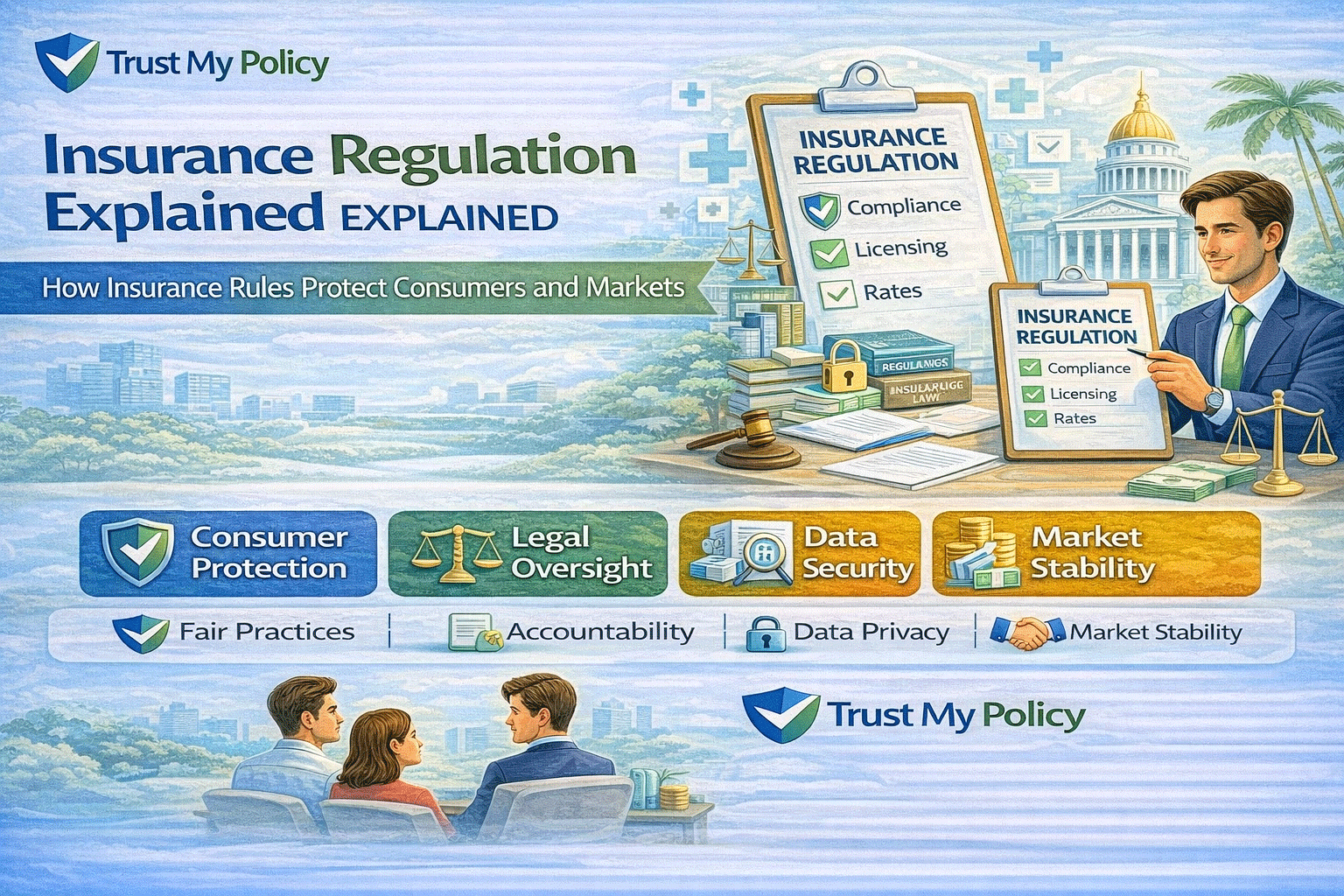
In the US, insurance regulation is primarily handled at the state level, with each state’s insurance department overseeing licensing, rate approval, and consumer complaints, loosely coordinated through the National Association of Insurance Commissioners. In the UK, the Financial Conduct Authority oversees conduct and fair treatment of customers, while the Prudential Regulation Authority oversees insurer financial safety and solvency.
Table of Contents
ToggleInsurance Regulation: Complete 2026 Guide
Wanda Price, 49, filed a complaint against her home insurer in Ohio after a disputed claim denial and was surprised to learn a state regulator, not a court, was her first and most accessible avenue for help. Within three weeks of filing, the state insurance department’s intervention led her insurer to reconsider and partially pay her claim.
Insurance Regulation in 2026 is handled very differently depending on where you live. In the US, each state has its own insurance department overseeing licensing, rate approval, and consumer complaints, coordinated loosely through the National Association of Insurance Commissioners. In the UK, the Financial Conduct Authority and Prudential Regulation Authority share oversight, focused respectively on conduct and financial safety. This guide breaks down exactly who regulates insurance, what they actually do, and how to use that system when something goes wrong.
This article covers the regulatory bodies overseeing insurance in both countries, what each one actually does, real scenarios showing regulation in action, and how to use these resources yourself. By the end, you’ll know exactly who to contact when you need help.
Quick Summary Table
| Feature | Details |
| What it is | The system of government oversight ensuring insurers operate fairly and remain financially sound |
| Who it affects | Every insurance policyholder and every licensed insurer |
| US regulatory structure | State-by-state insurance departments, coordinated through the NAIC |
| UK regulatory structure | Financial Conduct Authority (conduct) and Prudential Regulation Authority (solvency) |
| Key benefit | Provides a free avenue for consumer complaints and oversight of insurer practices |
| Key limitation | US regulation varies by state, creating inconsistency across the country |
| Regulator | State insurance departments, NAIC (US); FCA, PRA (UK) |
What Does Insurance Regulation Actually Cover?
Think of insurance regulation like a referee at a sporting match — not a player, but someone ensuring both sides follow the rules, intervening when something goes clearly wrong, and maintaining standards so the game stays fair for everyone involved. Insurance regulators perform a similar role for the relationship between insurers and policyholders.
Insurance regulation is the system of government oversight covering insurer licensing, rate approval, market conduct, consumer complaints, and financial solvency requirements. In the US, this is handled primarily at the state level, with each state insurance department setting its own specific rules, loosely coordinated through the National Association of Insurance Commissioners. In the UK, regulation is split between the Financial Conduct Authority, which oversees fair customer treatment and conduct, and the Prudential Regulation Authority, which oversees insurer financial safety. Anyone with a coverage dispute, a pricing question, or a concern about an insurer’s stability needs to know which of these bodies can actually help.
How Insurance Regulation Actually Functions — 5 Steps
- Insurers must be licensed to operate in a given state or country. This licensing process verifies the insurer meets baseline financial and operational standards before selling any policies.
- Regulators review and often approve specific rate filings. In the US, this typically happens at the state level; in the UK, pricing oversight focuses more on conduct than individual rate approval.
- Regulators monitor market conduct and consumer treatment. This includes ensuring fair claims handling, accurate marketing, and non-discriminatory pricing practices.
- Consumers can file complaints directly with the relevant regulator. Both US state insurance departments and the UK’s Financial Ombudsman Service provide a free avenue for unresolved disputes.
- Regulators monitor ongoing financial solvency. This ensures insurers maintain sufficient capital reserves to pay future claims, with specific frameworks like US risk-based capital requirements and the UK’s Solvency UK regime.
Comparison: US State-Based Regulation vs. UK Centralized Regulation
| Criteria | US State-Based Regulation | UK Centralized Regulation |
| Structure | Each state has its own insurance department | Two national bodies, the FCA and PRA, cover the whole country |
| Consistency | Varies meaningfully between states | Consistent nationwide standards |
| Rate approval | Often required at the state level for many lines | No line-by-line rate filing system; conduct-focused oversight instead |
| Pros | Allows regulation tailored to each state’s specific market | Provides clear, consistent national standards |
| Cons | Can create confusing inconsistency for consumers and multi-state insurers | Less individualized rate oversight compared to some US states |
We recommend US readers identify their specific state insurance department, and UK readers understand the FCA and PRA’s distinct roles, since each system requires a slightly different approach to getting help.
4 Real-Life Scenarios
Scenario 1: Wanda, 49, homeowner in Ohio. Wanda’s complaint to her state insurance department led to a reconsideration of her disputed claim denial within three weeks. Verdict: state regulators provide a real, accessible avenue for unresolved disputes. Action: Wanda now recommends filing a regulator complaint before pursuing costly legal action for similar disputes.
Scenario 2: A driver in Bristol disputing a UK auto insurance claim decision. After her insurer’s internal appeals process was exhausted, she escalated to the Financial Ombudsman Service, which conducted an independent review. Verdict: the UK’s ombudsman system provides a structured path beyond the insurer’s own internal process. Action: she received a partial settlement after the ombudsman’s review found the claim handling fell short of fair treatment standards.
Scenario 3: A multi-state US insurer launching a new auto insurance product. The insurer had to file and gain approval for its rate structure separately in each state where it planned to operate. Verdict: state-based regulation requires significant coordination for insurers operating nationally. Action: the insurer prioritized states with faster approval timelines for its initial rollout.
Scenario 4: A UK insurer adjusting its capital reserves under the Solvency UK regime. Following the UK’s post-Brexit reform of the Solvency II framework, the insurer adjusted its long-term investment strategy to align with updated capital requirements. Verdict: solvency regulation directly shapes how insurers manage their financial reserves. Action: the insurer worked with its actuarial team to confirm compliance with the updated Solvency UK rules ahead of relevant reporting deadlines.
Pros & Cons of the Insurance Regulatory System
| Pros | Cons |
| Provides a free, accessible avenue for consumer complaints in both countries. | US state-based regulation creates inconsistency across different states. |
| UK’s FCA and PRA split provides clear, focused oversight of conduct and solvency separately. | Navigating which specific body handles a given complaint can be confusing. |
| Licensing requirements help filter out clearly unqualified or unstable insurers. | Regulatory approval processes can slow down legitimate rate or product changes. |
| Solvency oversight protects policyholders from insurer financial instability. | Not all consumers know these free regulatory avenues exist before pursuing costlier options. |
| Ongoing market conduct monitoring helps catch unfair practices over time. | Regulatory action can take weeks to months to resolve a specific dispute. |
5 Common Mistakes People Make
- Not knowing which regulator handles their specific complaint. This happens because the regulatory landscape isn’t widely advertised to consumers. What to do instead: in the US, contact your state insurance department; in the UK, exhaust your insurer’s internal appeal first, then escalate to the Financial Ombudsman Service.
- Assuming regulators can immediately overturn any insurer decision. This happens because complaints feel like they should carry automatic weight. What to do instead: understand that regulators review and can recommend action, but outcomes depend on the specifics of each case.
- Pursuing costly legal action before trying a free regulator complaint. This happens because legal action can feel like the most serious, decisive option. What to do instead: file a free complaint with the relevant regulator first, since many disputes resolve at this stage.
- Assuming UK insurance regulation works the same way as US state-based regulation. This happens because the systems are structured quite differently. What to do instead: understand that the UK uses two centralized national bodies rather than state-by-state oversight.
- Not checking an insurer’s financial strength rating before buying a policy. This happens because solvency oversight happens largely behind the scenes. What to do instead: check independent ratings like AM Best or check that a UK insurer is properly authorized by the PRA before committing to a long-term policy.
⚠️ WARNING: Never assume a dispute with an insurer has no recourse beyond what the insurer itself offers. Both the US state-based system and the UK’s Financial Ombudsman Service provide genuine, free avenues for escalation that many consumers never use.
Decision Table: Which Regulatory Resource Should You Use?
| Your Situation | Our Recommendation |
| You’re a US consumer with an unresolved claim dispute | Yes — file a free complaint with your state insurance department |
| You’re a UK consumer who has exhausted your insurer’s internal appeal | Yes — escalate to the Financial Ombudsman Service |
| You’re shopping for a new policy and want to verify insurer stability | Yes — check AM Best ratings (US) or PRA authorization (UK) |
| You’re a business considering insurance regulation across multiple US states | Yes — research each relevant state’s specific requirements before launching |
| You suspect unfair or discriminatory pricing practices | Yes — report this to your state insurance department or the FCA |
| You’re considering legal action before trying a regulator complaint | No — try the free regulatory complaint route first in most cases |
| You’re unsure whether your specific issue is a conduct or solvency matter (UK) | Yes — conduct issues go to the FCA, financial stability concerns relate to the PRA |
💡 TIP: The single golden rule for using insurance regulation: file a free complaint with the appropriate regulator before assuming you have no recourse or resorting to costly legal action.
Cost Table: What Regulatory Resources Actually Cost
| Scenario | Cost | Notes |
| Filing a complaint with a US state insurance department | $0 | Free for consumers in every US state |
| Escalating a dispute to the UK Financial Ombudsman Service | $0 | Free for consumers, after the insurer’s internal process is exhausted |
| Checking an insurer’s AM Best financial strength rating | $0 | Publicly available free resource |
| Confirming a UK insurer’s PRA authorization status | $0 | Publicly searchable on the Financial Services Register |
| Hiring an attorney before trying regulatory complaint routes | Often $200–$500+/hour | Generally a more expensive and slower first step than a free complaint |
| Multi-state insurer licensing and rate filing compliance costs | Significant, varies by insurer | Reflects the cost of complying with state-by-state regulation |
| UK insurer Solvency UK compliance and reporting costs | Significant, varies by insurer | Reflects ongoing regulatory reporting requirements |
Resources for Engaging with Insurance Regulation
Your state insurance department (US) — The primary point of contact for licensing questions, rate filing information, and consumer complaints in your state. Cost range: free. Best for: any US consumer dispute or regulatory question. Rating: government regulatory body.
NAIC (National Association of Insurance Commissioners) — Coordinates standards and provides consumer resources across all US state insurance departments. Cost range: free public resource. Best for: US consumers wanting a national-level overview. Rating: regulatory standards body.
Financial Conduct Authority (UK) — Oversees fair conduct and customer treatment standards for UK insurers. Cost range: free to consult guidance. Best for: UK consumers with conduct-related concerns. Rating: government regulatory body.
Prudential Regulation Authority (UK) — Oversees the financial safety and solvency of UK insurers, including the Solvency UK framework. Cost range: free to consult guidance. Best for: UK consumers researching insurer financial stability. Rating: government regulatory body.
Financial Ombudsman Service (UK) — An independent body that reviews unresolved insurance complaints after an insurer’s internal process is exhausted. Cost range: free for consumers. Best for: UK policyholders with an unresolved dispute. Rating: independent statutory ombudsman.
We recommend your state insurance department (US) or the Financial Ombudsman Service (UK) as best overall first step for any unresolved dispute, since both are free and specifically designed to handle exactly this kind of issue.
Frequently Asked Questions
What is insurance regulation?
Insurance regulation is the system of government oversight covering insurer licensing, rate approval, market conduct, consumer complaints, and financial solvency requirements.
Who regulates insurance in the US?
Insurance is primarily regulated at the state level in the US, with each state’s insurance department setting its own rules, loosely coordinated through the National Association of Insurance Commissioners.
Who regulates insurance in the UK?
The Financial Conduct Authority oversees conduct and fair customer treatment, while the Prudential Regulation Authority oversees insurer financial safety and solvency, including the Solvency UK framework.
How do I file a complaint against my insurer in the US?
Contact your specific state’s insurance department directly, which provides a free process for reviewing unresolved disputes with licensed insurers in that state.
How do I escalate a dispute in the UK?
First exhaust your insurer’s internal appeals process, then escalate to the Financial Ombudsman Service, which provides an independent, free review of unresolved complaints.
Why does US insurance regulation vary by state?
The US insurance regulatory system has historically been organized at the state level, allowing each state to tailor rules to its own specific market, which creates meaningful variation nationwide.
What is the difference between the FCA and PRA in the UK?
The FCA focuses on conduct and fair treatment of customers, while the PRA focuses specifically on the financial safety and solvency of insurers.
Can regulators force an insurer to pay a disputed claim?
Regulators can investigate, recommend corrective action, and apply pressure, but outcomes depend on the specifics of each case rather than an automatic guaranteed reversal.
How can I check if an insurer is financially stable before buying a policy?
Check independent ratings like AM Best in the US, or confirm a UK insurer’s authorization status on the Financial Conduct Authority’s Financial Services Register.
Is filing a regulatory complaint free?
Yes, both the US state insurance department complaint process and the UK Financial Ombudsman Service are free for consumers to use.
Key Takeaways
- File a free complaint with your state insurance department before pursuing costly legal action in the US.
- Exhaust your insurer’s internal appeal first, then escalate to the Financial Ombudsman Service in the UK.
- Check an insurer’s financial strength rating before committing to a long-term policy.
- Understand that US regulation varies by state, while UK regulation is centralized nationally.
- Know the distinct roles of the FCA and PRA when escalating a UK dispute.
- Report suspected unfair or discriminatory pricing practices to the relevant regulator.
- Use the NAIC or FCA’s public resources for a clearer national-level overview of your rights.
This article is for informational purposes only. Always consult a licensed insurance professional before making coverage decisions. Trust My Policy does not sell insurance products or represent any insurer.

Reader Comments (0)