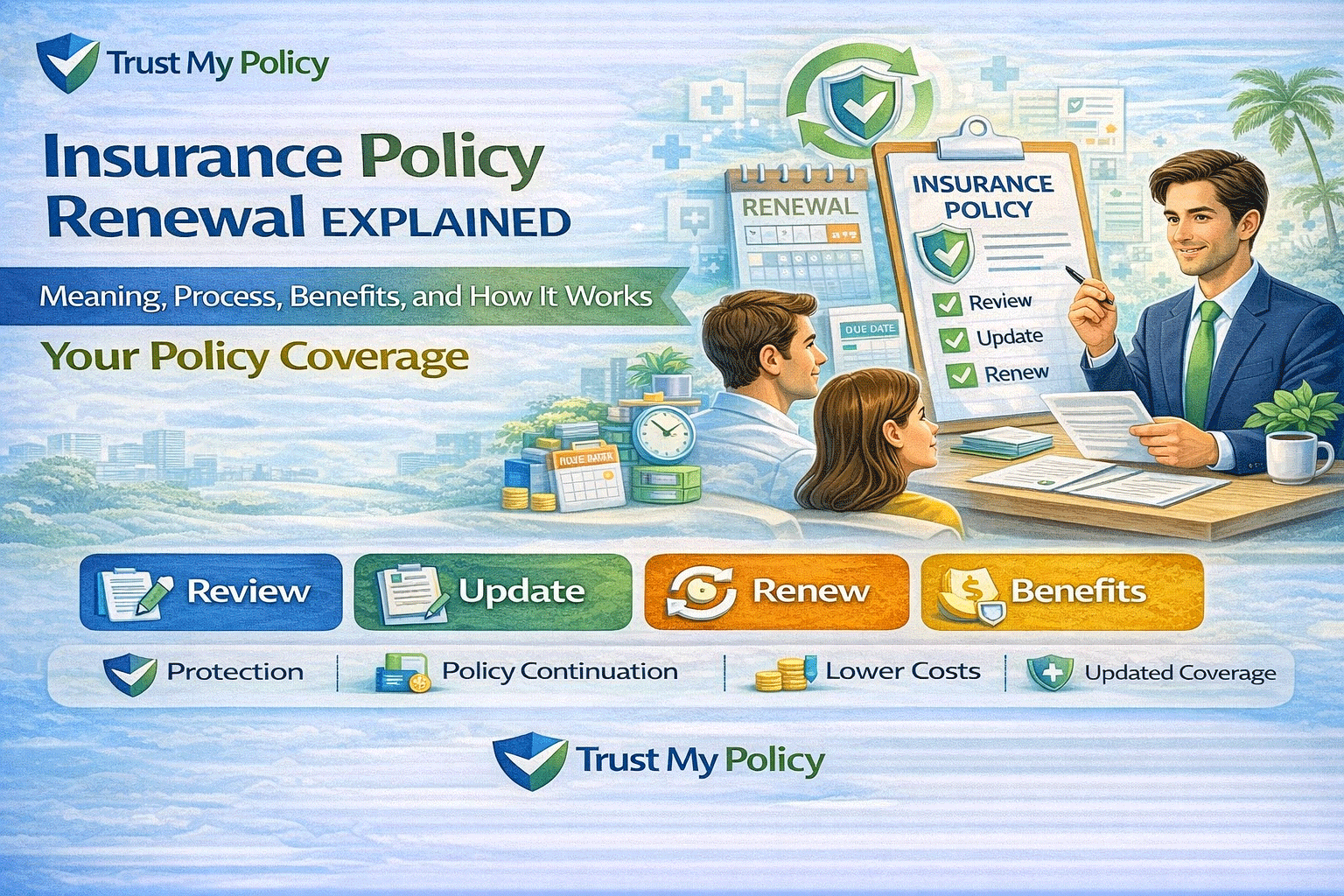
Insurance Policy Renewal Explained: Meaning, Process, Benefits, and How It Works
Insurance policies do not last forever. Most insurance contracts—such as health insurance, car insurance, travel insurance, and home insurance—are issued for a fixed period, usually one year. After this period ends, the policy must be renewed to continue coverage. This process is known as insurance policy renewal.
Understanding insurance policy renewal is important because missing a renewal can lead to a lapse in coverage. When coverage lapses, the policyholder may lose important benefits such as accumulated bonuses, waiting period credits, or eligibility for claims. In some cases, the person may even need to buy a completely new policy, which can be more expensive.
For individuals and families worldwide, insurance renewal helps maintain continuous protection against financial risks like medical expenses, accidents, property damage, or liability. It also allows policyholders to review their coverage and make adjustments based on changing needs.
This guide explains insurance policy renewal in simple terms. It covers what renewal means, how the process works, why it matters, common mistakes, and practical examples to help readers clearly understand the concept.
Insurance Policy Renewal
| Aspect | Insurance Policy Renewal |
|---|---|
| Definition | Extending an existing insurance policy for another term after it expires |
| Typical Renewal Period | Usually yearly, but varies by policy |
| Purpose | Maintain continuous insurance coverage |
| What Happens If Not Renewed | Policy expires and coverage stops |
| Renewal Requirements | Payment of premium and sometimes updated information |
| Benefits | Continuous coverage, preserved benefits, easier claims |
| Common Policies Requiring Renewal | Health, car, travel, home, and business insurance |
, benefits, and financial protection options available to policyholders. Many readers compare multiple guides before selecting a plan so they can clearly evaluate premiums, claim procedures, and long‑term advantages. A useful resource to explore is Best Car Insurance for High-Risk Drivers, which explains how this insurance policy works, the key benefits it offers, and situations where it may be the most suitable option. By reviewing this guide, you can gain deeper insights into coverage features, eligibility requirements, and practical tips that help individuals and families make smarter insurance decisions.
What Is Insurance Policy Renewal?
Insurance policy renewal refers to the process of extending an existing insurance policy after its term ends by paying the renewal premium. It keeps the insurance coverage active for another policy period.
Most insurance policies are issued for a specific duration, often one year. Once that period ends, the policyholder must renew the policy if they want the coverage to continue.
Renewal is usually simple. It involves:
-
Paying the renewal premium
-
Confirming policy details
-
Updating personal or risk information if needed
After renewal, the policy continues with either the same coverage or modified terms depending on the insurer’s rules.
Key Features of Policy Renewal
-
Maintains continuous insurance coverage
-
Prevents policy lapse
-
Preserves benefits such as no-claim bonuses
-
May allow policy updates or adjustments
Example
A person buys a health insurance policy valid from January 2025 to January 2026.
Before January 2026 ends, they pay the renewal premium. The policy then continues until January 2027.
Why Insurance Policy Renewal Is Important
Renewing an insurance policy on time is important for several reasons.
1. Continuous Financial Protection
Renewal ensures uninterrupted protection against risks such as:
-
Medical emergencies
-
Vehicle accidents
-
Property damage
-
Travel disruptions
Without renewal, coverage stops completely.
2. Preservation of Policy Benefits
Many insurance policies include benefits that build over time, such as:
-
No-claim bonuses
-
Reduced waiting periods
-
Loyalty benefits
-
Policy discounts
If a policy lapses, these benefits may be lost.
3. Avoiding Higher Premiums
If coverage lapses and the person buys a new policy later, insurers may:
-
Increase premiums
-
Apply new waiting periods
-
Conduct fresh risk evaluations
Renewing on time avoids these complications.
4. Easier Claims Processing
Continuous policies make claims processing smoother because insurers already have the policyholder’s history and records.
, benefits, and financial protection options available to policyholders. Many readers compare multiple guides before selecting a plan so they can clearly evaluate premiums, claim procedures, and long‑term advantages. A useful resource to explore is Liability vs Full Coverage Insurance, which explains how this insurance policy works, the key benefits it offers, and situations where it may be the most suitable option. By reviewing this guide, you can gain deeper insights into coverage features, eligibility requirements, and practical tips that help individuals and families make smarter insurance decisions.
Types of Insurance Policies That Require Renewal
Most common insurance products require periodic renewal.
Health Insurance
Health insurance policies often renew every year. Renewal ensures continued medical coverage and preserves waiting period credits.
Motor Insurance
Car and motorcycle insurance policies typically require annual renewal to remain legally compliant in many countries.
Home Insurance
Homeowners and renters insurance usually renew yearly to maintain protection for property and belongings.
Travel Insurance
Some travel policies are single-trip, but annual travel insurance plans require renewal.
Business Insurance
Businesses often renew liability, property, or professional insurance annually.
Insurance Policy Renewal Process
The renewal process usually follows several steps.
Step 1: Renewal Notification
Most insurers send reminders before the policy expires.
These reminders may arrive through:
-
Email
-
SMS
-
Postal mail
-
Mobile app notifications
Step 2: Review of Policy Details
Policyholders should review:
-
Coverage limits
-
Policy exclusions
-
Premium amount
-
Updated policy terms
Step 3: Premium Payment
The policyholder pays the renewal premium.
Payment methods may include:
-
Online payment
-
Bank transfer
-
Automatic debit
-
Payment through insurance agents
Step 4: Policy Confirmation
After payment, the insurer issues a renewed policy document confirming continued coverage.
Detailed Comparison Table: Policy Renewal vs Policy Lapse vs New Policy
| Feature | Policy Renewal | Policy Lapse | New Policy Purchase |
|---|---|---|---|
| Coverage Status | Continues without interruption | Coverage stops | Starts fresh |
| Waiting Periods | Usually already completed | May reset | Typically start again |
| No Claim Bonus | Preserved | Often lost | Not applicable |
| Risk Assessment | Usually minimal | May require review | Full underwriting |
| Premium Cost | Usually stable | May increase later | May be higher |
| Documentation | Limited updates | New application needed | Full application required |
| Claim Eligibility | Immediate | Not available | Depends on waiting periods |
, benefits, and financial protection options available to policyholders. Many readers compare multiple guides before selecting a plan so they can clearly evaluate premiums, claim procedures, and long‑term advantages. A useful resource to explore is Liability Insurance for Businesses, which explains how this insurance policy works, the key benefits it offers, and situations where it may be the most suitable option. By reviewing this guide, you can gain deeper insights into coverage features, eligibility requirements, and practical tips that help individuals and families make smarter insurance decisions.
Pros and Cons of Insurance Policy Renewal
Advantages
1. Continuous Protection
Renewal ensures there is no gap in insurance coverage.
2. Retention of Benefits
Policyholders keep accumulated advantages such as:
-
No-claim bonuses
-
Loyalty rewards
-
Waiting period credits
3. Easier Process
Renewing an existing policy is usually faster than buying a new one.
4. Predictable Premiums
Premiums often increase gradually rather than dramatically.
Disadvantages
1. Premium Increases
Insurers may raise premiums during renewal due to:
-
Age
-
Claims history
-
Inflation
-
Risk factors
2. Policy Changes
Coverage terms may change over time.
3. Overlooking Better Options
Automatically renewing without review may cause policyholders to miss better coverage options.
Real-Life Examples of Insurance Policy Renewal
Example 1: Health Insurance Renewal
Maria purchased a health insurance policy in 2023. She renews the policy every year.
Because she renewed continuously, her waiting period for certain treatments ended in 2025. If she had allowed the policy to lapse, the waiting period might have restarted.
Example 2: Car Insurance Renewal
David owns a car and renews his vehicle insurance each year.
Because he had no claims for three years, he received a no-claim bonus discount when renewing his policy.
Example 3: Home Insurance Renewal
A homeowner renews their property insurance annually.
After a few years, the homeowner updates the policy during renewal to increase coverage due to rising property values.
Example 4: Missed Renewal
A traveler forgets to renew annual travel insurance.
When they take a trip, they realize they no longer have coverage for medical emergencies abroad.
, benefits, and financial protection options available to policyholders. Many readers compare multiple guides before selecting a plan so they can clearly evaluate premiums, claim procedures, and long‑term advantages. A useful resource to explore is Home Insurance Coverage Types, which explains how this insurance policy works, the key benefits it offers, and situations where it may be the most suitable option. By reviewing this guide, you can gain deeper insights into coverage features, eligibility requirements, and practical tips that help individuals and families make smarter insurance decisions.
Common Mistakes During Insurance Policy Renewal
Many policyholders make simple mistakes when renewing insurance policies.
1. Missing the Renewal Date
One of the most common mistakes is forgetting the renewal deadline.
This can lead to:
-
Policy lapse
-
Loss of benefits
-
Higher future premiums
2. Ignoring Policy Changes
Some policyholders renew without reviewing updated terms.
Changes may include:
-
Coverage limits
-
Deductibles
-
Exclusions
3. Not Updating Personal Information
Policyholders should update details such as:
-
Address
-
Contact information
-
Health status
-
Vehicle usage
Incorrect information may affect claims.
4. Underinsuring Assets
Over time, property values and healthcare costs increase.
Failing to update coverage may lead to insufficient protection.
5. Automatic Renewal Without Review
While automatic renewal is convenient, it can prevent policyholders from reassessing whether the policy still meets their needs.
Tips for Managing Insurance Policy Renewals
Policyholders can follow simple steps to handle renewals effectively.
Set Renewal Reminders
-
Use calendar alerts
-
Track policy expiration dates
Review Coverage Annually
Check whether coverage still fits current needs.
Compare Policy Terms
Even if renewing, reviewing policy details helps maintain appropriate coverage.
Maintain Claim History Records
Tracking claims and benefits helps understand how renewal affects premiums.
Ask Questions if Needed
Policyholders should clarify any unclear terms before renewing.
Frequently Asked Questions (FAQs)
1. What does insurance policy renewal mean?
Insurance policy renewal means extending an existing insurance policy for another coverage period by paying the renewal premium before the policy expires.
2. What happens if an insurance policy is not renewed?
If a policy is not renewed, it expires and coverage stops. The policyholder may lose accumulated benefits and may need to purchase a new policy.
3. Can insurance premiums change during renewal?
Yes. Premiums may change due to factors such as age, claims history, inflation, or changes in coverage.
4. Is there a grace period for policy renewal?
Some insurance policies offer a short grace period after the expiration date. However, coverage may be suspended during that period depending on policy terms.
5. Can policyholders modify coverage during renewal?
Yes. Renewal is often an opportunity to adjust coverage limits, add riders, or update policy details.
6. Do waiting periods restart after renewal?
Normally, waiting periods do not restart if the policy is renewed continuously. However, they may restart if the policy lapses.
7. Is renewal automatic for all insurance policies?
Not always. Some policies offer automatic renewal, while others require manual payment before the expiration date.
, benefits, and financial protection options available to policyholders. Many readers compare multiple guides before selecting a plan so they can clearly evaluate premiums, claim procedures, and long‑term advantages. A useful resource to explore is Cashless vs Reimbursement Health Insurance Claims, which explains how this insurance policy works, the key benefits it offers, and situations where it may be the most suitable option. By reviewing this guide, you can gain deeper insights into coverage features, eligibility requirements, and practical tips that help individuals and families make smarter insurance decisions.
Conclusion
Insurance policy renewal is a simple but essential process that keeps insurance coverage active after the policy term ends. By paying the renewal premium before the expiration date, policyholders can maintain continuous protection against financial risks such as medical expenses, accidents, property damage, or travel emergencies.
Renewal also helps preserve valuable policy benefits, including waiting period credits, no-claim bonuses, and loyalty rewards. Allowing a policy to lapse can result in loss of these benefits and may require purchasing a new policy with stricter conditions.
To manage renewals effectively, policyholders should monitor expiration dates, review policy terms regularly, update personal information, and ensure coverage still matches their needs. Understanding how insurance policy renewal works helps individuals and families make informed decisions and maintain consistent financial protection.
Disclaimer: This article is for educational purposes only. Trust My Policy is an independent informational platform and does not sell insurance products or represent any insurance provider. Readers should consult official policy documents or licensed professionals for personalized advice.