
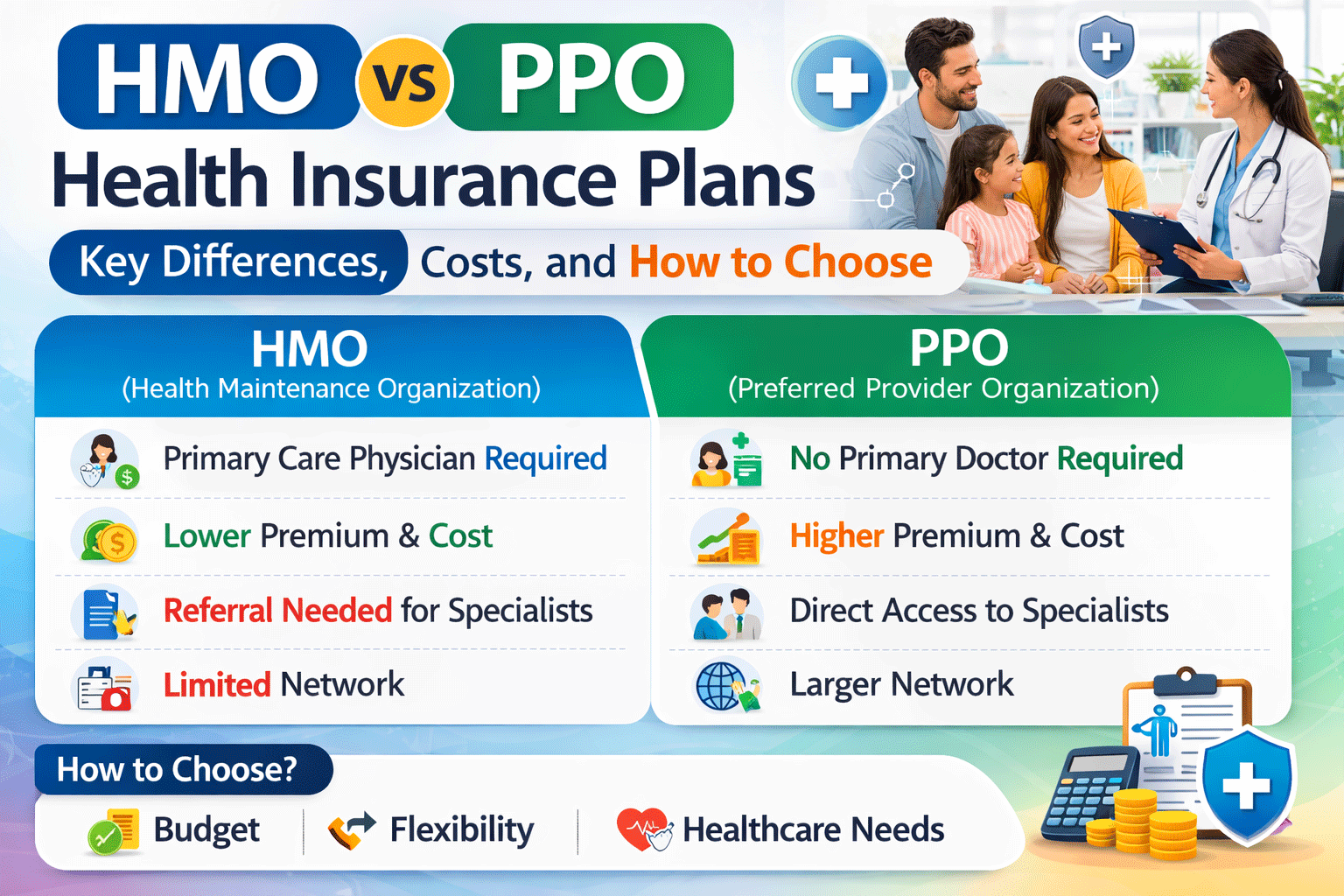
An HMO (Health Maintenance Organization) requires you to choose a primary care physician (PCP) who coordinates all your care. You need referrals to see specialists and must stay within the HMO network. HMOs cost less — an average of $41/month less than PPOs (ValuePenguin 2025). A PPO (Preferred Provider Organization) lets you see any doctor in or out of network without referrals, at a higher premium. Choose HMO if you are healthy and want lower cost. Choose PPO if you have ongoing specialist needs or value freedom to choose any doctor.
When Aisha, a 39-year-old marketing director from Chicago, changed jobs in early 2026, she had 30 days to choose between her new employer’s HMO plan at $180/month or their PPO plan at $260/month. The $80/month difference seemed clear — take the HMO and save $960/year. But Aisha sees a rheumatologist every two months for an autoimmune condition. Under the HMO, she would need a GP referral each time. Her rheumatologist was not in the HMO network. Under the PPO, she could see him directly at a higher copay. She chose the HMO without checking network status. Three months in, she could not see her specialist without starting over with a new in-network rheumatologist, losing 8 years of treatment history.
HMO vs PPO health insurance plans in 2026 is a decision that affects not just your monthly premium but who you can see, how quickly you can access specialists, and how much you pay when you need care outside your network. According to CalPERS July 2025 data, Basic PPO premiums increased 12.08% for 2026 versus 6.48% for HMO plans — the cost gap is widening. But the right choice depends entirely on your health profile, preferred doctors, and how you use healthcare.
In this guide you will learn exactly how HMO and PPO plans differ in structure, referral requirements, and cost, which plan wins for five different health profiles, how to check whether your doctor is in-network before you enrol, the 2026 premium data for both plan types, and the four most expensive mistakes people make when choosing between HMO and PPO.
| Feature | HMO | PPO |
| Primary Care Physician required | ✅ Yes — must choose a PCP | ❌ No — see any doctor directly |
| Referral to see specialist | ✅ Yes — PCP referral required | ❌ No — see specialist directly |
| Out-of-network coverage | ❌ No (emergency only) | ✅ Yes — higher cost but covered |
| Average monthly premium | Lower — $41/month less than PPO (ValuePenguin 2025) | Higher — 20% more than HMO (Venteur 2026) |
| Deductible | Often low or zero | Usually higher ($500–$2,500) |
| Network size | Smaller — restricted to HMO network | Larger — in-network + out-of-network access |
| 2026 PPO premium increase | HMO rose 6.48% (CalPERS 2025) | PPO rose 12.08% (CalPERS 2025) |
| Best for | Healthy individuals, low usage, cost-focused | Specialist users, chronic conditions, location flexibility |
An HMO is a Health Maintenance Organization — a type of health plan that contracts with a specific network of doctors, hospitals, and other providers. As an HMO member, you select a primary care physician (PCP) who becomes the coordinator of all your healthcare. Need a specialist? Your PCP must refer you to one within the HMO network. See an out-of-network provider without prior authorisation? The HMO pays nothing except in genuine emergencies.
Think of an HMO as a gated healthcare community. Everything inside the gates is covered at low cost. Leaving the gates costs you everything out of pocket. The trade-off for staying inside: lower premiums, lower or zero deductibles, and predictable copays — usually $10–$30 per visit.
HMOs work best for people who: live in a metro area with a large HMO network, are healthy and primarily need preventive and routine care, have no established specialist relationships they need to keep, and want the lowest possible monthly premium with predictable costs.
For a full overview of health plan types including HMO, PPO, EPO, and HDHP, see our guide on types of health insurance plans — HMO PPO EPO and HDHP compared for 2026
A PPO is a Preferred Provider Organization — a health plan that gives you access to a network of preferred providers at lower cost, while also allowing you to go outside the network at higher cost. No PCP required. No referrals needed. Want to see a dermatologist directly? Book the appointment. Want to see a specialist at an out-of-network hospital? You can — you will just pay a higher coinsurance rate (typically 30–50% vs 10–20% in-network).
Think of a PPO as an open-access healthcare pass. In-network providers cost less; out-of-network providers cost more. But you are never locked out of any provider entirely. This flexibility comes at a price: PPO premiums are approximately 20% higher than HMO premiums according to Venteur April 2026 data.
PPOs work best for people who: have established specialist relationships they need to maintain, live in rural areas with limited HMO networks, travel frequently and need access to care in multiple states, or have chronic conditions requiring frequent specialist visits without waiting for PCP referrals.
If you are comparing PPO costs to high-deductible plans, see our guide on premium vs deductible — how to find the right balance for your health insurance plan
| Criteria | HMO | PPO |
| Typical monthly premium (individual) | $180–$280/month | $240–$380/month |
| Typical deductible | $0–$1,000 (often zero) | $500–$2,500 |
| PCP required | Yes | No |
| Specialist referral required | Yes — from PCP | No — direct access |
| In-network coverage | Full coverage at low copay | Full coverage at standard copay/coinsurance |
| Out-of-network coverage | Not covered (emergency only) | Covered at 30–50% coinsurance |
| Network size | Smaller — local/regional | Larger — national access |
| Telehealth access | Usually in-network only | In and out of network |
| Premium trend 2026 (CalPERS) | HMO rose 6.48% | PPO rose 12.08% |
| Best for | Healthy, cost-focused, local care | Specialist users, travellers, chronic conditions |
We recommend HMO plans for healthy individuals who want the lowest total annual cost and do not have existing specialist relationships. We recommend PPO plans for anyone with chronic conditions, established specialist relationships, or who travels frequently enough that out-of-network access matters.
Scenario 1: Aisha, 39, Marketing Director — Chronic Condition (Chicago)
Aisha has an autoimmune condition managed by a rheumatologist she has seen for 8 years. HMO: $180/month, but her rheumatologist is out of network. She would need a new in-network rheumatologist (losing 8 years of treatment history) and a PCP referral each visit. PPO: $260/month, rheumatologist in network at $55 specialist copay. Annual cost: HMO $2,160 premium + $0 specialist cost (but forced to change doctor) vs PPO $3,120 premium + $660 specialist copays = $3,780. Verdict: PPO saves Aisha continuity of care and is worth the extra $120/month given her specialist dependency.
Scenario 2: James, 28, Software Developer — Healthy, Minimal Usage (San Francisco)
James is healthy, visits his GP once per year for a checkup (free ACA preventive care), takes no regular medications, and has no specialists. HMO: $200/month premium, $0 deductible, $15 copay per visit. PPO: $275/month premium, $800 deductible, $35 copay per visit. Annual HMO cost: $2,400 premium + $0 OOP = $2,400. Annual PPO cost: $3,300 premium + $0 OOP (no claims) = $3,300. HMO saves James $900/year. Verdict: For healthy minimal-usage individuals, HMO is clearly superior.
Scenario 3: Linda, 52, Frequently Travelling Consultant — Multi-State Usage (New York)
Linda works across New York, Dallas, and Seattle and needs medical access in all three cities. Her HMO network is New York State only. A migraine episode in Dallas required urgent care. HMO: emergency only covered out of state; urgent care visit cost $380 out of pocket. PPO: same urgent care visit costs 30% coinsurance = $114 after deductible. Over 12 months Linda had 3 out-of-state care events. HMO OOP: $1,140 uncovered costs. PPO OOP: $342 at coinsurance. PPO saves Linda $798 in out-of-pocket costs alone — and her monthly premium difference was only $720/year. Verdict: For frequent travellers, PPO is the only plan that provides genuine coverage.
Scenario 4: The Patel Family — Children with Varied Needs (Texas)
The Patels (husband 41, wife 39, children ages 5 and 12) are on an HMO family plan at $950/month. Their 12-year-old sees a paediatric neurologist for epilepsy — in-network, requiring a referral each visit. Their 5-year-old needs only routine care. The HMO works well for routine care and their neurologist happens to be in-network. Annual HMO cost: $11,400 premium + $480 specialist copays = $11,880. Equivalent PPO family: $1,200/month = $14,400 + $300 copays = $14,700. HMO saves the Patels $2,820/year because their specialist is in-network. Verdict: If your specialist is in the HMO network, HMO delivers big savings. Always check network status before enrolling.
| Pros of HMO | Cons of HMO | Pros of PPO | Cons of PPO |
| Lower monthly premium — $41 less/month on average (ValuePenguin 2025) | No out-of-network coverage except emergencies | See any doctor without referral — no PCP gatekeeper | Higher monthly premium — 20% more than HMO (Venteur 2026) |
| Low or zero deductible on most plans | Must change doctors if preferred specialist is out of network | Out-of-network care is covered at higher coinsurance | Higher deductible — $500–$2,500 typical |
| Predictable, low copays ($10–$30) per visit | Referral required for every specialist — adds time and friction | Full nationwide and often international network access | Complex billing — in-network and out-of-network rates differ |
| PCP coordinates care — fewer unnecessary specialist referrals | Cannot easily change PCP without re-enrolling in some plans | Ideal for multi-state or international travellers | PPO premiums rose 12.08% in 2026 vs 6.48% for HMO (CalPERS) |
| HMO premium increases lower than PPO in 2026 (CalPERS data) | Plan disruption if your HMO changes its network mid-year | No permission needed — see any specialist at any time | Out-of-network balance billing risk without No Surprises Act protections |
When deciding between these network types, look closely at how they charge for specialist visits. HMOs favor flat fees, while PPOs lean toward percentages. Read our deep-dive comparison on copay vs coinsurance to calculate your potential out-of-pocket exposure.
Mistake 1: Choosing an HMO Without Checking if Your Doctor Is In-Network
Why it happens: People assume their existing doctors will be in the HMO network. What to do instead: Before enrolling, call your doctor’s office and ask: “Do you accept [specific HMO plan name]?” Also search the insurer’s online provider directory. Aisha’s mistake cost her 8 years of treatment continuity.
Mistake 2: Choosing a PPO Purely for Flexibility You Will Never Use
Why it happens: The word “flexibility” sounds appealing even if you only ever see one GP. What to do instead: Honestly assess whether you use out-of-network care or see specialists without referrals. If you do neither, you are paying $41–$80/month more for flexibility that saves you nothing.
Mistake 3: Ignoring That HMO Referrals Take Time
Why it happens: People do not realise the referral process adds 1–4 weeks to specialist access. What to do instead: If you have a condition requiring urgent or frequent specialist access, factor the referral timeline into your decision. For non-urgent conditions, the HMO referral process is manageable. For fast-moving conditions, PPO direct access matters.
Mistake 4: Not Comparing Total Annual Cost — Only Monthly Premium
Why it happens: The premium is visible; the deductible and OOP costs are not. What to do instead: Calculate: (monthly premium x 12) + expected deductible payments + estimated copay costs. A $180/month HMO with $0 deductible and $20 copays can be cheaper than a $240/month PPO with a $1,500 deductible even for moderate healthcare users.
Mistake 5: Assuming Your HMO Network Is the Same Next Year
Why it happens: Networks change annually. Doctors leave HMO networks. What to do instead: At every renewal, re-verify that your key providers are still in-network on your HMO plan. If your PCP or specialist has left the network, you may face the choice of changing doctors or switching to a PPO mid-year (which requires a qualifying event).
⚠️ WARNING: Choosing an HMO When You Have an Out-of-Network Specialist You Cannot Replace
What happens: You enrol in an HMO to save $80/month. Your specialist is out of network. You either pay the specialist’s full rate out of pocket (typically $200–$500 per visit) or you switch to an in-network specialist and lose years of treatment history. The $960/year premium saving disappears with two out-of-pocket specialist visits. What to do instead: Make a list of every doctor you see regularly. Search each one on your potential HMO plan’s provider directory before you enrol. If even one key provider is out of network, calculate whether the PPO premium difference is cheaper than paying that provider out of pocket.
| Your Situation | Our Recommendation |
| Healthy, rarely see doctors, want lowest premium | ✅ HMO — saves $41–$80/month; low-usage means referral requirements are minor |
| You have a chronic condition requiring regular specialist visits | ✅ PPO — direct specialist access without referral delays is essential |
| Your preferred specialist is in the HMO network | ✅ HMO — all the savings with no trade-off on care quality |
| Your preferred specialist is out of the HMO network | ✅ PPO — network access to your specialist is worth the premium difference |
| You travel frequently across states for work | ✅ PPO — HMO out-of-state coverage is emergency only; PPO covers urgent care nationwide |
| You want to see any doctor without asking permission | ✅ PPO — no PCP gatekeeper; book any appointment directly |
| Your employer subsidises both equally | ✅ Compare total annual cost — use your prior year medical expenses to estimate |
| You are on Medicare and want supplemental coverage | ✅ Medicare Advantage HMO — lower premium at $12/month vs PPO $16/month (SmartFinancial 2024 data) |
💡 Tip: Before choosing, make one phone call. Call your most important specialist and ask: “Are you in-network for [plan name]?” That one call is worth more than any comparison article. Network status determines more of your real-world cost than the premium difference.
| Profile | Annual HMO Cost | Annual PPO Cost | Best Plan & Saving |
| Healthy, 1 GP visit/year | $2,400 premium + $15 copay = $2,415 | $3,300 premium + $0 = $3,300 | HMO saves $885/year |
| Moderate, 6 visits + 1 specialist | $2,400 + $90 copays + $55 specialist = $2,545 | $3,300 + $180 copays + $110 specialist = $3,590 | HMO saves $1,045/year |
| Chronic condition, 12 GP + 6 specialist visits | $2,400 + $360 copays + $330 specialist = $3,090 | $3,300 + $480 + $330 = $4,110 | HMO saves $1,020 (if specialist in network) |
| Chronic condition, specialist out of HMO network | $2,400 + $360 + $1,800 OOP specialist = $4,560 | $3,300 + $480 + $330 = $4,110 | PPO saves $450 AND preserves specialist |
| Frequent traveller — 3 out-of-state care events | $2,400 + $1,140 uncovered OOP = $3,540 | $3,300 + $342 coinsurance = $3,642 | Near equal — PPO better for continuity |
| Family of four, in-network specialist | $11,400 + $480 = $11,880 | $14,400 + $300 = $14,700 | HMO saves $2,820/year |
Kaiser Permanente (US) — Best HMO
Why recommended: Top-rated HMO in JD Power 2025 Commercial Health Study; integrated care model; lowest OOP costs. HMO premiums from $180/month individual. Best for: CA, CO, GA, HI, MD, OR, VA, WA residents. Rating: A AM Best; 4.2/5 JD Power 2025.
Blue Cross Blue Shield (US) — Best PPO
Why recommended: Largest US PPO network covering 96% of hospitals; available in all 50 states; strong out-of-network protections. PPO premiums from $250/month individual. Best for: Frequent travellers; patients with established specialist relationships. Rating: A+ AM Best; 3.9/5 JD Power 2025.
Aetna (US) — Best HMO for Employer Plans
Why recommended: Strong HMO employer plan options; low specialist copays ($20–$35); telehealth included at no additional cost. HMO premiums from $190/month. Best for: Employer-enrolled employees wanting low-cost HMO with good telehealth. Rating: A+ AM Best; 3.8/5 JD Power 2025.
UnitedHealthcare (US) — Best PPO Nationwide
Why recommended: Largest PPO network in the US; strong out-of-network cost controls; robust digital tools. PPO premiums from $265/month. Best for: Multi-state employees and frequent travellers needing nationwide PPO access. Rating: A AM Best; 3.7/5 JD Power 2025.
We recommend Kaiser Permanente as the best HMO for most readers in eligible states — the integrated care model and lowest OOP costs make it the strongest HMO value. Blue Cross Blue Shield is the best PPO for nationwide access and network breadth.
No. HMO plans require a referral from your primary care physician before you can see a specialist. Without a referral, the specialist visit is not covered by your HMO and you pay the full cost out of pocket. Some HMOs have an exception for OB/GYN visits — women can typically see an OB/GYN directly without a PCP referral. For all other specialists, the referral requirement is a firm rule.
On an HMO, out-of-network care is not covered except in genuine medical emergencies. If you see an out-of-network provider for a non-emergency, you pay the full cost yourself — the HMO pays nothing. This is the most significant practical difference between HMO and PPO plans. Always verify in-network status before any appointment on an HMO.
HMOs are almost always cheaper in monthly premium — an average of $41/month less per ValuePenguin 2025 data. However, total annual cost depends on your usage pattern. If your key specialist is out of the HMO network, paying full out-of-pocket specialist fees can make an HMO more expensive overall than a PPO that covers those specialist visits at 20–30% coinsurance. Always calculate total annual cost, not just monthly premium.
Yes. You can change your primary care physician on an HMO, typically once per month or at open enrollment. The process requires contacting your HMO and selecting a new PCP from the network. Some HMOs allow immediate PCP changes via their app or member portal. Note that changing your PCP may affect referrals already in progress — confirm with your HMO before switching if you have active specialist referrals.
An EPO (Exclusive Provider Organization) is a hybrid plan type that combines features of both HMO and PPO. Like an HMO, an EPO only covers in-network providers (no out-of-network coverage except emergencies). Like a PPO, an EPO typically does not require a PCP or referrals to see specialists — you can book specialist appointments directly within the network. EPOs usually cost less than PPOs but more than HMOs, and are a good option for people who want direct specialist access but are comfortable staying in-network.
A POS (Point of Service) plan combines elements of HMO and PPO. You have a PCP who coordinates care (like an HMO) but you can also go out of network at higher cost (like a PPO). POS plans typically cost more than HMOs but less than PPOs. They are a useful middle-ground for people who want the care coordination of an HMO but occasionally need out-of-network access. POS plans are less common than HMO and PPO plans on the ACA Marketplace.
Both HMO and PPO plans must cover genuine medical emergencies regardless of network status — this is required by the ACA and the No Surprises Act (effective 2022). If you have a medical emergency and are taken to an out-of-network hospital, your HMO or PPO must cover the emergency care at in-network rates. You cannot be balance-billed for emergency care at out-of-network ER rates. For urgent care (not life-threatening emergencies), HMOs may only cover in-network urgent care centres — always confirm with your insurer.
Both HMO and PPO plans must cover mental health and substance use disorder services at parity with physical health benefits under the Mental Health Parity and Addiction Equity Act (MHPAEA). In practice: HMO mental health coverage is in-network only — your therapist or psychiatrist must be in the HMO network or you pay full cost. PPO mental health coverage includes both in-network (lower cost) and out-of-network (higher cost) therapy and psychiatry. If you have an established therapist outside your potential HMO network, a PPO is the only plan that covers those sessions.
For families with children, HMO is usually the better financial choice if your paediatrician and any specialist managing a child’s condition are in the HMO network. HMO family premiums are typically $200–$350/month cheaper than PPO family premiums. The referral requirement adds friction but is manageable for routine paediatric care. If any child has a condition requiring a specific out-of-network specialist, a PPO is essential — the out-of-pocket specialist costs on an HMO will exceed the PPO premium difference within a few visits.
Only if you experience a qualifying life event — job change, marriage, divorce, birth, adoption, or loss of other coverage. You cannot voluntarily switch from HMO to PPO mid-year simply because you are unhappy with your network access. You must wait for the annual open enrollment period. This is why verifying network status before enrolling is so critical — a mistake cannot easily be corrected until the following year.
This article is for informational purposes only. Always consult a licensed insurance professional before making coverage decisions. Trust My Policy does not sell insurance products or represent any insurer.

Jagadeesh Gutha is the founder of TrustMyPolicy.com, an independent insurance information platform covering life, health, car, home, and business insurance for US and UK readers. He researches insurance products, policy structures, and consumer rights to help everyday people make informed coverage decisions without the jargon. All content on TrustMyPolicy is independently researched, fact-checked, and written to educate — not to sell.






Insurance Guides for UK, USA & Worldwide We are not an insurer or broker.
Reader Comments (1)
[…] how HMO vs PPO plan types affect your self-employed coverage options HMO vs PPO health insurance plans — complete 2026 comparison […]