
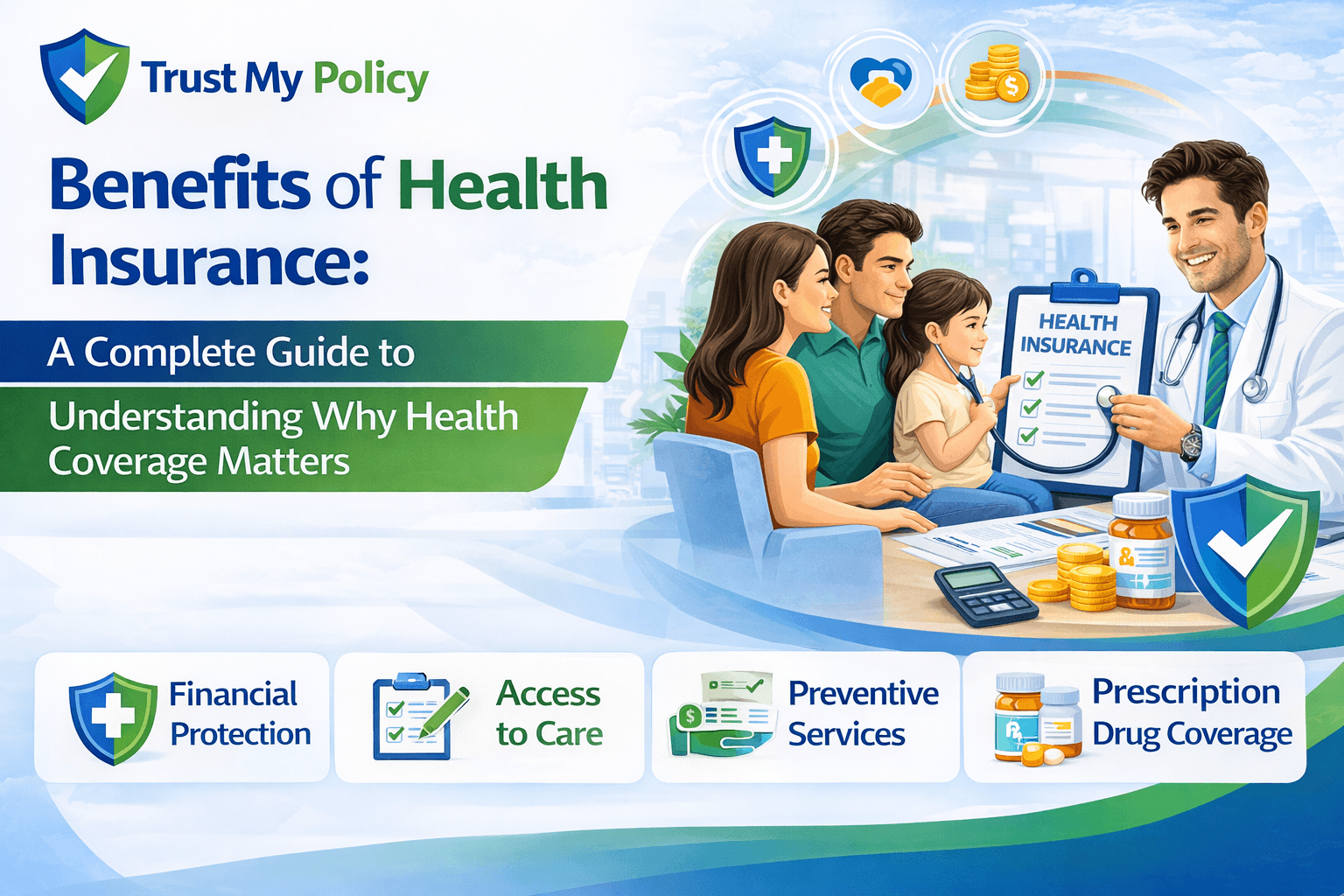
The main benefits of health insurance are financial protection against catastrophic medical costs, access to negotiated provider rates that reduce your costs even before the deductible, free preventive care including screenings and vaccines under ACA-compliant plans, prescription drug savings through formulary pricing, and mental health coverage. According to the Kaiser Family Foundation, uninsured Americans pay an average of 2.5 times more for hospital services than insured patients paying negotiated rates.
Tomás García, 31, skipped health insurance for two years in Austin to save money, estimating he’d save around $3,600 in premiums. In year two, an unplanned appendectomy generated an $18,400 hospital bill he paid entirely out of pocket. The $3,600 in saved premiums cost him $18,400 — and that’s before counting the preventive screenings and prescription discounts he’d missed along the way.
The Benefits of Health Insurance in 2026 go well beyond the obvious financial protection against catastrophic medical events. They include negotiated provider rates that reduce your costs even before your deductible, free preventive care that can catch serious conditions early, prescription drug savings through formulary pricing, mental health coverage, and the elimination of the specific financial uncertainty that uninsured people carry every day. This guide makes the real case for health insurance using specific numbers and scenarios rather than generic statements.
This article covers every category of benefit health insurance provides, the real dollar value of each, real scenarios showing the difference coverage makes, and a clear framework for valuing your own plan. By the end, you’ll understand exactly what Tomás was actually giving up during those two years.
| Feature | Details |
| What it is | A set of financial, preventive, and access-related benefits from holding health coverage |
| Who benefits most | Anyone who might need unexpected medical care, preventive services, or ongoing prescriptions |
| Financial protection | Catastrophic bills capped at the annual out-of-pocket maximum |
| Negotiated rate benefit | Insured patients typically pay significantly less than uninsured cash prices |
| Preventive care | Free under ACA-compliant US plans; free under NHS in the UK |
| Key limitation | Benefits require using in-network providers in network-based plans |
| Regulator | State insurance departments and CMS (US); Financial Conduct Authority and NHS England (UK) |
Most people think of health insurance as simply a financial backstop for big emergencies — the thing that pays when something goes catastrophically wrong. The actual value of health insurance is broader than that. It functions simultaneously as emergency financial protection, a cost-negotiation tool for routine care, a preventive health investment, and a mental health safety net, all in a single monthly payment.
The benefits of health insurance fall into five distinct categories: financial protection against catastrophic or unexpected costs, access to negotiated provider rates that reduce the cost of routine care, free preventive services under ACA-compliant plans, prescription drug savings through insurer-negotiated formulary pricing, and mental health and ongoing condition management coverage. Anyone evaluating whether health insurance is “worth it” needs to weigh all five categories against the premium cost, not just the emergency protection benefit alone.
| Criteria | With Health Insurance | Without Health Insurance |
| Emergency appendectomy | $1,000–$3,500 out of pocket (deductible + coinsurance) | $15,000–$30,000+ full cash price |
| Annual physical exam | $0 under ACA-compliant plans | $150–$400 full cash price |
| Common prescription (e.g., metformin) | $4–$15/month formulary price | $20–$80/month full cash price |
| Catastrophic illness maximum | Capped at out-of-pocket maximum (2026 IRS limit: $9,450 individual) | Uncapped — full treatment cost |
| Mental health therapy session | $20–$50 copay after deductible | $100–$250+ per session cash price |
| Preventive screenings | Often $0 under ACA-compliant plans | $200–$2,000+ depending on specific test |
We recommend health insurance for virtually every reader, since the negotiated rate benefit alone often makes routine care more affordable than the cash equivalent, even in low-use years.
Scenario 1: Tomás, 31, uninsured in Austin for two years. Tomás saved $3,600 in premiums but paid $18,400 for an unplanned appendectomy. He also paid full cash price for two years of any routine or preventive care. Verdict: the emergency financial protection benefit alone reversed his “savings” by more than five times. Action: Tomás enrolled in a marketplace plan the following month after settlement of the hospital bill.
Scenario 2: A woman in Manchester with NHS coverage needing a non-urgent specialist appointment. She waited four months on the NHS but paid nothing for her care, demonstrating the UK’s universal financial protection benefit even without private insurance. Verdict: the NHS baseline eliminates catastrophic financial risk for all UK residents regardless of income. Action: she added a private medical supplement specifically to reduce wait times for non-urgent referrals.
Scenario 3: A 45-year-old diabetic man in Dallas with employer-sponsored health insurance. His insurer’s formulary pricing reduced his monthly insulin cost from $340 cash price to $35 copay — a $3,660 annual saving from prescription benefit alone. Verdict: for people managing ongoing conditions, the prescription drug benefit can represent thousands of dollars in annual savings. Action: he confirmed his specific medications were on his insurer’s formulary before each plan renewal.
Scenario 4: A 28-year-old woman in Boston using her free preventive care benefit. Her annual mammogram screening, covered at $0 under her ACA-compliant plan, detected an early-stage condition that was treated successfully at a total out-of-pocket cost well within her annual deductible. Verdict: the preventive care benefit can catch serious conditions at a stage where treatment is far less costly and far more effective. Action: she now schedules all recommended preventive screenings at the start of each plan year.
| Pros | Cons |
| Catastrophic financial protection with a defined annual out-of-pocket maximum. | Monthly premiums represent an ongoing cost even in healthy, low-use years. |
| Negotiated provider rates reduce the cost of routine care below uninsured cash prices. | In-network restrictions mean your choice of provider may be limited. |
| Free preventive care under ACA-compliant plans supports early detection of serious conditions. | High-deductible plans still require meaningful out-of-pocket spending before coverage kicks in. |
| Prescription drug formulary pricing can produce significant savings on ongoing medications. | Navigating plan tiers, deductibles, and networks adds administrative complexity. |
| Mental health parity requirements ensure coverage for therapy and substance use treatment. | Plans vary significantly in the quality and scope of mental health provider networks. |
⚠️ WARNING: Never go without health insurance to save on premiums without explicitly calculating your worst-case financial exposure without it. A single hospitalisation can generate a bill that exceeds years of premium payments, and that risk exists every day you’re uninsured.
| Your Situation | Our Recommendation |
| You haven’t used your plan this year and feel it’s “wasted” | Yes — calculate the negotiated rate and preventive care value, not just claim reimbursements |
| You’re skipping preventive screenings because you feel healthy | Yes — schedule them; they’re free under your ACA-compliant plan and catch conditions early |
| You take any ongoing prescription medications | Yes — check your formulary to confirm you’re using the lowest available cost tier |
| You’re considering going uninsured to save the premium | No — calculate your worst-case uninsured exposure before treating coverage as optional |
| You haven’t used an in-network provider consistently | Yes — confirm provider network status before every significant appointment |
| You’re comparing health insurance across employers | Yes — factor in formulary coverage for your specific medications, not just premium costs |
| You have untreated mental health needs | Yes — your ACA-compliant plan must cover mental health services at parity with physical health |
💡 TIP: The single golden rule for valuing health insurance: add up the negotiated rate saving on any routine care, the free preventive services, and your prescription formulary savings before deciding that a claim-free year means your premium was wasted.
| Benefit | Insured Cost | Uninsured Cash Price | Annual Saving |
| Annual physical exam | $0 (ACA-compliant plan) | $150–$400 | $150–$400 |
| Emergency appendectomy | $1,500–$3,500 out of pocket | $15,000–$30,000+ | $12,000–$27,000+ |
| Common prescription (metformin, 30-day supply) | $4–$15 formulary | $20–$80 cash | $72–$780/year |
| Mammogram screening | $0 (ACA-compliant plan) | $300–$500 | $300–$500 |
| Mental health therapy session (monthly) | $20–$50 copay | $100–$250+ | $960–$2,400/year |
| Catastrophic illness (cancer treatment, full year) | Capped at out-of-pocket maximum | Potentially hundreds of thousands | Effectively unlimited protection |
| UK NHS baseline access | £0 direct cost | Cost of equivalent private care | Varies; catastrophic protection is complete |
Your plan’s Summary of Benefits and Coverage (SBC) — A standardised two-page document listing your specific covered benefits, free preventive services, and cost-sharing structure. Cost range: free. Best for: quickly confirming which specific preventive services are covered at $0. Rating: required by law under the ACA.
Your insurer’s formulary tool — Most insurers provide an online drug lookup tool showing your specific medication’s formulary tier and out-of-pocket cost. Cost range: free. Best for: confirming your prescription’s exact cost under your plan. Rating: not applicable, primary service channel.
HealthCare.gov preventive care guidelines (US) — Publishes the complete list of preventive services covered at no cost under ACA-compliant plans. Cost range: free. Best for: US policyholders confirming which screenings and vaccines are free. Rating: federal government resource.
NHS health checks and screening programmes (UK) — The NHS provides a range of free preventive checks and cancer screening programmes available to eligible residents. Cost range: free. Best for: UK residents wanting to use all available free preventive care. Rating: national public health service.
KFF (Kaiser Family Foundation) — Publishes ongoing research on health insurance costs, coverage rates, and the financial impact of being uninsured. Cost range: free public resource. Best for: US readers wanting data-backed context on insurance value. Rating: independent health policy research organisation.
We recommend reviewing your plan’s Summary of Benefits and Coverage and formulary tool together as best overall, since these two documents confirm the real value your specific plan provides beyond the premium you’re paying.
The main benefits are catastrophic financial protection, negotiated provider rates that reduce routine care costs, free preventive services under ACA-compliant plans, prescription drug formulary savings, and mental health coverage.
According to the Kaiser Family Foundation, uninsured Americans pay an average of 2.5 times more for hospital services than insured patients paying negotiated rates.
Yes, under ACA-compliant US plans, specific recommended preventive services — including annual physicals, certain screenings, vaccines, and contraceptive care — are covered at no cost before the deductible.
Even before your deductible, your insurer’s pre-negotiated rate with in-network providers means you pay a fraction of the full cash price an uninsured patient would face.
Under ACA-compliant plans, yes. Mental health and substance use services must be covered at parity with physical health benefits, meaning comparable cost-sharing applies.
The out-of-pocket maximum is the annual cap on your total cost-sharing, after which your insurer covers 100% of covered costs for the rest of the plan year. The 2026 IRS individual limit is $9,450.
Yes, for most people. The negotiated rate benefit on routine care, free preventive services, and prescription savings often provide value even in low-use years, before any emergency protection is considered.
Common examples include annual physical exams, recommended cancer screenings, vaccinations, blood pressure and cholesterol checks, and contraceptive care. The full list is published at HealthCare.gov.
Yes. UK residents have free NHS access as a baseline, so UK private health insurance supplements rather than replaces their primary coverage, primarily reducing specialist wait times.
Use all free preventive services, check your formulary for the lowest-cost tier for your medications, confirm in-network provider status before appointments, and understand your specific deductible and out-of-pocket maximum.
This article is for informational purposes only. Always consult a licensed insurance professional before making coverage decisions. Trust My Policy does not sell insurance products or represent any insurer.

Jagadeesh Gutha is the founder of TrustMyPolicy.com, an independent insurance information platform covering life, health, car, home, and business insurance for US and UK readers. He researches insurance products, policy structures, and consumer rights to help everyday people make informed coverage decisions without the jargon. All content on TrustMyPolicy is independently researched, fact-checked, and written to educate — not to sell.


Insurance Guides for UK, USA & Worldwide We are not an insurer or broker.
Reader Comments (0)