

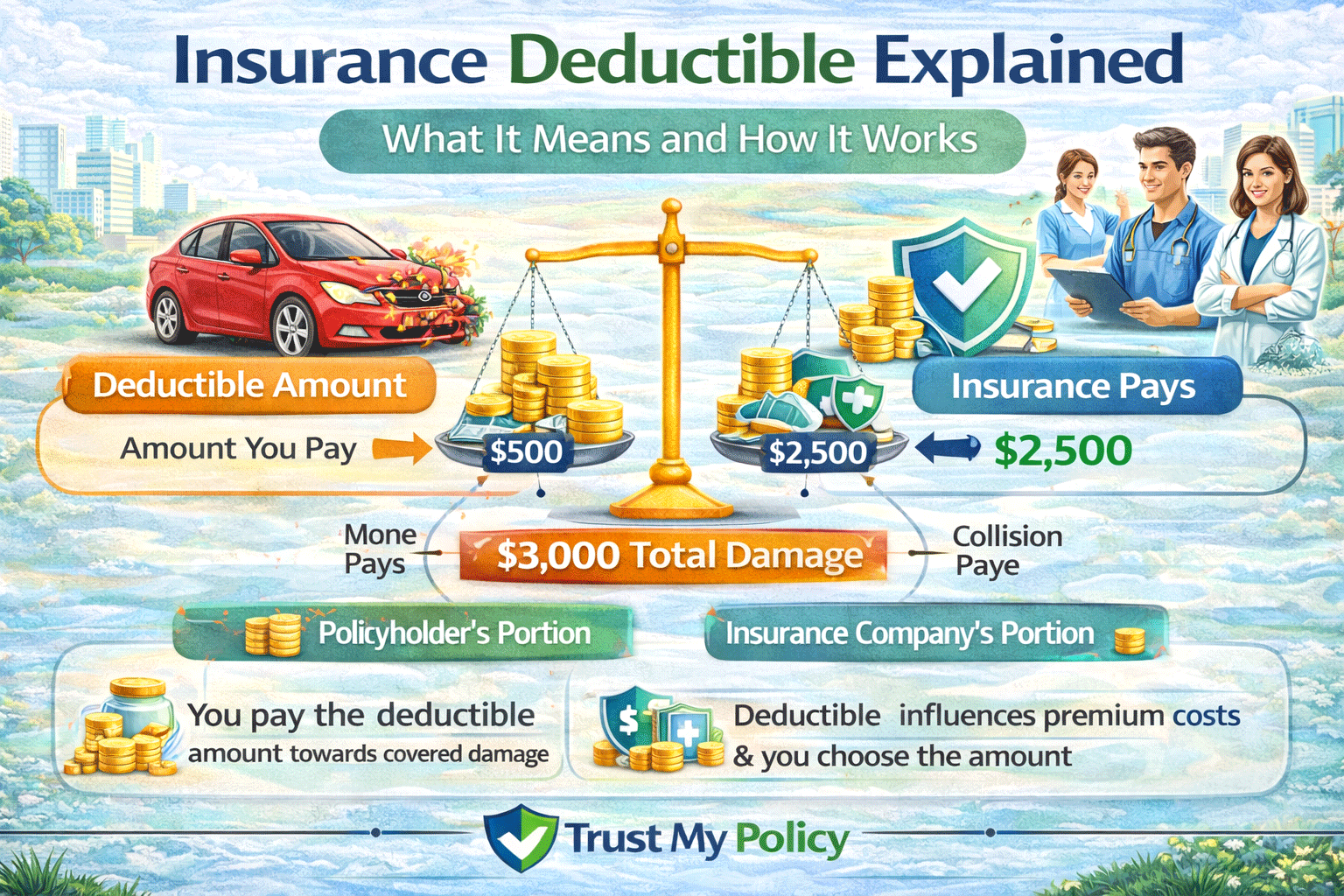
An insurance deductible is the fixed amount you pay out of pocket on a claim before your insurer pays the rest. Common deductibles range from $500 to $2,000 for home and auto insurance. Choosing a higher deductible typically lowers your monthly premium by 10–20%, while a lower deductible raises it.
Table of Contents
ToggleInsurance Deductible Explained: Complete 2026 Guide
Ryan Foster, 38, filed a $2,200 home insurance claim after a storm damaged his fence in Cincinnati, only to receive a check for $1,200. He’d forgotten his policy carried a $1,000 deductible, money he was responsible for paying before his insurer covered the rest.
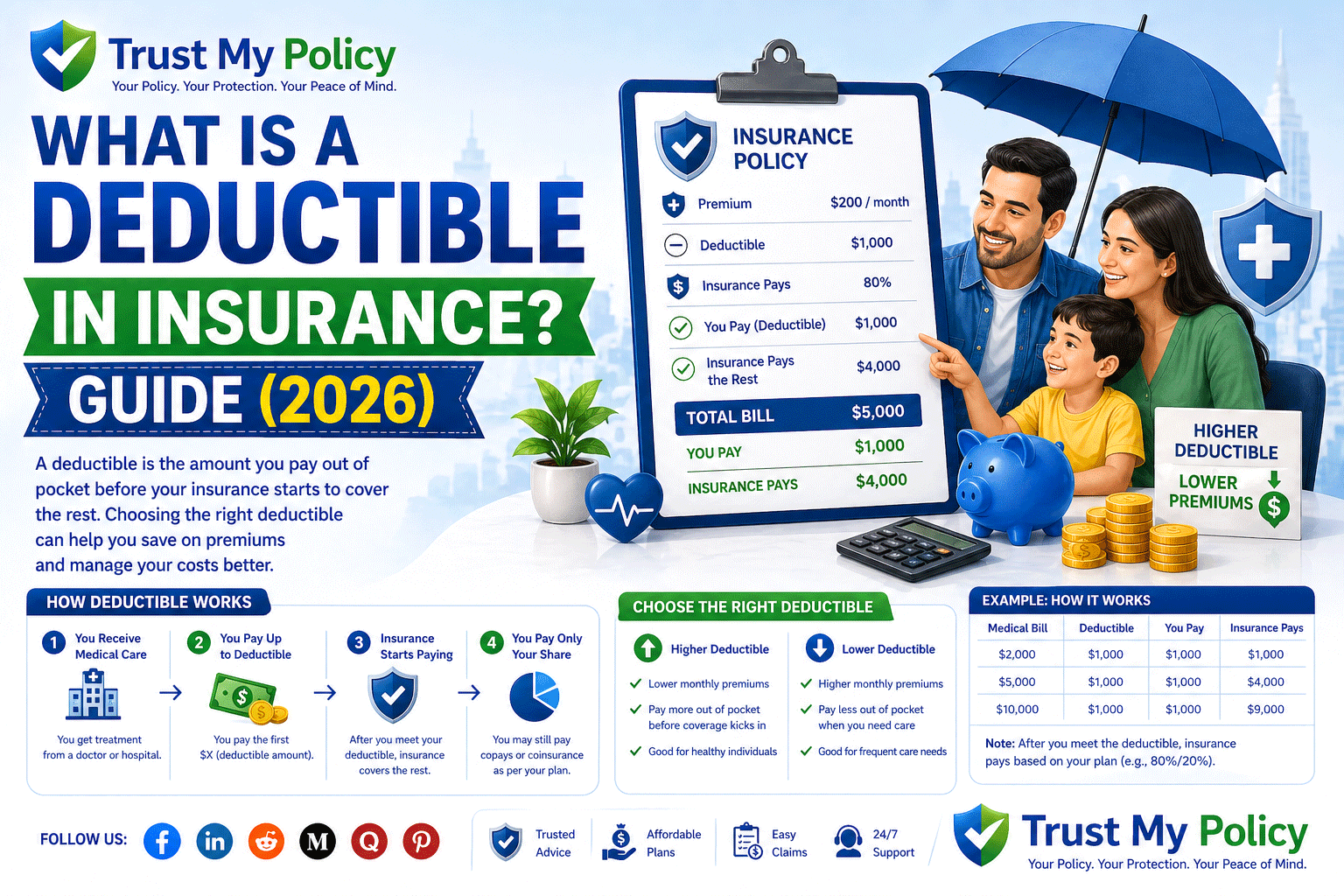
Insurance Deductible Explained simply: a deductible is the amount you pay out of pocket before your insurer pays the remaining cost of a covered claim. Choosing a higher deductible lowers your premium but increases what you pay at claim time, while a lower deductible raises your premium but reduces your out-of-pocket cost when something goes wrong. This guide breaks down exactly how deductibles work across different insurance types and how to choose the right one.
This article covers exactly how deductibles function, how they affect your premium, real scenarios with specific numbers, and a clear framework for choosing the right amount. By the end, you’ll never be surprised by a deductible again.
Quick Summary Table
| Feature | Details |
| What it is | The amount you pay out of pocket before insurance coverage kicks in on a claim |
| Who it applies to | Auto, home, and health insurance policyholders; life insurance has no deductible |
| Typical range | $500–$2,000 for auto and home; varies by plan tier for health insurance |
| Effect on premium | Higher deductible typically lowers premium by roughly 10–20% |
| Key benefit | Lets you balance monthly cost against out-of-pocket risk at claim time |
| Key limitation | A high deductible can leave you struggling to pay for an unexpected claim |
| Regulator | State insurance departments (US); Financial Conduct Authority (UK) |
What Is an Insurance Deductible, Really?
Think of a deductible like a cover charge at a venue — you pay a set amount before you get access to everything else inside. With insurance, you pay your deductible amount first, and your insurer covers the remaining cost of a covered claim after that.
An insurance deductible is the specific dollar amount, set when you choose your policy, that you must pay out of pocket on a covered claim before your insurer pays anything further. Anyone with auto, home, or health insurance needs to understand this clearly, since it directly determines both your monthly premium and your actual cost when filing a claim.
How Deductibles Actually Work — 5 Steps
- You choose a deductible amount when setting up your policy. Common choices range from $500 to $2,000 for auto and home insurance.
- A higher deductible typically lowers your monthly premium. Insurers reward you for taking on more of the initial risk yourself.
- You experience a covered loss and file a claim. The total cost of repair or replacement is calculated first.
- You pay your deductible amount, and the insurer pays the rest. If your claim is $2,200 and your deductible is $1,000, you pay $1,000 and the insurer pays $1,200.
- Some policies have per-incident deductibles, others have annual ones. Health insurance deductibles, for example, typically reset once per year and apply across all claims that year.
Comparison: High Deductible vs. Low Deductible
| Criteria | High Deductible | Low Deductible |
| Monthly premium | Lower | Higher |
| Out-of-pocket cost at claim time | Higher | Lower |
| Best for | Those with savings to cover a larger upfront cost | Those wanting predictable, lower costs at claim time |
| Pros | Saves money monthly if you rarely claim | Less financial strain if you do need to claim |
| Cons | Can be a financial strain if an unexpected claim arises | Higher ongoing premium cost even in claim-free years |
We recommend a deductible amount you could comfortably pay in cash for most readers, balancing monthly savings against the realistic risk of needing to file a claim.
4 Real-Life Scenarios
Scenario 1: Ryan, 38, homeowner in Cincinnati. Ryan forgot his $1,000 deductible applied to his $2,200 storm damage claim and was surprised to receive only $1,200. Verdict: not tracking your deductible can create a real budgeting surprise at claim time. Action: Ryan now keeps a note of his exact deductible amount alongside his policy documents.
Scenario 2: Sarah, 29, driver in Seattle who chose a $1,500 deductible to lower her premium. A minor collision resulted in a $1,800 repair bill, leaving her to pay $1,500 out of pocket. Verdict: a high deductible saved her money monthly but created a real cash burden at claim time. Action: Sarah lowered her deductible to $500 at her next renewal after this experience.
Scenario 3: A family in Texas with a $3,000 health insurance deductible. They paid the full $3,000 out of pocket before their insurer began covering a portion of additional medical costs that year. Verdict: health insurance deductibles can represent a significant annual cost before benefits fully apply. Action: they built a dedicated savings line specifically to cover their deductible each year.
Scenario 4: A UK homeowner who chose a low £100 excess (the UK term for deductible) on a buildings policy. A roof leak claim of £1,800 resulted in a payout of £1,700 after the excess was applied. Verdict: a lower excess meant a smaller out-of-pocket cost despite a slightly higher annual premium. Action: they kept the low excess given how often UK weather-related claims occur in their area.
Pros & Cons of How Deductibles Work
| Pros | Cons |
| Higher deductibles can meaningfully lower your monthly premium. | A high deductible can be a real financial strain during an unexpected claim. |
| Lower deductibles reduce your out-of-pocket cost when you do need to claim. | Lower deductibles mean a higher ongoing premium, even in claim-free years. |
| Choosing the right deductible lets you balance monthly cost against risk tolerance. | Forgetting your exact deductible amount can lead to budgeting surprises. |
| Health insurance deductibles often reset annually, providing a predictable cycle. | Multiple claims in one year can mean paying the deductible more than once for per-incident policies. |
| Some insurers waive deductibles for specific claim types, like glass damage. | Deductible rules vary significantly by policy type and insurer. |
5 Common Mistakes People Make
- Choosing the highest deductible without checking their own savings. This happens because the lower premium looks appealing upfront. What to do instead: only choose a high deductible if you could comfortably pay it in cash if needed.
- Forgetting their exact deductible amount when filing a claim. This happens because people don’t revisit their policy details until they actually need them. What to do instead: keep your deductible amount noted alongside your policy documents.
- Assuming all deductibles work the same way across policy types. This happens because the term sounds identical across auto, home, and health insurance. What to do instead: check whether your deductible applies per incident or annually for each specific policy.
- Not asking about deductible waivers for specific claim types. This happens because many people don’t know these exist. What to do instead: ask your insurer directly whether any claim types, like glass damage, qualify for a reduced or waived deductible.
- Filing a small claim that costs more in premium increases than the payout received. This happens because people forget that claims can affect future premiums. What to do instead: compare the claim amount against your deductible and potential premium increase before filing for minor damage.
⚠️ WARNING: Never choose a deductible amount you couldn’t pay in cash within a few days. A high deductible that saves you money monthly can become a serious financial problem the moment you actually need to file a claim.
Decision Table: What Deductible Should You Choose?
| Your Situation | Our Recommendation |
| You have at least $1,000–$2,000 in readily available savings | Yes — consider a higher deductible to lower your monthly premium |
| You have little to no savings cushion | No — choose a lower deductible, even if the premium is higher |
| You’ve had multiple claims in recent years | Yes — consider a lower deductible to reduce repeated out-of-pocket costs |
| You’re comparing health insurance plans with different deductibles | Yes — calculate your total likely annual cost, not just the premium |
| You rarely file claims and want to save money long-term | Yes — a higher deductible may suit your situation |
| You’re unsure whether your deductible applies per incident or annually | Yes — confirm this detail directly with your insurer before relying on it |
| You’re filing a claim only slightly above your deductible amount | No — consider paying out of pocket instead to avoid a future premium increase |
💡 TIP: The single golden rule for choosing a deductible: pick the highest amount you could comfortably pay in cash within a few days, not the highest amount that simply lowers your premium the most.
Cost Table: How Deductibles Affect Real Costs
| Scenario | Deductible | Out-of-Pocket Cost on a Claim |
| Auto insurance, $500 deductible, $1,800 claim | $500 | $500, insurer pays $1,300 |
| Auto insurance, $1,500 deductible, $1,800 claim | $1,500 | $1,500, insurer pays $300 |
| Home insurance, $1,000 deductible, $2,200 claim | $1,000 | $1,000, insurer pays $1,200 |
| Home insurance, $2,500 deductible, $2,200 claim | $2,500 | $2,200, insurer pays $0 since claim is under the deductible |
| Health insurance, $3,000 annual deductible | $3,000 | Paid in full before insurer coverage applies that year |
| UK car insurance, £250 excess, £900 claim | £250 | £250, insurer pays £650 |
| UK buildings insurance, £100 excess, £1,800 claim | £100 | £100, insurer pays £1,700 |
Resources for Understanding Your Deductible
Your insurer’s policy documents — The single most reliable source for your exact deductible amount and how it applies to specific claim types. Cost range: free to review. Best for: confirming your current deductible before filing any claim. Rating: not applicable, primary source document.
Independent insurance brokers — Brokers can help you compare deductible options across multiple insurers for the same coverage level. Cost range: typically free for the consumer. Best for: anyone choosing a new policy and unsure which deductible fits their budget. Rating: varies by broker, check state or FCA licensing.
NAIC consumer resources (US) — Publishes plain-language guidance on how deductibles work across different insurance types. Cost range: free public resource. Best for: US consumers wanting unbiased educational material. Rating: regulatory standards body.
Citizens Advice (UK) — Offers free, independent guidance on understanding excess and deductible terms in UK insurance policies. Cost range: free. Best for: UK consumers wanting plain-language guidance. Rating: independent charity.
Policygenius (US) — A comparison platform that shows how different deductible choices affect your quoted premium in real time. Cost range: free to use. Best for: US shoppers comparing deductible and premium trade-offs. Rating: independent comparison service.
We recommend reviewing your own policy documents first as best overall, since your exact deductible terms can vary even within the same insurer’s product lineup.
Frequently Asked Questions
What is an insurance deductible?
An insurance deductible is the fixed amount you pay out of pocket on a covered claim before your insurer pays the remaining cost.
Does a higher deductible always save me money?
Only if you rarely file claims. A higher deductible lowers your monthly premium but increases your out-of-pocket cost any time you do need to file a claim.
Do all insurance policies have a deductible?
Most auto, home, and health insurance policies have a deductible, but life insurance typically does not, since it pays a full death benefit rather than reimbursing a specific loss.
Is a deductible the same as an excess in the UK?
Yes. “Excess” is the UK term commonly used for what’s called a deductible in the US, and it works the same way.
How do I choose the right deductible amount?
Choose an amount you could comfortably pay in cash within a few days, balancing that against how much a lower deductible raises your monthly premium.
Does my deductible reset every year?
For health insurance, yes, deductibles typically reset annually. For auto and home insurance, the deductible usually applies per individual claim rather than resetting on a calendar basis.
Should I file a small claim that’s close to my deductible amount?
Often not. If the claim amount is only slightly above your deductible, paying out of pocket may cost less overall than a potential future premium increase.
Can I change my deductible after buying a policy?
Yes, in most cases you can request a change to your deductible at renewal, though this will also adjust your premium accordingly.
Are there any claims with a waived deductible?
Yes, some insurers waive the deductible for specific claim types, like glass-only auto damage, so it’s worth asking your insurer directly.
What happens if my claim is less than my deductible?
The insurer pays nothing, since the deductible must be met first; in this case, you would cover the entire cost yourself.
Key Takeaways
- Choose a deductible amount you could comfortably pay in cash within a few days.
- Keep your exact deductible noted alongside your policy documents to avoid surprises.
- Confirm whether your deductible applies per incident or resets annually.
- Ask your insurer about deductible waivers for specific claim types like glass damage.
- Compare deductible and premium trade-offs across multiple insurers before choosing a policy.
- Avoid filing small claims close to your deductible amount to prevent future premium increases.
- Reassess your deductible choice whenever your savings cushion or claim history changes.
This guide reflects the latest 2026 insurance data.
This article is for informational purposes only. Always consult a licensed insurance professional before making coverage decisions. Trust My Policy does not sell insurance products or represent any insurer.





Reader Comments (3)
[…] Has a deductible? […]