
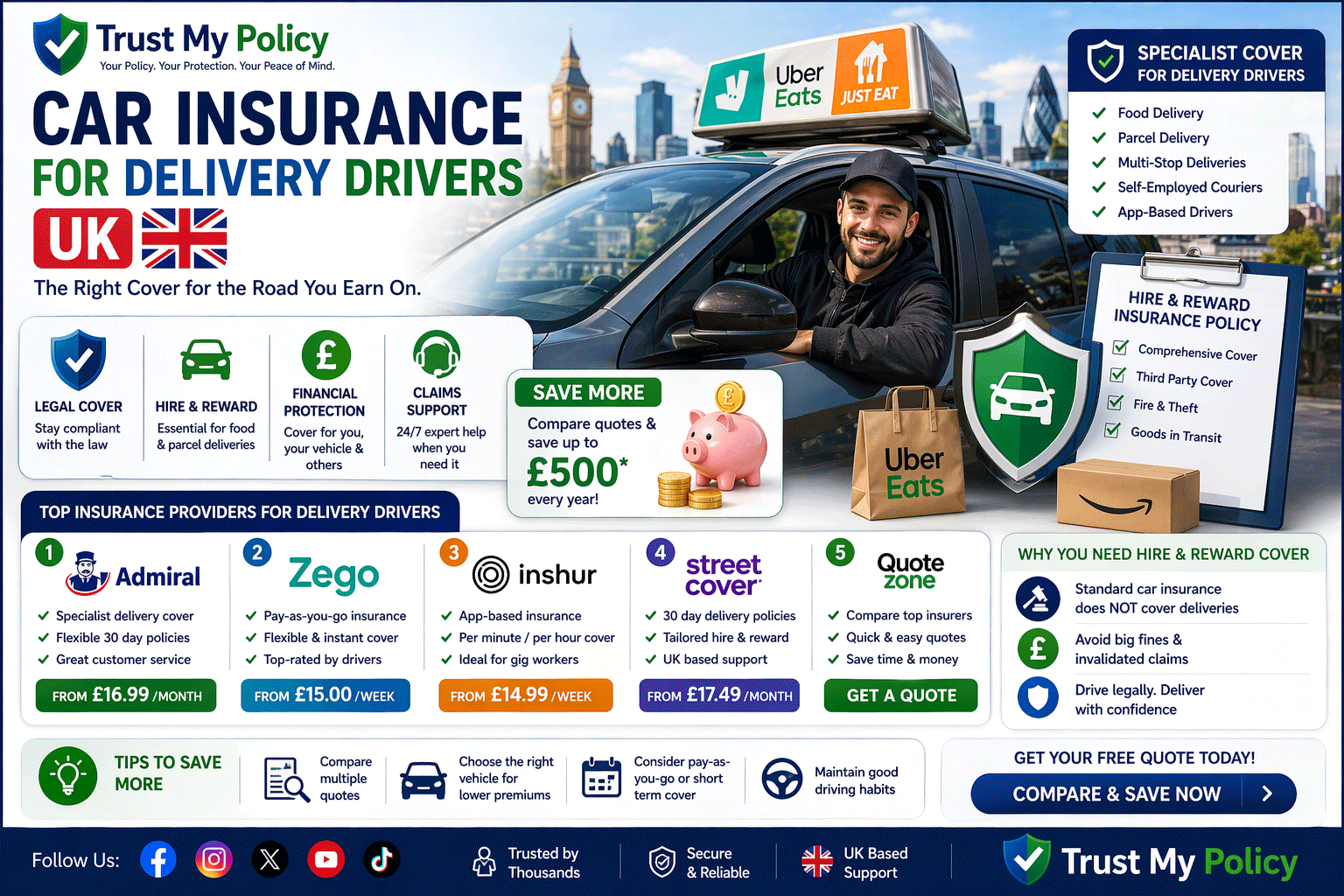
Car insurance for delivery drivers UK requires a hire and reward (H&R) policy — a legal requirement under the Road Traffic Act 1988 for anyone carrying goods for payment. Standard car insurance, including business use, does NOT cover delivery work. A pay-as-you-go H&R top-up costs £1–£3.50/hour via Zego. A full annual combined SD&P and H&R policy costs £1,450–£3,200/year for car drivers. All major delivery platforms (Deliveroo, Amazon Flex, Uber Eats, Just Eat, Evri) require proof of H&R cover before you can start earning.
Danny, 26, had been doing Deliveroo shifts for three months using his personal car. He had a standard comprehensive car insurance policy. He assumed ‘business use’ covered his delivery work. In November, he rear-ended a van while carrying a food order. His insurer investigated, discovered the delivery platform activity, and voided his policy — treating him as uninsured at the time of the accident. He faced a £1,200 repair bill, a potential MIB pursuit, and six penalty points.
Car insurance for delivery drivers UK in 2026 is not optional and is not covered by standard policies. Under the Road Traffic Act 1988, using your vehicle to carry goods or passengers in exchange for payment requires hire and reward insurance — a legally distinct class of cover that standard car insurance, including business use upgrades, does not provide. Driving without it means driving uninsured.
This guide covers everything UK delivery drivers need in 2026: what hire and reward insurance is, why your existing policy does not cover you, the two policy structures available, what each costs, which platforms require proof of cover, and the five best UK providers for delivery drivers in 2026.
| Feature | Details |
| Legal requirement | Hire and reward (H&R) insurance under the Road Traffic Act 1988 — standard cover is void for paid delivery work |
| Does business use cover delivery? | No. Business use adds Class 1/2/3 cover for visiting clients. It does not cover carrying goods for payment. |
| Annual cost (car, experienced driver) | £1,450–£3,200/year for comprehensive H&R car insurance |
| Annual cost (young driver 21–24, car) | £2,900–£4,800/year — 40–50% more than experienced drivers |
| Pay-as-you-go top-up cost | £1–£3.50/hour (Zego). Requires separate SD&P base policy of £500–£1,000/year |
| Platforms requiring H&R proof | Deliveroo, Uber Eats, Just Eat, Amazon Flex, Evri, DPD and all major delivery apps |
| Penalty for driving without H&R | Fixed penalty £300, 6 points, potential vehicle seizure, personal liability for all accident costs |
| Regulated by | Financial Conduct Authority (FCA); Road Traffic Act 1988 sets legal use classes |
Think of it like a work permit for your car. Your standard car insurance allows you to drive for social, domestic, and pleasure purposes (SD&P) — shopping, commuting, visiting friends. The moment you get paid to carry goods, you need a different type of authorisation: hire and reward insurance.
Hire and reward (H&R) insurance is a legally mandated class of commercial vehicle cover that applies whenever you use your vehicle to transport goods or passengers in exchange for payment. It sits above and beyond standard car insurance. Even a comprehensive SD&P policy with business use added does not satisfy the hire and reward requirement — they cover fundamentally different risk profiles.
Who needs it: Every UK driver earning money from their vehicle. Food delivery drivers for Deliveroo, Uber Eats, Just Eat. Parcel couriers for Amazon Flex, Evri, DPD, Hermes. Grocery delivery drivers for Ocado, Sainsbury’s. Florists, pharmacies, or any business using a personal car for paid deliveries. The ONS estimated 7.25 million people had undertaken gig economy work in the UK — delivery and transport is one of the largest sectors, with around one quarter of gig workers involved.
| Criteria | Annual Combined SD&P + H&R | PAYG H&R Top-Up |
| How it works | One annual policy covers both personal and delivery driving — no need to switch on or off | Keep existing SD&P policy. Activate H&R cover hourly via app when working. Pay per hour used. |
| Best for | Full-time and part-time couriers working 20+ hours/week | Casual couriers working fewer than 15–20 hours/week |
| Typical cost | £1,450–£3,200/year (car, experienced driver) | £500–£1,000/year SD&P base + £0.80–£3.50/hour top-up |
| Risk of forgetting to activate | None — always on | High — forgetting to activate = driving uninsured during a delivery |
| Break-even hours | N/A — flat annual cost | ~20 hours/week. Below this, PAYG is cheaper; above this, annual wins |
| Provider examples | Zego (annual), AXA, Admiral, INSHUR | Zego (PAYG app), Admiral |
| Winner | Annual for regular delivery work; PAYG for casual or seasonal work |
We recommend the annual combined SD&P and H&R policy for anyone doing delivery work more than once a week. The risk of forgetting to activate PAYG cover — and the consequences of driving uninsured — outweigh the modest cost saving for part-time workers. PAYG makes sense only for truly occasional or seasonal delivery work.
| Driver Profile | Policy Type | Typical Annual Cost | Notes |
| Car driver, age 30–50, full-time courier | Annual comprehensive H&R | £1,450–£2,150/year | 2025–2026 broker data; varies by postcode and vehicle |
| Car driver, age 21–24, full-time courier | Annual comprehensive H&R | £2,900–£4,800/year | Young drivers pay 40–50% more. Urban areas add 20–40% |
| Scooter/moped, food delivery, city | Annual H&R | £900–£2,200/year | 125cc scooter; city-centre couriers face highest rates |
| Van courier, experienced driver | Annual comprehensive H&R | £1,800–£3,200/year | Van policies priced separately from car H&R |
| Part-time casual, PAYG (300 hrs/year) | PAYG top-up + SD&P base | Approx £1,400/year total | £800 base + £600 top-up at ~£2/hr average |
| Cheapest option (PAYG for casual work) | PAYG minimum hours | From £1/hour activated | Only viable under 15 hours/week |
Situation: Used personal comprehensive car insurance for three months of Deliveroo shifts. Rear-ended a van while carrying a food order. Insurer voided the policy.
What he should have had: PAYG H&R via Zego (£1.20–£1.80/hour for a 26-year-old in Manchester). At 15 hours/week: approximately £70–£115/month on top of his SD&P policy. Annual additional cost: £840–£1,380.
Verdict: Danny drove uninsured without knowing it. His SD&P insurer was legally entitled to void the policy. He became personally liable for all accident costs and faces MIB recovery action. The cost of not having H&R cover was devastatingly higher than the cover itself. Every delivery driver must confirm their H&R status before their first paid shift — not after.
Situation: New to Amazon Flex. Uploaded her standard business use certificate — Amazon rejected it. Account activation delayed by 4 days while she got H&R cover.
Solution: INSHUR annual H&R policy: £1,620/year for her 2021 Toyota Yaris in Birmingham. Amazon Flex accepted the certificate immediately. Policy covers all delivery platforms — not just Amazon.
Verdict: Amazon Flex, Evri, DPD, and all major parcel platforms explicitly require H&R cover — business use is not accepted. Get the right policy before applying to any platform. INSHUR and Zego both offer H&R policies accepted by all major platforms under a single certificate.
Situation: Wants to start Uber Eats on a 125cc scooter. Quoted £2,100/year for annual H&R. Looking for a cheaper option.
Analysis: At 19 in London on a scooter, Tom faces the intersection of three high-risk factors: young age, urban location, and powered two-wheeler. PAYG is not available for scooters from all providers. Zego offers scooter H&R. Annual policy is the primary option.
Verdict: £2,100/year on a scooter earning £12–£15/hour means insurance costs approximately £1.50/hour of work. At 15 hours/week, insurance is covered by the first 2.5 hours of earnings each week. The maths works if he commits to consistent hours. A clean record year will reduce renewal significantly.
Situation: Works full-time, does courier work only in November–January for extra Christmas income. Annual H&R feels excessive.
Solution: 30-day H&R policy from INSHUR for November, December, and January: approximately £300–£450 total for three months. Or PAYG via Zego for the hours she actually works — at 20 hours/week for 10 weeks, approximately £400–£600 total.
Verdict: Short-term and PAYG H&R policies are perfect for seasonal couriers. INSHUR offers both 30-day and annual policies specifically for this use case. Sarah saves over £1,000 compared to an annual policy for the same coverage.
| Pros | Cons |
| Legal compliance — without H&R cover you are driving uninsured and face £300 fine, 6 points, and full personal liability for accident costs | H&R policies cost significantly more than standard car insurance — 40–80% higher premiums reflecting the commercial risk |
| PAYG option makes part-time delivery genuinely affordable — pay only for working hours | PAYG requires you to remember to activate cover before every shift — forgetting once means driving uninsured |
| One H&R policy usually covers all delivery platforms — no need for separate policies for Deliveroo, Amazon Flex, and Uber Eats | Young drivers (under 25) face the highest H&R premiums — often £2,900–£4,800/year for car policies |
| Goods in transit add-on available to protect the items you are carrying, not just your vehicle | Goods in transit cover (protecting parcels/food you carry) is not included by default — it costs extra |
| Annual policies include SD&P cover for personal driving — one policy covers your whole life as a driver | Urban postcodes (London, Manchester, Birmingham) attract 20–40% higher premiums than rural areas for the same driver profile |
Business use (Class 1, 2, or 3) covers visiting clients, travelling between workplaces, or driving for work errands. It does not cover hire and reward — the carrying of goods for payment. These are legally different use classes. Every delivery driver who has upgraded to business use but not H&R is legally uninsured while working.
| ⚠️ WARNING: Driving Without Hire and Reward Cover Is a Criminal Offence
Under the Road Traffic Act 1988, delivering goods or food for payment without H&R cover is driving without insurance. The fixed penalty is £300 and 6 penalty points. Police can seize your vehicle. More critically: if you cause an accident while delivering without H&R cover, you are personally liable for all costs — repair, injury, and legal fees — which can reach tens of thousands of pounds. The Motor Insurers’ Bureau will pay third-party claims and then pursue you for full recovery. |
Some standard car insurers do not permit PAYG H&R top-up policies on top of their SD&P cover. If you use a PAYG product without your SD&P insurer’s knowledge or approval, you risk voiding your base policy. Always confirm your SD&P insurer allows H&R top-ups before activating one.
Deliveroo, Uber Eats, and Amazon Flex do not provide H&R insurance for drivers using personal vehicles. They may provide third-party liability cover in some circumstances, but this does not satisfy the legal H&R requirement. You need your own policy.
If you switch from Deliveroo to Amazon Flex and your H&R certificate has lapsed, you are uninsured from the moment the old policy ended. H&R cover must be continuously active any time you may be working. Set renewal reminders at least 30 days before your policy expiry.
H&R premiums vary enormously between providers. Zego, INSHUR, AXA, and Acorn price the same courier profile very differently. A quote comparison at renewal regularly saves £300–£800/year for the same level of cover.
| Your Situation | Our Recommendation |
| You deliver food or parcels for any platform using your own vehicle | Yes — legally required. H&R cover is a criminal requirement, not optional |
| You have standard car insurance with ‘business use’ added | Not sufficient. Business use does not cover H&R. You need a separate H&R policy |
| You do casual delivery work once or twice a week | Yes — PAYG via Zego is the most cost-effective option for low hours |
| You do full-time delivery work (20+ hours/week) | Yes — annual combined SD&P + H&R policy. PAYG becomes more expensive above this threshold |
| You are a seasonal courier (Christmas, Black Friday only) | Yes — 30-day H&R policy from INSHUR covers you for just the months you work |
| Your employer provides a company vehicle for deliveries | Check — you may be covered under their ‘any driver’ commercial policy. Confirm in writing before driving |
| You are under 25 and find H&R expensive | Yes — still legally required. Compare Acorn (best for high-risk profiles) and Zego PAYG to minimise cost |
| 💡 TIP: PAYG Saves Money Only Below 15–20 Hours Per Week
Calculate your weekly working hours before choosing between annual and PAYG. At 10 hours/week and £2/hour: £1,040/year top-up costs + £700 base SD&P = £1,740 total. An annual combined policy for the same driver profile costs £1,450–£1,800. At 20+ hours/week, annual always wins. At under 10 hours/week, PAYG always wins. Do the maths for your specific hours. |
Why recommended: Zego is the market leader for UK hire and reward insurance in 2026. They offer both annual combined SD&P + H&R policies and the most flexible PAYG product in the market, charged by the minute (minimum 1 hour). App-based activation, instant certificates, compatible with all major delivery platforms. Covers car, van, and scooter. Particularly strong for part-time and multi-platform drivers.
Cost: PAYG: £1–£3.50/hour. Annual: competitive — get a quote via the Zego app.
Best for: Any delivery driver — particularly part-time, flexible, and multi-platform workers who want the market-leading PAYG product.
Why recommended: INSHUR is trusted by over one million on-demand drivers in the UK. Specifically strong for Amazon Flex, Uber Eats, and parcel delivery platforms. Offers both 30-day and annual H&R policies. One policy covers all platforms — no need for separate certificates. Quick online quote process, instant policy documents.
Cost: Competitive annual rates. 30-day policies available for seasonal couriers.
Best for: Full-time couriers, Amazon Flex drivers, and seasonal workers wanting 30-day flexible cover.
Why recommended: Admiral is one of the few major mainstream insurers offering dedicated delivery car insurance under their ‘carriage of goods for hire and reward’ classification. Available via their standard online quote process. Strong brand reliability, 24/7 claims line, and a familiar customer experience for drivers who prefer a household name. Also offers black box delivery option.
Cost: Competitive for standard driver profiles; higher for young and high-risk drivers.
Best for: Experienced drivers who want a mainstream insurer with a dedicated H&R product and simple annual policy management.
Why recommended: Acorn Group launched Street Cover specifically for delivery drivers using personal cars. Purpose-built for gig economy workers, including those with previous claims, convictions, or irregular work patterns. Acorn is one of the few insurers that will cover non-standard profiles (young drivers, minor convictions) for H&R work. Platform-agnostic — covers all delivery apps under one policy.
Cost: Higher than standard market for clean profiles, but competitive for non-standard drivers who struggle elsewhere.
Best for: Drivers under 25, those with minor convictions or claims history, and seasonal workers who are declined by mainstream providers.
Why recommended: AXA is the strongest traditional insurer for van-based full-time couriers. Long-established H&R van insurance with predictable annual premiums. Suits full-time drivers who want structured cover from a major provider with strong financial stability.
Cost: Mid-range; competitive for experienced van-based couriers.
Best for: Full-time van couriers and experienced drivers who want a traditional annual policy from a major insurer.
👉 We recommend Zego as the best overall for most UK delivery drivers because they offer both annual and PAYG in one platform, cover all major delivery apps under one policy, and consistently price competitively for the delivery driver market.
No. Standard social, domestic, and pleasure (SD&P) car insurance — including policies with business use added — does not cover hire and reward activities. Under the Road Traffic Act 1988, carrying goods for payment requires a legally distinct hire and reward policy. Driving without H&R cover while delivering is a criminal offence with a £300 fixed penalty, 6 penalty points, and potential personal liability for all accident costs.
Annual H&R car insurance for experienced drivers (age 30–50) costs £1,450–£2,150/year for comprehensive cover. Young drivers aged 21–24 pay £2,900–£4,800/year. PAYG top-up cover costs £1–£3.50/hour via Zego, on top of a SD&P base policy of £500–£1,000/year. Urban postcodes (London, Manchester) cost 20–40% more than rural areas for the same driver profile.
Deliveroo, Uber Eats, Just Eat, and Amazon Flex do not provide hire and reward insurance for drivers using personal vehicles. They may offer limited third-party liability cover in some circumstances during active order periods, but this does not satisfy the legal H&R requirement. Every driver using their own vehicle for gig economy delivery work must arrange their own valid H&R cover.
Yes — but only if your SD&P insurer permits it. Some mainstream insurers do not allow H&R top-up products to be activated alongside their base policy. Before using any PAYG product, confirm in writing that your SD&P insurer accepts this arrangement. Using PAYG without your base insurer’s knowledge could void your standard policy. Zego’s PAYG product specifies which SD&P policies it is compatible with.
No. One hire and reward policy covers all delivery platforms simultaneously. A single annual H&R certificate from Zego, INSHUR, or Acorn covers you whether you are delivering for Deliveroo, Amazon Flex, Uber Eats, Just Eat, Evri, or any other platform under the same policy. You provide the same certificate to all platforms when registering.
Yes, but it is significantly more expensive. Drivers aged 21–24 typically pay £2,900–£4,800/year for an annual car H&R policy. Most standard H&R providers will not cover drivers under 21. Acorn Insurance (Street Cover) specialises in non-standard and younger delivery drivers and is the most commonly recommended provider for under-25 couriers who are declined elsewhere.
For young delivery drivers managing the cost of cover, see our best car insurance for new drivers under 25 UK guide. For black box options that can reduce premiums, our best black box insurance for young drivers UK article covers all telematics providers.
| 📋 Disclaimer
This article is for informational purposes only. Always check with your insurer for exact terms, conditions, and current pricing. Trust My Policy does not sell insurance products or represent any insurer. |

Jagadeesh Gutha is the founder of TrustMyPolicy.com, an independent insurance information platform covering life, health, car, home, and business insurance for US and UK readers. He researches insurance products, policy structures, and consumer rights to help everyday people make informed coverage decisions without the jargon. All content on TrustMyPolicy is independently researched, fact-checked, and written to educate — not to sell.



Insurance Guides for UK, USA & Worldwide We are not an insurer or broker.
Reader Comments (0)