
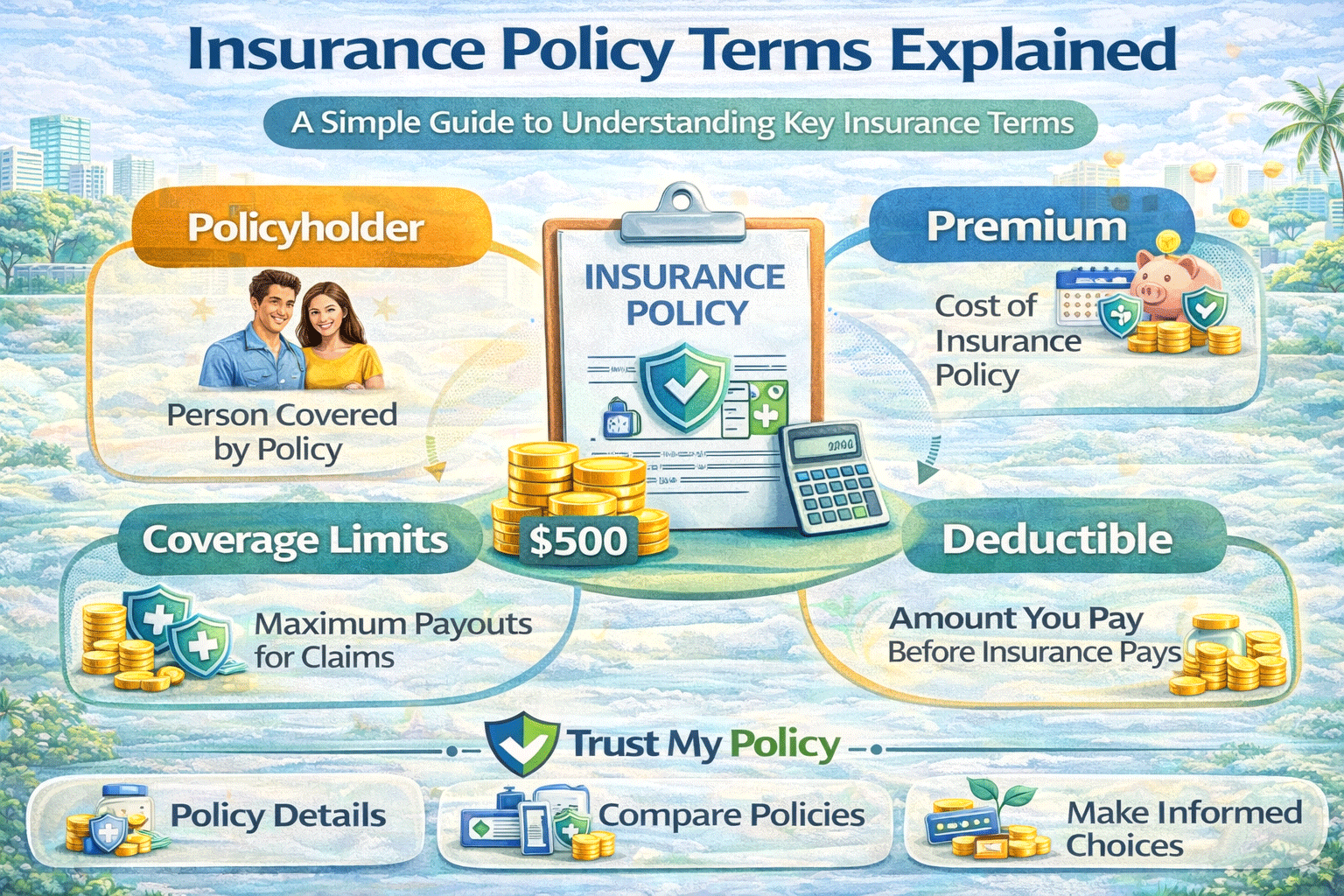
The most important insurance policy terms to know are premium (your recurring payment), deductible (what you pay before coverage kicks in), exclusion (what’s specifically not covered), endorsement (an add-on changing your base policy), and limit (the maximum amount the insurer will pay). Misunderstanding even one of these can lead to a denied or reduced claim.
Daniel Osei, 39, read through his first homeowners policy in Houston and froze at the word “endorsement,” assuming it meant something he’d have to actively approve every year. He called his broker, who explained it simply meant an add-on to his base policy — a term that had nothing to do with annual approval at all.
Insurance Policy Terms in 2026 don’t have to feel like a foreign language. Words like deductible, premium, exclusion, and endorsement appear in nearly every policy, and understanding them is the difference between confidently managing your coverage and being surprised at claim time. This guide defines the terms that matter most, in plain English, with real examples for each.
This article covers the most important insurance policy terms, what each one actually means in practice, real scenarios showing why the distinction matters, and a quick-reference glossary. By the end, you’ll be able to read any policy document with confidence.
| Feature | Details |
| What it is | The standard vocabulary used across auto, home, health, and life insurance policies |
| Who needs to know these | Anyone reading a policy document, filing a claim, or comparing quotes |
| Most commonly misunderstood term | “Exclusion,” since it defines what’s specifically not covered |
| Most financially important term | “Limit,” since it caps the maximum payout regardless of the actual loss |
| Key benefit | Understanding terms prevents claim surprises and helps you compare policies accurately |
| Key limitation | Terms can vary slightly in meaning between insurers and policy types |
| Regulator | State insurance departments (US); Financial Conduct Authority (UK) |
Reading an insurance policy without understanding its terms is like reading a legal contract in a language you only half speak — you might catch the general idea, but you’ll miss the one clause that actually matters most when something goes wrong.
Insurance policy terms are the specific, standardized vocabulary insurers use to define exactly what’s covered, what isn’t, how much you’ll pay, and how much they’ll pay. Anyone reading a policy document, comparing quotes, or filing a claim needs a working knowledge of these terms, since misunderstanding even one — like assuming “comprehensive” covers everything — can lead to a denied or reduced claim.
| Criteria | Term 1 | Term 2 |
| Premium vs. Deductible | The amount you pay to keep the policy active | The amount you pay out of pocket before the insurer pays a claim |
| Exclusion vs. Limitation | Something entirely not covered by the policy | A reduced or conditional amount of coverage for a specific situation |
| Endorsement vs. Rider | A formal amendment changing the base policy terms | Often used interchangeably with endorsement, especially in life insurance |
| Actual Cash Value vs. Replacement Cost | Value minus depreciation at time of loss | Cost to replace the item new, without depreciation deducted |
| Named Peril vs. All-Risk (Open Peril) | Covers only specifically listed causes of loss | Covers all causes of loss except those specifically excluded |
We recommend reading your declarations page and exclusions section together for most readers, since comparing what’s covered against what’s specifically excluded gives the clearest real picture of your protection.
Scenario 1: Daniel, 39, homeowner in Houston. Daniel misunderstood “endorsement” as something requiring annual approval, until his broker clarified it simply meant an add-on to his base policy. Verdict: unfamiliar terms can create unnecessary confusion or worry. Action: Daniel now keeps a basic glossary alongside his policy documents for quick reference.
Scenario 2: Priya, 33, driver in Manchester who assumed “comprehensive” meant total coverage. She was surprised that comprehensive insurance didn’t cover damage from an actual collision, which fell under collision coverage instead. Verdict: term names can be misleading if taken too literally. Action: Priya now checks the specific definitions section of any policy rather than assuming based on the term’s everyday meaning.
Scenario 3: A renter in Chicago whose claim was reduced because of an “actual cash value” clause. Her five-year-old laptop was reimbursed at its depreciated value, far less than the cost of a new replacement. Verdict: actual cash value and replacement cost produce very different payout amounts. Action: she upgraded to a replacement cost endorsement for an additional $3 a month.
Scenario 4: A small business owner in Leeds confused by “named peril” versus “all-risk” coverage. His named peril policy excluded a type of water damage not specifically listed, leaving a claim partially denied. Verdict: named peril policies only cover what’s explicitly listed, unlike broader all-risk coverage. Action: he upgraded to an all-risk policy at his next renewal for broader protection.
| Pros | Cons |
| Prevents costly surprises at claim time from misunderstood coverage. | Insurance terminology can initially feel overwhelming to a new policyholder. |
| Allows accurate comparison between different insurers’ policies. | Some terms vary slightly in meaning between insurers and policy types. |
| Helps you choose the right type of coverage, like all-risk versus named peril. | Reading full policy documents takes more time than skimming a summary. |
| Supports better decisions about endorsements and add-on coverage. | Legal and technical language can still require a broker’s clarification at times. |
| Builds confidence in managing your own insurance decisions long-term. | Misreading even one key term can still lead to a real financial gap. |
⚠️ WARNING: Never assume “all-risk” coverage means literally everything is covered. All-risk policies cover all causes of loss except those specifically excluded, and exclusions still apply even under this broader coverage type.
| Your Situation | Our Recommendation |
| You’re unsure what “exclusion” means in your policy | Yes — read this section directly, it defines what’s specifically not covered |
| You assume “comprehensive” covers all car damage | No — clarify with your insurer, since collision damage falls under a separate term |
| You’re choosing between actual cash value and replacement cost coverage | Yes — choose replacement cost if you can afford the slightly higher premium |
| You’ve never reviewed the endorsements attached to your policy | Yes — review them now, they can significantly change your coverage |
| You’re comparing a named peril policy against an all-risk policy | Yes — choose all-risk for broader protection if the cost difference is reasonable |
| You assume your coverage limit always matches your asset’s full value | No — confirm your limit is set high enough to match your actual exposure |
| You’re confused by a specific term in a renewal notice | Yes — ask your insurer or broker directly rather than guessing its meaning |
💡 TIP: The single golden rule for understanding policy terms: never assume a term means its everyday, casual definition — always check the policy’s specific definitions section or ask your insurer directly.
| Scenario | Cost Difference | Notes |
| Replacement cost vs. actual cash value endorsement | +$2–$5/month | Significantly increases payout accuracy on older belongings |
| Named peril vs. all-risk home policy | +$10–$30/month | Broader all-risk coverage costs more but reduces exclusion gaps |
| Higher coverage limit on a renters policy | +$3–$8/month per $10,000 increase | Matches payout potential to actual belongings value |
| Adding a specific endorsement (e.g., jewelry rider) | +$5–$15/month | Covers high-value items beyond standard policy limits |
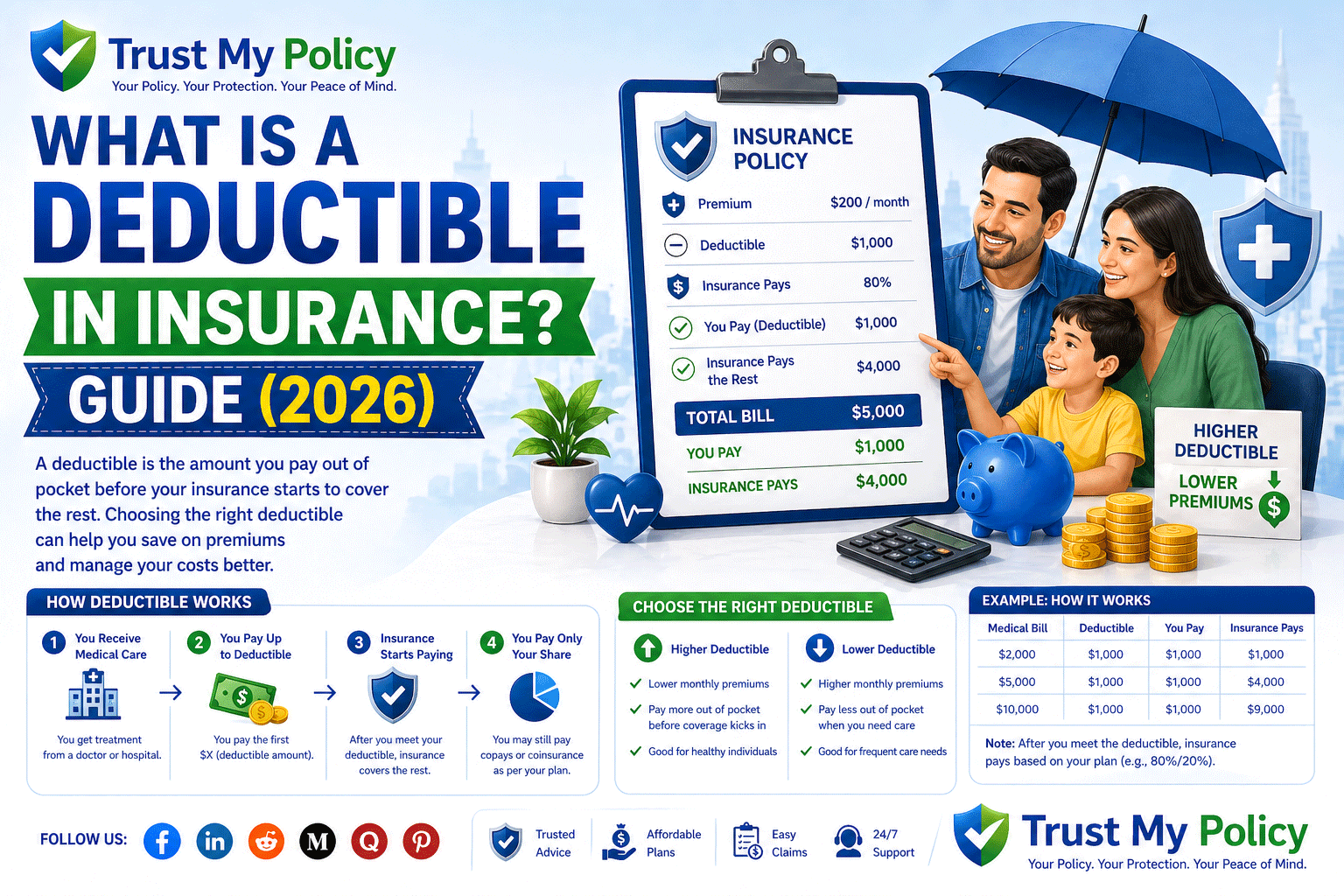
| Lower deductible chosen for clearer cost predictability | +10%–20% premium increase | Reduces out-of-pocket exposure at claim time |
| UK “new for old” contents cover vs. standard cover | +£3–£8/month | UK equivalent of the replacement cost vs. actual cash value distinction |
| Umbrella liability policy raising your overall limit | +$150–$300/year | Adds significant additional liability protection beyond standard limits |
Independent insurance brokers — Brokers can walk through unfamiliar terms in your specific policy document line by line. Cost range: typically free for the consumer. Best for: anyone confused by specific wording in their own policy. Rating: varies by broker, check state or FCA licensing.
NAIC consumer glossary (US) — Publishes a plain-language glossary of standard insurance terms used across US policies. Cost range: free public resource. Best for: US consumers wanting a quick definition reference. Rating: regulatory standards body.
Financial Conduct Authority glossary (UK) — Offers official definitions of insurance terminology used in UK policies. Cost range: free public resource. Best for: UK consumers wanting regulator-verified definitions. Rating: government regulatory body.
Citizens Advice (UK) — Offers free, independent guidance on understanding confusing insurance policy language. Cost range: free. Best for: UK consumers wanting plain-language explanations. Rating: independent charity.
Your insurer’s customer service line — Can clarify exactly how a specific term applies to your individual policy. Cost range: free to contact. Best for: confirming term definitions specific to your exact coverage. Rating: not applicable, direct insurer resource.
We recommend starting with an independent broker as best overall because they can explain unfamiliar terms in the specific context of your own policy, rather than a generic definition alone.
The most important terms are premium, deductible, exclusion, endorsement, and limit, since these define your cost, your coverage, and the maximum amount you can be paid.
An exclusion is something specifically not covered by your policy, even if it might seem related to a covered event at first glance.
An endorsement is a formal add-on or amendment that changes your base policy, either expanding or restricting your coverage in a specific way.
Actual cash value reflects an item’s depreciated worth at the time of loss, while replacement cost covers what it would cost to buy the item new, without depreciation deducted.
Not exactly. Comprehensive insurance covers non-collision damage specifically, while “full coverage” is a casual term usually referring to a bundle of liability, collision, and comprehensive coverage together.
A limit is the maximum amount your insurer will pay for a covered loss, regardless of whether your actual loss exceeds that amount.
A named peril policy only covers causes of loss specifically listed in the policy, while an all-risk policy covers all causes except those specifically excluded.
While most core terms are standardized, some insurers define specific endorsements, riders, or exclusions slightly differently, so it’s important to check your own policy’s definitions section.
Often yes, especially for higher-value belongings, since the payout difference after depreciation can be significant on older items.
Check the definitions section of your policy document first, then contact your insurer or broker directly if the term still isn’t clear.
This guide reflects the latest 2026 insurance data.
This article is for informational purposes only. Always consult a licensed insurance professional before making coverage decisions. Trust My Policy does not sell insurance products or represent any insurer.

Jagadeesh Gutha is the founder of TrustMyPolicy.com, an independent insurance information platform covering life, health, car, home, and business insurance for US and UK readers. He researches insurance products, policy structures, and consumer rights to help everyday people make informed coverage decisions without the jargon. All content on TrustMyPolicy is independently researched, fact-checked, and written to educate — not to sell.

[…] a limit set appropriately can fully absorb even a serious loss. This guide breaks down exactly how coverage limits work, where they apply, and how to set yours […]



Insurance Guides for UK, USA & Worldwide We are not an insurer or broker.
Reader Comments (2)
[…] Policies Are Designed in 2026 follows a consistent structure across nearly every insurer: a declarations page summarizing your specific coverage, an insuring agreement defining what’s covered, […]