Insurance Policy Definition: What It Is, What’s In It, and Why Every Word Matters
David thought he was covered for a burst water pipe. He’d paid home insurance for three years without a claim. When the pipe burst under his kitchen floor, causing £8,000 in damage, his insurer declined the claim. The reason: his policy covered sudden and accidental water damage but excluded gradual leaks and escape of water from underground pipes. The relevant exclusion was on page 27 of his policy wording. He’d never read past page 3.
An insurance policy is the legal contract between you and your insurer. It defines exactly what is covered, what is excluded, what you must pay, and what the insurer will pay. Every word in it matters — and yet most policyholders never read it fully.
This guide explains what an insurance policy is in plain English, what every policy contains, which sections are most important to read before you need to claim, and how policies differ between the UK and USA.
Insurance Policy Definition
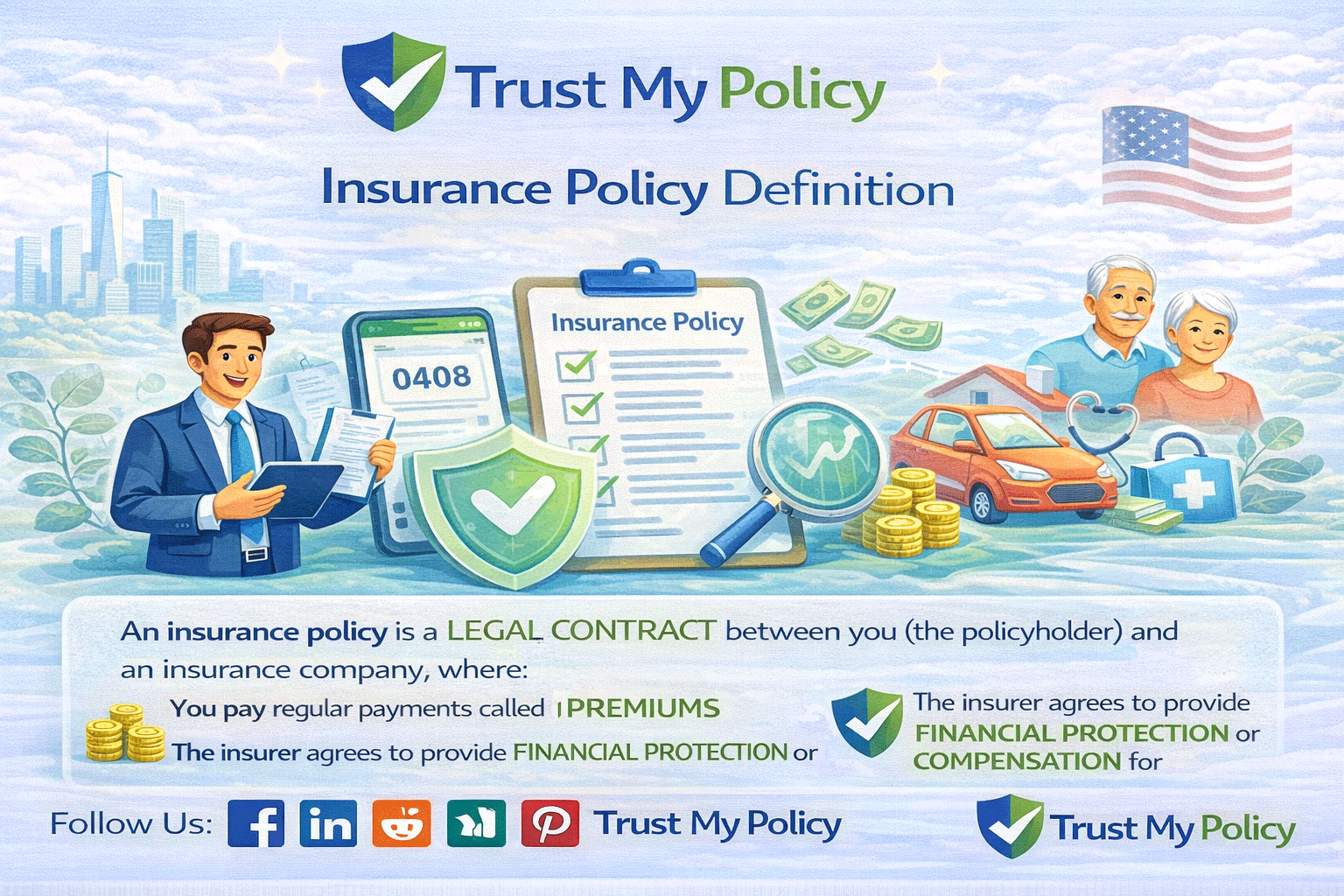
An insurance policy is a legally binding contract between a policyholder (you) and an insurance company (the insurer). Under the contract, you agree to pay regular premiums in exchange for the insurer’s promise to pay a specified benefit or cover specified losses if a defined event occurs during the policy period. The policy document sets out in full what is and is not covered, under what conditions, and for how much.
In plain language: the policy is the rulebook for your insurance. It tells you exactly what you’re buying — and exactly what you’re not.
The policy is not just an administrative document. It is a legally enforceable contract. Courts interpret insurance policies word by word when there are disputes. The difference between ‘sudden’ and ‘gradual’ damage (as in David’s case above) is the difference between a paid and a declined claim — and both words appear in virtually every home insurance policy.
Key Parts of an Insurance Policy
1. Declarations Page (USA) / Policy Schedule (UK)
This is the summary page at the front of your policy — the part most people read. It contains:
| Information | Details |
| Policyholder details | Your name, address, date of birth |
| Policy number | Your unique reference for all communications and claims |
| Policy period (UK: inception date) | When the policy starts and ends |
| Insured property or person | What or who is covered (the car, the property, your life, your health) |
| Coverage types | A summary of what types of coverage are in place (e.g. comprehensive, third party; or buildings + contents) |
| Coverage limits | The maximum amount the insurer will pay for each type of coverage |
| Deductible / excess | The amount you pay first before the insurer contributes (USA: deductible; UK: excess) |
| Premium | How much you pay and how often |
| Named beneficiaries (life insurance) | Who receives the death benefit |
2. Insuring Agreement (Coverage / Definitions Section)
This is the core of the policy — it describes exactly what the insurer promises to cover. It is usually expressed as a broad grant of coverage followed by specific conditions.
For example, a home insurance insuring agreement might say: ‘We will pay for direct physical loss to the property described in the Declarations, caused by a Covered Cause of Loss.’ The key phrase here is ‘Covered Cause of Loss’ — which is then defined elsewhere in the policy. The insuring agreement is always conditional: cover is always subject to definitions, conditions, and exclusions elsewhere in the document.
3. Definitions Section
Insurance policies define specific terms used throughout the document. These definitions are not common sense — they are legal definitions that determine the scope of coverage.
Examples of definitions that have determined real claim outcomes:
| Term | How It’s Defined in Policies | Why It Matters |
| ‘Accident’ | Often defined as ‘sudden, unforeseen, and unintended’ | A gradual leak developing over weeks may not qualify as an ‘accident’ |
| ‘Bodily injury’ | May exclude mental or emotional injuries | Critical in liability policies — determines what compensation claims are covered |
| ‘Occurrence’ | Can mean a single event OR multiple events arising from the same source | Affects whether multiple related claims are treated as one or many for deductible purposes |
| ‘Pre-existing condition’ | Defined differently by each insurer, but generally any condition with prior symptoms, treatment, or advice | Determines what health insurance covers — especially under moratorium underwriting |
| ‘Insured person’ | May include just the policyholder, or also spouse and dependants depending on the policy | Critical in health insurance — who exactly is covered |
4. Exclusions Section
Exclusions are the most important section most policyholders never read. An exclusion is a condition, event, or circumstance specifically removed from coverage — meaning the insurer will not pay claims related to it, regardless of what the insuring agreement seems to promise.
Common exclusions across insurance types:
| Insurance Type | Common Exclusions |
| Home / buildings insurance | Gradual wear and tear; subsidence in some policies; deliberate damage; war; floods (often a separate policy) |
| Car insurance | Driving under the influence; racing; using car commercially without declaration; driving without a valid licence |
| Health / medical insurance | Pre-existing conditions (waiting period applies in UK PMI); cosmetic treatment; emergencies (PMI is not an emergency service); chronic conditions on PMI |
| Life insurance | Suicide (first 12–24 months); death resulting from undisclosed dangerous activities; material misrepresentation in the application |
| Travel insurance | Pre-existing conditions not declared; travelling to countries under FCO/State Dept. travel advisory; pandemic-related cancellation in some older policies |
| ⚠️ The Most Expensive Mistake: Not Reading the Exclusions
The exclusions section is where most declined claims originate. Read it before you need to claim — not after. If you don’t understand an exclusion, ask your insurer or broker to explain it in writing before you commit to the policy. An exclusion you discover at claim time cannot be undone. |
5. Conditions Section
Policy conditions are obligations on both you (the policyholder) and the insurer. Breaching a condition — even unintentionally — can void a claim.
Common policyholder conditions include:
- Duty to disclose: You must provide accurate and complete information when applying and at each renewal. Failing to disclose material facts (health history in life/health insurance, modifications to your car, business use of your home) gives the insurer the right to void the policy.
- Duty to mitigate: In the event of a loss, you must take reasonable steps to prevent further damage. Leaving a burst pipe unattended for 48 hours while you’re on holiday could be deemed failure to mitigate.
- Prompt notification of claims: Most policies require you to notify the insurer within a specific timeframe (often 24–48 hours for car accidents; ‘as soon as reasonably possible’ for home claims). Late notification can affect claim validity.
- Cooperation with the insurer: You must provide information and documentation the insurer reasonably requests to process a claim.
6. Endorsements / Riders (UK: Add-ons or Optional Extras)
An endorsement (USA) or rider (insurance general) is an amendment to the standard policy — it adds, removes, or modifies coverage. Endorsements can expand your coverage (e.g. adding home business cover to a standard home policy) or restrict it (e.g. adding a named driver exclusion to car insurance).
Examples: A ‘waiver of premium’ rider on life insurance waives your premiums if you become disabled. A ‘guaranteed insurability’ rider on life insurance lets you increase coverage after life events without a new medical exam. Always read endorsements — they are part of your policy and can significantly affect what you’re covered for.
How to Read an Insurance Policy: What to Focus On
Most policies are 30–100+ pages long. Here’s what to prioritise:
- Start with the Declarations / Policy Schedule — confirm your name, the insured property or person, dates, coverage amounts, and excess/deductible are correct.
- Read the insuring agreement — understand the broad scope of what’s covered.
- Read the exclusions section completely — this is where claims are most often denied. Do not skip this.
- Read the conditions — understand your obligations. Pay particular attention to notification requirements and duty of disclosure.
- Check definitions for any term that determines whether your specific situation is covered.
- Note renewal terms — does the policy auto-renew? What notice do you need to give to cancel? Are premiums guaranteed to remain the same at renewal?
UK vs USA: How Insurance Policies Differ
| Feature | UK Policies | USA Policies |
| Regulatory body | Financial Conduct Authority (FCA) | State insurance commissioners; NAIC sets model standards |
| Standard document | Policy wording + policy schedule (summary) | Declarations page + policy form + endorsements |
| Duty of disclosure | Consumer Insurance (Disclosure and Representations) Act 2012 — ‘reasonable consumer’ standard; deliberate/reckless misrepresentation voids policy | State-specific; generally full disclosure required; material misrepresentation allows insurer to rescind |
| Cooling-off period | 14-day cancellation right on all FCA-regulated policies (EU Consumer Rights Directive) | Varies by state; typically 10–30 days for life insurance; auto/home varies |
| Health insurance model | PMI supplements NHS (no pre-existing condition exclusion on ACA plans in USA; UK PMI uses moratorium/FMU) | ACA-compliant plans: no pre-existing exclusions; short-term plans: exclusions permitted |
| Ombudsman | Financial Ombudsman Service (FOS) — free dispute resolution for consumers | State insurance departments; no single national ombudsman |
Types of Insurance Policies: A Quick Reference
| Policy Type | What It Insures | Key Coverage |
| Life insurance | Your life — pays death benefit to beneficiaries | Term life (fixed period), whole life (permanent), universal life (flexible) |
| Health / medical insurance | Medical expenses — treatment, hospitalisation, prescriptions | Illness, injury, surgery; excludes cosmetic, pre-existing (UK PMI), emergencies (UK PMI) |
| Car / auto insurance | Your vehicle and liability | Third party; third party fire and theft; comprehensive |
| Home / buildings insurance | Your property structure | Damage from fire, flood, storm, subsidence, burst pipes (terms vary) |
| Contents insurance | Items inside your home | Theft, accidental damage, loss — usually up to a sum per item and total |
| Income protection / disability | Your income if you cannot work | Monthly benefit; your choice of deferral period; own occupation definition ideal |
| Critical illness | Your financial position on serious diagnosis | Lump sum on diagnosis of cancer, heart attack, stroke and listed conditions |
| Travel insurance | Travel disruption, medical costs abroad | Cancellation, medical emergency, baggage, delay |
| Business insurance | Business assets and liability | Buildings, contents, employer’s liability, professional indemnity, business interruption |
Frequently Asked Questions
What is an insurance policy?
An insurance policy is a legally binding contract between you (the policyholder) and an insurance company (the insurer). You pay regular premiums; the insurer promises to pay a specified benefit or cover a specified loss if a defined event occurs during the policy period. The policy document sets out in full what is covered, what is excluded, what conditions you must meet, and how claims are processed.
What are the main parts of an insurance policy?
Every insurance policy contains: (1) Declarations page / Policy Schedule — summary of who and what is covered, for how much, and for how long; (2) Insuring Agreement — the broad grant of coverage; (3) Definitions — legal meanings of key terms used throughout the policy; (4) Exclusions — what is not covered; (5) Conditions — obligations on both you and the insurer; (6) Endorsements / Riders — amendments to the standard policy. The exclusions section is the most important to read before you need to make a claim.
What is the difference between a policy and a certificate of insurance?
The policy is the full legal contract, including all terms, conditions, and exclusions. A certificate of insurance (COI) is a summary document proving that coverage exists — it lists the coverage types, limits, and effective dates but does not reproduce the full policy terms. A COI is often requested by employers, landlords, or contractors as proof of coverage, but it cannot be used to interpret the actual terms of the policy.
What happens if I don’t read my insurance policy?
You remain legally bound by all of its terms whether you’ve read them or not. If you file a claim for something excluded in the policy, the insurer can decline it — even if you genuinely didn’t know the exclusion existed. Courts consistently uphold insurance policy terms on the basis that you had the opportunity to read the contract before signing. Not reading your policy is the most common cause of claim disputes and unexpected coverage gaps.
Can an insurer change my policy mid-term?
In the UK, insurers can change policy terms at renewal but generally cannot make material changes mid-term without your agreement (FCA regulations). In the USA, rules vary by state and policy type. Life insurance policies with fixed premiums generally cannot be altered mid-term by the insurer. Health and home insurance may allow mid-term adjustments under specific regulatory frameworks. Any change to your policy should be confirmed in writing as an endorsement, not just verbally.
Key Takeaways
- An insurance policy is a legal contract — every word is enforceable. Read it before you need to claim, not after.
- The most important sections: Declarations/Schedule (confirm your details are correct), Exclusions (what is NOT covered), and Conditions (your obligations).
- Exclusions are the most common reason claims are denied. Read this section completely and ask your broker to explain anything unclear.
- Key definitions within the policy determine whether your specific situation is covered. ‘Sudden’ vs ‘gradual’, ‘accident’, and ‘pre-existing condition’ are examples of terms that have determined real claim outcomes.
- In the UK, you have a 14-day cooling-off period to cancel any FCA-regulated insurance policy. In the USA, cooling-off periods vary by state and product.
- Endorsements and riders add, remove, or modify coverage — always read them as part of the full policy.
For specific guidance on policy types, see our guide to [INTERNAL LINK: what is life insurance and how does it work] or our insurance for self-employed UK guide for business policy types.
| 📋 Disclaimer
This article is for informational purposes only and does not constitute financial or insurance advice. Always consult a licensed insurance professional for guidance specific to your situation. TrustMyPolicy.com does not sell insurance products or represent any insurer. |