Documents Needed for Insurance Claims: Complete Guide for Policyholders
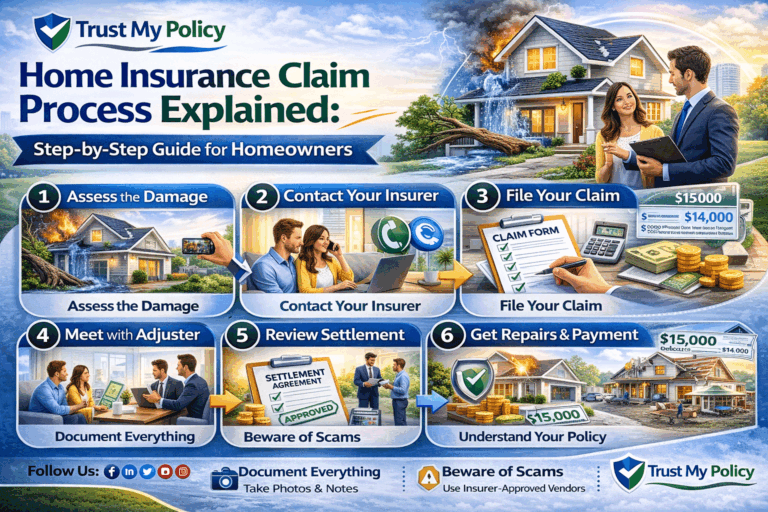
Insurance policies provide financial protection against unexpected events such as accidents, property damage, medical emergencies, or loss of life. However, receiving compensation from an insurance policy requires following a formal claim procedure. One of the most important parts of this procedure is submitting the correct documents needed for insurance claims.
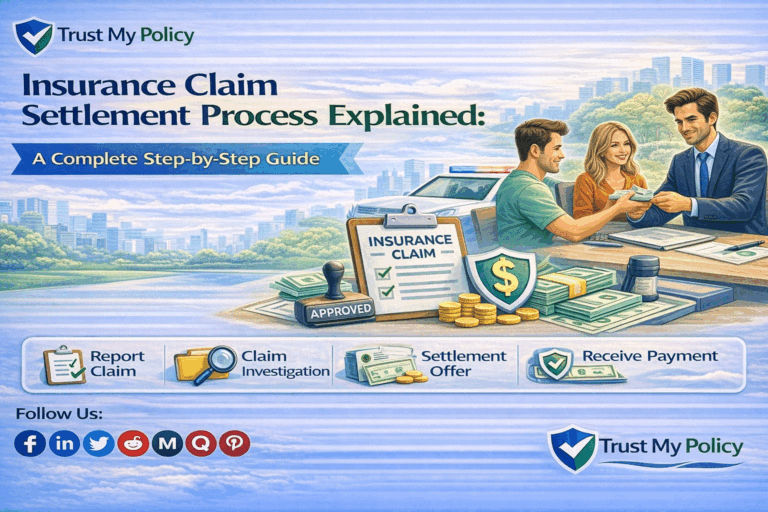
Insurance companies require documentation to verify that a claim is valid and that the loss occurred as described. These documents help insurers confirm the policyholder’s identity, review the details of the incident, evaluate the damage or expenses involved, and determine the appropriate claim settlement.
Many insurance claims experience delays because policyholders do not submit complete documentation. Missing paperwork, incorrect information, or delayed submissions can slow the process or lead to claim rejection in some cases.
Understanding the documents needed for insurance claims helps policyholders prepare in advance and avoid unnecessary complications during stressful situations. While documentation requirements may vary depending on the type of insurance—such as health, auto, home, or life insurance—the core types of documents remain similar across most policies.
This guide explains the key documents required for insurance claims, why they are important, and how policyholders can organize them effectively when filing a claim.
Table of Contents
ToggleDocuments Needed for Insurance Claims
| Document Type | Purpose | Example | Importance |
|---|---|---|---|
| Claim Form | Official request for compensation | Completed claim application | Essential |
| Policy Document | Proof of insurance coverage | Policy certificate | Essential |
| Identity Proof | Confirms policyholder identity | Passport or national ID | High |
| Incident Reports | Evidence of the event | Police or accident report | High |
| Medical Records | Verifies treatment or injury | Hospital bills and reports | High |
| Repair Estimates | Shows damage cost | Vehicle repair estimate | Medium |
| Photographic Evidence | Visual proof of damage | Photos of property damage | Medium |
, benefits, and financial protection options available to policyholders. Many readers compare multiple guides before selecting a plan so they can clearly evaluate premiums, claim procedures, and long‑term advantages. A useful resource to explore is Best Health Insurance for Self-Employed, which explains how this insurance policy works, the key benefits it offers, and situations where it may be the most suitable option. By reviewing this guide, you can gain deeper insights into coverage features, eligibility requirements, and practical tips that help individuals and families make smarter insurance decisions.
What Are Insurance Claim Documents?
Insurance claim documents are official records submitted to an insurance company to support a claim request.
These documents help insurers verify three main elements:
-
The identity of the policyholder
-
The occurrence of the insured event
-
The financial impact of the loss
Insurance companies review documentation to confirm that the claim falls within the policy coverage and to estimate the amount payable.
Documents may vary depending on the type of insurance policy and the nature of the incident.
Common categories of claim documentation include:
-
Identification documents
-
Policy records
-
Incident reports
-
Financial records or invoices
-
Medical reports or repair estimates
Providing accurate documentation helps insurers process claims efficiently.
Key Documents Needed for Insurance Claims
Claim Form
The insurance claim form is the primary document required to start the claim process.
It usually includes:
-
Policyholder details
-
Policy number
-
Date of incident
-
Description of the loss or damage
-
Estimated claim amount
The claim form officially notifies the insurer that the policyholder is requesting compensation.
Incomplete or inaccurate claim forms may delay the claim process.
Policy Document
The policy document confirms that the policyholder has active insurance coverage.
It includes important details such as:
-
Policy number
-
Coverage limits
-
Policy duration
-
Covered risks and exclusions
Insurance companies use the policy document to verify that the incident falls within the scope of coverage.
Identity Proof
Insurance companies require identity verification to confirm that the claim is being filed by the correct policyholder or beneficiary.
Common identity documents include:
-
Passport
-
National identity card
-
Driver’s license
-
Government-issued identification
Identity verification helps prevent fraud and ensures accurate claim processing.
Incident or Accident Report
An incident report provides official documentation of the event that caused the loss.
Examples include:
-
Police reports for theft or accidents
-
Fire department reports for fire incidents
-
Accident reports for vehicle collisions
These reports provide third-party confirmation that the incident occurred.
Medical Reports and Hospital Bills
For health insurance or injury claims, medical documentation is essential.
Typical medical documents include:
-
Hospital admission records
-
Doctor’s reports
-
Diagnostic test results
-
Medical bills and receipts
Insurance companies review these documents to verify treatment and calculate reimbursement.
, benefits, and financial protection options available to policyholders. Many readers compare multiple guides before selecting a plan so they can clearly evaluate premiums, claim procedures, and long‑term advantages. A useful resource to explore is Can You Have Multiple Life Insurance Policies, which explains how this insurance policy works, the key benefits it offers, and situations where it may be the most suitable option. By reviewing this guide, you can gain deeper insights into coverage features, eligibility requirements, and practical tips that help individuals and families make smarter insurance decisions.
Repair Estimates or Damage Assessment
Repair estimates help insurers understand the financial impact of property damage.
Examples include:
-
Vehicle repair estimates
-
Home repair invoices
-
Contractor cost estimates
These documents help determine the claim settlement amount.
Photographic Evidence
Photos can provide clear visual proof of damage.
Examples include:
-
Vehicle accident damage
-
Property damage after storms
-
Water damage inside homes
Photographic evidence supports written documentation and helps insurers assess damage more accurately.
Detailed Comparison of Insurance Claim Documents
| Document | Purpose | When Required | Example Situation |
|---|---|---|---|
| Claim Form | Initiates claim | Always required | Filing home insurance claim |
| Policy Document | Confirms coverage | Always required | Checking coverage limits |
| Identity Proof | Verifies claimant identity | Most claims | Beneficiary filing claim |
| Police Report | Confirms incident | Theft or accident | Vehicle theft case |
| Medical Records | Verifies treatment | Health insurance claim | Hospitalization |
| Repair Estimate | Calculates loss value | Property damage | Storm damage repairs |
| Photos | Visual evidence | Damage claims | Flood damage to property |
Additional Supporting Documents
Depending on the claim type, additional documentation may be required.
Examples include:
-
Property ownership documents
-
Purchase receipts for valuable items
-
Bank account details for claim payments
-
Death certificates for life insurance claims
These documents help insurers complete claim verification.
, benefits, and financial protection options available to policyholders. Many readers compare multiple guides before selecting a plan so they can clearly evaluate premiums, claim procedures, and long‑term advantages. A useful resource to explore is Risk Pooling in Insurance, which explains how this insurance policy works, the key benefits it offers, and situations where it may be the most suitable option. By reviewing this guide, you can gain deeper insights into coverage features, eligibility requirements, and practical tips that help individuals and families make smarter insurance decisions.
Pros and Cons of Documentation Requirements
Advantages
-
Helps verify claims accurately
-
Reduces fraudulent insurance claims
-
Ensures fair claim settlements
-
Provides evidence for damage assessment
-
Improves transparency during claim processing
Limitations
-
Collecting documents may take time
-
Missing documents may delay claims
-
Some documents require official reports
-
Complex claims may require additional paperwork
Understanding documentation requirements helps policyholders prepare in advance.
Real-Life Examples
Example 1: Vehicle Accident Claim
A driver is involved in a minor accident.
Required documents may include:
-
Claim form
-
Vehicle insurance policy
-
Driver’s license
-
Police report
-
Photos of vehicle damage
-
Repair estimate
These documents help insurers evaluate the accident and approve the claim.
Example 2: Health Insurance Claim
A patient receives hospital treatment.
Required documents may include:
-
Medical bills
-
Hospital discharge summary
-
Doctor’s reports
-
Diagnostic test results
The insurer reviews these documents to calculate reimbursement.
Example 3: Home Insurance Claim
A storm damages a house roof.
Required documents may include:
-
Insurance policy document
-
Photos of damage
-
Contractor repair estimate
-
Claim form
These documents help determine the cost of repairs.
Common Mistakes When Submitting Insurance Claim Documents
Submitting Incomplete Forms
Missing details in claim forms may delay claim processing.
Not Keeping Copies of Documents
Policyholders should keep copies of submitted documents for future reference.
Delayed Document Submission
Insurance companies often have deadlines for submitting claim documents.
Providing Incorrect Information
Incorrect details may require additional verification.
Not Documenting Damage Immediately
Photographs and reports should be collected as soon as possible after the incident.
, benefits, and financial protection options available to policyholders. Many readers compare multiple guides before selecting a plan so they can clearly evaluate premiums, claim procedures, and long‑term advantages. A useful resource to explore is Best Life Insurance for Families, which explains how this insurance policy works, the key benefits it offers, and situations where it may be the most suitable option. By reviewing this guide, you can gain deeper insights into coverage features, eligibility requirements, and practical tips that help individuals and families make smarter insurance decisions.
Frequently Asked Questions (FAQs)
What documents are needed for insurance claims?
Typical documents include claim forms, policy documents, identity proof, incident reports, invoices, repair estimates, and supporting evidence.
Why do insurance companies require documents?
Documents help insurers verify the claim, confirm coverage, and determine the amount payable.
Do all insurance claims require police reports?
No. Police reports are typically required for incidents such as theft, accidents, or vandalism.
What happens if documents are missing?
Missing documents may delay claim processing or require additional verification.
Are photos required for insurance claims?
Photos are often helpful for property or accident claims because they provide visual evidence of damage.
Can claims be submitted online?
Many insurers allow digital submission of claim forms and supporting documents.
Conclusion
Understanding the documents needed for insurance claims helps policyholders prepare for unexpected situations and avoid delays during claim processing. Insurance companies require documentation to confirm the details of the incident, verify policy coverage, and estimate financial losses accurately.
Common claim documents include claim forms, policy records, identity proof, incident reports, medical records, repair estimates, and photographic evidence. Each document serves a specific purpose in verifying and evaluating the claim.
While documentation requirements may vary depending on the type of insurance, maintaining organized records and submitting complete information can significantly improve the efficiency of the claim process.
Being prepared with the right documents ensures that policyholders can access insurance protection when it is needed most.
, benefits, and financial protection options available to policyholders. Many readers compare multiple guides before selecting a plan so they can clearly evaluate premiums, claim procedures, and long‑term advantages. A useful resource to explore is Third-Party vs Comprehensive Car Insurance, which explains how this insurance policy works, the key benefits it offers, and situations where it may be the most suitable option. By reviewing this guide, you can gain deeper insights into coverage features, eligibility requirements, and practical tips that help individuals and families make smarter insurance decisions.
Disclaimer
Disclaimer: This article is for educational purposes only. Trust My Policy is an independent informational platform and does not sell insurance products or represent any insurance provider. Readers should consult official policy documents or licensed professionals for personalized advice.