

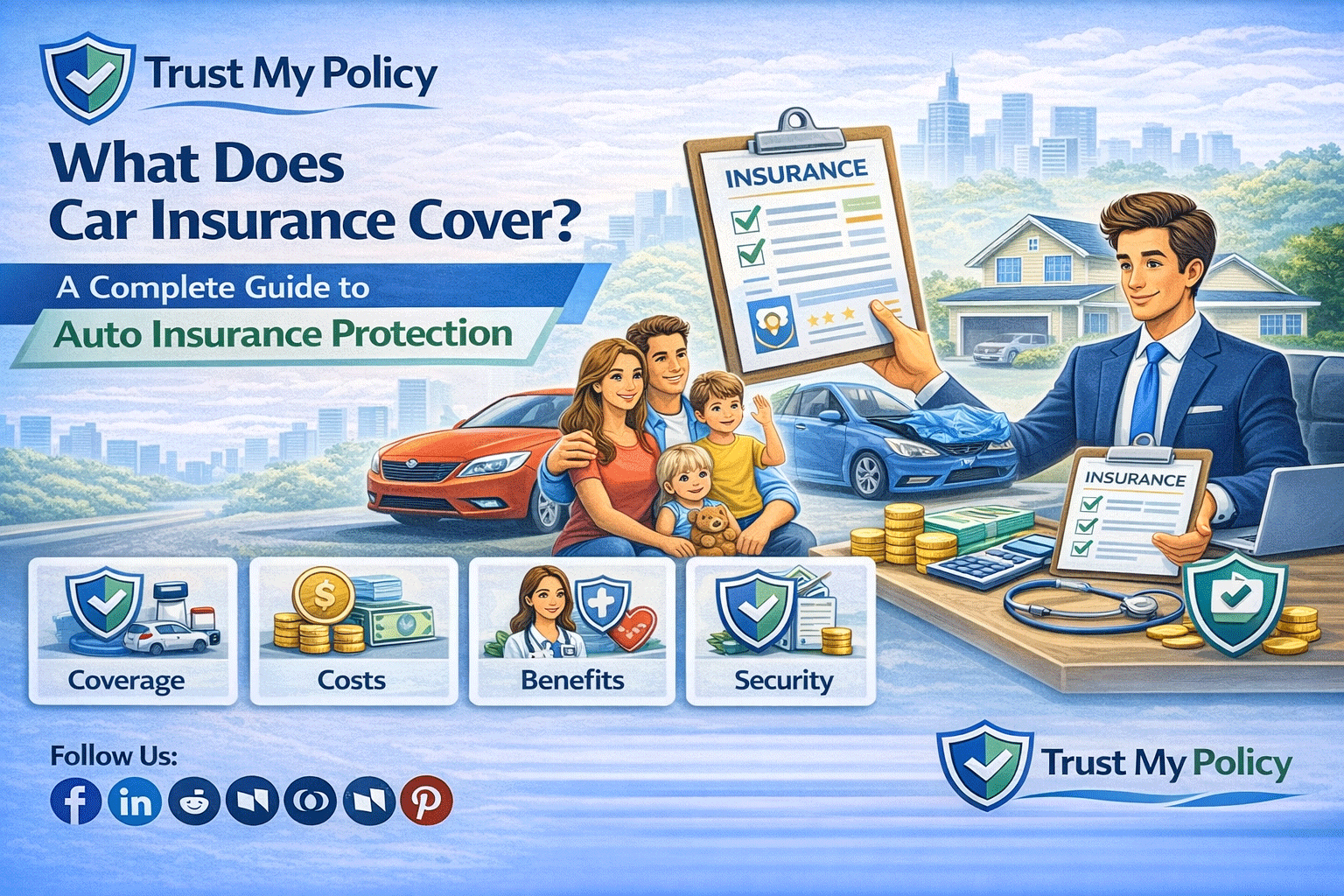
Standard car insurance covers liability for injury or damage you cause to others, damage to your own vehicle from collisions (collision coverage) and non-crash events like theft or weather (comprehensive coverage), and optionally medical costs and uninsured motorist protection. It typically does not cover personal property stolen from the car, mechanical breakdowns, business use, or intentional damage.
Table of Contents
ToggleWhat Does Car Insurance Cover
Ryan Cole, 26, assumed his “full coverage” policy in Nashville would pay for everything after a collision, including his rental car while his vehicle was being repaired, his laptop stolen from the back seat, and his chiropractor visits after a neck strain. He was wrong on two of those three assumptions — and surprised by which two.
What Does Car Insurance Cover in 2026 depends entirely on which coverage types are included in your policy and what exclusions apply. Standard car insurance covers third-party injuries and property damage (liability), damage to your own vehicle from crashes or non-crash events (collision and comprehensive), and sometimes medical costs and uninsured motorist protection. What it usually does not cover includes your own personal property inside the vehicle, business use, and often mechanical breakdowns or normal wear and tear.
This article covers exactly what each part of a typical car insurance policy pays for, what surprises drivers most in the exclusions, real scenarios showing both coverage and gaps, and how to close common gaps with specific add-ons. By the end, you’ll know exactly what you can and can’t rely on your policy for.
Quick Summary Table
| Feature | Details |
| What is covered | Third-party injury and property damage, vehicle damage from crashes and non-crash events, optional medical costs |
| What is typically excluded | Personal property inside the vehicle, mechanical breakdown, business use, intentional damage |
| Key surprise inclusions | Rental car reimbursement and roadside assistance if specifically added |
| Key surprise exclusions | Personal belongings in the car, rideshare or delivery use, flood damage in some policies |
| Typical cost | $80–$250/month for a policy covering both liability and vehicle damage |
| Regulator | State insurance departments (US); Financial Conduct Authority (UK) |
What Exactly Does Car Insurance Pay For?
Think of your car insurance policy like a restaurant menu with both standard and optional items. The standard items, liability coverage, are always included. The optional items, collision, comprehensive, rental reimbursement, come at extra cost but are listed on the menu. And then there are items that simply aren’t on the menu at all, like cover for your personal belongings inside the car or for using the car for a delivery job, which require a completely separate type of insurance.
Car insurance pays for different things depending on which coverage types you’ve included. Liability coverage pays for injuries or property damage you cause to others. Collision coverage pays for damage to your own vehicle from a crash regardless of fault. Comprehensive coverage pays for non-crash damage like theft, fire, hail, fallen objects, and animal strikes. Optional add-ons like rental reimbursement or roadside assistance cover specific situations that wouldn’t otherwise be included. And a specific set of common situations fall entirely outside what car insurance covers, regardless of how comprehensive a policy sounds.
What Car Insurance Covers — 5 Core Areas
- Third-party liability. If you cause an accident that injures someone or damages their property, your liability coverage pays for their costs up to your policy limits.
- Your own vehicle after a collision. Collision coverage pays for the repair or replacement of your car after a crash with another vehicle or object, regardless of who was at fault.
- Your own vehicle from non-crash events. Comprehensive coverage pays for damage from theft, fire, hail, flooding, falling objects, vandalism, and animal strikes.
- Medical costs after an accident. MedPay or Personal Injury Protection pays for your own and your passengers’ medical costs after an accident, regardless of fault, if included.
- Specific add-on protections. Rental car reimbursement, roadside assistance, and gap coverage can be added to pay for situations your base policy doesn’t automatically cover.
Comparison: What Is and Isn’t Covered
| Category | Covered | Typically Not Covered |
| Damage to other people’s cars or property | Yes, under liability | Only up to your liability limit |
| Damage to your own car from a crash | Yes, under collision | Only if collision coverage is included |
| Theft of your car | Yes, under comprehensive | Only if comprehensive coverage is included |
| Personal belongings stolen from the car | No | Covered under home or renters insurance instead |
| Rideshare or delivery use injuries | No | Requires a specific rideshare/delivery endorsement |
| Mechanical breakdown or wear and tear | No | Requires a separate mechanical breakdown policy |
| Flood damage | Yes, under comprehensive in most cases | Some policies have specific flood exclusions; check yours |
| Rental car while yours is being repaired | Only if rental reimbursement is added | Not included in base liability-only policies |
We recommend most readers confirm with their insurer exactly which items from the “not covered” column apply to their specific situation.
4 Real-Life Scenarios
Scenario 1: Ryan, 26, driver in Nashville. Ryan’s collision coverage paid for his car repairs, but his laptop stolen from the back seat wasn’t covered (his renters insurance handled that), and rental reimbursement wasn’t included in his policy. Verdict: personal property and rental cars are common coverage gap surprises. Action: Ryan added rental reimbursement for $8 a month and confirmed with his renters insurer that his laptop was covered.
Scenario 2: A delivery driver in Dallas whose personal auto policy denied an accident claim. The insurer cited a business-use exclusion since the driver was actively delivering food when the accident occurred. Verdict: standard personal auto policies typically exclude commercial or delivery use. Action: the driver added a delivery endorsement for $12 a month to close this gap.
Scenario 3: A driver in Leeds whose cat walked across the bonnet and scratched the paintwork. Animal-caused damage was covered under her comprehensive policy, though she confirmed the deductible was higher than the repair cost and chose to pay out of pocket. Verdict: animal-related damage is a covered comprehensive claim, but small claims below the deductible are better handled out of pocket. Action: she kept the experience in mind when reassessing her deductible amount at renewal.
Scenario 4: A driver in Florida whose engine seized due to poor maintenance. The claim was denied entirely, since mechanical failure due to wear and tear or inadequate maintenance is universally excluded from car insurance. Verdict: car insurance covers accidental damage, not mechanical breakdowns. Action: the driver bought a separate vehicle service contract for mechanical breakdown protection.
Pros & Cons of Standard Car Insurance Coverage
| Pros | Cons |
| Covers the most financially serious risks: third-party liability and vehicle loss. | Personal property inside the car is never covered under auto insurance. |
| Comprehensive coverage addresses a wide range of non-crash events in one product. | Business, rideshare, and delivery use require separate endorsements. |
| Optional add-ons allow coverage to be customised for specific needs. | Mechanical breakdown and normal wear and tear are universally excluded. |
| Medical payments coverage provides immediate support regardless of fault determination. | “Full coverage” is an informal term that doesn’t guarantee all possible risks are covered. |
| Uninsured motorist coverage addresses risk outside your personal control. | Coverage gaps can be invisible until an actual incident reveals them. |
5 Common Mistakes Drivers Make
- Assuming “full coverage” covers absolutely everything. This happens because the term sounds comprehensive. What to do instead: ask your insurer or broker specifically what’s excluded under your policy, even if you call it full coverage.
- Assuming personal belongings in the car are covered. This happens because the theft happened inside the vehicle. What to do instead: file a claim for stolen personal belongings under your home or renters insurance, not your auto policy.
- Using a personal auto policy for rideshare or delivery driving. This happens because drivers assume their existing policy extends to all uses. What to do instead: add a specific rideshare or delivery endorsement to close this gap.
- Expecting car insurance to cover mechanical breakdowns. This happens because the car “stopped working” and the driver has insurance. What to do instead: purchase a separate mechanical breakdown or vehicle service contract if this protection matters to you.
- Not adding rental reimbursement and then being surprised when it’s needed. This happens because rental reimbursement feels like a minor optional extra. What to do instead: add it proactively since the monthly cost is typically minimal relative to daily rental rates.
⚠️ WARNING: Never assume your car insurance covers rideshare or delivery use just because the vehicle is personally insured. Using a standard personal policy for commercial purposes without disclosure can result in a denied claim and a cancelled policy.
Decision Table: Is Your Specific Situation Covered?
| Your Situation | Our Recommendation |
| Your car was damaged in a collision | Yes — covered under collision if you have that coverage |
| Your personal laptop was stolen from your car | No — claim this under home or renters insurance instead |
| Your car was damaged by hail | Yes — covered under comprehensive coverage |
| You drive for a rideshare or delivery app | No — add a specific endorsement to your personal policy |
| You need a rental car while yours is repaired | No unless you added rental reimbursement — add it for a small monthly cost |
| Your engine failed due to wear and tear | No — car insurance never covers mechanical breakdown |
| You were hit by an uninsured driver | Yes — if you have uninsured motorist coverage |
💡 TIP: The single golden rule for understanding car insurance coverage: if the question is about your own personal property, business use, or mechanical failure, car insurance almost certainly doesn’t cover it — each of those requires a different type of protection.
Cost Table: What Different Covered Events Actually Pay Out
| Scenario | Covered By | Typical Payout |
| You cause a $15,000 crash that injures the other driver | Liability | Up to your liability limit |
| Your car is totalled in a not-at-fault accident | Collision (via your insurer) or liability (via other driver) | Actual cash value minus deductible |
| Your car is stolen | Comprehensive | Actual cash value minus deductible |
| Your windscreen is cracked by road debris | Comprehensive | Repair cost, sometimes with no deductible |
| Your laptop is stolen from your car | Not covered by auto insurance | Claim under home/renters insurance |
| You need a rental while your car is repaired | Rental reimbursement add-on | Typically $30–$50/day up to a limit |
| Your engine breaks down due to neglect | Not covered | No auto insurance payout; separate vehicle service contract needed |
Best Providers for Broad Car Insurance Coverage
GEICO (US) — Offers clear online tools to see exactly what each coverage type includes before purchasing. Cost range: competitive across most US states. Best for: drivers wanting transparency about coverage inclusions before buying. Rating: AM Best A++.
Progressive (US) — Allows side-by-side comparison of coverage types and costs, making it clear exactly what each option adds. Cost range: competitive US pricing. Best for: drivers building a policy from scratch and wanting to understand each element. Rating: AM Best A+.
Admiral (UK) — Offers fully comprehensive UK car insurance with clear inclusion of what’s covered versus what requires an add-on. Cost range: competitive UK pricing. Best for: UK drivers wanting broad standard coverage with transparent terms. Rating: Defaqto 4-5 Star.
Aviva (UK) — Provides comprehensive car insurance with a clear policy summary helping drivers understand exactly what’s included. Cost range: competitive UK pricing. Best for: UK drivers wanting a financially strong insurer with clear documentation. Rating: Defaqto 5 Star.
State Farm (US) — Broad agent network for in-person guidance on which events your specific policy does and doesn’t cover. Cost range: competitive, varies by state. Best for: US drivers wanting a detailed personalised explanation of coverage inclusions. Rating: AM Best A++.
We recommend Progressive for US drivers and Admiral for UK drivers as best overall because both offer transparent coverage comparison tools that make it easy to see exactly what your specific policy does and doesn’t pay for.
Frequently Asked Questions
What does car insurance cover?
Standard car insurance covers third-party liability, damage to your own car from crashes and non-crash events like theft or weather, and optionally medical costs and uninsured motorist protection.
Does car insurance cover stolen personal belongings?
No. Personal property stolen from your car is covered under home or renters insurance, not auto insurance.
Does car insurance cover rideshare or delivery driving?
Standard personal policies typically exclude this use; a specific rideshare or delivery endorsement is needed to close this gap.
Does car insurance cover mechanical breakdowns?
No. Mechanical failure and normal wear and tear are universally excluded from standard car insurance; a separate mechanical breakdown policy or vehicle service contract is needed.
Is flood damage covered by car insurance?
Usually yes, under comprehensive coverage, though some specific policies may have flood exclusions worth checking directly with your insurer.
Does car insurance pay for a rental car while mine is being repaired?
Only if you’ve specifically added rental reimbursement coverage to your policy; it’s not included in standard base policies.
What does “full coverage” mean?
Full coverage is an informal term usually meaning liability plus collision plus comprehensive, but it doesn’t guarantee every possible risk is covered, since many exclusions still apply.
Does car insurance cover a passenger’s medical costs?
MedPay and PIP coverage can pay for passengers’ medical costs; standard liability coverage only covers injury costs for people in other vehicles.
Is animal damage covered by car insurance?
Yes, in most cases, animal strikes and damage from animals are covered under comprehensive coverage.
What’s the difference between what car and home insurance cover for theft?
Car insurance (comprehensive) covers theft of the vehicle itself; home or renters insurance covers personal belongings stolen from inside the vehicle.
Key Takeaways
- Understand that “full coverage” doesn’t cover everything — review your specific exclusions.
- Claim stolen personal belongings under home or renters insurance, not your auto policy.
- Add a rideshare or delivery endorsement if you use your car for any gig platform work.
- Add rental reimbursement proactively since the monthly cost is minimal.
- Never expect car insurance to cover mechanical breakdowns or normal wear and tear.
- Confirm whether flood damage is explicitly included or excluded in your specific policy.
- Ask your insurer for a full list of exclusions when buying a new policy.
This article is for informational purposes only. Always consult a licensed insurance professional before making coverage decisions. Trust My Policy does not sell insurance products or represent any insurer.





Reader Comments (2)
[…] liability (covers damage you cause to others), collision (covers damage to your own car in a crash), comprehensive (covers non-crash damage like theft or weather), uninsured/underinsured motorist (covers you when […]