
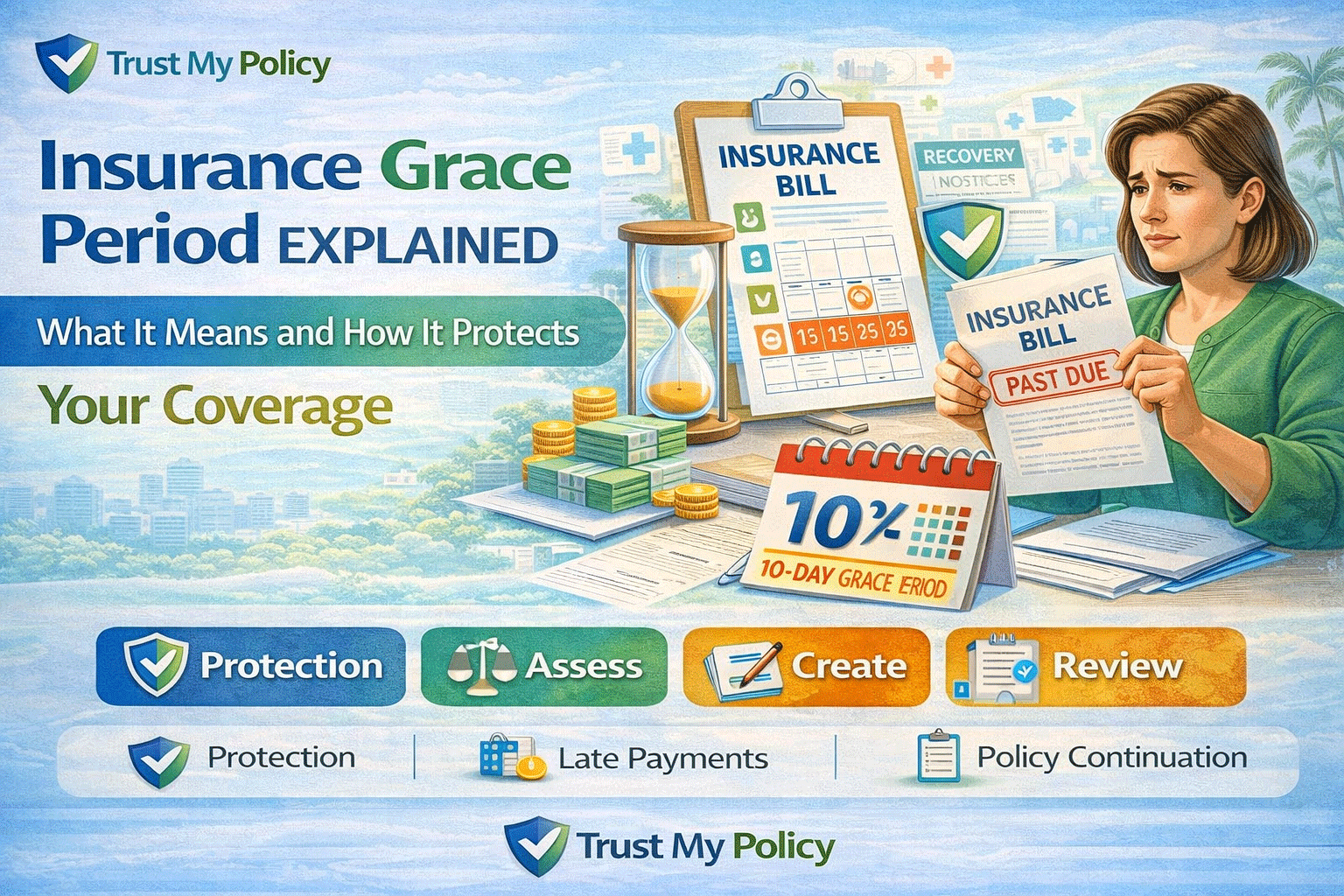
An insurance grace period is the window of time after a missed premium payment, typically 10–31 days depending on the policy and state, during which your coverage remains technically active. If you pay within that window, your policy continues without a lapse. If you don’t, your coverage can be cancelled retroactively to the original due date.
Felicia Adams, 30, had her auto insurance payment bounce due to a banking error in Atlanta and panicked, assuming her coverage had instantly lapsed. A quick call to her insurer revealed she still had nine days left in her grace period to make the payment before any actual lapse would occur.
An Insurance Grace Period is the set window of time after a missed premium payment during which your coverage technically stays active, giving you a chance to pay before the policy actually lapses. Typical grace periods run anywhere from 10 to 31 days depending on the policy type, state, and insurer. This guide breaks down exactly how grace periods work, how long you actually have, and what happens if you miss the deadline entirely.
This article covers what a grace period actually means, how long you typically get for different policy types, real scenarios showing what happens at each stage, and what to do if you’re at risk of missing a payment. By the end, you’ll know exactly where you stand if a payment ever slips through the cracks.
| Feature | Details |
| What it is | A set window after a missed payment during which coverage stays active |
| Who it applies to | Auto, home, health, and life insurance policyholders |
| Typical length | 10–31 days, varying by policy type, insurer, and state |
| Key benefit | Protects you from instant cancellation due to a single missed payment |
| Key limitation | Coverage can be cancelled retroactively if payment isn’t made within the window |
| Regulator | State insurance departments (US); Financial Conduct Authority (UK) |
Think of a grace period like a library’s late return window — return the book within that window and there’s no real consequence, but go past it and you start facing real penalties, potentially losing borrowing privileges entirely. Insurance grace periods work the same way with your coverage.
An insurance grace period is a specific window of time, defined in your policy, during which coverage remains technically active even after a premium payment is missed. If you make the payment within that window, your policy continues uninterrupted. If you don’t, the insurer can cancel the policy, sometimes retroactively to the original due date, leaving you without coverage during the gap. Anyone holding an ongoing insurance policy needs to know their specific grace period length.
| Criteria | Auto and Home Insurance Grace Periods | Life and Health Insurance Grace Periods |
| Typical length | 10–20 days, varies by state and insurer | Often 30–31 days, sometimes longer for life insurance |
| Coverage during the period | Usually remains fully active | Usually remains fully active |
| Consequence of non-payment | Policy cancellation, often retroactive to due date | Policy lapse, which can be more consequential for life insurance |
| Pros | Provides a reasonable buffer for short payment delays | Longer windows reflect the higher stakes of life and health coverage |
| Cons | A retroactive cancellation can affect a claim during the grace period | A lapsed life policy may require new underwriting to reinstate |
We recommend treating any grace period as a true deadline rather than a safety net for most readers, since the consequences of missing it can be more serious than they initially appear.
Scenario 1: Felicia, 30, driver in Atlanta. Felicia’s payment bounced due to a banking error, but she had nine days remaining in her grace period to resolve it before any actual lapse occurred. Verdict: a grace period gave her a genuine buffer to fix an honest mistake. Action: Felicia switched to a backup payment method to avoid future banking errors causing the same issue.
Scenario 2: A driver in Manchester whose payment failed and who didn’t realize a grace period applied at all. He assumed his coverage was instantly cancelled and went two days without driving out of caution, only to later learn he still had ten more days to pay. Verdict: not knowing your specific grace period length can cause unnecessary disruption. Action: he confirmed his exact grace period length directly with his insurer afterward.
Scenario 3: A life insurance policyholder in Texas who missed a payment and didn’t pay within the 31-day grace period. His policy lapsed, and reinstating it required new underwriting, including updated health questions, since enough time had passed. Verdict: missing a life insurance grace period can mean a meaningfully more difficult reinstatement process. Action: he set up autopay immediately after reinstating the policy to avoid a repeat lapse.
Scenario 4: A homeowner in the UK whose direct debit payment failed during a bank account switch. Her insurer’s 14-day grace period gave her enough time to update her payment details before any cancellation took effect. Verdict: grace periods commonly accommodate routine payment hiccups like a bank switch. Action: she double-checked her new account’s direct debit setup immediately to avoid a repeat issue.
| Pros | Cons |
| Protects policyholders from instant cancellation due to a single missed payment. | A retroactive cancellation can still affect a claim made during the grace period itself. |
| Gives a reasonable buffer for honest mistakes like banking errors. | Not knowing your specific grace period length can cause unnecessary panic or risk. |
| Life and health insurance often have longer grace periods given the higher stakes. | A lapsed life insurance policy may require new underwriting to reinstate. |
| Most policies remain fully active in coverage during the grace period itself. | Repeated reliance on the grace period can be flagged as a risk factor by some insurers. |
| Setting up autopay can largely eliminate the risk of needing the grace period at all. | Grace period lengths vary by state, insurer, and policy type, requiring direct confirmation. |
⚠️ WARNING: Never assume a claim made during your grace period is automatically protected if you ultimately fail to pay. Some insurers can retroactively cancel coverage back to the original due date, which can affect or void a claim made during that window if payment is never completed.
| Your Situation | Our Recommendation |
| You just missed a premium payment | Yes — pay as soon as possible within your grace period, don’t wait |
| You’re unsure how long your specific grace period is | Yes — confirm directly with your insurer or check your policy documents |
| Your payment failed due to a banking error | Yes — fix the payment method immediately and confirm the payment processes successfully |
| Your life insurance policy has already lapsed | Yes — contact your insurer about reinstatement as soon as possible |
| You’ve relied on the grace period multiple times recently | Yes — set up autopay with a backup payment method to avoid repeat issues |
| You filed a claim during your grace period and are now worried about payment | Yes — complete the missed payment immediately to avoid jeopardizing that claim |
| You’re confident your payments are always on time | No immediate action — but it’s still worth knowing your grace period length just in case |
💡 TIP: The single golden rule for grace periods: treat the window as an emergency buffer, not a routine extension, and always confirm your exact grace period length directly with your insurer rather than assuming.
| Scenario | Cost or Consequence | Notes |
| Payment made within the grace period | $0 additional cost | Policy continues without any lapse |
| Late fee charged within the grace period | $10–$25 | Varies by insurer, even if coverage continues uninterrupted |
| Policy lapses after the grace period (auto/home) | Need to reapply, potentially at a higher rate | Lapses can be viewed as a risk factor by future insurers |
| Life insurance policy lapses after the grace period | Possible new underwriting required to reinstate | Can include updated health questions or even a new medical exam |
| Claim made during the grace period, payment never completed | Possible claim denial or reduced payout | Reflects the risk of retroactive cancellation to the original due date |
| Driving uninsured after an undiscovered lapse | Full exposure to any accident cost plus potential fines | Can occur if a policyholder mistakenly assumes coverage continued |
| Setting up autopay to avoid relying on grace periods | $0 additional cost | Eliminates most risk of an accidental missed payment |
Your insurer’s policy documents — The definitive source for your specific grace period length and what happens if it’s missed. Cost range: free to review. Best for: confirming your exact terms before assuming anything. Rating: not applicable, primary source document.
Your state insurance department (US) — Can confirm minimum grace period requirements set by state regulation for specific policy types. Cost range: free to contact. Best for: US consumers wanting to verify minimum legal requirements. Rating: government regulatory body.
Financial Conduct Authority (UK) — Sets standards for how UK insurers must handle missed payments and grace periods fairly. Cost range: free to consult guidance. Best for: UK consumers wanting to understand fair treatment standards. Rating: government regulatory body.
Independent insurance brokers — Brokers can confirm your specific policy’s grace period and help set up reliable autopay arrangements. Cost range: typically free for the consumer. Best for: anyone wanting a plain-language confirmation of their terms. Rating: varies by broker, check licensing.
NAIC consumer resources (US) — Publishes plain-language guidance on grace period requirements across different US states. Cost range: free public resource. Best for: US consumers researching state-specific rules. Rating: regulatory standards body.
We recommend reviewing your own policy documents directly as best overall, since grace period lengths vary significantly by insurer, state, and policy type.
An insurance grace period is a specific window of time after a missed premium payment, typically 10–31 days, during which your coverage remains technically active.
Auto and home insurance grace periods are often 10–20 days, while life and health insurance grace periods are commonly 30–31 days, though this varies by insurer and state.
Your insurer can cancel your policy, sometimes retroactively to the original due date, which can leave you without coverage and require you to reapply.
Yes, in most cases your coverage remains fully active during the grace period, though a claim made during this time could still be affected if payment is never completed.
Often yes, but reinstatement may require new underwriting, including updated health questions or a new medical exam, depending on how long the policy was lapsed.
Most do, but the specific length and terms vary by policy type, insurer, and state, so it’s worth confirming directly rather than assuming a standard length applies.
Fix the payment method and complete the payment as quickly as possible within your grace period to avoid any lapse in coverage.
No. The grace period is intended as an emergency buffer, not a routine extension, and repeated reliance on it can be viewed as a risk factor by some insurers.
Not necessarily in full. If you ultimately fail to make the payment, some insurers can retroactively cancel coverage, which could affect or void that claim.
Setting up autopay with a reliable backup payment method significantly reduces the risk of ever missing a payment and needing to rely on the grace period.
This article is for informational purposes only. Always consult a licensed insurance professional before making coverage decisions. Trust My Policy does not sell insurance products or represent any insurer.

Jagadeesh Gutha is the founder of TrustMyPolicy.com, an independent insurance information platform covering life, health, car, home, and business insurance for US and UK readers. He researches insurance products, policy structures, and consumer rights to help everyday people make informed coverage decisions without the jargon. All content on TrustMyPolicy is independently researched, fact-checked, and written to educate — not to sell.

[…] insurance waiting period is a specific span of time after your policy starts during which certain benefits aren’t yet active, even though the policy itself is in force. […]

Insurance Guides for UK, USA & Worldwide We are not an insurer or broker.
Reader Comments (2)
[…] if you can prove payment was made within a grace period or the lapse notice wasn’t properly delivered, so it’s worth appealing rather than assuming the […]