
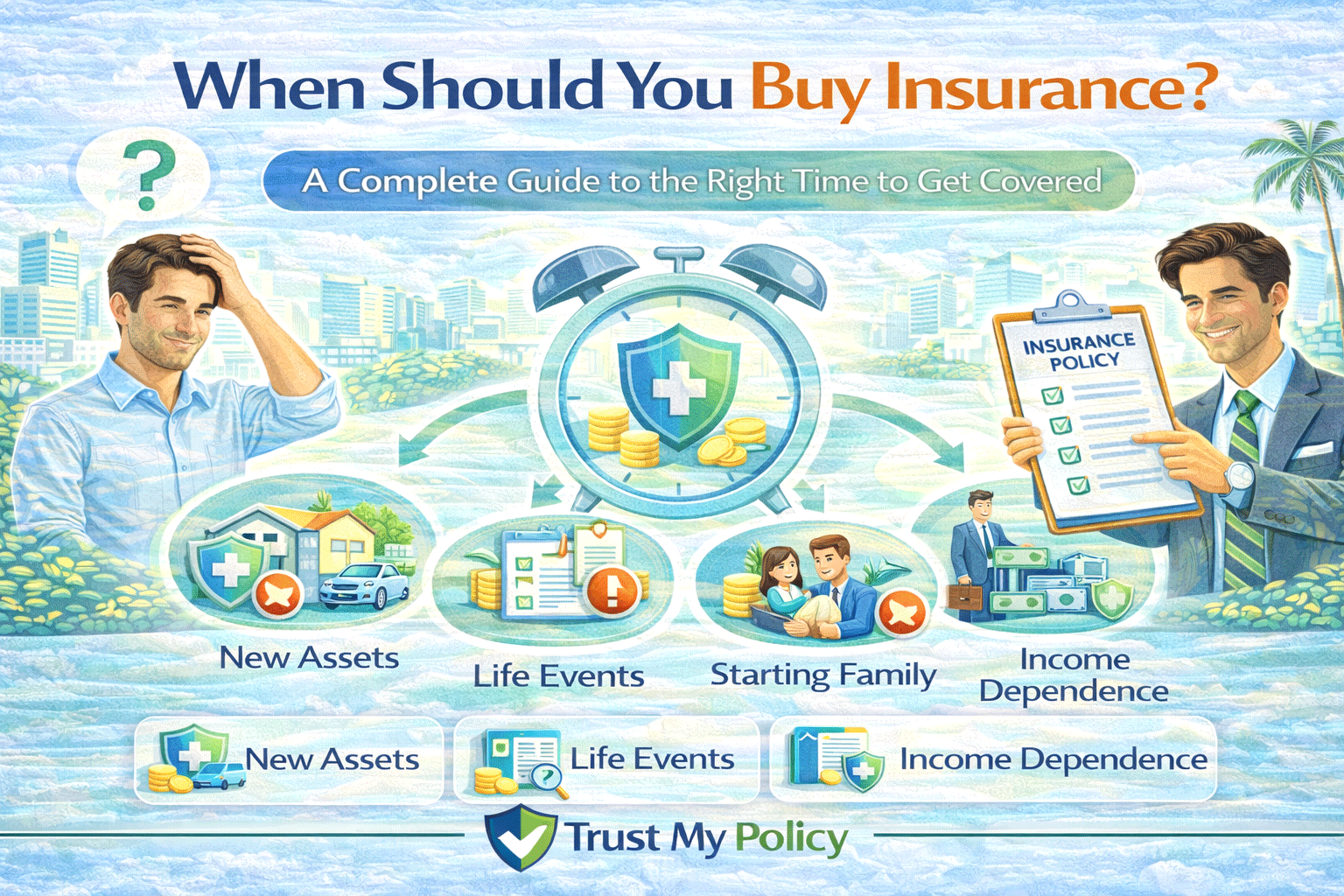
You should buy health insurance the moment you lose existing coverage, auto insurance before you drive a financed or owned vehicle, renters or home insurance on the day you move in, and life insurance as early as possible once you have any dependent or debt. Waiting even one year for life insurance can raise your premium by 5–10% per year of age, according to standard actuarial pricing tables.
Megan Foster, 27, told herself she’d buy life insurance “once things settled down” after her son was born in Atlanta. Eighteen months later, her premium quote had risen because of a new health condition flagged at her checkup, costing her $22 more a month for the same coverage she could have locked in right after the birth.
When Should You Buy Insurance in 2026 comes down to specific life events and ages, not a vague sense of “someday.” Health insurance should start the moment you lose other coverage, auto insurance the day you own or finance a car, and life insurance as early as possible once anyone depends on your income. This guide gives you the exact triggers for each major policy type, so you’re never caught uninsured or paying more than necessary.
This article covers the specific timing triggers for each insurance type, why waiting almost always costs more, real scenarios showing the financial impact, and a clear timing checklist. By the end, you’ll know exactly when to buy.
| Feature | Details |
| What it is | The specific life events and ages that should trigger a new insurance purchase |
| Who needs to track this | Anyone starting a job, having a child, buying a home, or aging into a new risk bracket |
| Typical cost of waiting | Premiums often rise 5–10% per year of age for life insurance |
| Coverage at risk if delayed | Gaps in health, auto, or liability coverage can mean total out-of-pocket exposure |
| Key benefit | Locking in lower rates and avoiding coverage gaps during vulnerable periods |
| Key limitation | Some events (new health diagnosis) can permanently raise future costs if you wait |
| Regulator | State insurance departments (US); Financial Conduct Authority (UK) |
Most people treat buying insurance like cleaning out a garage — something to get to eventually, with no real deadline attached. Insurance doesn’t work on a someday timeline. It works more like open enrollment for a flight: miss the window, and you either pay more or can’t get the same seat at all.
The right time to buy insurance is tied to specific, identifiable triggers: losing existing coverage, acquiring a new asset, taking on a dependent, or aging into a different risk bracket. Anyone going through a major life transition — a new job, a new baby, a first home, a new car — needs to know these triggers, because the cost of waiting compounds the longer you delay.
| Criteria | Buying at the Right Trigger | Waiting Until “Later” |
| Premium cost | Locked in at your current, often lowest, rate | Rises with age and any new health or risk factors |
| Coverage gaps | None, since coverage starts before the risk begins | Real financial exposure during the uninsured gap |
| Application outcome | Likely best available rate class | Risk of a worse rate class or denial after a new diagnosis |
| Pros | Predictable, lower long-term cost | None beyond short-term cash flow |
| Cons | Requires acting before you feel an urgent need | Can cost significantly more or leave you exposed to ruin |
We recommend buying at the specific trigger event for most readers because every type of insurance gets more expensive, more restricted, or both, the longer you wait.
Scenario 1: Megan, 27, new mother in Atlanta. Megan delayed life insurance for 18 months after her son’s birth and was later quoted $22 more a month after a new health condition was flagged. Verdict: the delay directly cost her a worse rate class. Action: Megan now advises friends to apply for life insurance within weeks of any major life event, not months.
Scenario 2: Jordan, 24, who bought a car in Manchester before arranging insurance. Jordan drove his new car home uninsured for two days “just to get it home,” risking a fine and zero protection if anything happened. Verdict: this is one of the riskiest timing gaps people create unnecessarily. Action: Jordan now arranges insurance before collecting any vehicle, with the policy starting the same day.
Scenario 3: A family in Texas between jobs for six weeks with no health coverage. They assumed they’d “wait until the new job’s plan kicks in” and skipped a marketplace plan, then faced a $4,200 emergency room bill during the gap. Verdict: short coverage gaps still carry full financial risk. Action: they now apply for a marketplace plan immediately during any employment transition, even for short gaps.
Scenario 4: A renter in London who moved in without contents insurance “until payday.” A burst pipe destroyed £3,000 of belongings nine days into the gap. Verdict: even short delays during a move carry real, immediate risk. Action: the renter now arranges contents insurance to start on the exact move-in date, not after.
| Pros | Cons |
| Locks in your lowest available premium before age or health changes it. | Requires planning ahead rather than reacting after a loss occurs. |
| Eliminates dangerous coverage gaps during vulnerable transition periods. | Some trigger events (marketplace enrollment windows) require fast action. |
| Avoids the risk of being declined or rated up after a new diagnosis. | Tracking multiple trigger events across life stages takes some organization. |
| Matches coverage start dates to when the actual risk begins. | Frequent life changes mean frequent policy reviews are needed. |
| Builds a habit of reviewing coverage at every major life event. | Missing an enrollment window can mean waiting months for the next one. |
⚠️ WARNING: Never let any allowed grace period or special enrollment window lapse while believing you can “buy coverage whenever.” Many policy types, especially US health marketplace plans, only allow enrollment during specific windows or qualifying life events.
| Your Situation | Our Recommendation |
| You just had a child or taken on a new dependent | Yes — apply for life insurance within weeks, not months |
| You’re about to pick up a new or financed vehicle | Yes — have the policy active before you drive it home |
| You’re moving into a new rental or home | Yes — start coverage on or before your move-in date |
| You’re between jobs with a coverage gap under a month | Yes — apply for marketplace or short-term coverage immediately |
| You missed open enrollment with no qualifying life event | No — you may need to wait, so confirm your options with a broker first |
| You’re young, healthy, and have no dependents yet | Yes — consider term life now anyway, since rates only rise with age |
| You’re unsure if a life change counts as a qualifying event | Yes — check with your insurer or marketplace, many common events qualify |
💡 TIP: The single golden rule for timing insurance purchases: buy before the risk exists, not after, since every insurance type gets more expensive or more restricted the longer you wait.
| Scenario | Cost of Waiting | Notes |
| Delaying life insurance by 5 years (age 30 to 35) | Often 25%–50% higher premium | Reflects standard age-based actuarial pricing |
| Driving uninsured for even one day | Potential fines plus 100% of any accident cost | Varies by state or country’s minimum liability laws |
| Skipping a short health coverage gap (under 30 days) | Full exposure to any medical bill incurred | A single ER visit can run into thousands |
| Missing US marketplace open enrollment | Wait until next window, often months later | Qualifying life events are the main exception |
| Moving in without renters/contents insurance for 1–2 weeks | Full exposure to theft, fire, or water damage | Claims like burst pipes can hit within days of moving in |
| Waiting until after a health diagnosis to apply for life insurance | Higher rate class or possible decline | Rate classes are locked in at the time of underwriting |
| Buying car insurance the same day as a new vehicle | No added cost, lowest-risk timing | The recommended baseline for any vehicle purchase |
HealthCare.gov (US) — The federal marketplace where you can check your specific enrollment window and qualifying life events. Cost range: free to browse and apply. Best for: US residents tracking health insurance timing. Rating: federal government marketplace.
NHS and the UK Department for Work and Pensions guidance — Useful for understanding UK coverage timing around health and state benefit transitions. Cost range: free public guidance. Best for: UK residents navigating coverage during life transitions. Rating: government resource.
Independent insurance brokers — Brokers can flag exactly which life events qualify for special enrollment or better underwriting timing. Cost range: typically free for the consumer. Best for: anyone unsure whether their situation qualifies for a timing exception. Rating: varies by broker, check state or FCA licensing.
Policygenius (US) — A comparison platform that lets you apply for term life insurance quickly once you identify your trigger event. Cost range: free to compare. Best for: US shoppers wanting to lock in a rate fast after a life event. Rating: independent comparison service.
Compare the Market (UK) — A UK comparison site useful for quickly arranging contents, life, or auto coverage around a moving or purchase date. Cost range: free to compare. Best for: UK shoppers needing fast, timed coverage. Rating: FCA-regulated comparison service.
We recommend an independent broker as best overall starting point because they can confirm your specific timing trigger and help you avoid a costly enrollment or underwriting delay.
Buy health insurance the moment you lose existing coverage, auto insurance before driving a financed or owned vehicle, home or renters insurance on your move-in date, and life insurance as early as possible once you have dependents or debt.
No. Applying while young and healthy almost always secures the lowest possible rate class, since age and health are the two strongest pricing factors insurers use.
You risk fines for uninsured driving and bear full financial responsibility for any accident, since most jurisdictions require active coverage before you legally drive.
Not always. US marketplace plans typically require a specific open enrollment window unless you have a qualifying life event like losing a job or having a child.
Premiums are priced using age and health at the time of application, so even a few years of waiting, or a new diagnosis, can permanently raise your rate class.
Before. Claims like theft or water damage can happen within days of moving in, so your policy should start on or before your move-in date.
Common qualifying events include losing a job, having a child, getting married or divorced, and moving to a new coverage area, though specific rules vary by plan and country.
For life insurance specifically, yes, since locking in a low rate while young and healthy is usually cheaper than waiting until you have an obvious need.
Check your specific marketplace or employer plan’s enrollment calendar, and ask a broker whether your situation qualifies for a special enrollment period instead.
In most cases yes, especially for life, auto, and renters insurance, since these typically don’t require a fixed annual enrollment window like some health plans do.
This guide reflects the latest 2026 insurance data.
This article is for informational purposes only. Always consult a licensed insurance professional before making coverage decisions. Trust My Policy does not sell insurance products or represent any insurer.

Jagadeesh Gutha is the founder of TrustMyPolicy.com, an independent insurance information platform covering life, health, car, home, and business insurance for US and UK readers. He researches insurance products, policy structures, and consumer rights to help everyday people make informed coverage decisions without the jargon. All content on TrustMyPolicy is independently researched, fact-checked, and written to educate — not to sell.



Insurance Guides for UK, USA & Worldwide We are not an insurer or broker.


Reader Comments (0)