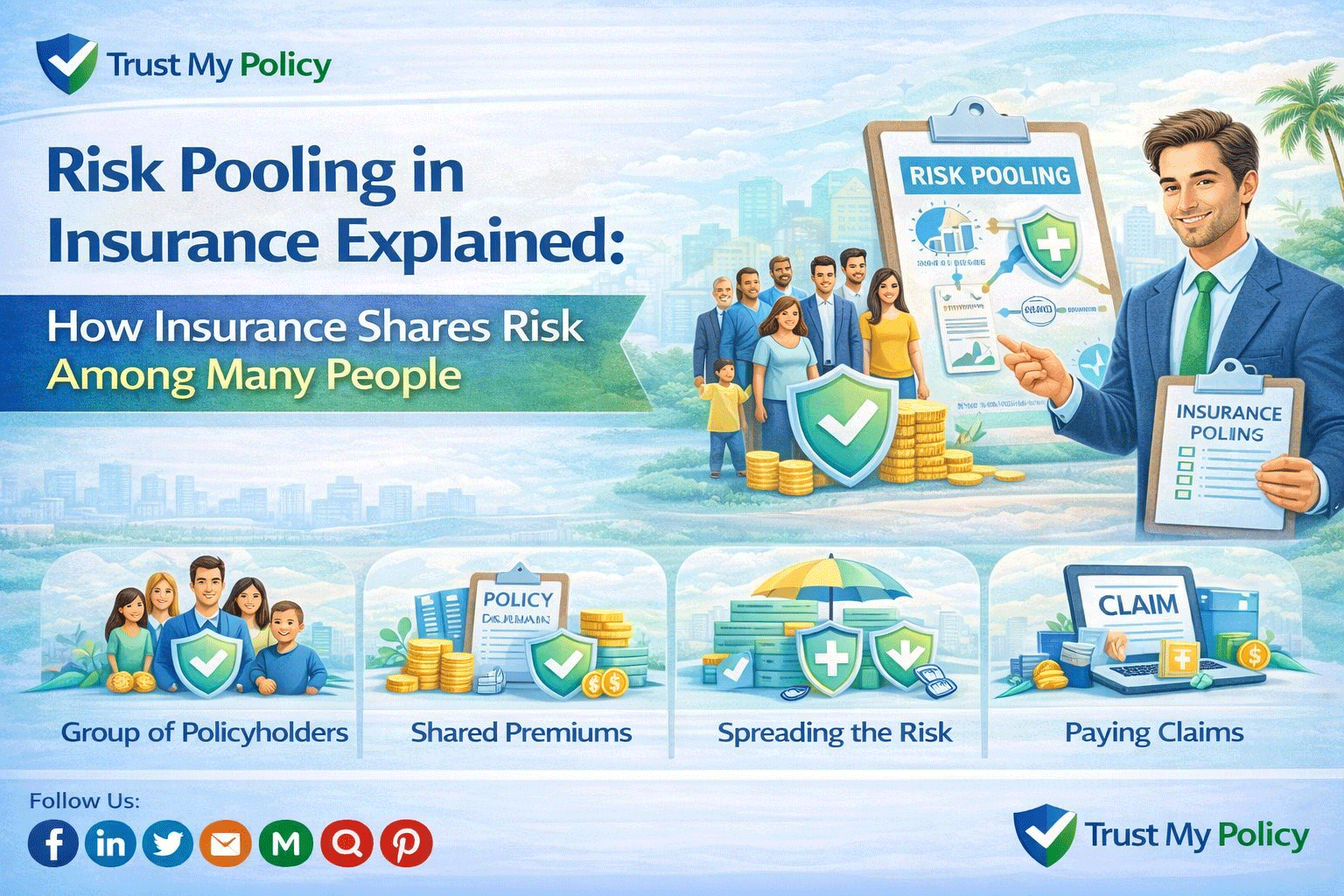
Insurance is built on a simple but powerful idea: sharing risk. Instead of one person facing a large financial loss alone, many people contribute small amounts of money to help cover losses when they occur. This concept is known as risk pooling in insurance.
Risk pooling is the foundation of almost every insurance system worldwide. Whether it involves health insurance, life insurance, auto insurance, or property insurance, insurers collect premiums from many policyholders and use those funds to pay claims for those who experience covered losses.
Understanding risk pooling in insurance helps explain how insurance companies operate and why insurance premiums exist. It also helps people understand how their premiums contribute to a larger system that protects individuals and communities from financial hardship.
Without risk pooling, insurance would be difficult to sustain because individual losses could be too large for one person to manage alone. By spreading financial risk across many participants, insurance systems create stability and predictability.
This article explains how risk pooling works, why it is important, how it benefits policyholders, and the role it plays in modern insurance systems around the world.
Table of Contents
ToggleRisk Pooling in Insurance
| Key Concept | Explanation | Why It Matters |
|---|---|---|
| Risk Pooling | Combining risks from many individuals into one group | Spreads financial risk across many people |
| Premium Contributions | Policyholders pay regular premiums | Creates a shared fund to cover claims |
| Claims Payment | Funds from the pool are used to pay losses | Helps affected individuals recover financially |
| Risk Distribution | Losses are shared among many participants | Prevents large financial burden on one person |
| Predictable Costs | Large pools make losses easier to estimate | Helps insurers manage risk |
| Financial Stability | Provides support during unexpected events | Protects individuals and communities |
Choosing the right insurance coverage requires understanding different policy types, benefits, and financial protection options available to policyholders. Many readers compare multiple guides before selecting a plan so they can clearly evaluate premiums, claim procedures, and long‑term advantages. A useful resource to explore is Life Insurance for High Risk Jobs, which explains how this insurance policy works, the key benefits it offers, and situations where it may be the most suitable option. By reviewing this guide, you can gain deeper insights into coverage features, eligibility requirements, and practical tips that help individuals and families make smarter insurance decisions.
What Is Risk Pooling in Insurance?
Risk pooling in insurance is the process of grouping together many individuals who face similar risks and sharing the financial impact of those risks across the entire group.
Instead of each person saving money individually for potential losses, everyone contributes to a shared pool through insurance premiums.
When a covered event occurs, money from the pool is used to pay claims for the affected policyholders.
Simple Definition
Risk pooling means collecting premiums from many people to create a financial pool that helps cover losses for those who experience insured events.
How Risk Pooling Works
Risk pooling operates through a structured process that allows insurers to manage financial risk.
Step 1: Individuals Purchase Insurance
People purchase insurance policies to protect against specific risks such as:
-
Illness
-
Car accidents
-
Property damage
-
Death of a family provider
Step 2: Premiums Are Collected
Policyholders pay premiums regularly. These premiums contribute to a large collective fund.
Step 3: The Risk Pool Is Created
All premium payments from policyholders form a risk pool.
This pool is used to pay claims when losses occur.
Step 4: Claims Are Paid
When an insured person experiences a covered event, the insurer pays the claim using funds from the risk pool.
Step 5: Risk Is Shared Across the Group
Because many people contribute to the pool, the cost of losses is spread across the entire group.
Key Concepts Related to Risk Pooling
Risk pooling is closely connected to several important insurance concepts.
Risk
Risk refers to the possibility that a person or asset may suffer a financial loss.
Examples include:
-
Health problems
-
Car accidents
-
Property damage
-
Loss of income
Premiums
Premiums are regular payments made by policyholders to maintain insurance coverage.
Premiums help build and maintain the risk pool.
Claims
Claims are requests made by policyholders for payment after a covered loss occurs.
Underwriting
Underwriting is the process insurers use to evaluate risk and determine appropriate premium levels.
Large Risk Groups
Insurance works best when many people participate in the pool because larger groups make losses more predictable.
Choosing the right insurance coverage requires understanding different policy types, benefits, and financial protection options available to policyholders. Many readers compare multiple guides before selecting a plan so they can clearly evaluate premiums, claim procedures, and long‑term advantages. A useful resource to explore is What to Do If an Insurance Claim Is Rejected, which explains how this insurance policy works, the key benefits it offers, and situations where it may be the most suitable option. By reviewing this guide, you can gain deeper insights into coverage features, eligibility requirements, and practical tips that help individuals and families make smarter insurance decisions.
Detailed Comparison Table: Risk Pooling vs Individual Risk Management
| Feature | Risk Pooling in Insurance | Individual Risk Management |
|---|---|---|
| Risk Sharing | Risk shared across many people | Individual carries full risk |
| Financial Impact | Loss spread across group | Loss borne by one person |
| Predictability | More predictable losses | Hard to predict personal losses |
| Cost Management | Premium payments manage risk | Individual savings required |
| Protection Level | Can cover large losses | Savings may not cover large events |
| Stability | Provides long-term stability | Higher financial uncertainty |
Why Risk Pooling Is Important in Insurance
Risk pooling provides several benefits that make insurance systems possible.
1. Makes Insurance Affordable
If individuals had to cover all potential losses themselves, the costs could be extremely high.
Pooling risk allows people to pay smaller premiums instead.
2. Spreads Financial Loss
Only a small number of policyholders experience losses at any given time.
The pooled funds ensure that these individuals receive financial support.
3. Creates Predictable Costs
With a large group of policyholders, insurers can estimate expected losses more accurately.
This helps maintain stable premium levels.
4. Supports Large Claims
Some losses, such as serious medical treatment or property damage, can be extremely expensive.
Risk pooling allows insurers to cover large claims that individuals might struggle to pay alone.
5. Encourages Social Protection
Risk pooling supports broader financial protection for communities by helping people recover from unexpected events.
Examples of Risk Pooling in Different Types of Insurance
Health Insurance
In health insurance, thousands or millions of people contribute premiums.
Only a portion of policyholders require expensive medical care each year. The risk pool helps cover those medical costs.
Auto Insurance
Drivers pay premiums into a shared risk pool.
If an accident occurs, the insurer pays for repairs or damages using pooled funds.
Life Insurance
Life insurance pools the risk of death across many policyholders.
When an insured person dies, beneficiaries receive financial support funded by the risk pool.
Property Insurance
Homeowners contribute premiums to protect against risks such as fire, storms, or theft.
If damage occurs, claims are paid from the collective pool.
Pros and Cons of Risk Pooling
Advantages
-
Spreads financial risk among many participants
-
Makes insurance more affordable
-
Supports payment of large claims
-
Provides financial protection during emergencies
-
Helps insurers predict potential losses
-
Encourages financial stability
Limitations
-
Premiums are required even if no claims occur
-
Some participants may contribute more than they receive in benefits
-
Risk pools require large participation to function effectively
-
Poor risk management can affect premium levels
Real-Life Use Cases of Risk Pooling
Example 1: Medical Treatment
Thousands of people contribute to a health insurance pool. A small percentage requires expensive surgery or treatment. The pool covers these medical costs.
Example 2: Natural Disaster
After a storm damages several homes, property insurance risk pools help pay for repairs for affected homeowners.
Example 3: Car Accident
Drivers contribute premiums to auto insurance pools. When accidents occur, funds from the pool cover repair costs.
Example 4: Life Insurance Payment
A family receives life insurance benefits after the death of a policyholder. These benefits come from the pooled contributions of many insured individuals.
Choosing the right insurance coverage requires understanding different policy types, benefits, and financial protection options available to policyholders. Many readers compare multiple guides before selecting a plan so they can clearly evaluate premiums, claim procedures, and long‑term advantages. A useful resource to explore is Best Car Insurance for High-Risk Drivers, which explains how this insurance policy works, the key benefits it offers, and situations where it may be the most suitable option. By reviewing this guide, you can gain deeper insights into coverage features, eligibility requirements, and practical tips that help individuals and families make smarter insurance decisions.
Common Mistakes or Misunderstandings About Risk Pooling
Thinking Premiums Are Wasted If No Claim Is Made
Insurance premiums support the risk pool even if a person never files a claim.
This system ensures protection is available when needed.
Believing Everyone Pays the Same Premium
Premiums often vary depending on risk factors such as age, location, or type of coverage.
Assuming Risk Pools Never Change
Risk pools evolve over time as policyholders join or leave and risks change.
Expecting Immediate Coverage for All Risks
Insurance policies may include waiting periods or exclusions.
Choosing the right insurance coverage requires understanding different policy types, benefits, and financial protection options available to policyholders. Many readers compare multiple guides before selecting a plan so they can clearly evaluate premiums, claim procedures, and long‑term advantages. A useful resource to explore is How Insurance Policies Are Designed, which explains how this insurance policy works, the key benefits it offers, and situations where it may be the most suitable option. By reviewing this guide, you can gain deeper insights into coverage features, eligibility requirements, and practical tips that help individuals and families make smarter insurance decisions.
Frequently Asked Questions (FAQs)
What is risk pooling in insurance?
Risk pooling is the process of combining financial contributions from many policyholders to create a shared fund used to pay insurance claims.
Why is risk pooling important?
Risk pooling spreads financial losses across many people, making insurance more affordable and sustainable.
How does risk pooling reduce financial risk?
By sharing the cost of losses across a large group, no single individual has to bear the entire financial burden.
Do all types of insurance use risk pooling?
Yes. Most forms of insurance rely on risk pooling to manage financial risk and pay claims.
What happens if too many claims occur?
Insurers manage risk pools carefully through underwriting, premium adjustments, and reserves to ensure claims can be paid.
Can risk pooling work with small groups?
Risk pooling works best with large groups because larger pools make losses more predictable.
Is risk pooling used outside insurance?
Yes. Risk pooling concepts are also used in healthcare systems, social protection programs, and cooperative financial arrangements.
Conclusion
Risk pooling is the fundamental principle that allows insurance systems to function. By combining the risks of many individuals into a shared pool, insurance spreads financial losses across a large group instead of placing the burden on one person.
Through regular premium contributions, policyholders help create a financial safety net that supports individuals when unexpected events occur. Whether it involves medical emergencies, accidents, property damage, or loss of income, risk pooling ensures that financial protection is available when needed.
Understanding risk pooling in insurance helps people appreciate how insurance systems operate and why participation in insurance programs contributes to broader financial security. By sharing risk collectively, individuals and communities can manage uncertainty more effectively and recover from financial setbacks.
Choosing the right insurance coverage requires understanding different policy types, benefits, and financial protection options available to policyholders. Many readers compare multiple guides before selecting a plan so they can clearly evaluate premiums, claim procedures, and long‑term advantages. A useful resource to explore is Small Business Insurance Explained, which explains how this insurance policy works, the key benefits it offers, and situations where it may be the most suitable option. By reviewing this guide, you can gain deeper insights into coverage features, eligibility requirements, and practical tips that help individuals and families make smarter insurance decisions.
Disclaimer: This article is for educational purposes only. Trust My Policy is an independent informational platform and does not sell insurance products or represent any insurance provider. Readers should consult official policy documents or licensed professionals for personalized advice.
Leave a Reply