Insurance Premium Explained: Meaning, How It Works, and Why It Matters
Insurance is designed to protect individuals, families, and businesses from unexpected financial risks. Whether it is related to health, life, vehicles, homes, or travel, insurance policies help reduce the financial burden caused by accidents, illness, or property damage. One of the most important concepts in any insurance policy is the insurance premium.
Many people purchase insurance without fully understanding what a premium is or how it is calculated. However, knowing how insurance premiums work is essential for making informed financial decisions. The premium is the amount that policyholders pay to maintain active insurance coverage.
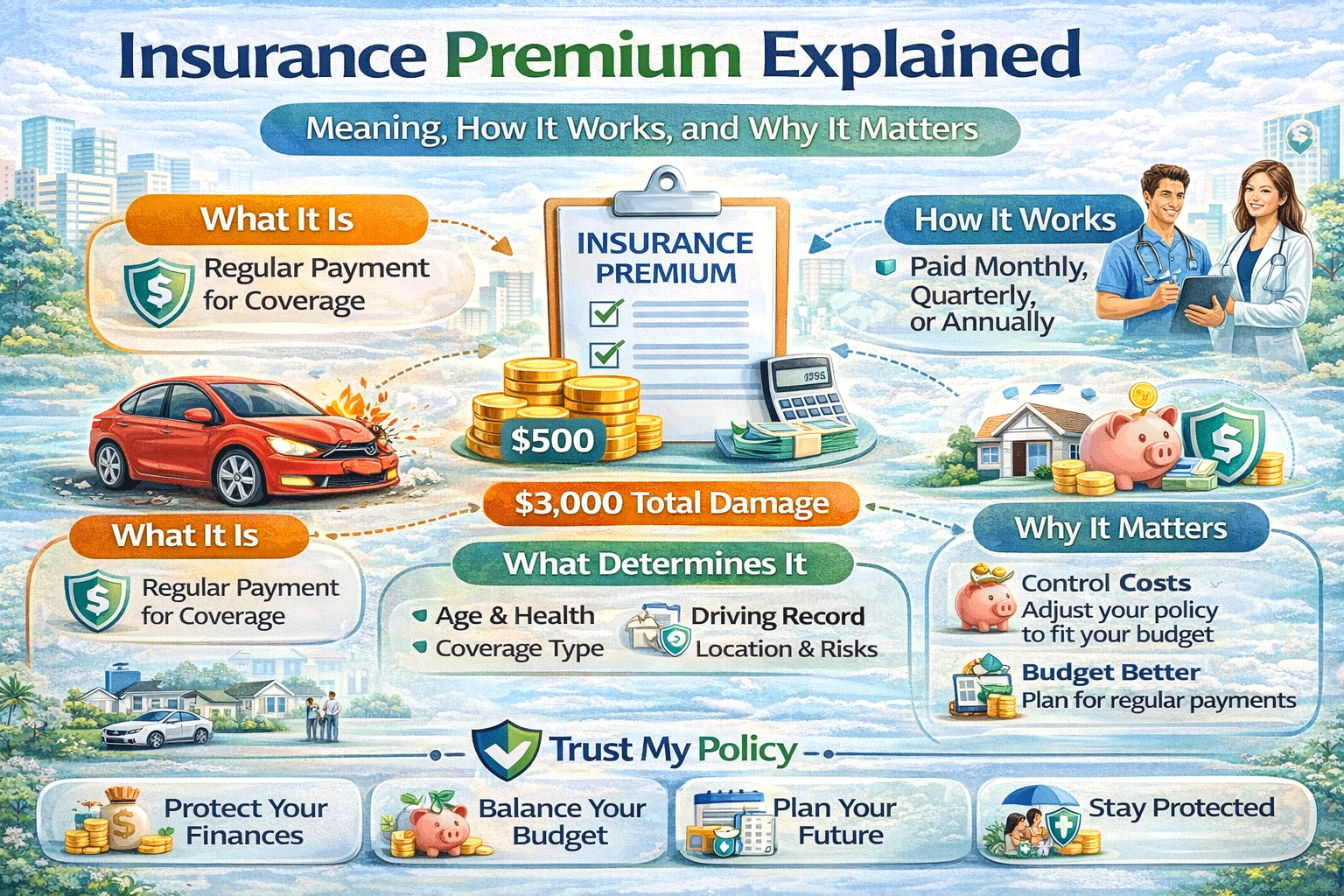
Insurance premiums can vary based on several factors, including the type of insurance, level of coverage, risk profile, age, location, and policy terms. Premium payments can be made monthly, quarterly, annually, or in other agreed payment schedules.
Understanding insurance premium explained concepts helps individuals evaluate policy affordability, compare coverage options, and choose insurance plans that match their financial goals.
This guide provides a comprehensive explanation of insurance premiums, including definitions, types, factors affecting premium costs, advantages and disadvantages, real-life examples, and common mistakes policyholders should avoid.
, benefits, and financial protection options available to policyholders. Many readers compare multiple guides before selecting a plan so they can clearly evaluate premiums, claim procedures, and long‑term advantages. A useful resource to explore is Cheap Home Insurance Options, which explains how this insurance policy works, the key benefits it offers, and situations where it may be the most suitable option. By reviewing this guide, you can gain deeper insights into coverage features, eligibility requirements, and practical tips that help individuals and families make smarter insurance decisions.
Insurance Premium Explained
| Feature | Explanation |
|---|---|
| Definition | Amount paid by policyholder to maintain insurance coverage |
| Payment frequency | Monthly, quarterly, semi-annual, or annual |
| Applies to | Most insurance policies including health, life, auto, and property |
| Determined by | Risk factors, coverage level, age, and policy type |
| Purpose | Provides financial protection against covered risks |
| Non-payment effect | Policy may lapse or become inactive |
| Example | Paying $50 per month for health insurance coverage |
Key takeaway:
An insurance premium is the payment made to an insurance provider in exchange for financial protection under a policy.
What Is an Insurance Premium?
An insurance premium is the amount a policyholder pays to an insurance company to keep an insurance policy active. This payment allows the policyholder to receive financial protection against specific risks covered in the policy.
Premiums can be paid in different ways depending on the policy structure.
Common Premium Payment Options
Policyholders may pay premiums through:
-
Monthly payments
-
Quarterly payments
-
Semi-annual payments
-
Annual payments
-
One-time lump sum payments in certain policies
The payment schedule is usually agreed upon when purchasing the policy.
Why Premiums Are Necessary
Insurance companies collect premiums from many policyholders to create a financial pool. This pool is used to pay claims when policyholders experience covered losses.
This system helps distribute risk across a large group of people.
, benefits, and financial protection options available to policyholders. Many readers compare multiple guides before selecting a plan so they can clearly evaluate premiums, claim procedures, and long‑term advantages. A useful resource to explore is How Insurance Companies Approve Claims, which explains how this insurance policy works, the key benefits it offers, and situations where it may be the most suitable option. By reviewing this guide, you can gain deeper insights into coverage features, eligibility requirements, and practical tips that help individuals and families make smarter insurance decisions.
How Insurance Premiums Work
Insurance premiums work as a risk-sharing mechanism. Policyholders pay regular premiums, and in return the insurer agrees to provide financial coverage for certain risks.
Basic Process
-
The policyholder purchases an insurance policy.
-
The policyholder pays the required premium.
-
The insurer provides coverage during the policy period.
-
If a covered event occurs, the policyholder may file a claim.
-
The insurer reviews the claim and pays approved expenses based on policy terms.
Without premium payments, the insurance policy typically becomes inactive.
Factors That Affect Insurance Premiums
Insurance premiums vary based on several important factors. Insurers assess these factors to determine the level of risk associated with each policyholder.
1. Type of Insurance
Different types of insurance have different risk levels.
Examples:
-
Health insurance
-
Life insurance
-
Auto insurance
-
Home insurance
-
Travel insurance
Each type has unique pricing structures.
2. Coverage Amount
Higher coverage limits usually result in higher premiums because the insurer may need to pay larger claims.
3. Risk Profile
Insurers evaluate risk factors such as:
-
Age
-
Health condition
-
Driving history
-
Property location
-
Lifestyle factors
Higher perceived risk may increase premium costs.
4. Deductible Level
The deductible is the amount the policyholder pays before insurance coverage begins.
Policies with higher deductibles often have lower premiums.
5. Policy Duration
Longer policy durations may offer more stable premium structures.
Short-term policies may have different pricing structures.
, benefits, and financial protection options available to policyholders. Many readers compare multiple guides before selecting a plan so they can clearly evaluate premiums, claim procedures, and long‑term advantages. A useful resource to explore is Insurance Solvency Explained, which explains how this insurance policy works, the key benefits it offers, and situations where it may be the most suitable option. By reviewing this guide, you can gain deeper insights into coverage features, eligibility requirements, and practical tips that help individuals and families make smarter insurance decisions.
Types of Insurance Premium Structures
Insurance premiums can be structured in different ways depending on the policy.
1. Fixed Premium
A fixed premium remains the same throughout the policy term.
This structure is common in some life insurance policies.
2. Adjustable Premium
Adjustable premiums may change over time based on:
-
Policy performance
-
Age
-
Economic conditions
-
Coverage adjustments
3. Level Premium
Level premiums remain constant for a specific period before adjusting later.
4. Risk-Based Premium
Risk-based premiums are calculated based on individual risk factors.
For example, drivers with safer records may pay lower premiums.
Insurance Premium Comparison Table
| Premium Type | Description | Example Use |
|---|---|---|
| Fixed premium | Same payment throughout policy | Some life insurance policies |
| Adjustable premium | Premium changes over time | Flexible life insurance |
| Level premium | Fixed for a specific period | Term life insurance |
| Risk-based premium | Based on risk profile | Auto insurance |
Understanding these structures helps policyholders compare insurance options more effectively.
, benefits, and financial protection options available to policyholders. Many readers compare multiple guides before selecting a plan so they can clearly evaluate premiums, claim procedures, and long‑term advantages. A useful resource to explore is Cheap Health Insurance Options, which explains how this insurance policy works, the key benefits it offers, and situations where it may be the most suitable option. By reviewing this guide, you can gain deeper insights into coverage features, eligibility requirements, and practical tips that help individuals and families make smarter insurance decisions.
Insurance Premium vs Deductible Comparison
| Feature | Insurance Premium | Insurance Deductible |
|---|---|---|
| Definition | Payment for maintaining insurance coverage | Amount paid before insurance pays claim |
| Payment timing | Paid regularly | Paid during claim |
| Purpose | Keeps policy active | Shares financial risk |
| Frequency | Monthly or annually | Only when claims occur |
| Impact on cost | Higher premium reduces risk exposure | Higher deductible reduces premium |
Both premiums and deductibles influence the overall cost of insurance.
Pros and Cons of Insurance Premiums
Advantages
-
Provides financial protection against unexpected losses
-
Allows individuals to manage risk through regular payments
-
Offers peace of mind during uncertain events
-
Enables access to various types of insurance coverage
-
Helps distribute financial risk among many policyholders
Disadvantages
-
Regular payments may affect personal budgets
-
Premiums may increase over time in some policies
-
Paying premiums does not guarantee claims if events are not covered
-
Missing payments may result in policy cancellation
Understanding these advantages and limitations helps individuals evaluate the value of insurance coverage.
Real-Life Examples of Insurance Premiums
Practical examples help illustrate how insurance premiums function in everyday situations.
Example 1: Health Insurance Premium
A person pays $100 per month for health insurance.
This premium keeps the policy active and allows the person to access healthcare coverage when needed.
Example 2: Auto Insurance Premium
A driver pays an annual premium of $600 for vehicle insurance.
If the driver experiences an accident covered under the policy, the insurance company may help pay repair costs.
Example 3: Home Insurance Premium
A homeowner pays $1,200 per year for property insurance.
This premium protects the home against risks such as fire, theft, or certain types of damage.
Example 4: Life Insurance Premium
A policyholder pays a fixed monthly premium for life insurance coverage.
If the insured person dies during the coverage period, beneficiaries may receive the death benefit.
, benefits, and financial protection options available to policyholders. Many readers compare multiple guides before selecting a plan so they can clearly evaluate premiums, claim procedures, and long‑term advantages. A useful resource to explore is Insurance for Consultants, which explains how this insurance policy works, the key benefits it offers, and situations where it may be the most suitable option. By reviewing this guide, you can gain deeper insights into coverage features, eligibility requirements, and practical tips that help individuals and families make smarter insurance decisions.
Common Mistakes About Insurance Premiums
Many policyholders misunderstand how insurance premiums work.
1. Choosing Policies Based Only on Premium Cost
Lower premiums may mean reduced coverage or higher deductibles.
2. Ignoring Policy Terms
Understanding policy details is important because premiums alone do not determine coverage quality.
3. Missing Premium Payments
Failing to pay premiums on time may result in policy cancellation or loss of coverage.
4. Not Reviewing Policies Regularly
Insurance needs may change over time, so reviewing coverage periodically is helpful.
5. Overlooking Risk Factors
Personal risk factors such as driving behavior or health habits may affect premium costs.
Frequently Asked Questions
What does insurance premium mean?
An insurance premium is the payment made to an insurer to keep an insurance policy active and maintain coverage.
How often are insurance premiums paid?
Premiums can be paid monthly, quarterly, semi-annually, annually, or sometimes as a single payment.
What happens if a premium is not paid?
If premiums are not paid, the insurance policy may lapse or become inactive.
Can insurance premiums change?
Some policies have fixed premiums, while others may adjust premiums based on risk factors or policy terms.
Why do insurance premiums vary between people?
Premiums vary due to factors such as age, health, location, coverage amount, and risk profile.
Are higher premiums always better?
Not necessarily. Higher premiums may provide broader coverage, but individuals should evaluate both coverage benefits and affordability.
Conclusion
Understanding insurance premium explained concepts is essential for anyone purchasing insurance coverage. A premium represents the payment made by the policyholder to maintain active insurance protection.
Insurance premiums are influenced by several factors, including coverage level, risk profile, policy type, and deductible amount. These payments allow insurers to provide financial protection against unexpected events.
Different premium structures exist, such as fixed premiums, adjustable premiums, level premiums, and risk-based premiums. Each structure offers different advantages depending on the policy design.
When choosing insurance coverage, individuals should consider not only premium costs but also coverage limits, deductibles, and policy terms. A balanced approach helps ensure both affordability and adequate protection.
By understanding how insurance premiums work, policyholders can make informed decisions that support long-term financial stability and risk management.
Disclaimer:
This article is for educational purposes only. Trust My Policy is an independent informational platform and does not sell insurance products or represent any insurance provider. Readers should consult official policy documents or licensed professionals for personalized advice.