Insurance Deductible Explained: What It Means and How It Works
Insurance helps individuals and families manage financial risks caused by accidents, illness, property damage, or other unexpected events. When purchasing an insurance policy, one important term that often appears is the insurance deductible. Understanding this concept is essential because it directly affects how much a policyholder pays when filing a claim.
Many people purchase insurance without fully understanding how deductibles work. As a result, they may be surprised by the amount they must pay before their insurance coverage begins to cover costs. Learning about insurance deductibles can help individuals choose policies that match their financial situation and risk tolerance.
An insurance deductible represents the portion of a claim that the policyholder must pay before the insurance provider contributes toward the remaining costs. Deductibles can vary widely depending on the type of insurance policy, the level of coverage, and the premium amount.
This guide provides a detailed explanation of insurance deductibles, including how they work, why they exist, different deductible types, advantages and disadvantages, real-life examples, and common misunderstandings.
By understanding deductibles clearly, policyholders can make more informed decisions when selecting insurance coverage.
Table of Contents
ToggleInsurance Deductible Explained
| Feature | Explanation |
|---|---|
| Definition | Amount the policyholder pays before insurance coverage applies |
| Purpose | Helps share financial risk between insurer and policyholder |
| Applies to | Many policies including health, auto, and property insurance |
| Impact on premiums | Higher deductible often leads to lower premiums |
| Payment timing | Paid when a claim occurs |
| Policyholder responsibility | Must pay deductible before insurance pays remaining costs |
| Example | If deductible is $500 and claim is $2,000, insurance may cover remaining $1,500 |
Key takeaway:
An insurance deductible is the amount the policyholder pays out of pocket before the insurance company covers the remaining approved claim costs.
, benefits, and financial protection options available to policyholders. Many readers compare multiple guides before selecting a plan so they can clearly evaluate premiums, claim procedures, and long‑term advantages. A useful resource to explore is Best Car Insurance for High-Risk Drivers, which explains how this insurance policy works, the key benefits it offers, and situations where it may be the most suitable option. By reviewing this guide, you can gain deeper insights into coverage features, eligibility requirements, and practical tips that help individuals and families make smarter insurance decisions.
What Is an Insurance Deductible?
An insurance deductible is a fixed amount that a policyholder must pay when filing a claim before the insurance coverage begins to contribute toward the remaining expenses.
Deductibles are commonly used in various types of insurance policies, including:
-
Health insurance
-
Auto insurance
-
Homeowners insurance
-
Travel insurance
-
Property insurance
The purpose of deductibles is to share financial responsibility between the insurance provider and the policyholder.
How Deductibles Work
When a claim is made:
-
The policyholder pays the deductible amount.
-
The insurance company covers the remaining approved expenses, depending on policy terms.
For example:
-
Claim amount: $5,000
-
Deductible: $1,000
-
Insurance coverage: $4,000 (after deductible)
This structure encourages responsible use of insurance and helps reduce smaller claims.
, benefits, and financial protection options available to policyholders. Many readers compare multiple guides before selecting a plan so they can clearly evaluate premiums, claim procedures, and long‑term advantages. A useful resource to explore is Minimum Car Insurance Requirements, which explains how this insurance policy works, the key benefits it offers, and situations where it may be the most suitable option. By reviewing this guide, you can gain deeper insights into coverage features, eligibility requirements, and practical tips that help individuals and families make smarter insurance decisions.
Why Insurance Deductibles Exist
Insurance deductibles serve several important purposes within the insurance system.
1. Risk Sharing
Deductibles ensure that both the policyholder and the insurance provider share financial responsibility.
2. Reducing Small Claims
Without deductibles, insurers might receive many small claims that could increase administrative costs.
3. Controlling Insurance Premiums
Deductibles help manage premium costs. Policies with higher deductibles often have lower monthly or annual premiums.
4. Encouraging Responsible Use
Policyholders may think carefully before filing claims for minor losses, helping maintain stability in insurance systems.
Types of Insurance Deductibles
Insurance deductibles can appear in several forms depending on the policy type.
1. Fixed Deductible
A fixed deductible is a specific monetary amount the policyholder must pay.
Example:
-
Deductible: $500
-
Claim amount: $2,000
-
Insurance covers remaining $1,500
This is one of the most common deductible structures.
2. Percentage Deductible
Some policies use a percentage-based deductible.
The deductible is calculated as a percentage of the insured value.
Example:
-
Property insured value: $200,000
-
Deductible: 2%
-
Deductible amount: $4,000
This type of deductible is common in certain property insurance policies.
3. Annual Deductible
An annual deductible applies within a specific policy year.
Once the deductible amount is met during that year, the insurer may cover additional approved costs according to policy terms.
This structure is often used in health insurance policies.
4. Per-Claim Deductible
A per-claim deductible applies each time a claim is filed.
Example:
If a policy has a $500 deductible and three claims occur, the policyholder may pay $500 for each claim.
This type is often used in auto insurance and property insurance.
, benefits, and financial protection options available to policyholders. Many readers compare multiple guides before selecting a plan so they can clearly evaluate premiums, claim procedures, and long‑term advantages. A useful resource to explore is Insurance for Small Companies, which explains how this insurance policy works, the key benefits it offers, and situations where it may be the most suitable option. By reviewing this guide, you can gain deeper insights into coverage features, eligibility requirements, and practical tips that help individuals and families make smarter insurance decisions.
Insurance Deductible Comparison Table
| Deductible Type | Description | Common Usage | Example |
|---|---|---|---|
| Fixed deductible | Set monetary amount | Auto, property insurance | $500 deductible |
| Percentage deductible | Based on insured value | Property insurance | 2% of property value |
| Annual deductible | Applies yearly | Health insurance | $1,000 yearly deductible |
| Per-claim deductible | Applied for each claim | Vehicle or property claims | $300 per claim |
Understanding the type of deductible used in a policy helps policyholders evaluate potential costs during claims.
How Deductibles Affect Insurance Premiums
The deductible amount directly influences insurance premium costs.
Higher Deductible
-
Lower premium payments
-
Higher out-of-pocket cost during claims
Lower Deductible
-
Higher premium payments
-
Lower out-of-pocket costs during claims
Premium vs Deductible Comparison
| Deductible Level | Premium Cost | Out-of-Pocket Cost During Claim | Risk Level |
|---|---|---|---|
| High deductible | Lower premium | Higher payment during claim | Higher personal risk |
| Low deductible | Higher premium | Lower payment during claim | Lower personal risk |
Choosing the right balance depends on the policyholder’s financial ability and risk tolerance.
Pros and Cons of Insurance Deductibles
Advantages
-
Helps reduce insurance premiums
-
Encourages responsible claim behavior
-
Prevents unnecessary small claims
-
Allows policyholders to customize insurance costs
-
Supports overall insurance system stability
Disadvantages
-
Requires out-of-pocket payment before insurance coverage begins
-
Higher deductibles may create financial strain during claims
-
Can be confusing if policy details are unclear
-
May discourage some policyholders from filing valid claims
Understanding these trade-offs is important when selecting a policy.
, benefits, and financial protection options available to policyholders. Many readers compare multiple guides before selecting a plan so they can clearly evaluate premiums, claim procedures, and long‑term advantages. A useful resource to explore is Private vs Public Health Insurance, which explains how this insurance policy works, the key benefits it offers, and situations where it may be the most suitable option. By reviewing this guide, you can gain deeper insights into coverage features, eligibility requirements, and practical tips that help individuals and families make smarter insurance decisions.
Real-Life Examples of Insurance Deductibles
Practical examples help explain how deductibles work in different insurance situations.
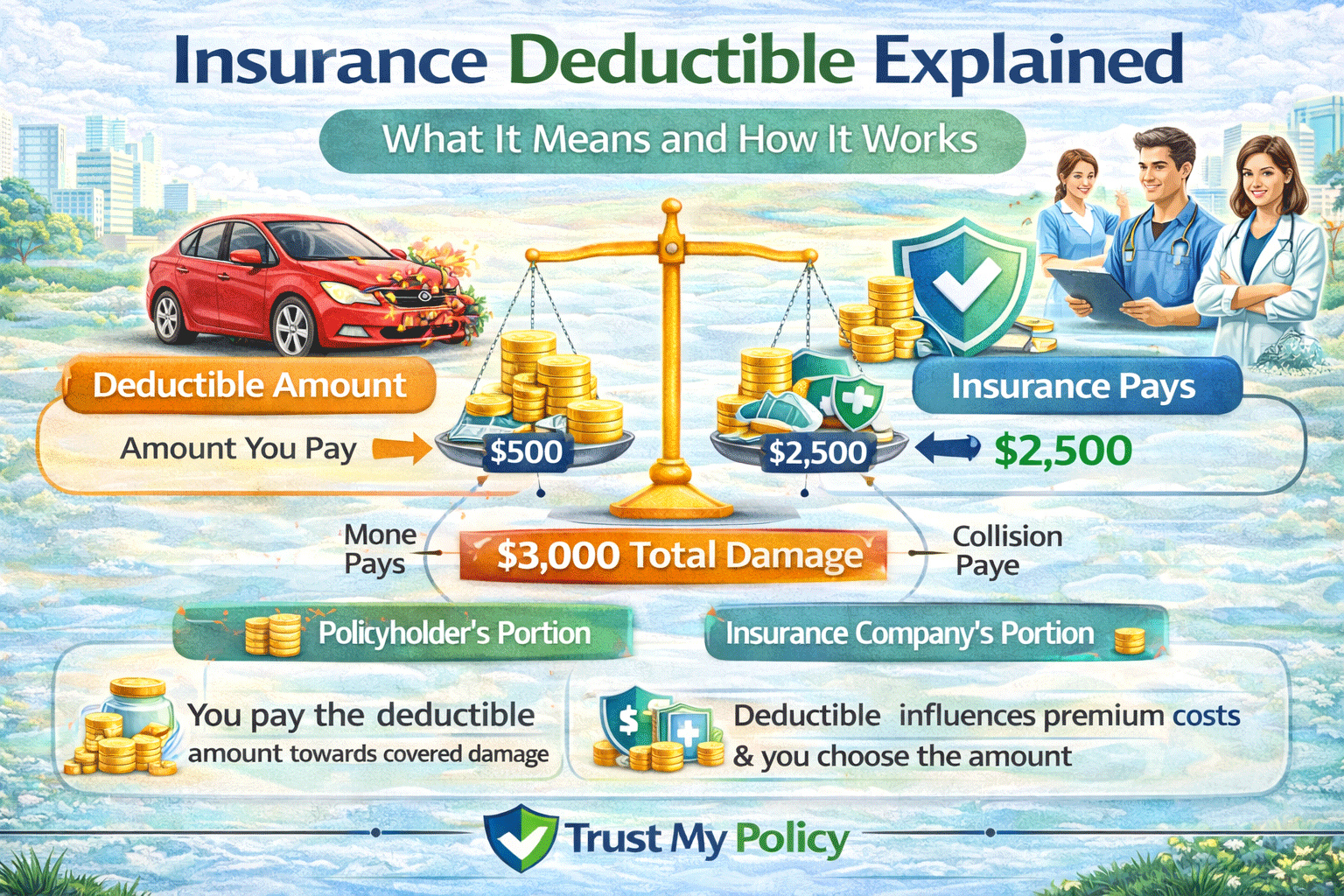
Example 1: Auto Insurance Claim
A driver experiences vehicle damage from an accident.
-
Repair cost: $3,000
-
Deductible: $500
The policyholder pays $500, and the insurer may cover the remaining $2,500 according to policy terms.
Example 2: Health Insurance Treatment
A patient requires medical treatment costing $2,500.
-
Annual deductible: $1,000
The policyholder pays the first $1,000. After that, insurance may begin covering approved costs.
Example 3: Home Insurance Damage
A storm damages part of a house.
-
Damage cost: $8,000
-
Deductible: $1,000
The homeowner pays the deductible, and insurance may cover the remaining $7,000 depending on coverage terms.
Example 4: Small Claim Scenario
A repair costs $300, but the deductible is $500.
Because the repair cost is lower than the deductible, the policyholder pays the full amount.
In this case, insurance does not contribute to the claim.
Common Mistakes About Insurance Deductibles
Many policyholders misunderstand how deductibles function.
1. Confusing Deductible with Premium
A premium is the regular payment for insurance coverage, while a deductible is the amount paid during a claim.
2. Choosing Deductibles Without Financial Planning
Selecting a high deductible may lower premiums but can create financial stress during unexpected events.
3. Assuming Deductibles Apply Only Once
Some policies apply deductibles per claim, meaning multiple claims may require multiple deductible payments.
4. Ignoring Policy Details
Deductible rules can vary by policy type. Reading policy documents carefully helps avoid misunderstandings.
5. Filing Claims for Small Amounts
If claim costs are lower than the deductible, filing a claim may not provide financial benefits.
Frequently Asked Questions
What does insurance deductible mean?
An insurance deductible is the amount a policyholder must pay before the insurance provider covers the remaining approved claim costs.
Is a higher deductible better?
A higher deductible may reduce premium costs but increases the amount paid during claims.
Do all insurance policies have deductibles?
Many insurance policies include deductibles, but the structure may vary depending on policy type.
Does the deductible apply to every claim?
Some policies apply deductibles per claim, while others apply them annually.
What happens if the claim amount is lower than the deductible?
If the claim amount is lower than the deductible, the policyholder typically pays the entire cost.
Can deductible amounts be changed?
Some insurance policies allow policyholders to choose deductible levels when purchasing or renewing coverage.
, benefits, and financial protection options available to policyholders. Many readers compare multiple guides before selecting a plan so they can clearly evaluate premiums, claim procedures, and long‑term advantages. A useful resource to explore is Whole Life vs Universal Life Insurance, which explains how this insurance policy works, the key benefits it offers, and situations where it may be the most suitable option. By reviewing this guide, you can gain deeper insights into coverage features, eligibility requirements, and practical tips that help individuals and families make smarter insurance decisions.
Conclusion
Understanding insurance deductible explained concepts is essential for anyone purchasing insurance coverage. A deductible represents the portion of a claim that the policyholder must pay before the insurer contributes toward remaining costs.
Deductibles help control premium costs, reduce small claims, and ensure that both the policyholder and the insurance provider share financial responsibility.
Different types of deductibles exist, including fixed deductibles, percentage deductibles, annual deductibles, and per-claim deductibles. Each type functions differently depending on the policy structure.
When selecting an insurance policy, individuals should carefully evaluate the balance between premium costs and deductible levels. A well-chosen deductible can help maintain affordable premiums while ensuring adequate financial protection during unexpected events.
By understanding how deductibles work, policyholders can make more informed decisions about managing insurance risks and protecting their financial stability.
Disclaimer:
This article is for educational purposes only. Trust My Policy is an independent informational platform and does not sell insurance products or represent any insurance provider. Readers should consult official policy documents or licensed professionals for personalized advice.