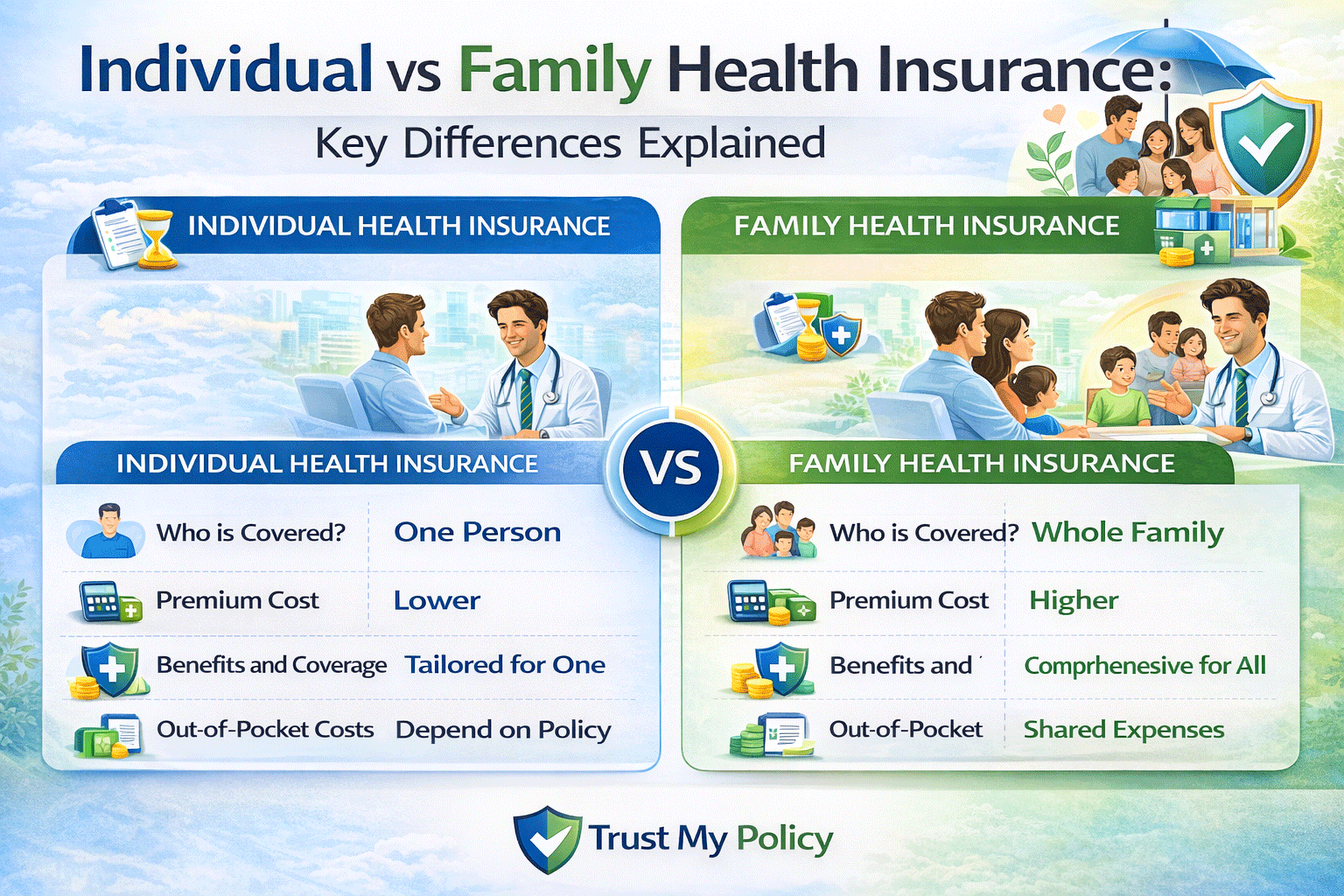
Health insurance is one of the most important financial protections a person or family can have. Medical costs are rising worldwide, and unexpected hospital bills can create serious financial stress. When choosing coverage, many people compare individual vs family health insurance to understand which option fits their needs.
An individual health insurance plan covers one person under a single policy. A family health insurance plan, often called a family floater plan, covers multiple family members under one shared sum insured. While both options provide medical protection, they differ in cost structure, flexibility, coverage limits, and suitability.
Choosing the right type depends on family size, medical history, age, and budget. This guide explains individual vs family health insurance in simple language. You will find clear comparison tables, advantages and disadvantages, real-life examples, common mistakes, and answers to frequently asked questions. The goal is to help you make an informed decision based on your situation.
Individual vs Family Health Insurance
| Feature | Individual Health Insurance | Family Health Insurance |
|---|---|---|
| Who Is Covered | One person | Multiple family members |
| Sum Insured | Separate for each person | Shared among members |
| Premium Cost | Based on one person | Based on oldest member |
| Flexibility | High (separate policies) | Moderate (shared plan) |
| Best For | Single individuals | Families with dependents |
| Risk Sharing | No sharing | Shared coverage pool |
| Customization | Personalized | Limited per individual |
Choosing the right insurance coverage requires understanding different policy types, benefits, and financial protection options available to policyholders. Many readers compare multiple guides before selecting a plan so they can clearly evaluate premiums, claim procedures, and long‑term advantages. A useful resource to explore is Why Insurance Claims Get Rejected, which explains how this insurance policy works, the key benefits it offers, and situations where it may be the most suitable option. By reviewing this guide, you can gain deeper insights into coverage features, eligibility requirements, and practical tips that help individuals and families make smarter insurance decisions.
What Is Individual Health Insurance?
Individual health insurance covers one person under a single policy. The coverage amount, premium, and benefits apply only to that insured individual.
Key Features of Individual Health Insurance
-
Separate sum insured
-
Separate premium
-
No sharing of coverage
-
Personalized coverage limits
-
Independent claim history
Each insured person has their own coverage amount that cannot be used by others.
Example
If two spouses each buy individual plans of $50,000:
-
Each person has $50,000 coverage.
-
One person’s claim does not affect the other’s coverage.
What Is Family Health Insurance?
Family health insurance covers multiple family members under one policy. The total coverage amount is shared among all insured members.
This type of plan is often called a family floater plan.
Key Features of Family Health Insurance
-
Single premium for entire family
-
Shared sum insured
-
Coverage for spouse, children, and sometimes parents
-
Cost-effective for young families
Example
If a family plan has $100,000 coverage:
-
Any family member can use the full amount.
-
If one member uses $70,000, only $30,000 remains for others during that policy year.
Detailed Comparison Table: Individual vs Family Health Insurance
| Criteria | Individual Plan | Family Plan |
|---|---|---|
| Coverage Structure | Separate coverage per person | Shared coverage |
| Premium Calculation | Based on individual age & health | Based on oldest member |
| Claim Impact | Does not affect others | Reduces shared pool |
| Cost Efficiency | Higher for multiple members | More economical for families |
| Suitable For | Singles or older members | Young families |
| Policy Management | Multiple policies | Single policy |
| Custom Benefits | Easier to tailor | Less individual customization |
| Risk Distribution | Independent | Shared risk |
| Sum Insured Flexibility | Fixed per person | Shared limit |
Choosing the right insurance coverage requires understanding different policy types, benefits, and financial protection options available to policyholders. Many readers compare multiple guides before selecting a plan so they can clearly evaluate premiums, claim procedures, and long‑term advantages. A useful resource to explore is How Car Insurance Claims Work, which explains how this insurance policy works, the key benefits it offers, and situations where it may be the most suitable option. By reviewing this guide, you can gain deeper insights into coverage features, eligibility requirements, and practical tips that help individuals and families make smarter insurance decisions.
How Individual Health Insurance Works
-
You purchase coverage for one person.
-
You pay premium based on age and health.
-
Claims reduce only that person’s coverage.
-
Policy renews annually.
Individual plans are straightforward and provide dedicated protection.
How Family Health Insurance Works
-
You purchase one plan covering multiple members.
-
Premium is based mainly on oldest insured member.
-
Any member can file a claim.
-
Claims reduce shared sum insured.
Family plans simplify administration but involve shared risk.
Cost Comparison
Family health insurance often costs less than buying multiple individual policies for each family member.
However, premium increases may occur when:
-
Adding elderly parents
-
Family medical history shows higher risk
-
Coverage amount increases
Individual policies may cost more collectively but offer independent coverage.
Pros and Cons of Individual Health Insurance
Advantages
-
Separate coverage for each person
-
Claims do not affect others
-
Suitable for high-risk members
-
Flexible coverage customization
Disadvantages
-
Higher total premium for families
-
Multiple policies to manage
-
Less cost-efficient for young families
Pros and Cons of Family Health Insurance
Advantages
-
Cost-effective for families
-
Single premium payment
-
Easy management
-
Flexible usage within family
Disadvantages
-
Shared coverage pool
-
One large claim reduces coverage for others
-
Premium based on oldest member
-
Less customization per person
Choosing the right insurance coverage requires understanding different policy types, benefits, and financial protection options available to policyholders. Many readers compare multiple guides before selecting a plan so they can clearly evaluate premiums, claim procedures, and long‑term advantages. A useful resource to explore is Insurance Myths Explained, which explains how this insurance policy works, the key benefits it offers, and situations where it may be the most suitable option. By reviewing this guide, you can gain deeper insights into coverage features, eligibility requirements, and practical tips that help individuals and families make smarter insurance decisions.
Real-Life Use Cases
Example 1: Young Couple Without Children
They choose a family plan with $100,000 coverage.
Benefits:
-
Lower premium than two separate policies.
-
Shared coverage sufficient for low medical usage.
Example 2: Family with Two Children
Family floater plan provides cost savings.
If one child needs minor surgery:
-
Coverage remains sufficient for others.
Example 3: Family with Elderly Parent
Elderly parent has higher medical risk.
In this case:
-
Separate individual policy for parent may protect shared family coverage.
-
Family plan may become expensive due to age-based premium.
Example 4: Single Professional
Individual health insurance is most suitable.
Family plan unnecessary unless covering dependents.
When Individual Health Insurance May Be Better
-
You are single.
-
One member has serious health issues.
-
Family members have large age differences.
-
You want separate coverage amounts.
When Family Health Insurance May Be Better
-
Young couple with children.
-
Similar age group.
-
Lower expected medical usage.
-
Budget-conscious families.
Common Mistakes and Misunderstandings
1. Thinking Family Plan Means Separate Coverage
Family plans share a single coverage pool.
2. Ignoring Age Factor
Premium depends on oldest member.
3. Choosing Lowest Premium Only
Lower premium may mean lower coverage.
4. Not Considering Long-Term Medical Needs
Health conditions may change over time.
5. Overlooking Policy Terms
Deductibles, waiting periods, and exclusions vary.
Choosing the right insurance coverage requires understanding different policy types, benefits, and financial protection options available to policyholders. Many readers compare multiple guides before selecting a plan so they can clearly evaluate premiums, claim procedures, and long‑term advantages. A useful resource to explore is Risk Pooling in Insurance, which explains how this insurance policy works, the key benefits it offers, and situations where it may be the most suitable option. By reviewing this guide, you can gain deeper insights into coverage features, eligibility requirements, and practical tips that help individuals and families make smarter insurance decisions.
Frequently Asked Questions (FAQs)
1. Which is cheaper: individual or family health insurance?
Family plans are usually cheaper for multiple young members.
2. Can I convert individual to family plan?
Yes, usually at renewal, depending on insurer policies.
3. What happens if one member uses full coverage?
Other members cannot claim more than remaining balance.
4. Is family health insurance good for elderly parents?
Sometimes individual plans are better for older members.
5. Does family plan cover maternity?
Some plans include maternity benefits after waiting period.
6. Can children be added later?
Yes, usually after birth or adoption.
7. Does premium increase yearly?
Premium may increase due to age or medical inflation.
Key Differences at a Glance
-
Individual plan = separate coverage.
-
Family plan = shared coverage.
-
Individual suits singles or high-risk members.
-
Family suits young families.
-
Cost structure differs significantly.
Conclusion
Understanding individual vs family health insurance helps you select coverage that aligns with your family structure and financial situation. Individual plans provide dedicated protection and flexibility, while family plans offer cost efficiency and simplified management.
There is no universal solution. The best choice depends on age, number of dependents, health conditions, and budget. Evaluating potential medical risks and coverage needs can help you make a practical decision.
Proper planning today can reduce financial stress during medical emergencies in the future.
Disclaimer: This article is for educational purposes only. Trust My Policy is an independent informational platform and does not sell insurance products or represent any insurance provider
Leave a Reply