Cashless vs Reimbursement Health Insurance Claims: Key Differences Explained
When you are hospitalized, the last thing you want to worry about is how to pay the medical bill. Health insurance is designed to reduce financial stress during medical emergencies. However, many policyholders are unsure about how claims are settled. This is where understanding cashless vs reimbursement health insurance claims becomes important.
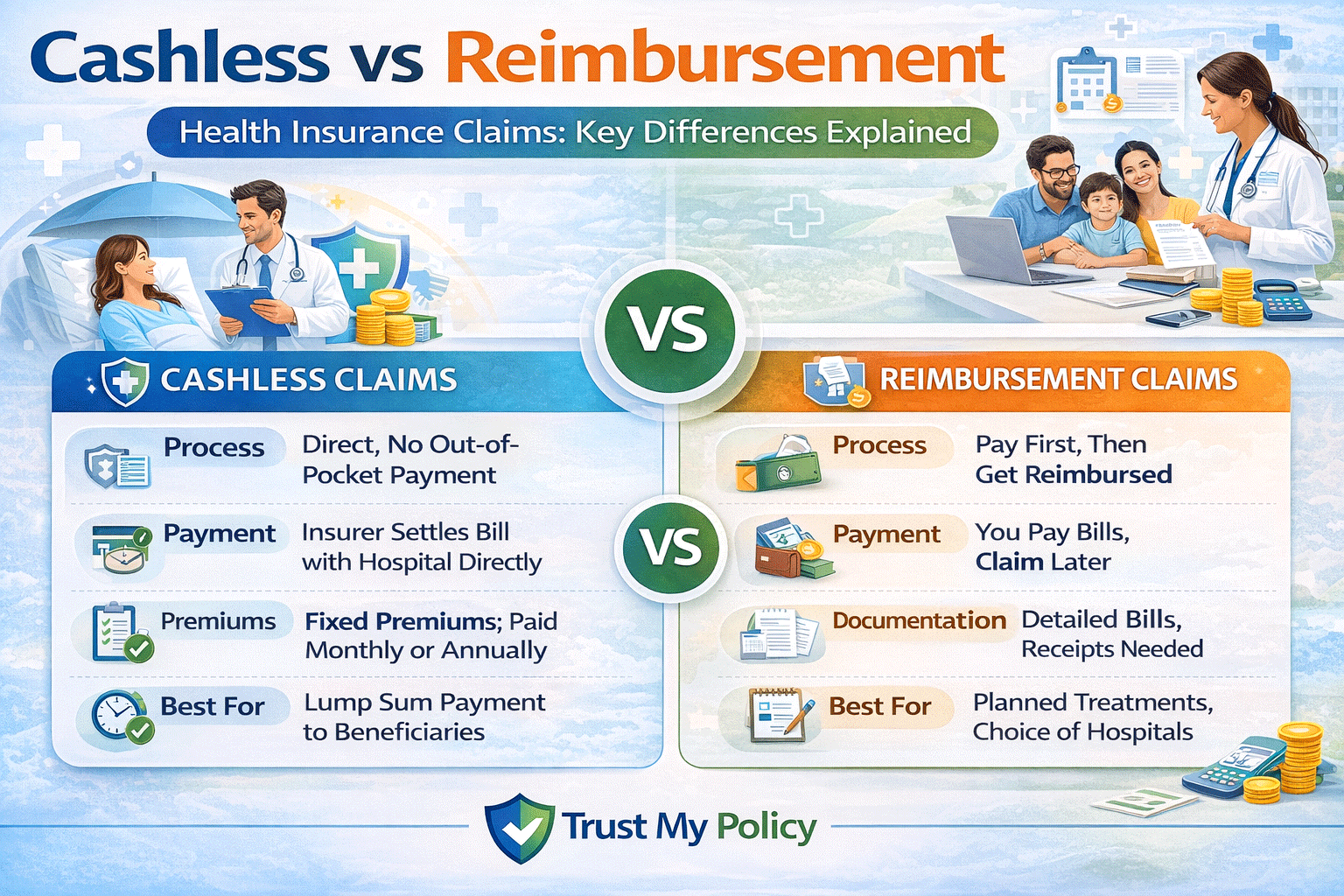
Both claim types help you recover medical expenses, but the process is very different. In a cashless claim, the insurance company pays the hospital directly. In a reimbursement claim, you pay the hospital first and later request repayment from the insurer. Each method has its own advantages, documentation requirements, and timelines.
Knowing the difference can help you prepare better during emergencies, avoid claim rejections, and manage hospital expenses smoothly. This detailed guide explains cashless vs reimbursement health insurance claims in simple language. It includes comparison tables, step-by-step processes, pros and cons, real-life examples, common mistakes, FAQs, and practical insights to help you make informed decisions.
Cashless vs Reimbursement Health Insurance Claims
| Feature | Cashless Claim | Reimbursement Claim |
|---|---|---|
| Who Pays Hospital First | Insurance company | Policyholder |
| Hospital Requirement | Must be network hospital | Any eligible hospital |
| Paperwork Timing | Before or during treatment | After discharge |
| Claim Approval Time | Faster if pre-approved | Takes longer |
| Financial Burden | Low upfront payment | High upfront payment |
| Best For | Planned treatment or network hospitals | Non-network or emergency cases |
What Is a Cashless Health Insurance Claim?
A cashless health insurance claim allows you to receive treatment at a network hospital without paying the full bill upfront. The insurance company directly settles the approved amount with the hospital.
Key Features of Cashless Claims
-
Available only at network hospitals.
-
Requires pre-authorization from insurer.
-
Insurance company pays hospital directly.
-
Policyholder pays non-covered expenses.
How Cashless Claims Work (Step-by-Step)
-
Choose a network hospital.
-
Show your health insurance card.
-
Hospital sends pre-authorization request.
-
Insurance company approves eligible amount.
-
Treatment begins.
-
Insurer pays hospital directly.
-
You pay only deductibles, co-pay, or non-covered items.
When Is Cashless Claim Used?
-
Planned surgeries.
-
Scheduled hospital admissions.
-
Certain emergency cases in network hospitals.
What Is a Reimbursement Health Insurance Claim?
A reimbursement health insurance claim requires you to pay the hospital bill first. After discharge, you submit documents to the insurance company to claim repayment.
Key Features of Reimbursement Claims
-
Can be used at non-network hospitals.
-
Requires full bill payment upfront.
-
Requires submission of original documents.
-
Reimbursement processed after review.
How Reimbursement Claims Work (Step-by-Step)
-
Receive treatment at hospital.
-
Pay full medical bill.
-
Collect original bills and discharge summary.
-
Submit claim form and documents.
-
Insurance company reviews claim.
-
Approved amount is transferred to you.
When Is Reimbursement Claim Used?
-
Emergency in non-network hospital.
-
No cashless facility available.
-
Small treatments where direct payment is easier.
Detailed Comparison Table: Cashless vs Reimbursement Health Insurance Claims
| Criteria | Cashless Claim | Reimbursement Claim |
|---|---|---|
| Payment Process | Insurer pays hospital | Policyholder pays first |
| Network Requirement | Mandatory | Not mandatory |
| Documentation | Pre-approval required | Post-treatment submission |
| Processing Speed | Faster | Slower |
| Financial Stress | Lower | Higher |
| Emergency Suitability | Yes (if network) | Yes (any hospital) |
| Risk of Rejection | Lower if pre-approved | Higher if documents incomplete |
| Ideal For | Planned procedures | Non-network treatment |
Advantages and Disadvantages of Cashless Claims
Pros of Cashless Claims
-
Minimal financial burden during hospitalization.
-
Direct payment to hospital.
-
Faster approval in planned cases.
-
Less paperwork after discharge.
Cons of Cashless Claims
-
Limited to network hospitals.
-
Requires pre-authorization.
-
Some expenses may not be covered.
-
Delays possible if approval takes time.
Advantages and Disadvantages of Reimbursement Claims
Pros of Reimbursement Claims
-
Freedom to choose any hospital.
-
Useful in remote areas.
-
No need for network facility.
-
Works in emergency situations.
Cons of Reimbursement Claims
-
Full payment required upfront.
-
Reimbursement can take weeks.
-
Strict documentation required.
-
Higher risk of partial approval.
Key Differences in Documentation
Cashless Claim Documents
-
Insurance card
-
Pre-authorization form
-
Doctor’s prescription
-
Hospital records
Reimbursement Claim Documents
-
Claim form
-
Original bills and receipts
-
Discharge summary
-
Diagnostic reports
-
Payment proof
Missing documents are a common reason for claim delays.
Real-Life Use Cases
Example 1: Planned Surgery in Network Hospital
A patient schedules knee surgery in a network hospital.
Best option: Cashless claim
Reason: Insurer pays hospital directly, reducing financial stress.
Example 2: Emergency in Remote Area
An accident occurs in a town without network hospitals.
Best option: Reimbursement claim
Reason: Immediate treatment at nearest hospital, later reimbursement.
Example 3: Small Medical Procedure
A minor procedure costing a moderate amount.
Either option may work depending on network availability.
Example 4: Large Hospital Bill
For high-cost treatment:
Cashless claim reduces burden of arranging large funds upfront.
Common Mistakes in Health Insurance Claims
1. Not Checking Network Hospitals
Many people assume all hospitals offer cashless service.
2. Delayed Intimation to Insurer
Insurance companies often require timely notification.
3. Missing Documents
Original bills are required for reimbursement claims.
4. Not Understanding Policy Limits
Certain expenses may not be covered.
5. Ignoring Waiting Periods
Pre-existing conditions may have waiting periods.
Which Is Better: Cashless or Reimbursement?
There is no universal answer.
Choose cashless if:
-
Treatment is planned.
-
Hospital is in network.
-
You want lower financial stress.
Choose reimbursement if:
-
Network hospital unavailable.
-
Emergency situation.
-
You prefer a specific non-network hospital.
How to Prepare for a Smooth Claim Process
-
Keep policy documents accessible.
-
Check network hospital list.
-
Inform insurer before planned admission.
-
Keep copies of all medical records.
-
Read coverage terms carefully.
Preparation reduces risk of claim rejection.
Frequently Asked Questions (FAQs)
1. Can I choose between cashless and reimbursement?
Yes, if treatment is in network hospital, you may choose cashless. Otherwise, reimbursement applies.
2. How long does reimbursement take?
It may take several weeks depending on insurer review process.
3. Are all hospital bills covered under cashless?
No. Non-covered items like consumables or non-medical expenses may not be included.
4. Can emergency treatment be cashless?
Yes, if hospital is in insurer’s network.
5. What happens if cashless claim is rejected?
You can pay the bill and later apply for reimbursement.
6. Do I need original bills for reimbursement?
Yes, insurers usually require original documents.
7. Is pre-authorization mandatory for cashless?
In most cases, yes for planned treatments.
Key Points at a Glance
-
Cashless = insurer pays hospital directly.
-
Reimbursement = you pay first, insurer repays later.
-
Cashless requires network hospital.
-
Reimbursement works anywhere eligible.
-
Financial burden differs significantly.
Conclusion
Understanding cashless vs reimbursement health insurance claims helps you manage medical emergencies with confidence. Cashless claims reduce immediate financial pressure by allowing direct settlement between hospital and insurer. They work best in planned treatments and network hospitals.
Reimbursement claims offer flexibility when treatment occurs outside network facilities. However, they require full payment upfront and careful documentation.
The best approach depends on hospital availability, emergency nature, financial preparedness, and policy terms. Reviewing your health insurance policy in advance and understanding claim procedures can prevent stress during medical situations.
Being informed today can make a major difference during unexpected healthcare events.
Disclaimer: This article is for educational purposes only. Trust My Policy is an independent informational platform and does not sell insurance products or represent any insurance provider. Readers should consult official policy documents or licensed professionals for personalized advice.