
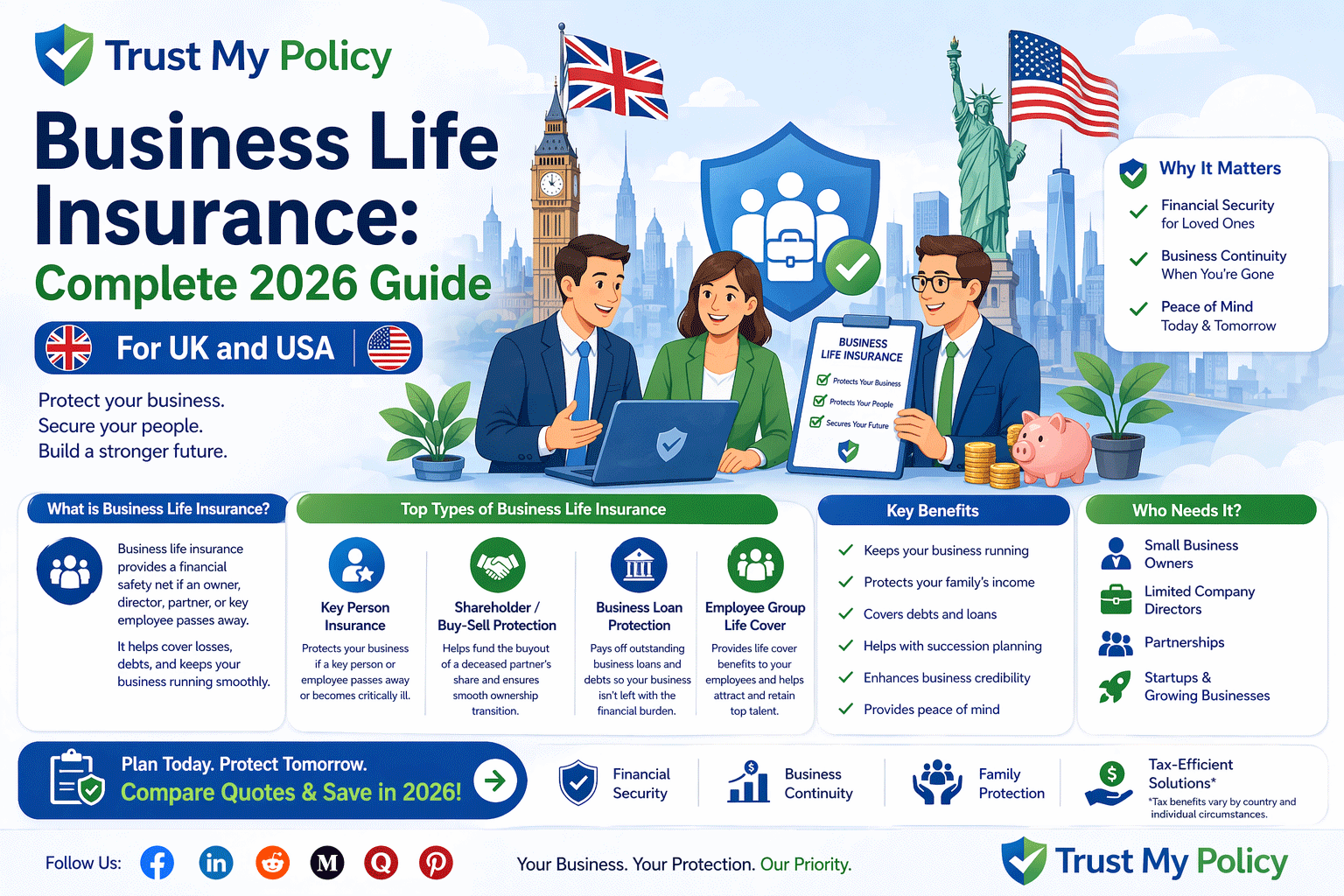
Business life insurance covers four main scenarios: (1) Key person insurance — the business takes a policy on a key employee; pays the business if that person dies or is diagnosed with critical illness; costs £50–£200/month. (2) Relevant life (UK Ltd Co) — company pays for director’s personal life insurance; premiums are corporation tax deductible; saves 19–25% effective cost. (3) Shareholder/partnership protection — funds the buyout of a deceased owner’s share. (4) Group life insurance — death-in-service benefit for all employees; costs approximately £5–£15 per employee per month.
When David’s business partner of 14 years died unexpectedly at 51, the practical consequences arrived within weeks. Their partnership agreement required the surviving partner to buy out the deceased partner’s 50% share of the business. David had two months to find £340,000 he didn’t have. He sold his house to stay in business. If they had taken out shareholder protection life insurance three years earlier — which would have cost approximately £150/month split between both — the insurance would have funded the buyout automatically.
Business life insurance in 2026 protects the people and financial structures that keep businesses running. It covers the death of key employees whose absence would cause financial loss, funds business continuity when owners or partners die, provides tax-efficient life cover for company directors, and provides death-in-service benefits that help employers attract and retain staff.
This guide covers every type of business life insurance in the UK and USA in 2026: key person insurance, relevant life insurance, shareholder and partnership protection, group life insurance, and director life cover — with real costs, tax implications, and the best providers for each type.
| Type | Who It Protects | Who Pays the Premium | Who Receives the Payout | Tax Treatment |
| Key person insurance | The business — covers financial loss if a key person dies | The business | The business | Premiums may be corporation tax deductible; payout taxed as business income |
| Relevant life (UK) | The director/employee’s family | The limited company | The director’s family (via trust) | Premiums: corporation tax deductible. Payout: IHT-free via trust |
| Shareholder protection | The surviving shareholders | Each shareholder personally (or the business) | The business / surviving shareholders | Depends on policy structure — specialist advice essential |
| Group life insurance | All employees — death-in-service benefit | The employer | The deceased employee’s beneficiaries | Employer: premiums deductible as business expense. Employee: P11D benefit in UK |
| Partnership protection | The partnership / surviving partners | The partnership or individual partners | The surviving partners / deceased’s estate | Specialist advice essential — varies by structure |
Think of business life insurance like the financial immune system of your company. Just as personal life insurance protects your family from the financial impact of your death, business life insurance protects your company from the financial impact of losing a key person, owner, or shareholder.
Business life insurance is any life insurance policy taken out in a business context — either by the business on behalf of employees or directors, or by owners to protect business continuity. Unlike personal life insurance, the beneficiary is often the business itself rather than a family, and the premiums are often paid by the business as a commercial expense.
Who needs it: Any business where the death of a specific individual would cause financial hardship. Small businesses where the owner IS the business. Businesses with key salespeople, technical experts, or critical relationships. Businesses with multiple owners or shareholders. Companies wanting to offer death-in-service benefits to attract and retain staff.
Key person insurance (also called keyman insurance) is a life insurance and/or critical illness policy taken out by the business on the life of a key individual. The business pays the premiums. The business is the beneficiary. If the key person dies or is diagnosed with a critical illness, the insurance pays a lump sum directly to the business — to cover lost profits, recruitment costs, the cost of a temporary replacement, or loan repayments.
| Feature | Details |
| Who is a ‘key person’? | The owner, a key salesperson generating significant revenue, a specialist whose skills are hard to replace, or anyone the business depends on disproportionately |
| Coverage amount | Typically 2–5 times the key person’s annual salary, or the value of the business they generate |
| Typical monthly cost | £50–£200/month depending on age, health, and coverage amount |
| Tax treatment (UK) | Premiums may be corporation tax deductible if the sole purpose is to protect business profits. Payout is then treated as taxable business income. HMRC guidance applies. |
| Tax treatment (USA) | Premiums paid by the business are NOT tax deductible. Death benefit is typically income-tax-free to the business (IRC Section 101a). |
| Best for | SMEs with 1–10 employees where one person generates a disproportionate share of revenue or expertise |
Relevant life insurance is available exclusively to UK limited companies and is one of the most tax-efficient employee benefits available. The company takes out a life insurance policy on a director or employee. The company pays the premiums — which are treated as an allowable corporation tax deduction. The policy is held in trust, so the payout goes directly to the employee’s family — free of income tax, free of inheritance tax.
| Feature | Details |
| Who can use it? | UK limited companies — not sole traders or partnerships |
| Who pays the premium? | The limited company |
| Tax treatment — premium | Fully corporation tax deductible as a legitimate business expense |
| Tax treatment — payout | Paid via trust to the employee/director’s family — IHT-free and income-tax-free |
| Effective cost saving vs personal policy | Typically 20–25% cheaper on an after-tax basis for a basic rate taxpayer; more for higher rate |
| Typical coverage | Same as standard personal term life — typically 4–10x salary as sum assured |
| Best for | All UK limited company directors with dependants — this is almost always more tax-efficient than a personal term life policy |
| 💡 TIP: Relevant Life Insurance Is the Most Overlooked Tax Benefit for UK Directors
A limited company director paying for personal term life insurance out of post-tax income is effectively paying 20–45% more than they need to. Relevant life insurance — paid by the company as a corporation tax-deductible expense — achieves the same death benefit for the director’s family at 20–25% lower effective cost. The company saves tax; the director gets the benefit; the family receives the payout IHT-free via trust. Always discuss this with your accountant before buying personal term life as a director. |
When a business owner dies, their share of the business passes to their estate — often to a spouse or other heirs who may have no interest in the business. This can force a sale, bring in unwanted new partners, or create a cash crisis for the surviving owners who want to buy out the deceased’s share but don’t have the funds.
Shareholder protection life insurance solves this by providing the surviving shareholders with funds to buy the deceased’s shares at an agreed valuation — without needing to find emergency cash or outside investors. The policy can be structured as own-life-in-trust (each owner insures their own life for the benefit of the others) or as a company-owned policy.
Partnership protection works on the same principle for partnerships and LLPs — ensuring the surviving partners can buy the deceased’s share at the agreed valuation without triggering a forced sale of the business.
Group life insurance provides a death-in-service benefit to all employees covered under the policy. If any covered employee dies while employed, the insurer pays a multiple of their salary (typically 2–4x) as a tax-free lump sum to their nominated beneficiaries.
| Feature | Details |
| Typical death-in-service multiple | 2–4 times annual salary |
| Typical employer cost | £5–£15 per employee per month depending on age profile of workforce, cover multiple, and group size |
| Minimum group size | Some insurers require minimum 3–5 employees; others accept smaller groups |
| Tax treatment (UK employer) | Premiums are deductible as a business expense |
| Tax treatment (UK employee) | Benefit in kind — reported on P11D if exceeding the lifetime allowance threshold (now abolished but employer registration still required in some cases) |
| Tax treatment (USA) | Employer premiums are deductible. First $50,000 of coverage per employee is income-tax-free; amounts above $50,000 generate imputed income |
| Best for | Businesses with 5+ employees wanting to offer a competitive benefits package; helps with recruitment and retention |
| Policy Type | Scenario | Monthly Cost UK | Monthly Cost USA |
| Key person life insurance | Key person: age 40, £500k coverage, 10 years | ~£50–£90/month | ~$80–$150/month |
| Relevant life (Ltd Co director) | Director: age 40, £500k coverage, 25 years | ~£35–£70/month (company pays — CT deductible) | N/A — USA equivalent is employer-owned life insurance |
| Shareholder protection | 2 shareholders, 50/50, business valued at £500k each | ~£30–£80/month per shareholder | ~$50–$120/month per shareholder |
| Group life (death in service) | 10 employees, average salary £35k, 3x salary cover | ~£5–£15/employee/month | ~$8–$20/employee/month |
| Partnership protection | 2 partners, 50% each, partnership valued at £400k | ~£25–£60/month per partner | ~$40–$100/month per partner |
If David and his partner had taken out partnership protection with a cross-option agreement three years before the partner’s death, the policy would have paid £340,000 to David — exactly the amount needed to buy out the partner’s estate. Total cost: approximately £120/month for both partners’ premiums combined over three years = £4,320 total premium paid. The alternative: selling his house.
Sarah takes out £400,000 of 25-year term life insurance. Option A: personal term life policy at £22/month paid from post-tax income — effective cost to Sarah as a higher-rate taxpayer: £36.67/month. Option B: relevant life via her limited company at the same £22/month premium — paid by the company as a corporation tax-deductible expense. Net cost after tax relief: approximately £17–£18/month. Annual saving: approximately £225. Over 25 years: £5,625 in tax savings.
A technology startup with 8 developers wants to offer death-in-service benefits as part of a competitive benefits package. Average salary: £52,000. 3x salary cover: £156,000 per employee. Group life cost: approximately £900–£1,200/month for all 8 employees — approximately £110–£150 per employee per month. More affordable than individual policies. Death benefit paid to each employee’s nominees.
A 3-partner law firm where one partner generates 60% of revenue. If that partner died, the firm’s revenue would drop dramatically during recruitment. Key person critical illness and life cover: £300,000 coverage for 10 years. Cost: approximately £90/month. Provides 12–18 months of revenue replacement while the firm recruits and rebuilds client relationships.
Key person insurance protects the business. Relevant life protects the director’s family. They solve completely different problems. A limited company director needs both — key person for business continuity, relevant life for their family’s protection.
| ⚠️ WARNING: Shareholder Protection Without a Cross-Option Agreement Is Incomplete
Shareholder protection insurance provides the funds to buy a deceased shareholder’s shares. But without a cross-option agreement (a legal document obligating the estate to sell and the surviving shareholders to buy at a pre-agreed valuation), the insurance payout and the share transfer are legally disconnected. The estate could refuse to sell, or the survivors could refuse to buy. Always implement the insurance alongside a properly drafted cross-option agreement reviewed by a solicitor. |
Shareholder and partnership protection should reflect the current business value — not the value three years ago when the policy was taken out. Business values change. Schedule annual policy reviews alongside your accountant to ensure the coverage matches the current valuation.
Key person insurance (keyman insurance) is a life insurance policy taken out by a business on the life of a key individual whose death would cause significant financial loss to the company. The business pays the premiums and receives the payout. The death benefit is used to cover lost profits, recruitment costs, or loan repayments during the period of disruption. HMRC allows corporation tax deductions on premiums where the sole purpose is protecting business profits.
Relevant life insurance is a life insurance policy taken out and paid for by a UK limited company for the benefit of a director or employee. Premiums are treated as an allowable corporation tax deduction. The policy is held in trust, so the payout goes directly to the director’s family — free of income tax and inheritance tax. It is one of the most tax-efficient employee benefits available and is typically 20–25% cheaper on an after-tax basis than an equivalent personal term life policy.
In the UK, key person insurance premiums may be corporation tax deductible if three conditions are met: the policy is on the life of a director or employee (not a business asset), the insurance is exclusively for the purpose of meeting a loss of trading profits, and the policy has no capital or surrender value. HMRC’s Business Income Manual provides detailed guidance. Always consult an accountant before assuming tax deductibility.
For the foundational guide to all life insurance types, see our [INTERNAL LINK: what is the best life insurance policy] guide. For self-employed workers needing personal protection, our best life insurance for self employed UK article covers both personal and business options.
| 📋 Disclaimer
This article is for informational purposes only. Always consult a licensed insurance professional before making coverage decisions. Trust My Policy does not sell insurance products or represent any insurer. |

Jagadeesh Gutha is the founder of TrustMyPolicy.com, an independent insurance information platform covering life, health, car, home, and business insurance for US and UK readers. He researches insurance products, policy structures, and consumer rights to help everyday people make informed coverage decisions without the jargon. All content on TrustMyPolicy is independently researched, fact-checked, and written to educate — not to sell.



Insurance Guides for UK, USA & Worldwide We are not an insurer or broker.

Reader Comments (0)