
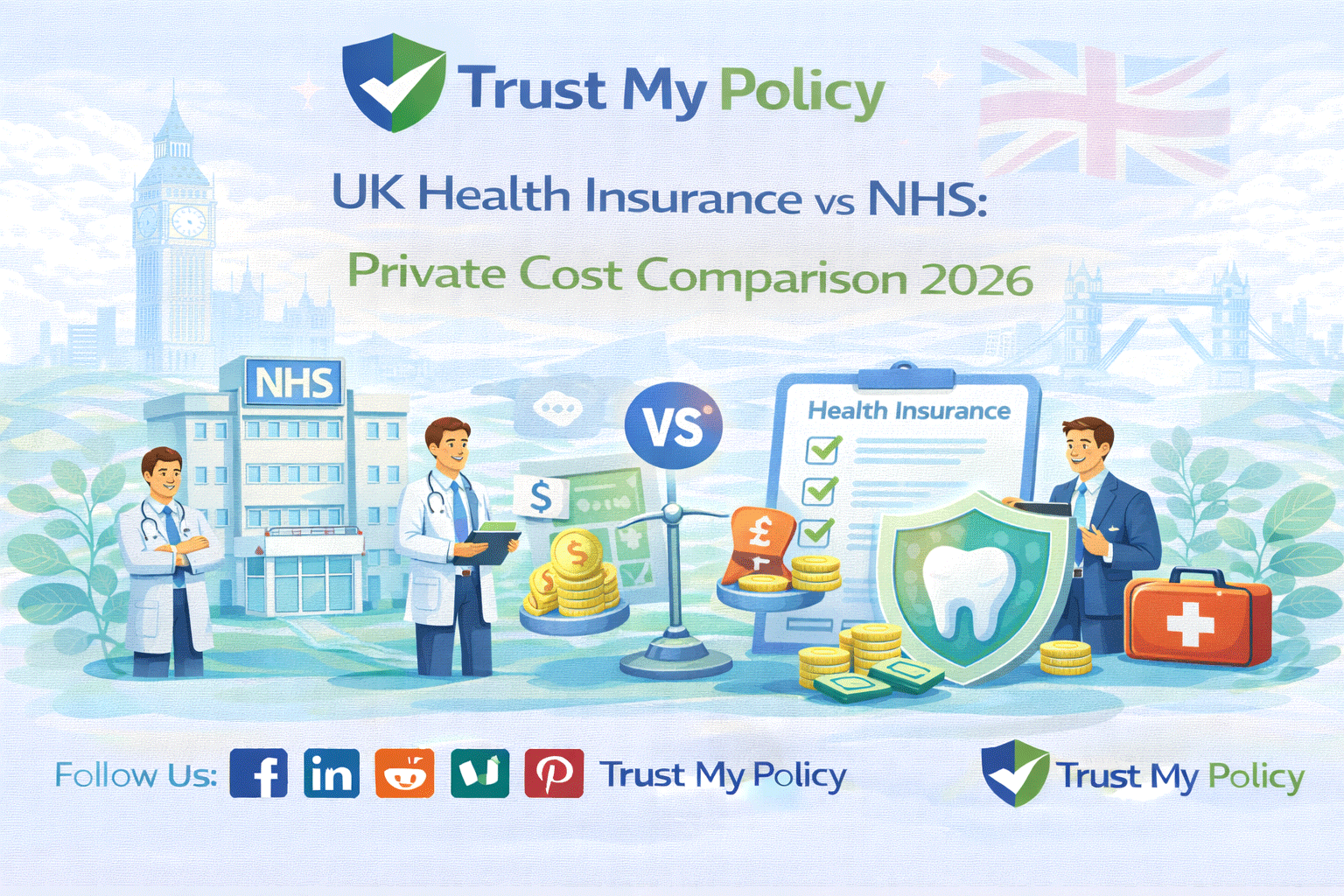
NHS healthcare is free at the point of use, funded by taxation. Private healthcare (via PMI or self-pay) costs £35–£100+/month in insurance premiums or £150–£15,000+ for individual procedures paid directly. The key difference is speed: NHS waiting times average weeks to months for non-urgent care; private consultations typically happen within days. NHS is best for emergencies, chronic conditions, and GP care. Private is best for elective procedures, specialist consultations, and diagnostics where speed matters.
Alan, 48, had been on an NHS waiting list for a knee replacement for 14 months. He couldn’t run his landscaping business properly. He’d missed three school sports days. His GP said it could be another 6–9 months. A private orthopaedic consultation cost him £250. Surgery was quoted at £12,500. He didn’t have private health insurance. He paid out of pocket, financed over 18 months, and was back at work in 8 weeks. His total cost of waiting — in lost business income — had already exceeded £25,000.
The UK NHS is free at the point of use — but ‘free’ doesn’t mean costless, and it doesn’t mean fast. In December 2025, the NHS England waiting list stood at 7.3 million cases according to the BMA. Around 2.8 million patients had waited more than 18 weeks. For many conditions, the gap between NHS and private timelines now runs to months — sometimes years.
This guide compares the NHS and private healthcare in the UK across four dimensions: waiting times, costs (both self-pay and PMI premiums), quality, and the scenarios where each genuinely wins. We use real 2025–2026 data throughout.
The NHS remains one of the world’s best healthcare systems for acute emergencies, cancer urgent pathways, and chronic disease management. However, its elective care waiting lists represent a genuine crisis of access that has driven a 13.8% year-on-year growth in the UK PMI market to £8.64 billion (LaingBuisson 2025).
| Metric | Data (2025–2026) | Source |
| Total NHS waiting list (England) | 7.3 million cases / 6.23 million individuals (Dec 2025) | BMA / NHS England |
| Waiting over 18 weeks | Approximately 2.8 million patients | NHS England RTT data |
| Waiting over 52 weeks | Approximately 139,000 patients (Dec 2025) | NHS England |
| NHS 18-week target (92% within 18 wks) | Not met nationally for several years | NHS England |
| Cancer 62-day target (85%) | Approximately 65–70% actually achieved | NHS England |
| ONS patient satisfaction on waiting list | 44% rated experience ‘poor’; 73% said shorter waits would improve it | ONS Aug 2025 survey |
| Private healthcare market size | £8.64 billion, +13.8% year-on-year | LaingBuisson 2025 |
| PMI claims paid (2024) | Record £4 billion | ABI |
| Dimension | NHS | Private (PMI or Self-Pay) |
| Cost | Free at point of use (funded via tax/NI) | £35–£100+/month PMI; or £150–£15,000+ self-pay per procedure |
| GP appointment | Usually within 1–2 weeks; some same-day | Same-day or next-day with virtual GP (included in most PMI) |
| Specialist consultation | 4–26+ weeks for referral to appointment | Typically 3–7 days with PMI; £150–£400 self-pay |
| Diagnostic tests (MRI/CT) | 4–12+ weeks wait | Within 1 week with PMI; £500–£1,500 self-pay |
| Elective surgery | Several months to 1–2+ years for some specialties | 2–4 weeks with PMI; £5,000–£20,000 self-pay |
| Cancer urgent pathway | 2-week urgent referral (target often missed: ~67% hit) | Immediate upon PMI approval |
| Mental health | Child referrals up to 16 weeks in some regions | Virtual therapy within days on most PMI plans |
| Emergency/A&E | Immediate; free | Private doesn’t cover emergencies — NHS A&E always used |
| Chronic condition management | NHS — free ongoing management | PMI doesn’t cover chronic conditions; NHS remains responsible |
| Choice of consultant | Limited (choose NHS Trust via right-to-choose) | Full choice of private consultant |
| Room type | Shared ward (typical) | Private room standard |
| Prescription costs | £9.90/item in England (free in Scotland/Wales) | Included in PMI treatment; or self-pay |
If you don’t have PMI and want private treatment, you can pay directly (self-pay). Costs vary significantly by hospital, location, and consultant. London hospitals are typically 20–40% more expensive than regional equivalents.
| Procedure | Typical Self-Pay Cost (UK, 2025) | NHS Wait Time (Typical) |
| Outpatient specialist consultation | £150–£400 | 4–20+ weeks |
| MRI scan | £400–£800 | 4–12 weeks |
| CT scan | £300–£600 | 4–12 weeks |
| Knee replacement | £10,000–£16,000 | 12–24+ months in some trusts |
| Hip replacement | £11,000–£16,000 | 12–24+ months in some trusts |
| Cataract surgery (one eye) | £1,500–£3,500 | 6–18 months |
| Hernia repair | £2,500–£5,500 | 6–18 months |
| Varicose vein treatment | £2,000–£5,000 | 12+ months |
| Colonoscopy | £1,000–£2,000 | 6–18 weeks (diagnostic urgency varies) |
| Private GP consultation | £80–£200 | Same day or next day |
| Profile | Monthly PMI Premium (2025) | Notes |
| Individual, age 28, healthy, moratorium | £30–£45/month | Basic inpatient cover, local hospital list, £500 excess |
| Individual, age 35, healthy, comprehensive | £45–£70/month | AXA quoted £50.02 for similar profile (Oct 2025) |
| Individual, age 45, comprehensive | £65–£95/month | Premiums rise with age; cancer/MH cover included |
| Individual, age 55, comprehensive | £90–£140/month | Significant age loading above 50 |
| Family (2 adults + 2 children), age 35/33 | £120–£200/month | Two adults + children; varies significantly by plan |
| Employer group plan (per employee) | £30–£60/month per head | Group pricing is 20–40% cheaper than individual |
| Bupa By You Comprehensive (avg 2026) | £89.39/month | MyTribeInsurance 2026 review data |
| 💡 TIP: The True Cost of ‘Free’ NHS Healthcare
NHS treatment is not genuinely free — the average UK taxpayer contributes thousands of pounds annually to NHS funding via income tax and National Insurance. The Department of Health and Social Care 2024/25 budget exceeded £190 billion. The question is not ‘NHS for free vs private for money’ — it’s ‘should I pay an additional £45–£95/month for PMI to access care faster, on top of what I already contribute via tax?’ For many, the answer is yes when NHS waits are measured in months rather than weeks. |
Situation: Maria tears her ACL playing football. She is a solicitor and cannot work effectively with the injury. Her NHS orthopedics referral wait: 14 weeks. Surgery date after that: unknown.
Private option: Her Aviva PMI is approved. She sees a private consultant in 4 days. Surgery is booked for 3 weeks later. She’s on crutches for 6 weeks and back at work in 8.
NHS route cost (indirect): 14+ weeks off at reduced capacity. Private route: PMI premium (£54/month) already paid. Excess of £250.
Verdict: For working-age adults with elective surgery needs, PMI provides a clear financial and quality-of-life advantage. The NHS route would have been ‘free’ but cost significantly more in lost productivity.
Situation: Richard has a heart attack on a Saturday morning.
Reality: Private health insurance does not cover emergencies. Richard calls 999. He is taken to the NHS cardiac unit. He receives emergency stenting, ICU care, and 5 days of inpatient treatment. Cost to Richard: £0. The NHS response is excellent — emergency and critical care is where the NHS functions best.
Verdict: Emergencies, A&E, and critical care are always NHS regardless of PMI. Private health insurance is not an emergency service. This is correctly understood by most PMI holders, who use the NHS for acute emergencies and PMI for planned care.
Situation: Sophie was diagnosed with Type 2 diabetes 3 years ago. She needs ongoing monitoring, medication reviews, and annual health checks.
Reality: Private health insurance does not cover chronic conditions. Sophie’s diabetes management stays with her NHS GP and diabetes team — free, consistent, and comprehensive. Her PMI (£58/month) is there for any new acute conditions that develop, not for her diabetes management.
Verdict: Chronic condition management is NHS territory. PMI complements the NHS for new acute conditions but never replaces NHS care for ongoing conditions. Understanding this distinction is essential for setting realistic expectations about what PMI delivers.
Situation: James, a senior manager, develops severe anxiety and cannot function at work. NHS mental health referral wait in his area: 12–16 weeks.
Private option: His Royal London PMI covers private mental health treatment. He sees a private psychiatrist within 5 days. Starts CBT the following week. Back to work in 6 weeks.
Verdict: Mental health is one of the most compelling reasons for PMI in the UK. NHS mental health waits can run 12–16+ weeks for non-urgent referrals. PMI — including many plans now offering virtual therapy within days — can make a material difference to outcomes and recovery time.
| NHS | Private (PMI or Self-Pay) |
| ✅ Free at point of use for all residents | ✅ Dramatically shorter waiting times for planned care |
| ✅ Best in class for emergencies and A&E | ✅ Choice of consultant and hospital |
| ✅ Covers chronic conditions on an ongoing basis | ✅ Private room, flexible appointment times |
| ✅ Maternity, mental health, prescriptions covered | ✅ Virtual GP access typically same day |
| ✅ No referral usually needed for urgent pathways | ✅ Mental health treatment within days on most PMI |
| ❌ Elective surgery waits: months to years | ❌ Doesn’t cover emergencies, A&E, chronic conditions |
| ❌ Specialist referral waits: 4–26+ weeks | ❌ Costs £35–£100+/month in addition to tax contributions |
| ❌ Diagnostic scan waits: 4–12+ weeks | ❌ Pre-existing conditions excluded for 2 years (moratorium) |
| ❌ Mental health waits: 12–16+ weeks in some areas | ❌ PMI premiums rise significantly with age |
PMI supplements the NHS — it doesn’t replace it. Emergencies, A&E, GP care, chronic conditions, and maternity all remain NHS regardless of your PMI policy. PMI is a fast lane for elective care, not a separate healthcare system.
| ⚠️ WARNING
Never cancel your NHS GP registration because you have private health insurance. Your NHS GP is still your first point of contact for referrals, repeat prescriptions, and managing ongoing conditions. The NHS and private care work in parallel — you need both pathways. |
Some private treatments are more accessible than people assume. A private GP consultation costs £80–£200. A private specialist consultation runs £150–£400. For people who need one specific thing quickly and have the means, self-pay may be preferable to waiting or taking out a full PMI policy.
Many patients don’t know that when their GP refers them for non-urgent specialist care, they have the legal right to choose any provider in England — including some NHS providers with shorter waiting times. Checking NHS waiting times at different Trusts via NHS.uk can sometimes reduce waits significantly without any private expenditure.
Under moratorium underwriting (95% of UK individual policies), any condition you had in the 5 years before your policy started is excluded for 2 years. If you buy PMI because your knee hurts, your knee won’t be covered. PMI is best started when you’re healthy, before conditions develop.
PMI premiums rise at renewal — sometimes significantly. Many people pay 20–40% more than necessary because they don’t compare providers at renewal. Using an FCA-regulated broker annually to compare is free and often produces meaningful savings.
| Your Situation | Recommendation |
| Self-employed, cannot afford weeks off ill | Strong yes — speed of treatment protects your income |
| Parents with young children | Good case — mental health, pediatric access speed matters |
| Employee with employer-sponsored PMI | Take it — group pricing is heavily subsidised |
| Healthy, rarely use healthcare, NHS works fine | PMI may not be necessary — consider self-pay for one-off needs |
| Have a chronic condition (diabetes, arthritis) | PMI won’t cover chronic management — NHS is best; PMI for new acute conditions |
| Over 50, rising NHS wait concerns | Strong case — elective surgery waits are longest and most impactful at this age |
| On a tight budget | Review NHS Right to Choose first; consider self-pay for specific needs over PMI |
| Business owner, key person risk | Strong case — rapid diagnosis and treatment protects business continuity |
As of December 2025, 7.3 million cases were on NHS England waiting lists, with approximately 2.8 million patients waiting more than 18 weeks. Around 139,000 had waited over a year. The NHS 18-week referral-to-treatment target (92% of patients) has not been met nationally for several years. Mental health referrals for children can take up to 16 weeks in some regions. Diagnostic tests (MRI, CT scans) average 4–12 weeks in many areas.
Individual PMI starts at around £30–£45/month for a healthy person in their late 20s with basic cover and a high excess. Comprehensive cover for a 35-year-old typically costs £45–£70/month. The ABI-referenced average for a family policy (two adults, two children) runs £120–£200/month. Premiums rise significantly with age, peaking at £90–£150+/month for individuals in their 50s. Bupa By You Comprehensive averaged £89.39/month across all ages in 2026 independent reviews.
The NHS covers everything for free at point of use, but with potentially long waiting times. PMI doesn’t cover things the NHS covers well — it provides faster access to things that have long NHS waits: specialist consultations (typically 3–7 days private vs 4–20+ weeks NHS), elective surgery (2–4 weeks vs months), diagnostic scans, and mental health treatment. Specific things PMI offers that the NHS is slow to provide include same-day virtual GP consultations, same-week specialist referrals, and mental health therapy within days.
Yes — and you still should for emergencies, A&E, GP care, and chronic conditions. Having PMI doesn’t change your NHS entitlement. Most PMI policyholders still use the NHS for their GP, prescriptions, emergency care, and long-term condition management. PMI provides a parallel private pathway for planned, elective care where the NHS is slow. You remain an NHS patient regardless of your PMI status.
Clinical outcomes for most conditions are comparable between NHS and private care — both operate under CQC (Care Quality Commission) regulation and employ the same consultants. The ONS found that 44% of NHS waiting list patients rated their experience as ‘poor’, with 73% citing shorter waits as the key improvement needed. Private care’s quality advantage is primarily speed of access, continuity of care with a chosen consultant, and the comfort of a private room — not a significant difference in the standard of medical treatment delivered.
For most working-age adults, the answer depends on whether waiting time is financially or personally costly for you. NHS waiting times of 4–20+ weeks for specialist consultations represent real costs for self-employed people and parents managing children’s health issues. For those with employer-sponsored PMI, the question is settled — take the benefit. For individuals considering personal PMI, the case is strongest for the self-employed, parents of young children, and anyone for whom rapid access to mental health or elective care makes a material difference.
If you’re considering private health insurance in the UK, our guide to cheap private health insurance UK no waiting period explains how to get the best cover at the lowest cost. For self-employed people weighing up the full insurance picture, see our insurance for self-employed UK guide.
| 📋 Disclaimer
This article is for informational purposes only. Always consult a licensed insurance professional before making coverage decisions. TrustMyPolicy.com does not sell insurance products or represent any insurer. |

Jagadeesh Gutha is the founder of TrustMyPolicy.com, an independent insurance information platform covering life, health, car, home, and business insurance for US and UK readers. He researches insurance products, policy structures, and consumer rights to help everyday people make informed coverage decisions without the jargon. All content on TrustMyPolicy is independently researched, fact-checked, and written to educate — not to sell.


Insurance Guides for UK, USA & Worldwide We are not an insurer or broker.

Reader Comments (0)