
Why Insurance Is Important: A Complete Beginner’s Guide to Financial Protection
Insurance plays an important role in modern financial planning. It helps individuals, families, and businesses manage financial risks that can arise from unexpected events such as accidents, illness, property damage, or loss of income. Without insurance, many people would struggle to recover financially after a major emergency.
Unexpected events can happen at any time. A medical emergency, car accident, natural disaster, or sudden loss of income can lead to significant financial stress. Insurance works as a financial safety net that helps reduce the economic burden during such situations.
Many people understand the basic idea of insurance but may not fully realize why it is important or how it helps protect long-term financial stability. Understanding the value of insurance can help individuals make informed decisions about risk management and financial planning.
In this guide, we explain why insurance is important, how it works, and how it protects individuals and families from financial uncertainty. This article also discusses common misunderstandings, practical examples, and helpful tips for beginners.
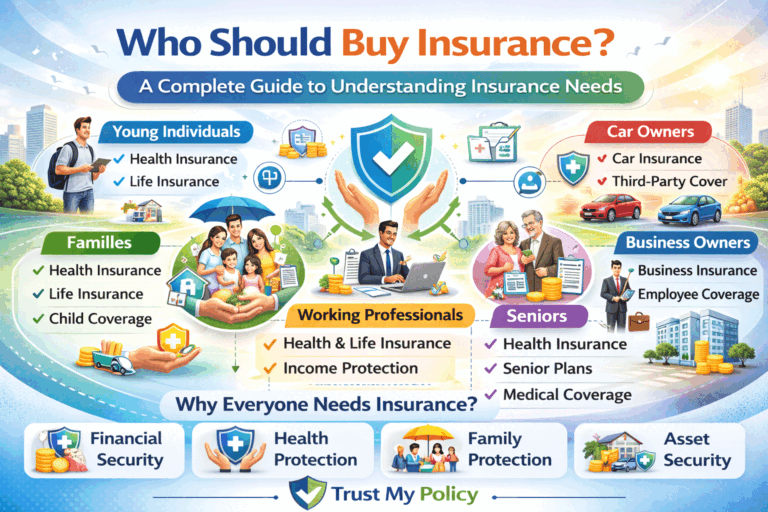
Why Insurance Is Important
| Key Aspect | Explanation |
|---|---|
| Financial Protection | Insurance helps cover unexpected financial losses. |
| Risk Management | It transfers financial risk from individuals to insurance providers. |
| Peace of Mind | Knowing you are financially protected reduces stress. |
| Legal Requirements | Some insurance types are required by law in many countries. |
| Family Security | Insurance helps protect family members from financial hardship. |
| Business Stability | Businesses use insurance to manage operational risks. |
Understanding the Basic Concept of Insurance
Insurance is a financial arrangement where individuals pay a regular amount known as a premium to an insurance provider. In return, the provider agrees to compensate for certain financial losses that may occur in the future.
The main purpose of insurance is risk sharing. Instead of one person bearing the full financial burden of an unexpected event, the risk is spread across many policyholders.
For example, thousands of people may pay insurance premiums, but only a smaller number will file claims during a given period. The collected premiums allow the insurer to cover those claims.
This system helps individuals avoid large unexpected financial expenses.
Types of Risks Insurance Can Protect Against
Insurance can help protect against many types of risks, including:
-
Health emergencies
-
Accidents and injuries
-
Property damage
-
Vehicle accidents
-
Natural disasters
-
Loss of income
-
Liability claims
Different insurance policies are designed to cover different risks.
Why Insurance Is Important in Financial Planning
Insurance is often considered one of the foundational elements of personal financial planning. It works alongside savings, investments, and budgeting to protect financial stability.
1. Protection Against Unexpected Expenses
One of the main reasons insurance is important is that it helps manage sudden and large financial costs.
Examples include:
-
Medical treatments
-
Car repairs after accidents
-
Home damage from fire or storms
-
Legal liability claims
Without insurance, these costs may create serious financial strain.
2. Financial Security for Families
Insurance helps protect family members from financial hardship in case of unexpected events.
For example:
-
Life insurance may provide financial support for dependents.
-
Health insurance can reduce the cost of medical treatment.
-
Disability coverage can replace lost income.
These protections help families maintain financial stability.
3. Risk Management and Loss Sharing
Insurance works by distributing risk among many policyholders. Instead of one person facing the entire financial loss, the cost is shared through premiums.
This system allows individuals to manage risks that might otherwise be too expensive to handle alone.
4. Legal and Contractual Requirements
In many countries, certain types of insurance are legally required.
Common examples include:
-
Motor vehicle insurance
-
Workers’ compensation insurance
-
Professional liability coverage in certain industries
These requirements help protect both individuals and society.
5. Encouraging Economic Stability
Insurance plays a major role in supporting economic activity.
Businesses rely on insurance to protect assets, employees, and operations. This allows companies to take calculated risks, invest in growth, and create jobs.
Without insurance systems, many economic activities would involve much higher financial risks.
Detailed Comparison: Insurance Benefits vs Risks Without Insurance
| Factor | With Insurance | Without Insurance |
|---|---|---|
| Financial Protection | Helps cover unexpected costs | Individuals must pay full expenses |
| Risk Management | Risks shared across many policyholders | Full financial risk on one person |
| Medical Expenses | Partially or fully covered depending on policy | Potentially very high out-of-pocket costs |
| Property Damage | Repair or replacement may be covered | Owner pays entire repair cost |
| Peace of Mind | Greater financial security | Higher stress during emergencies |
| Long-Term Stability | Helps maintain financial balance | Large losses can affect savings and investments |
Pros and Cons of Insurance
Advantages of Insurance
-
Provides financial protection against unexpected losses
-
Helps manage financial risks effectively
-
Offers peace of mind
-
Supports long-term financial planning
-
Protects family members from financial hardship
-
Encourages responsible risk management
Potential Limitations
-
Premium payments are required regularly
-
Coverage may include exclusions
-
Claims processes may require documentation
-
Some policies have waiting periods
Understanding both benefits and limitations helps people make informed decisions.
Real-Life Examples Showing Why Insurance Is Important
Example 1: Medical Emergency
A person experiences a sudden medical condition that requires hospitalization. Medical treatment costs can be significant in many countries.
With health insurance, much of the treatment cost may be covered depending on the policy terms.
Without insurance, the individual must pay the entire cost out of pocket.
Example 2: Car Accident
A driver is involved in a road accident that damages multiple vehicles.
Motor insurance can help cover:
-
Vehicle repair costs
-
Third-party liability
-
Legal expenses
Without insurance, the driver may face substantial financial responsibility.
Example 3: Property Damage
A severe storm damages a home’s roof and interior.
Property insurance may help cover repair costs and temporary housing depending on the policy.
Without insurance, homeowners must cover repair expenses themselves.
Example 4: Loss of Income
If someone becomes unable to work due to illness or injury, certain insurance policies may provide income replacement.
This support can help cover basic living expenses until recovery.
Common Mistakes When Understanding Insurance Importance
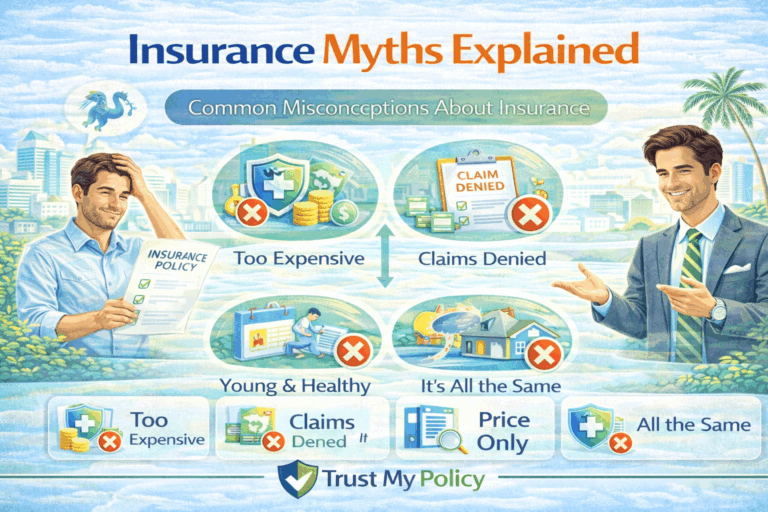
Many people misunderstand how insurance works. These misunderstandings can lead to poor financial decisions.
Thinking Insurance Is Only for Emergencies
Insurance is not just about emergencies. It is part of long-term financial planning.
Assuming Insurance Is Too Expensive
Some people avoid insurance because they think premiums are too high. However, the financial impact of an uninsured loss can be much greater.
Believing Young People Do Not Need Insurance
Unexpected events can affect anyone regardless of age. Early coverage can sometimes provide long-term financial advantages.
Ignoring Policy Details
Insurance policies include specific terms, coverage limits, and exclusions. Understanding these details is important.
Frequently Asked Questions
What is the main purpose of insurance?
The main purpose of insurance is to provide financial protection against unexpected losses or risks.
Why is insurance important for families?
Insurance helps families maintain financial stability during unexpected events such as illness, accidents, or loss of income.
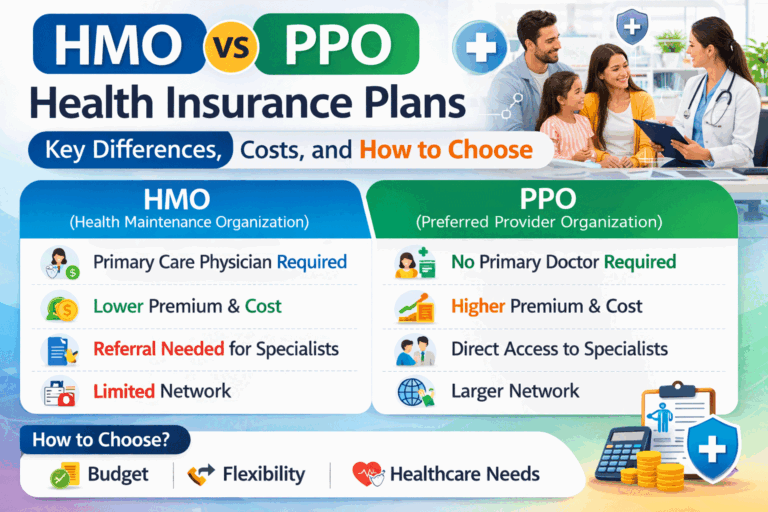
What are the most common types of insurance?
Common types include:
-
Health insurance
-
Life insurance
-
Motor insurance
-
Property insurance
-
Travel insurance
Can insurance prevent financial loss completely?
Insurance may reduce financial losses but does not eliminate all risks. Coverage depends on policy terms and limits.
Is insurance necessary for everyone?
While not every type of insurance is required for everyone, many forms of insurance help individuals manage financial risks effectively.
How does insurance help businesses?
Businesses use insurance to protect assets, employees, and operations from financial risks such as liability claims or property damage.
What happens if someone does not have insurance?
Without insurance, individuals must handle unexpected financial losses on their own, which can significantly affect savings and financial stability.
Conclusion
Insurance plays a vital role in protecting individuals, families, and businesses from financial uncertainty. By transferring financial risks to insurance providers, people can better manage unexpected events such as accidents, health emergencies, or property damage.
Understanding why insurance is important helps individuals make better financial decisions and build stronger long-term financial plans.
Insurance does not eliminate risk completely, but it can significantly reduce the financial impact of many unexpected situations. When used as part of a broader financial strategy, insurance contributes to stability, security, and peace of mind.
Learning about insurance and evaluating personal needs carefully can help individuals choose appropriate protection for their circumstances.
Disclaimer
Disclaimer: This article is for educational purposes only. Trust My Policy is an independent informational platform and does not sell insurance products or represent any insurance provider. Readers should consult official policy documents or licensed professionals for personalized advice.