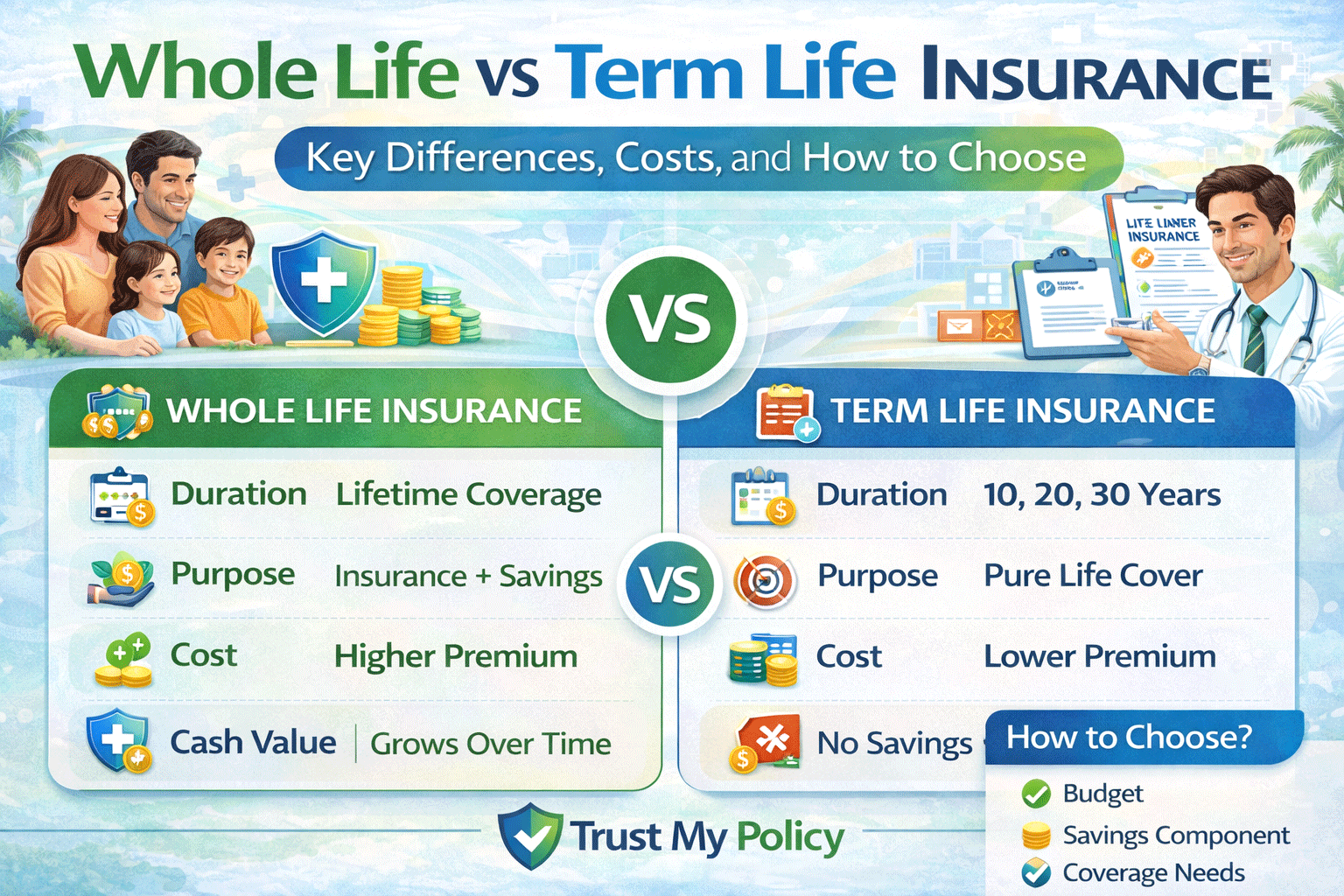
Choosing the right life insurance policy is an important financial decision. Many people compare whole life vs term life insurance to understand which option provides better protection for their family. Both types offer a death benefit, but they work very differently in terms of duration, cost, flexibility, and long-term value.
Term life insurance provides coverage for a specific number of years, such as 10, 20, or 30 years. Whole life insurance provides lifelong coverage and includes a savings component known as cash value. Because of these structural differences, premiums, benefits, and long-term financial impact vary significantly.
Understanding these differences can help you choose coverage that aligns with your goals — whether that is protecting young children, covering a mortgage, planning an estate, or building long-term financial stability.
This detailed guide explains whole life vs term life insurance in simple language. You will find comparison tables, definitions, pros and cons, real-life examples, common mistakes, FAQs, and practical insights to help you make an informed decision.
Whole Life vs Term Life Insurance
| Feature | Term Life Insurance | Whole Life Insurance |
|---|---|---|
| Coverage Duration | Fixed term (10–30 years) | Lifetime coverage |
| Premium Cost | Lower | Higher |
| Cash Value | No | Yes |
| Investment Component | No | Yes (cash value grows) |
| Simplicity | Simple | More complex |
| Best For | Temporary needs | Long-term financial planning |
| Flexibility | Limited | More structured |
What Is Term Life Insurance?
Term life insurance provides coverage for a specific period, known as the term. If the insured person passes away during the term, the beneficiary receives the death benefit. If the term ends and the policy is not renewed, coverage stops.
Key Features of Term Life Insurance
-
Fixed coverage period (10, 20, 30 years, etc.)
-
Lower premiums compared to whole life
-
No cash value accumulation
-
Pure insurance protection
-
Simple and easy to understand
How Term Life Insurance Works
-
You choose a coverage amount.
-
You select a term length.
-
You pay regular premiums.
-
If death occurs during the term, beneficiaries receive payout.
-
If you outlive the term, policy expires unless renewed.
Choosing the right insurance coverage requires understanding different policy types, benefits, and financial protection options available to policyholders. Many readers compare multiple guides before selecting a plan so they can clearly evaluate premiums, claim procedures, and long‑term advantages. A useful resource to explore is Insurance Pricing Model, which explains how this insurance policy works, the key benefits it offers, and situations where it may be the most suitable option. By reviewing this guide, you can gain deeper insights into coverage features, eligibility requirements, and practical tips that help individuals and families make smarter insurance decisions.
What Is Whole Life Insurance?
Whole life insurance is a type of permanent life insurance that provides coverage for your entire lifetime, as long as premiums are paid. It also builds cash value over time.
Key Features of Whole Life Insurance
-
Lifetime coverage
-
Fixed premiums
-
Guaranteed death benefit
-
Cash value accumulation
-
Potential dividend payments (in some policies)
How Whole Life Insurance Works
-
You choose coverage amount.
-
Premium remains fixed.
-
Part of premium goes to insurance cost.
-
Part builds cash value.
-
Cash value grows over time.
-
Beneficiaries receive death benefit upon death.
Detailed Comparison Table: Whole Life vs Term Life Insurance
| Criteria | Term Life | Whole Life |
|---|---|---|
| Duration | Temporary | Lifetime |
| Premium Cost | Affordable | Expensive |
| Cash Value | None | Yes |
| Investment Growth | No | Yes (guaranteed growth) |
| Complexity | Simple | More complex |
| Loan Option | No | Yes (borrow against cash value) |
| Estate Planning Use | Limited | Common |
| Coverage End | At term end | When insured passes away |
| Best For | Income replacement | Wealth transfer |
Cost Differences Explained
Term Life Insurance Cost
-
Lower premiums
-
Ideal for budget-conscious individuals
-
Larger coverage amounts affordable
Whole Life Insurance Cost
-
Higher premiums
-
Long-term commitment
-
Includes savings element
Premium differences can be significant. Whole life policies may cost several times more than term policies for the same coverage amount.
Cash Value in Whole Life Insurance
Cash value is a savings component that:
-
Grows over time
-
Accumulates tax-deferred
-
Can be borrowed against
-
May reduce death benefit if unpaid
Term life insurance does not build cash value.
Pros and Cons of Term Life Insurance
Advantages
-
Lower cost
-
Easy to understand
-
Higher coverage for lower premium
-
Good for temporary financial needs
Disadvantages
-
No cash value
-
Coverage expires
-
Premium may increase if renewed
-
No lifelong protection
Choosing the right insurance coverage requires understanding different policy types, benefits, and financial protection options available to policyholders. Many readers compare multiple guides before selecting a plan so they can clearly evaluate premiums, claim procedures, and long‑term advantages. A useful resource to explore is Cheap Home Insurance Options, which explains how this insurance policy works, the key benefits it offers, and situations where it may be the most suitable option. By reviewing this guide, you can gain deeper insights into coverage features, eligibility requirements, and practical tips that help individuals and families make smarter insurance decisions.
Pros and Cons of Whole Life Insurance
Advantages
-
Lifetime coverage
-
Fixed premium
-
Cash value growth
-
Can support estate planning
-
Predictable long-term structure
Disadvantages
-
High premiums
-
Lower initial return on investment
-
Complex structure
-
Long-term financial commitment
Real-Life Use Cases
Example 1: Young Parent with Mortgage
Needs coverage for 20 years while children grow up.
Best option: Term life
Reason: Affordable coverage during high responsibility years.
Example 2: Estate Planning Focus
Individual wants to leave guaranteed inheritance.
Best option: Whole life
Reason: Permanent death benefit and predictable payout.
Example 3: Business Owner
Needs coverage to protect business loan.
Best option: Term life for loan duration.
Example 4: High Net-Worth Individual
Wants tax-efficient wealth transfer.
Whole life may support long-term planning.
When Term Life Insurance Is Often Suitable
-
Young families
-
Mortgage protection
-
Income replacement
-
Temporary financial obligations
-
Budget-sensitive buyers
When Whole Life Insurance Is Often Suitable
-
Long-term estate planning
-
Wealth transfer goals
-
Lifetime financial protection
-
Stable long-term income
-
Individuals comfortable with higher premiums
Choosing the right insurance coverage requires understanding different policy types, benefits, and financial protection options available to policyholders. Many readers compare multiple guides before selecting a plan so they can clearly evaluate premiums, claim procedures, and long‑term advantages. A useful resource to explore is Insurance Grace Period, which explains how this insurance policy works, the key benefits it offers, and situations where it may be the most suitable option. By reviewing this guide, you can gain deeper insights into coverage features, eligibility requirements, and practical tips that help individuals and families make smarter insurance decisions.
Common Mistakes and Misunderstandings
1. Thinking Term Life Is Wasted Money
Term life provides protection during high-risk financial years.
2. Assuming Whole Life Is an Investment Replacement
Whole life includes savings, but it is primarily insurance.
3. Ignoring Budget Limits
High premiums can strain finances long-term.
4. Not Reviewing Coverage Needs
Life changes require policy reassessment.
5. Believing One Option Is Always Better
Both serve different purposes.
Frequently Asked Questions (FAQs)
1. Is term life insurance cheaper than whole life?
Yes, term life generally has much lower premiums.
2. Does whole life insurance expire?
No, it provides lifetime coverage as long as premiums are paid.
3. Can I convert term to whole life?
Some term policies offer conversion options.
4. What happens when term ends?
Coverage stops unless renewed or converted.
5. Can I borrow from whole life policy?
Yes, you can borrow against cash value.
6. Which policy builds savings?
Whole life builds cash value; term does not.
7. Which is better for young families?
Term life is often more affordable for temporary needs.
Whole Life vs Term Life: Quick Decision Guide
Choose Term Life If:
-
You want affordable coverage.
-
You need protection for specific years.
-
You want higher coverage at lower cost.
Choose Whole Life If:
-
You want lifetime protection.
-
You prefer predictable premiums.
-
You want a cash value component.
-
Estate planning is important.
Key Differences at a Glance
-
Term = temporary protection.
-
Whole life = permanent protection.
-
Term = lower premium.
-
Whole life = higher premium + savings.
-
Term = simple.
-
Whole life = structured and long-term.
Conclusion
Understanding whole life vs term life insurance helps you align your financial protection with your life stage and long-term goals. Term life insurance offers affordable, temporary coverage ideal for income replacement and major financial responsibilities. Whole life insurance provides lifelong protection with a cash value component, supporting estate planning and long-term financial stability.
There is no universal “best” option. The right choice depends on your age, budget, family needs, and financial objectives. Carefully reviewing your goals and understanding how each policy works can help you select coverage that protects your loved ones while supporting your broader financial plan.
Choosing the right insurance coverage requires understanding different policy types, benefits, and financial protection options available to policyholders. Many readers compare multiple guides before selecting a plan so they can clearly evaluate premiums, claim procedures, and long‑term advantages. A useful resource to explore is Insurance Coverage for Startups, which explains how this insurance policy works, the key benefits it offers, and situations where it may be the most suitable option. By reviewing this guide, you can gain deeper insights into coverage features, eligibility requirements, and practical tips that help individuals and families make smarter insurance decisions.
Disclaimer: This article is for educational purposes only. Trust My Policy is an independent informational platform and does not sell insurance products or represent any insurance provider. Readers should consult official policy documents or licensed professionals for personalized advice.
Leave a Reply