
What Is the Waiting Period in Insurance?
Raj bought private health insurance in January. In March, he needed surgery on a knee problem he’d had mild symptoms of the previous year. His insurer declined the claim. He was confused — he was paying, he was covered, so why was he being refused? The answer: the waiting period. His policy excluded conditions he’d had symptoms of in the last five years for the first two years. His claim fell inside that exclusion window.
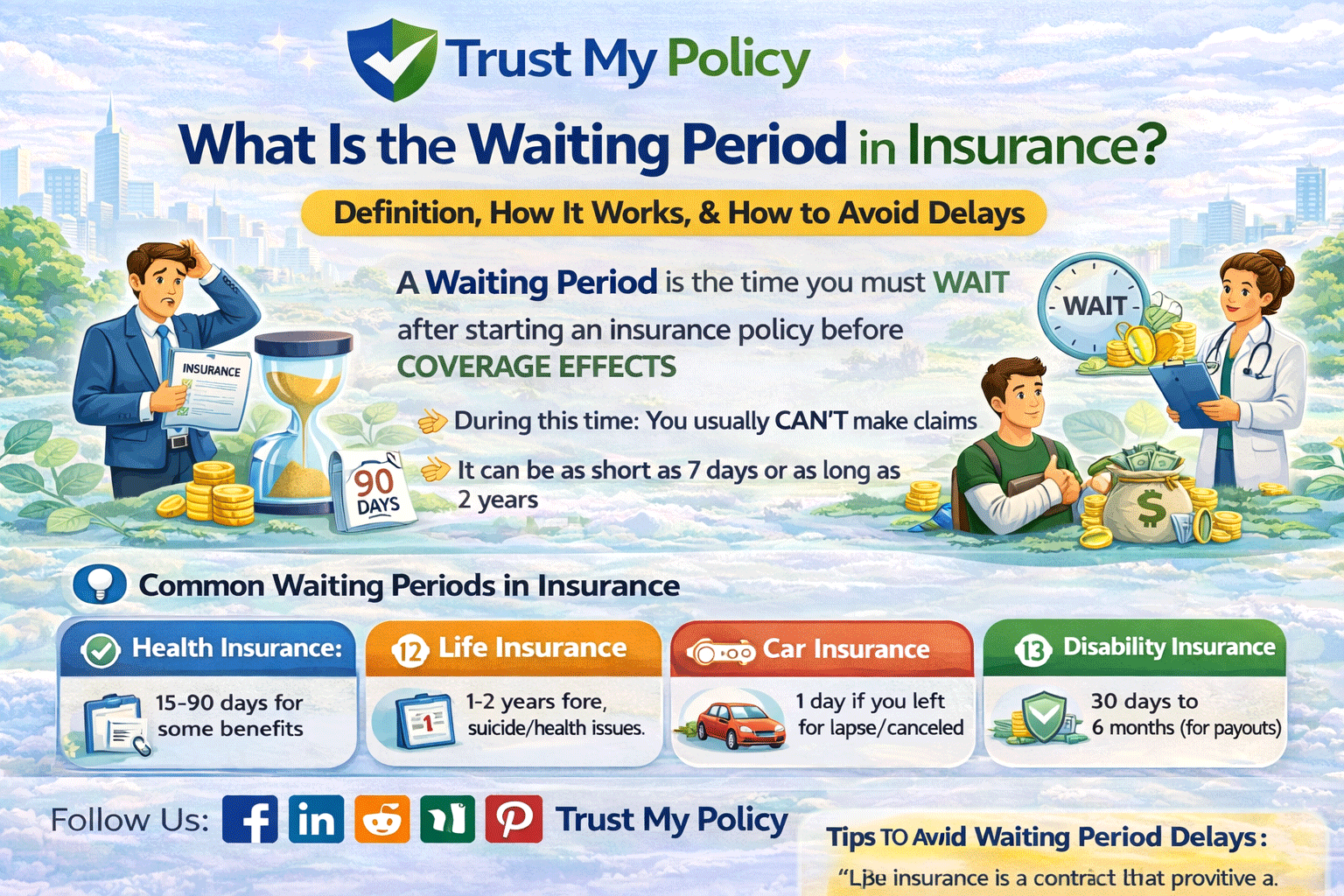
A waiting period in insurance is a defined length of time at the start of your policy — or after a qualifying event — during which certain claims are not paid. It is one of the most misunderstood features of any insurance policy, and one of the most common reasons for claim disputes.
This guide explains exactly what a waiting period is, why insurers use them, how they work across different types of insurance (health, life, dental, disability), and what you can do to minimise their impact on your cover.
What Is a Waiting Period in Insurance?
A waiting period in insurance is a set period of time that must pass after your policy starts (or after a triggering event) before certain coverage takes effect or before you can make a claim on specific conditions. During a waiting period, you are still paying premiums, but the coverage for the affected condition or benefit is not yet active.
Think of it as a probationary period. The insurer is covering you — but not for everything yet. The waiting period exists so that people cannot sign up for insurance specifically because they already know they need it, make an immediate claim, and cancel. Without waiting periods, this ‘adverse selection’ would make insurance unaffordable for everyone.
Waiting periods exist across virtually every type of insurance, but they work differently depending on the product. The length, what they apply to, and how they can be bypassed varies significantly.
Why Do Insurers Have Waiting Periods?
Insurance is built on the principle that many people pool their premiums to cover the losses of the few who experience unexpected events. Waiting periods protect the integrity of this model in three ways:
- Preventing adverse selection: Without a waiting period, someone diagnosed with a serious illness could buy insurance on Monday, make a claim on Tuesday, and cancel the policy after it pays out. This would make premiums unaffordable for healthy policyholders.
- Distinguishing pre-existing from new conditions: For health and life insurance, the waiting period is the mechanism that separates conditions you had before joining from conditions that genuinely arise after you’re covered.
- Managing risk at policy inception: The earliest period of any policy is the riskiest for an insurer. Waiting periods allow the insurer to manage concentrated early-period risk.
Types of Waiting Periods by Insurance Type
1. Health Insurance Waiting Periods (UK — Private Medical Insurance)
In UK private medical insurance (PMI), the waiting period is linked to the underwriting method chosen at the start of the policy:
| Underwriting Type | How the Waiting Period Works | Duration |
| Moratorium underwriting (most common — ~95% of UK policies) | Any condition you had symptoms of, treatment for, or sought advice about in the 5 years before your policy started is automatically excluded for an initial period. If you remain free of symptoms, treatment, and advice for that condition for 2 continuous years after your policy starts, it may then become eligible for cover. | 5-year ‘look-back’ exclusion; 2-year symptom-free period before coverage can begin |
| Full medical underwriting (FMU) | You declare your full medical history upfront. The insurer provides a written list of exclusions — some permanent, some time-limited. No standard time-based waiting period for new conditions. | No time-based wait for new conditions; specific exclusions defined upfront |
| New conditions (both underwriting types) | Any entirely new acute condition that develops after your policy starts is covered from day one — there is no general waiting period for brand-new conditions. | Zero — immediate coverage |
| ⚠️ The Moratorium Clock Resets
Under moratorium underwriting, if you seek any advice, treatment, medication, or experience any symptom related to an excluded condition during the 2-year period, the 2-year clock resets to zero from that date. A single GP visit about a related condition can restart the entire waiting period. |
2. Health Insurance Waiting Periods (USA — ACA and Group Plans)
Under the Affordable Care Act (ACA), health insurance sold through the Marketplace cannot impose waiting periods for pre-existing conditions — all conditions are covered from day one, regardless of history. This applies to individual market plans and group employer plans.
The one exception: employer group plan waiting periods. Employers can require new employees to wait up to 90 days before becoming eligible for the employer-sponsored health plan. This is a waiting period for eligibility, not for conditions — once you’re eligible, all conditions are covered immediately. This 90-day maximum is set by the ACA.
| Plan Type | Pre-Existing Condition Waiting Period | Eligibility Waiting Period |
| ACA Marketplace plan (USA) | None — pre-existing conditions covered from day one | None — enrol during open enrollment or SEP; immediate cover |
| Employer group plan (USA) | None — all conditions covered once eligible | Up to 90 days from date of hire (ACA maximum) |
| Short-term health plan (USA — NOT ACA-compliant) | Pre-existing conditions typically excluded entirely | None — can enrol year-round; immediate coverage for new conditions |
| UK private medical insurance (moratorium) | 5-year look-back; 2-year symptom-free wait per excluded condition | None |
| UK private medical insurance (FMU) | No time-based wait; specific written exclusions from day one | None |
3. Life Insurance Waiting Periods
Life insurance waiting periods operate differently in the UK vs the USA, and they depend on the type of policy:
Term life (UK and USA): Standard term life insurance has no waiting period for most causes of death. If you die in a car accident on day two of your policy, the death benefit is paid (provided you were honest in your application). The exception is suicide — most UK and US term life insurers apply a 12–24 month exclusion for suicide at the start of a policy.
Guaranteed issue whole life (USA) and Over 50s plans (UK): These no-medical-exam policies almost universally include a 2-year graded death benefit period. If you die within the first 2 years of the policy for any reason other than accidental death, your beneficiaries receive only your premiums back plus interest (typically 10%), not the full death benefit. This is the trade-off for guaranteed acceptance with no health questions.
| Policy Type | Waiting Period | What’s Paid During Wait |
| Standard term life (UK and USA) | None for most causes of death | Full death benefit from day one |
| Standard term life — suicide clause | 12–24 months (varies by insurer and state/country) | Usually premiums returned; full benefit after exclusion period ends |
| Guaranteed issue whole life / Over 50s plan | 2 years (graded death benefit) | Premiums + 10% interest if death in years 1–2; full benefit after |
| Simplified issue whole life | Some: 2-year graded; some: immediate full benefit (check policy) | Varies — always ask upfront |
4. Dental Insurance Waiting Periods (USA)
US dental insurance is notable for having among the longest waiting periods in the insurance market. Standard dental plans typically apply:
| Service Category | Typical Waiting Period | Notes |
| Preventive (cleanings, exams, X-rays) | None — covered immediately | No wait on any plan; always compare this category first |
| Basic restorative (fillings, extractions) | 3–6 months | Waived on some plans if you have prior continuous coverage |
| Major restorative (crowns, bridges, dentures) | 6–12 months | The most impactful wait — can delay urgent treatment for nearly a year |
| Orthodontics (braces) | 12 months | Almost universal on standard plans; some plans exclude entirely |
| Implants | 12 months (many plans exclude entirely) | Spirit Dental and some others waive; check explicitly |
The most effective way to bypass dental waiting periods is to provide proof of continuous prior dental coverage (a Certificate of Creditable Coverage from your previous insurer). Delta Dental, Humana, and several others will waive waiting periods for new members who can show 12 months of uninterrupted prior coverage.
5. Disability / Income Protection Waiting Periods
In disability and income protection insurance, the waiting period is often called the elimination period or deferral period. It is the length of time you must be continuously unable to work before benefit payments begin.
| Elimination/Deferral Period | Typical Monthly Premium Impact | Best For |
| 4 weeks (UK) / 30 days (USA) | Highest premium | Those with no savings buffer; most immediate protection |
| 8–13 weeks (UK) / 60–90 days (USA) | Moderate premium | Most common choice; assumes some short-term savings cover the initial gap |
| 26 weeks (UK) / 180 days (USA) | Significantly lower premium | Those with 6 months’ savings or employer sick pay covering the gap |
| 52 weeks (UK) / 365 days (USA) | Lowest premium | Those with substantial savings or very long employer sick pay arrangements |
The elimination period is the most direct lever for controlling income protection premium costs. A self-employed person with 3 months of savings might choose a 13-week deferral period — the policy only kicks in after 13 weeks of being unable to work, but the premium is significantly lower than a 4-week deferral.
Waiting Periods vs Exclusions: What’s the Difference?
These two terms are often confused. They are related but distinct:
| Term | Definition | Example | Can It Be Overcome? |
| Waiting period | A time-based restriction on coverage — temporary by nature | 2-year moratorium on a pre-existing knee condition under UK PMI | Yes — by waiting out the period without symptoms or treatment |
| Exclusion | A condition, event, or circumstance permanently removed from coverage | War exclusion on most life insurance; cosmetic treatment on health insurance | Generally no — exclusions are typically permanent |
| Graded benefit | A phased payout structure during a waiting period | Guaranteed issue life insurance pays premiums + interest in years 1–2, full benefit after | No — this is the policy design |
How to Minimise the Impact of Waiting Periods
For Health Insurance
- Apply when healthy — moratorium underwriting treats you best when you have no recent medical history. Each year without a significant health event reduces the number of conditions under the moratorium.
- Use full medical underwriting (FMU) if you want day-one clarity — you’ll receive a written list of exclusions immediately rather than discovering exclusions at claim time.
- Switch insurers with a continued medical exclusions (CME) request — when moving from group to individual PMI, ask the new insurer to carry over your existing moratorium terms so the 2-year clock continues rather than restarting.
For Life Insurance
- Standard term life insurance avoids the graded death benefit issue entirely. Choose this over guaranteed issue wherever your health allows.
- Be fully honest on your application — a claim denied due to misrepresentation is far worse than a higher premium from accurate disclosure.
For Dental Insurance
- Keep your Certificate of Creditable Coverage from your previous dental insurer when switching plans — this document can waive waiting periods.
- Look for plans marketed as ‘no waiting period’ — Spirit Dental, Humana Loyalty Plus, and Guardian Direct all waive waiting periods on basic and major work.
For Disability / Income Protection
- Match your elimination period to your savings buffer — if you have 3 months of living costs saved, a 13-week deferral period maximises savings without leaving you exposed.
- Check whether your employer provides sick pay and how long it lasts — set your deferral period to start where your employer sick pay ends.
4 Real Examples: Waiting Periods in Action
Example 1: Raj — PMI Moratorium, Knee Claim Denied
Raj bought UK PMI in January. He had mild knee symptoms in November the previous year — one GP visit. He applied in January under moratorium underwriting. In March, his knee worsened. The insurer reviewed his medical records, found the November GP visit, and denied the claim — the knee condition had been symptomatic within the 5-year look-back window, meaning it was excluded for 2 continuous symptom-free years from his policy start date. The claim fell inside that 2-year window.
Lesson: Under moratorium underwriting, the insurer assesses your history at claim time, not application time. Always consider FMU if you have any known conditions — you’ll get a written exclusion list upfront rather than a surprise at claim time.
Example 2: Claire — Dental Insurance, Crown Needed Week 3
Claire enrolled in a standard Delta Dental PPO plan in the USA. Three weeks later, a cracked molar required a crown. Her plan had a 12-month waiting period for major work. The crown cost $1,600. Her dental insurance paid nothing — the claim was inside the waiting period.
Lesson: If you know you need major dental work soon, research plans specifically marketed as ‘no waiting period for major services’ — Spirit Dental, Humana Loyalty Plus, and Guardian Direct Core all waive waiting periods on crowns. Alternatively, provide proof of 12 months of prior continuous dental coverage to have the waiting period waived.
Example 3: Ben — Income Protection, 4-Week vs 13-Week Deferral
Ben is a self-employed IT contractor earning £5,000/month. He’s comparing income protection policies. A 4-week deferral costs £42/month; a 13-week deferral costs £28/month. He has £18,000 in savings (approximately 3.6 months of living costs). He chooses the 13-week deferral — his savings cover the first 13 weeks, and the policy kicks in from week 14.
Lesson: Choosing a longer elimination period is not riskier if your savings buffer matches it. Ben saves £168/year in premiums while still being fully protected from week 14 onward.
Example 4: Patricia — Guaranteed Issue Life, 2-Year Graded Benefit
Patricia, 68, bought a $25,000 guaranteed issue whole life policy in March 2024. She passed away in September 2025 — 18 months into the policy. The cause of death was natural causes. Her beneficiary received: all premiums paid ($2,520 total) plus 10% interest ($252). Total: $2,772 — not the $25,000 face value. The 2-year graded benefit period had not been completed.
Lesson: The graded death benefit on guaranteed issue life insurance is not theoretical — it affects real families. If you’re considering guaranteed issue, understand that full coverage only begins after 2 complete years from the policy start date. If immediate full coverage is essential, explore simplified issue policies that offer day-one full benefit (subject to answering health questions).
Frequently Asked Questions
What is a waiting period in insurance?
A waiting period in insurance is a defined length of time after your policy starts (or after a qualifying event) during which certain claims are not payable. You continue paying premiums during the waiting period, but coverage for specific conditions or benefits is not yet active. Waiting periods are used to prevent adverse selection — people buying insurance specifically to make an immediate claim — and to distinguish pre-existing conditions from new ones.
Does a waiting period mean I’m not covered at all?
No — a waiting period is usually specific to certain conditions or benefit types, not your entire policy. For example, under UK PMI moratorium underwriting, entirely new conditions that develop after your policy starts are covered from day one. Only conditions with history in the previous 5 years are subject to the 2-year waiting period. Similarly, ACA-compliant US health plans cover all conditions from day one — only employer eligibility waiting periods (up to 90 days) apply.
How long is a typical insurance waiting period?
Waiting period lengths vary by insurance type: UK private health insurance moratorium: 2 years (for pre-existing conditions to potentially become covered). US employer health plan eligibility wait: up to 90 days. US dental insurance major work: 6–12 months. Disability/income protection elimination period: 4 weeks to 52 weeks depending on what you choose. Guaranteed issue life insurance graded death benefit: 2 years. Standard term life insurance: no waiting period for most causes of death.
Can a waiting period be waived?
Sometimes. The most common situations where waiting periods are waived: (1) Dental insurance — providing proof of 12 months of prior continuous coverage to a new insurer; (2) UK PMI — using continued medical exclusions (CME) when switching insurers preserves moratorium progress; (3) Employer health plans (USA) — if you had prior qualifying coverage, you may be exempt from the employer’s waiting period under HIPAA portability rules; (4) Choosing full medical underwriting instead of moratorium eliminates the time-based wait but replaces it with written specific exclusions.
What is the difference between a waiting period and an exclusion?
A waiting period is temporary — it’s a time-based restriction that can expire, allowing a condition to become covered after the period passes (provided you meet conditions like being symptom-free). An exclusion is typically permanent — it removes a specific condition, activity, or circumstance from coverage entirely regardless of how long you’ve been on the policy. A diabetic’s diabetes may be permanently excluded from a PMI policy; the waiting period on an unrelated condition they had 3 years ago might expire after 2 symptom-free years.
Key Takeaways
- A waiting period is a time-based restriction on coverage — you’re still paying premiums, but certain claims won’t be paid until the period ends.
- UK private health insurance (moratorium): 5-year look-back period; 2-year symptom-free wait before a pre-existing condition can become covered. New conditions: covered immediately.
- US ACA health plans: no waiting period for pre-existing conditions. Employer plans: up to 90-day eligibility wait (not condition-based).
- Guaranteed issue life insurance: 2-year graded death benefit — only premiums + interest paid in the first 2 years, not the full face value.
- Dental insurance: typically no wait for preventive care; 6–12 months for major work (crowns, bridges). Waived with proof of prior continuous coverage.
- Income protection elimination period: your choice of deferral (4 weeks to 52 weeks) — longer waits mean lower premiums; match to your savings buffer.
To understand how waiting periods apply in health insurance specifically, see our cheap private health insurance UK no waiting period guide. For life insurance without a waiting period, our no medical exam life insurance under 50k policy guide covers simplified and guaranteed issue options.
| 📋 Disclaimer
This article is for informational purposes only and does not constitute financial or insurance advice. Always consult a licensed insurance professional for guidance specific to your situation. TrustMyPolicy.com does not sell insurance products or represent any insurer. |