How Insurance Risk Works: A Simple Guide to Understanding Risk in Insurance
Insurance exists because life is unpredictable. Accidents, illnesses, natural disasters, and financial losses can happen at any time. To protect individuals and businesses from these unexpected events, insurance companies use a concept known as insurance risk.
Understanding how insurance risk works is important for anyone who buys insurance, files claims, or wants to understand how insurance pricing and coverage decisions are made. Risk is the foundation of the entire insurance system. Without risk assessment, insurers would not be able to calculate premiums, determine coverage eligibility, or manage financial stability.
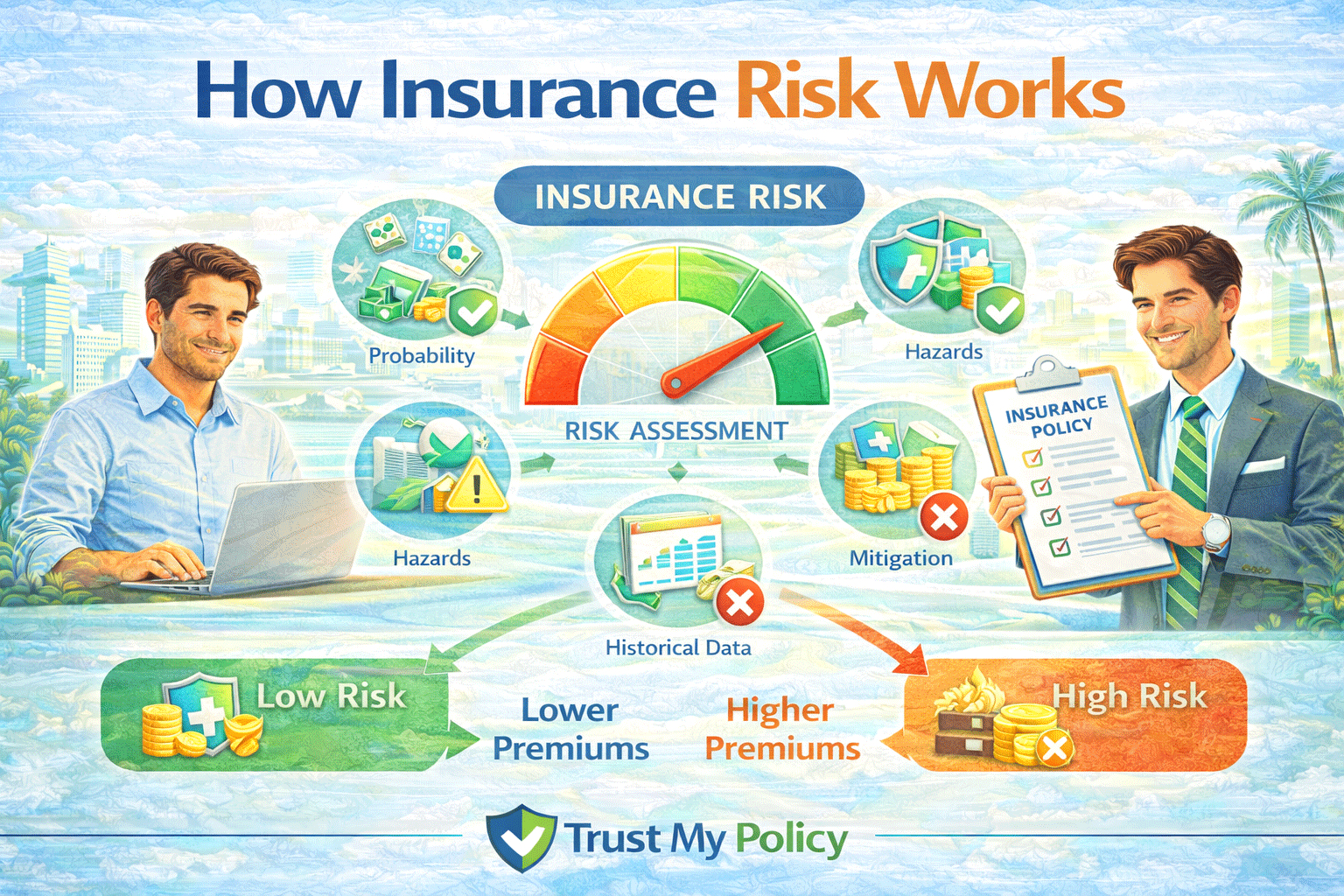
In simple terms, insurance risk refers to the probability that a loss will occur and the potential cost of that loss. Insurance companies analyze many factors to estimate risk levels before offering coverage. These factors may include age, health conditions, location, driving history, property conditions, and other variables.
This article explains how insurance risk works, why it matters, and how insurers evaluate and manage risk. You will also learn about different types of risk, common misunderstandings, and real-world examples that show how risk affects insurance decisions globally.
Key Concepts of How Insurance Risk Works
| Concept | Simple Meaning | Why It Matters |
|---|---|---|
| Insurance Risk | The chance that an insured event may occur | Determines premiums and coverage |
| Risk Assessment | Process of evaluating potential loss | Helps insurers decide eligibility |
| Risk Pooling | Many policyholders share potential losses | Reduces financial impact on individuals |
| Risk Pricing | Calculating the cost of coverage | Determines insurance premiums |
| Risk Management | Strategies used to reduce loss | Helps maintain insurer stability |
This quick summary provides a basic understanding of the core ideas behind insurance risk before exploring the topic in greater detail.
What Is Insurance Risk?
Insurance risk refers to the likelihood that a person, property, or business will experience a loss covered by an insurance policy.
In the insurance industry, risk is not viewed as something negative. Instead, it is something that can be measured, analyzed, and managed.
Insurance companies collect large amounts of data to understand patterns related to risk. Using statistical models and historical records, insurers estimate how often certain events occur and how expensive those events may be.
For example:
-
A person living in an area with frequent floods may represent a higher property risk.
-
A driver with multiple traffic violations may present higher auto insurance risk.
-
An older building may have greater fire or structural risk.
The higher the probability of loss, the higher the risk level.
Why Risk Is Important in Insurance
Insurance companies must maintain financial stability while providing coverage to millions of policyholders. Proper risk evaluation helps achieve this balance.
Risk analysis helps insurers:
-
Set fair premium prices
-
Avoid financial losses
-
Maintain sustainable insurance programs
-
Protect policyholders collectively
-
Predict future claims
Without risk analysis, insurance companies would not be able to operate effectively.
Types of Insurance Risk
Insurance risks can generally be divided into several categories depending on the nature of the potential loss.
1. Pure Risk
Pure risk involves situations where there are only two possible outcomes:
-
Loss
-
No loss
Examples include:
-
Fire damage
-
Natural disasters
-
Accidents
-
Illness
Pure risks are typically insurable because they can be measured statistically.
2. Speculative Risk
Speculative risk involves the possibility of:
-
Loss
-
Gain
-
No change
Examples include:
-
Investments
-
Business ventures
-
Stock market activities
Insurance companies usually do not cover speculative risks because the outcome may involve profit rather than loss.
3. Personal Risk
Personal risk relates to events that affect an individual’s health, life, or income.
Examples include:
-
Disability
-
Medical expenses
-
Premature death
-
Loss of employment income
Many personal insurance policies are designed to protect individuals against these risks.
4. Property Risk
Property risk involves potential damage or loss of physical assets.
Examples include:
-
Homes
-
Vehicles
-
Buildings
-
Equipment
Property risks may result from fire, theft, weather events, or accidents.
5. Liability Risk
Liability risk occurs when a person or business is legally responsible for injury or damage caused to others.
Examples include:
-
Car accidents causing injuries
-
Business negligence
-
Property damage caused to another person
Liability insurance helps cover legal and compensation costs.
How Insurance Companies Evaluate Risk
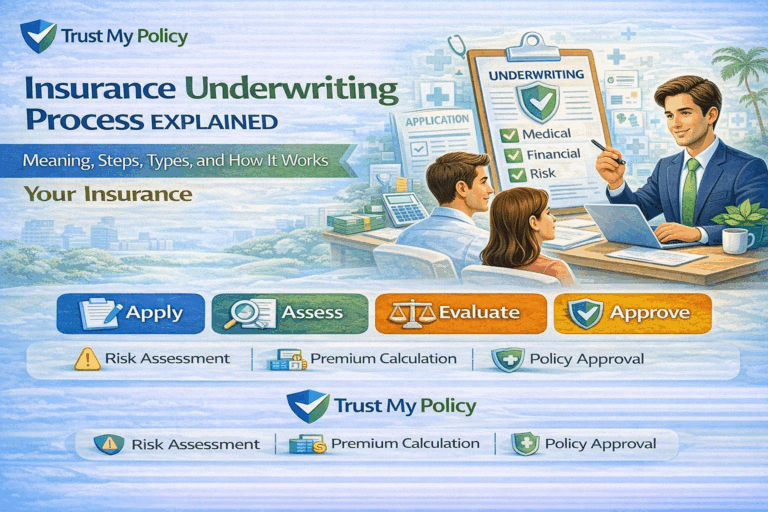
Insurance companies use a process called underwriting to evaluate risk.
Underwriters review many factors to estimate how likely a loss may occur.
Common evaluation factors include:
Personal Factors
-
Age
-
Occupation
-
Health history
-
Lifestyle habits
Location Factors
-
Climate risks
-
Crime rates
-
Natural disaster exposure
Asset Factors
-
Property condition
-
Vehicle safety features
-
Construction quality
Historical Data
-
Previous claims
-
Insurance history
-
Driving records
By analyzing these factors, insurers determine whether to approve coverage and what premium to charge.
Detailed Comparison Table: Insurance Risk Factors
| Risk Factor | What It Measures | Example | Impact on Insurance |
|---|---|---|---|
| Age | Risk probability based on age group | Younger drivers | May increase premiums |
| Location | Geographic risk exposure | Flood zones | May require higher premiums |
| Health Status | Medical risk level | Chronic illness | May affect life or health insurance |
| Property Condition | Structural safety of assets | Old wiring | May increase property risk |
| Driving History | Accident or violation records | Multiple tickets | May increase auto insurance costs |
| Claims History | Previous insurance claims | Frequent claims | May affect eligibility |
This comparison helps illustrate how different factors influence insurance risk assessment.
How Risk Pooling Works in Insurance
Risk pooling is one of the most important principles in insurance.
Instead of one person paying the full cost of a loss, many policyholders contribute premiums into a shared pool.
When a covered loss occurs, the funds from this pool help pay the claim.
Example:
-
10,000 policyholders pay premiums
-
Only a small number experience losses
-
The pooled funds cover those losses
This system allows insurance to remain affordable and sustainable.
Risk Pricing: How Premiums Are Calculated
Insurance premiums are calculated based on estimated risk levels.
Several components influence pricing:
-
Probability of loss
-
Expected claim cost
-
Administrative expenses
-
Risk margin
-
Regulatory requirements
Higher risk generally leads to higher premiums because the insurer expects a greater chance of paying claims.
Lower risk may result in lower premiums.
Pros and Cons of Risk-Based Insurance Systems
Advantages
-
Helps maintain financial stability in insurance markets
-
Allows fair pricing based on risk level
-
Encourages safer behavior
-
Supports long-term sustainability of insurance programs
-
Helps insurers predict future losses
Disadvantages
-
Higher-risk individuals may face expensive premiums
-
Some people may struggle to obtain coverage
-
Risk assessments may change over time
-
Data accuracy affects risk evaluation
Despite these challenges, risk-based pricing remains essential to the insurance industry.
Real-Life Examples of Insurance Risk
Example 1: Auto Insurance Risk
A driver with a clean driving history typically represents lower risk compared to someone with multiple accidents.
Because of this:
-
Lower-risk drivers may pay lower premiums
-
Higher-risk drivers may pay higher premiums
Example 2: Home Insurance Risk
A house located in a hurricane-prone area may have higher property risk compared to one in a low-risk region.
Insurance companies consider:
-
Weather history
-
Construction quality
-
Proximity to emergency services
These factors influence coverage decisions.
Example 3: Health Insurance Risk
Health insurers evaluate medical risk based on factors such as:
-
Age
-
Lifestyle
-
Medical conditions
-
Family health history
These elements help estimate potential healthcare costs.
Common Mistakes or Misunderstandings About Insurance Risk
Many people misunderstand how insurance risk works.
Here are some common misconceptions.
Risk Means Insurance Will Always Deny Coverage
Risk evaluation does not automatically mean coverage denial. It simply helps insurers determine pricing and eligibility.
Higher Premiums Mean Unfair Pricing
Premiums are usually based on statistical risk data rather than arbitrary decisions.
Insurance Covers Every Possible Risk
Insurance policies cover specific risks defined in the policy terms. Not all risks are included.
Risk Assessment Happens Only Once
Risk assessments may be reviewed periodically as circumstances change.
Frequently Asked Questions
What is insurance risk in simple terms?
Insurance risk refers to the probability that a covered loss or event may occur and the potential financial impact of that event.
Why do insurance companies assess risk?
Insurance companies assess risk to determine eligibility, calculate premiums, and maintain financial stability.
Can insurance risk change over time?
Yes. Risk levels may change due to age, lifestyle changes, property upgrades, or changes in location.
How do insurers reduce risk?
Insurers encourage risk reduction through safety requirements, inspections, and policy conditions.
What is risk pooling in insurance?
Risk pooling means many policyholders share the financial burden of potential losses by contributing premiums into a collective fund.
Does higher risk always mean higher premiums?
In most cases, yes. Higher risk often leads to higher premiums because insurers expect a greater chance of claims.
Is risk evaluation the same worldwide?
While the principles are similar globally, regulations and risk factors may vary between countries.
Conclusion
Understanding how insurance risk works helps individuals make better decisions about insurance coverage. Risk assessment allows insurance companies to predict losses, set fair premiums, and maintain financial stability.
Insurance operates on a system where many policyholders share the financial burden of potential losses. Through risk pooling, underwriting, and statistical analysis, insurers can provide protection against unexpected events.
While risk evaluation may sometimes lead to higher premiums or coverage restrictions, it is an essential part of maintaining a sustainable insurance system.
By understanding the principles of insurance risk, individuals can better interpret policy terms, assess their coverage needs, and reduce potential risks in their daily lives.
Disclaimer
Disclaimer: This article is for educational purposes only. Trust My Policy is an independent informational platform and does not sell insurance products or represent any insurance provider. Readers should consult official policy documents or licensed professionals for personalized advice.