
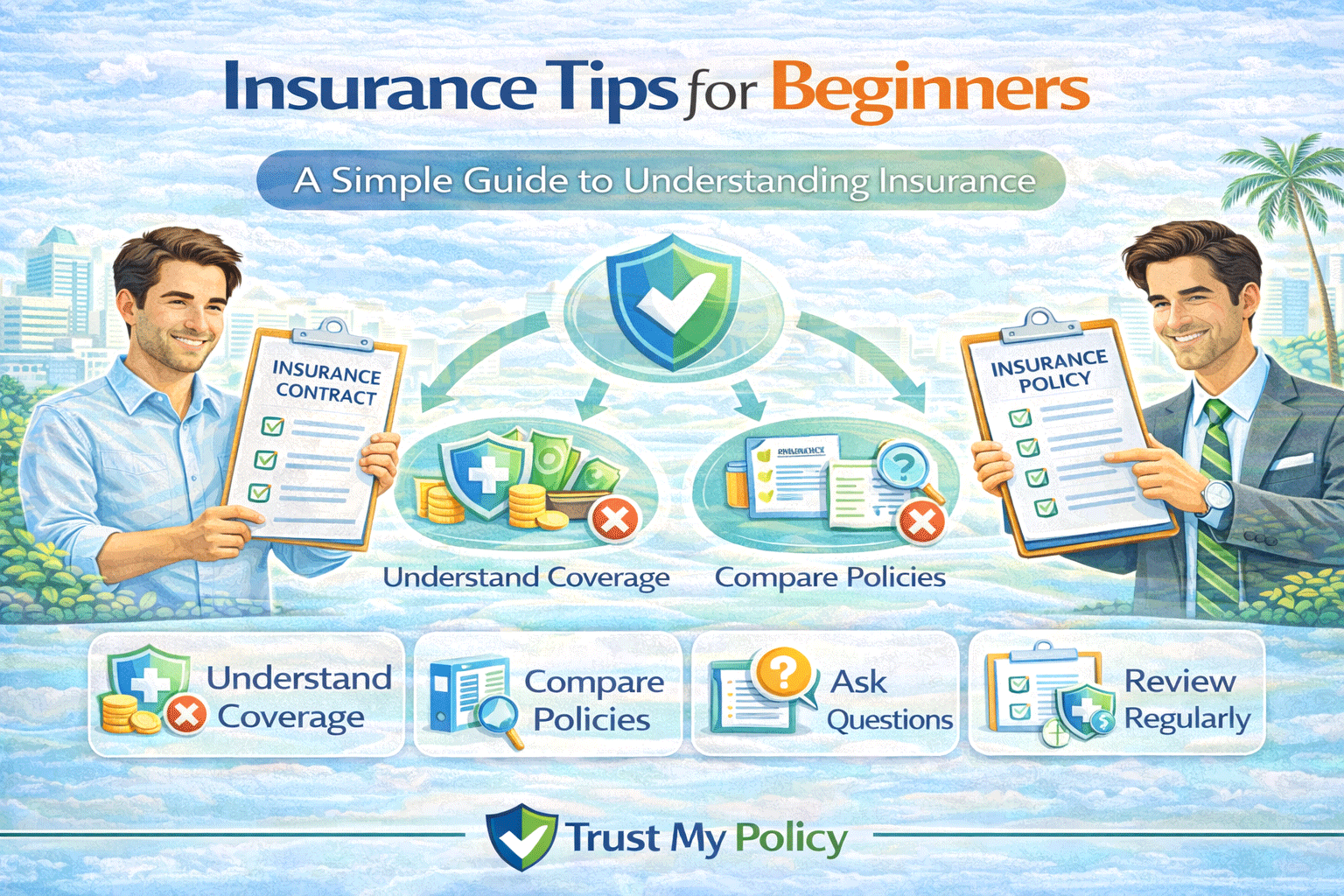
For beginners, the most important tips are: compare at least three quotes before buying, understand your deductible and coverage limits, prioritize liability protection, and review your policy annually. Following just these habits can save new buyers hundreds of dollars a year and prevent costly coverage gaps.
Olivia Tran, 23, bought her first car insurance policy in Seattle by accepting the first quote she saw online, never checking her deductible or liability limits. A year later, a minor fender-bender taught her she’d chosen a $1,000 deductible while believing she’d picked $250, costing her $750 more out of pocket than she expected.
Insurance Tips for Beginners in 2026 starts with a few core habits: always compare at least three quotes, read your deductible and coverage limits before buying, and prioritize liability protection over the cheapest premium. These small habits prevent the most expensive first-time mistakes new policyholders make. This guide walks through 10 practical tips every beginner should know before buying their first policy.
This article covers the foundational habits every first-time buyer needs, how to compare quotes properly, real beginner scenarios, and a clear checklist for your first purchase. By the end, you’ll know exactly what to do differently than most beginners.
| Feature | Details |
| What it is | A set of practical habits for first-time insurance buyers |
| Who needs this | Young adults, first-time renters, new drivers, and anyone buying their first policy |
| Typical first-policy cost | $50–$300/month combined for auto and renters insurance |
| Coverage to prioritize | Liability protection first, then property and health coverage |
| Key benefit | Avoiding the most expensive and common first-time buyer mistakes |
| Key limitation | Beginners often don’t know which questions to ask before buying |
| Regulator | State insurance departments (US); Financial Conduct Authority (UK) |
Buying your first policy can feel like assembling furniture with instructions in a language you don’t quite read — you can technically get through it, but you’ll likely get a few things backward. Most beginners focus entirely on the monthly price and skip the parts of the policy that actually matter most when something goes wrong.
Insurance tips for beginners are the practical, foundational habits that help first-time buyers choose coverage correctly: comparing quotes, understanding deductibles and limits, and prioritizing the types of protection that matter most. Anyone buying their first auto, renters, health, or life policy needs these basics before signing anything.
| Criteria | Doing It Right | The Common Beginner Approach |
| Quote comparison | At least three insurers compared | Accepting the first quote seen |
| Coverage understanding | Deductible and limits reviewed before buying | Price checked, details skipped |
| Priority | Liability coverage prioritized first | Cheapest premium prioritized first |
| Discounts | All available discounts requested | Discounts left unclaimed |
| Pros | Better protection at a fair price | Faster to buy, easier short-term |
| Cons | Takes more time upfront | Often costs far more at claim time |
We recommend doing it right for most readers because the extra 20–30 minutes spent comparing and reading details typically saves hundreds of dollars over the life of a policy.
Scenario 1: Olivia, 23, first-time car buyer in Seattle. Olivia accepted the first online quote without checking her deductible, then paid $750 more than expected after a minor accident. Verdict: skipping the details cost her real money on her very first claim. Action: Olivia switched insurers and confirmed her new $250 deductible in writing before signing.
Scenario 2: James, 25, first apartment renter in Manchester. James assumed renters insurance was optional and skipped it, then lost £3,000 in belongings to a burst pipe. Verdict: this is one of the most common and costly beginner mistakes. Action: James bought a £100-a-year contents policy the same week and now treats it as a fixed monthly cost.
Scenario 3: Maria, 28, freelancer buying her first health plan in Texas. Maria chose the cheapest Bronze plan without checking her subsidy eligibility, missing a tax credit that would have cut her premium by $150 a month. Verdict: skipping the subsidy check cost her significant savings. Action: Maria recalculated her income on HealthCare.gov and switched to a subsidized Silver plan.
Scenario 4: Tom, 30, buying his first life insurance policy after getting married. Tom almost skipped comparing quotes, assuming all term life pricing was similar, then found a 25% cheaper rate from a second insurer for identical coverage. Verdict: even simple products like term life vary meaningfully in price. Action: Tom locked in the cheaper policy and reviews pricing again every few years.
| Pros | Cons |
| Comparing quotes typically saves hundreds of dollars a year. | Takes more time than accepting the first available quote. |
| Understanding your deductible prevents claim-time financial surprises. | Policy language can still feel confusing even after reading carefully. |
| Prioritizing liability protects against the most financially damaging risks. | Liability-focused coverage may mean a higher premium upfront. |
| Asking about discounts often reduces your premium with no added effort. | Not all discounts are advertised clearly by every insurer. |
| Annual reviews catch better rates and changing needs early. | Requires remembering to actually revisit your policy each year. |
⚠️ WARNING: Never assume your deductible matches what you remember selecting. Always confirm the exact deductible amount in writing, since this single detail determines how much you’ll pay out of pocket at claim time.
| Your Situation | Our Recommendation |
| You’re buying your first car insurance policy | Yes — get three quotes and confirm your deductible before buying |
| You’re moving into your first rental | Yes — buy renters or contents insurance immediately, don’t assume it’s covered |
| You’re a freelancer buying your first health plan | Yes — check subsidy eligibility before choosing a plan tier |
| You just got married or had a child | Yes — get term life insurance now, while premiums are lowest |
| You’re unsure which discounts you qualify for | Yes — ask your insurer directly for a full discount list |
| You’ve had the same policy for years without reviewing it | Yes — compare new quotes at your next renewal |
| You’re tempted to skip liability coverage to save money | No — liability protects against the most financially damaging risks |
💡 TIP: The single golden rule for beginners: never judge a quote by price alone — always check the deductible, coverage limits, and liability protection before deciding.
| Scenario | Typical Monthly Cost | Notes |
| First-time auto insurance, young adult, full coverage | $150–$300 | Rates drop significantly with a few years of clean driving history |
| First renters insurance policy | $10–$20 | One of the cheapest, highest-value first policies a beginner can buy |
| First health plan, subsidized, lower income | $0–$150 | Subsidy eligibility can dramatically lower this cost |
| First term life policy, healthy 25-year-old | $15–$25 | Premiums are at their lowest when applying young and healthy |
| Switching insurers after comparison shopping | Often $20–$60/month savings | Common result of comparing at least three quotes |
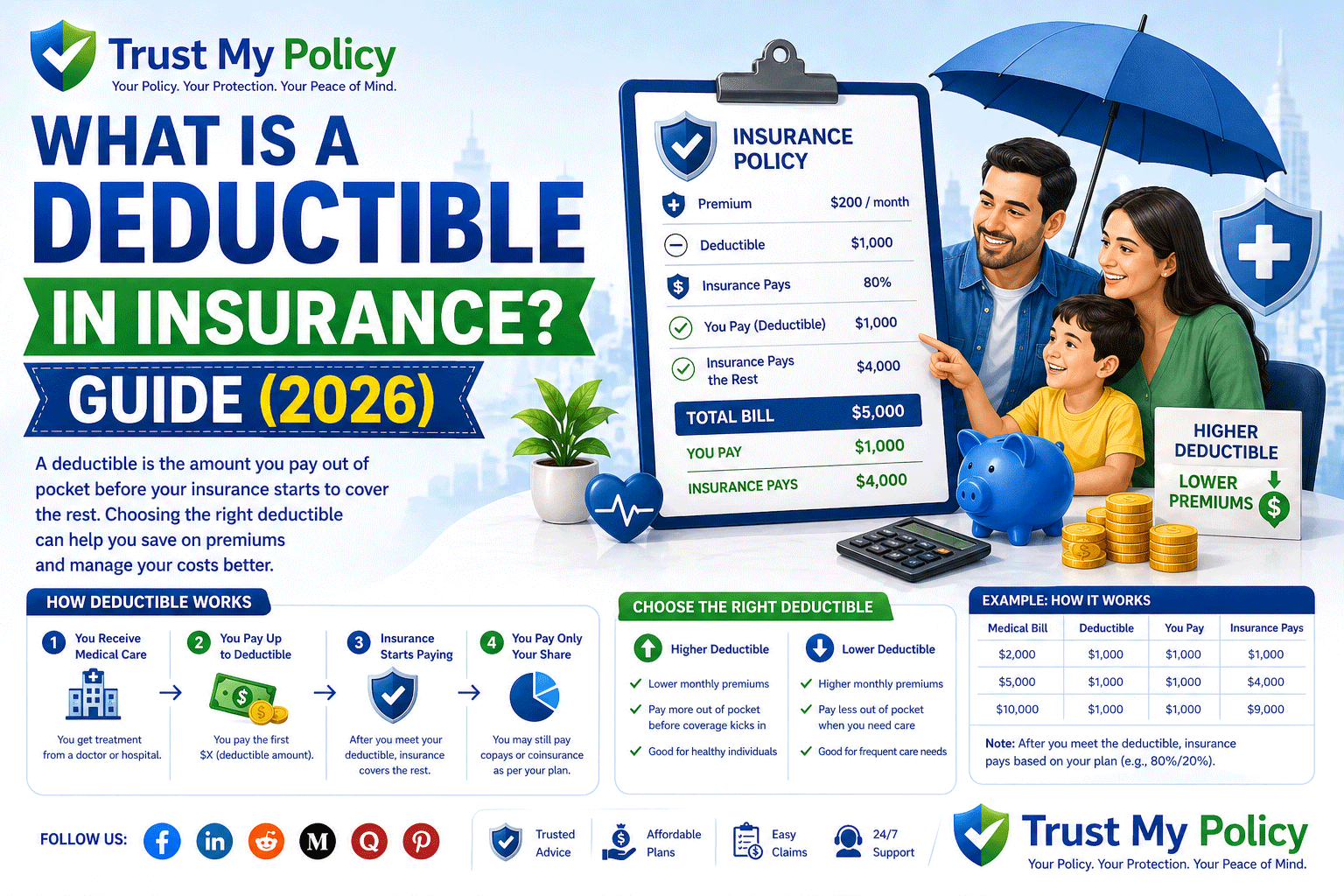
| Raising deductible from $250 to $1,000 | $10–$25/month savings | Lowers premium but increases out-of-pocket cost at claim time |
| Bundling auto and renters with one insurer | 5%–15% combined discount | Common multi-policy savings beginners often miss |
Policygenius (US) — A comparison platform built for first-time buyers comparing life, renters, and home insurance quotes side by side. Cost range: free to compare. Best for: US beginners wanting transparent, no-pressure comparisons. Rating: independently reviewed comparison service.
Compare the Market (UK) — A leading UK comparison site for first-time renters, drivers, and life insurance buyers. Cost range: free to compare. Best for: UK beginners wanting fast multi-carrier quotes. Rating: FCA-regulated comparison service.
GEICO — Known for straightforward online auto insurance quotes that are easy for first-time buyers to understand and compare. Cost range: competitive entry-level pricing. Best for: US first-time drivers. Rating: AM Best A++.
Lemonade — A digital-first renters and home insurer popular with younger, first-time buyers for its simple app-based process. Cost range: competitive, especially for renters. Best for: first-time renters in the US and UK. Rating: AM Best A-.
Your state insurance department or the Financial Conduct Authority — Both publish free, unbiased consumer guides specifically aimed at first-time insurance buyers. Cost range: free. Best for: beginners wanting neutral, non-sales-driven guidance. Rating: government regulatory resource.
We recommend starting with a comparison platform like Policygenius or Compare the Market as best overall because seeing multiple real quotes side by side is the fastest way to avoid a beginner’s most common mistake.
Beginners should compare at least three quotes, understand their deductible and coverage limits, and prioritize liability protection before choosing a policy based on price alone.
Aim for at least three quotes from different insurers for identical coverage, since pricing can vary significantly between companies for the same risk profile.
Yes. A landlord’s policy typically covers only the building itself, not a tenant’s personal belongings, making a separate renters policy essential for most first-time renters.
Liability coverage should generally come first, since lawsuits and other people’s losses can be far more financially damaging than your own property loss.
The best time is while you’re young and healthy, since premiums are lowest at this stage and only increase as you age.
Yes. Many discounts, like bundling, good student, or claims-free discounts, aren’t applied automatically, so it’s worth asking your insurer directly.
Compare your deductible against your actual savings; if you couldn’t comfortably pay it out of pocket today, it may be set higher than you can realistically afford.
Yes. Reviewing annually helps you catch better rates, new discounts, and changing coverage needs before they become expensive gaps.
Choosing a policy based on premium price alone, without checking the deductible, coverage limits, or exclusions that determine what you’ll actually receive at claim time.
Either can work well; a broker can help compare options for free, while buying directly works well if you’re comfortable comparing quotes yourself.
This guide reflects the latest 2026 insurance data.
This article is for informational purposes only. Always consult a licensed insurance professional before making coverage decisions. Trust My Policy does not sell insurance products or represent any insurer.

Jagadeesh Gutha is the founder of TrustMyPolicy.com, an independent insurance information platform covering life, health, car, home, and business insurance for US and UK readers. He researches insurance products, policy structures, and consumer rights to help everyday people make informed coverage decisions without the jargon. All content on TrustMyPolicy is independently researched, fact-checked, and written to educate — not to sell.



Insurance Guides for UK, USA & Worldwide We are not an insurer or broker.

Reader Comments (0)