
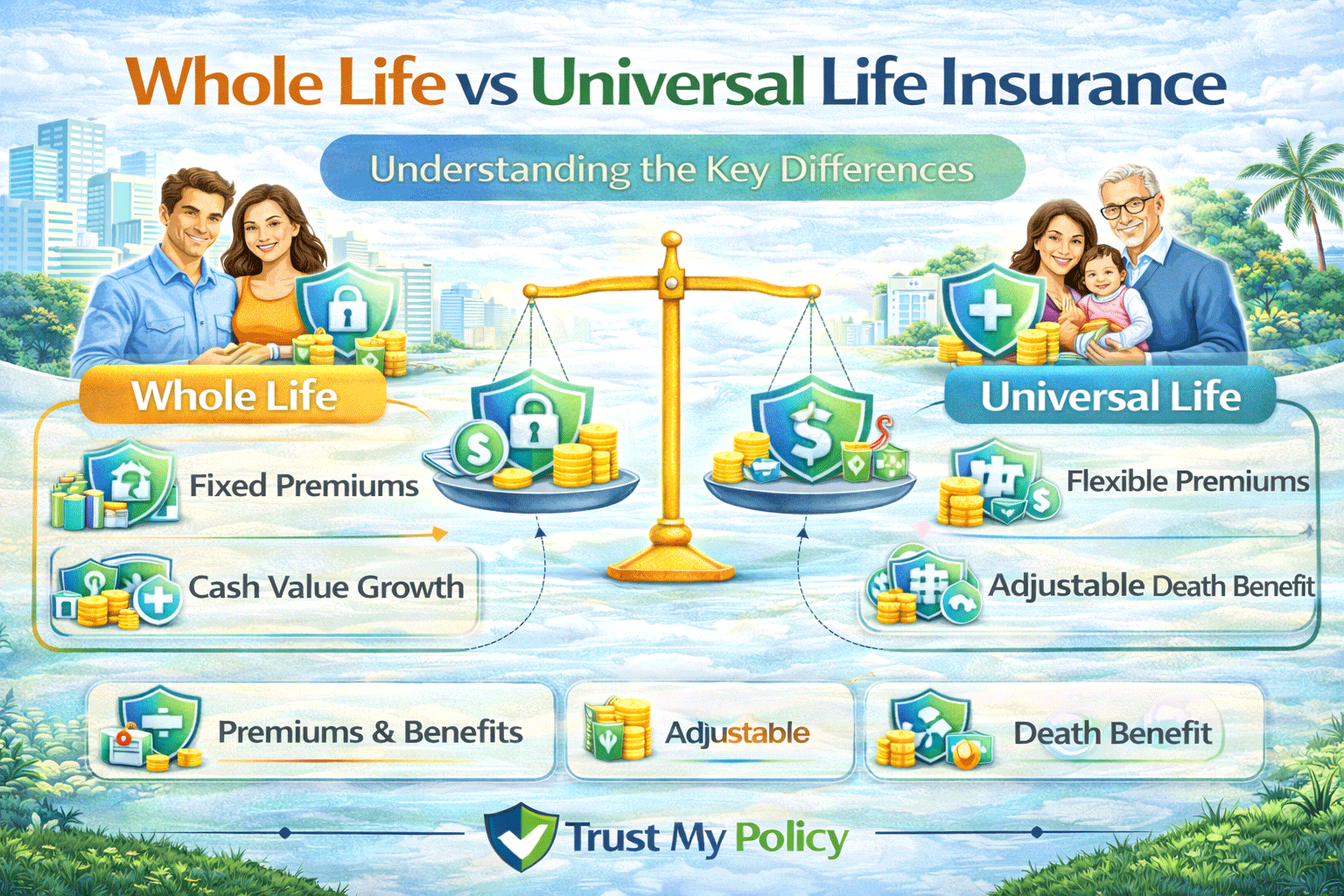
Whole life insurance offers fixed premiums and guaranteed cash value growth for your entire life, typically costing more upfront. Universal life insurance offers flexible premiums and a cash value that can grow based on current interest rates, giving you more control but less guaranteed growth. A $500,000 whole life policy for a healthy 35-year-old might cost $400–$500 a month, compared to $150–$300 for a comparable universal life policy.
Daniel Osei, 47, runs a small architecture firm in Chicago and bought a whole life policy at 30 because an agent told him it was “the safe choice.” Seventeen years later, when his income became unpredictable during a slow contract year, he discovered his policy had no real flexibility to skip a payment without risking a lapse, unlike the universal life policy his business partner held.
Whole Life vs Universal Life Insurance in 2026 comes down to flexibility and predictability. Whole life insurance offers fixed premiums and guaranteed cash value growth for life. Universal life insurance offers adjustable premiums and a cash value tied to interest rates or, in some versions, market performance, giving you more flexibility but less certainty. This guide breaks down exactly how each policy works, what it costs, and which one matches your financial situation.
This article covers how each policy type builds cash value, what flexibility actually means in practice, real scenarios with dollar figures, and a clear decision framework. By the end, you’ll know exactly which one fits your goals.
| Feature | Details |
| What it is | Two types of permanent life insurance that build cash value over time |
| Who needs it | People wanting lifelong coverage plus a savings or investment component |
| Typical cost | $400–$500/month whole life; $150–$300/month universal life, for $500,000 coverage at age 35 |
| Coverage available | Lifelong death benefit plus an accumulating cash value account |
| Key benefit | Whole life guarantees growth; universal life offers premium flexibility |
| Key limitation | Universal life’s cash value can underperform and require higher payments later |
| Regulator | State insurance departments (US); Financial Conduct Authority (UK) |
Think of whole life insurance like a fixed-rate mortgage — predictable payments, predictable growth, no surprises either way. Universal life insurance is more like an adjustable-rate mortgage with a savings account attached — more flexibility in what you pay, but the growth and long-term cost can shift with conditions outside your control.
Whole life insurance is a type of permanent life insurance with fixed premiums, a guaranteed death benefit, and cash value that grows at a guaranteed rate set by the insurer. Universal life insurance is also permanent, but premiums and death benefits can be adjusted within limits, and the cash value grows based on current interest rates or, in some variations, market-linked performance. Anyone considering permanent life insurance for long-term savings or estate planning needs to understand this distinction.
| Criteria | Whole Life Insurance | Universal Life Insurance |
| Cost | Higher fixed premium ($400–$500/month for $500,000 at age 35) | Lower, flexible premium ($150–$300/month for the same coverage) |
| Cash value growth | Guaranteed minimum rate set by the insurer | Tied to current interest rates or, in some versions, market performance |
| Premium flexibility | Fixed for life, no adjustment allowed | Adjustable within policy limits |
| Best for | Those wanting predictability and guaranteed growth | Those wanting flexibility for variable income or changing needs |
| Pros | Guaranteed growth, no surprises, often pays dividends in mutual insurers | Lower starting cost, adjustable as life circumstances change |
| Cons | Less flexible, higher fixed cost | Cash value and future premiums can be less predictable |
We recommend whole life insurance for most readers prioritizing certainty and universal life insurance for those with variable income who need premium flexibility, since each serves a genuinely different planning need.
Scenario 1: Daniel, 47, architect in Chicago with whole life insurance. Daniel struggled to find flexibility in his fixed premium during a slow contract year, since whole life doesn’t allow reduced payments without risking a lapse. Verdict: predictability came at the cost of flexibility when his income became unpredictable. Action: Daniel used his policy’s cash value loan option to cover the shortfall that year instead of missing a payment.
Scenario 2: Priya, 38, freelance consultant in Leeds with universal life insurance. Priya reduced her premium for six months during a slow period without lapsing her policy, since universal life allowed that flexibility. Verdict: the adjustable premium structure matched her variable freelance income well. Action: Priya now reviews her policy’s cash value annually to ensure it can still support her reduced payment pattern long-term.
Scenario 3: A couple in their 50s in Texas using whole life insurance for estate planning. They valued the guaranteed death benefit and predictable cash value growth to fund a portion of their estate plan. Verdict: the certainty of whole life made it easier to plan decades ahead with confidence. Action: they used policy dividends to gradually reduce their out-of-pocket premium over time.
Scenario 4: A small business owner in Bristol using universal life insurance tied to a stock market index. A strong market year significantly boosted his cash value, but a weaker year afterward slowed growth more than he expected. Verdict: market-linked universal life policies carry real variability in cash value growth. Action: he now reviews his policy’s performance annually rather than assuming consistent growth.
| Pros | Cons |
| Whole life offers guaranteed, predictable cash value growth for life. | Whole life premiums are fixed and inflexible if your income changes. |
| Universal life allows you to adjust premiums as your finances change. | Universal life cash value growth is less predictable than whole life. |
| Both types build cash value you can borrow against later in life. | Underfunding universal life can require much higher payments later to avoid a lapse. |
| Whole life often pays dividends through mutual insurers. | Whole life’s higher fixed cost can strain a tight budget more than term insurance. |
| Universal life can offer market-linked growth potential in some versions. | Market-linked universal life cash value can decline in a poor market year. |
⚠️ WARNING: Never let a universal life policy’s cash value run too low without reviewing it. If the cash value can no longer cover the policy’s internal costs, the policy can lapse even if you’ve been making payments for years.
| Your Situation | Our Recommendation |
| You want guaranteed, predictable premiums and growth | Yes — whole life insurance fits this need well |
| You have variable income and need premium flexibility | Yes — universal life insurance fits this need well |
| You’re using permanent insurance mainly for estate planning | Yes — whole life’s predictability often suits long-term planning better |
| You’re comfortable reviewing your policy’s performance annually | Yes — universal life can work well if you stay engaged with it |
| You just want affordable death benefit coverage with no cash value need | No — consider term life insurance instead of either permanent option |
| You’re unsure your universal life policy’s cash value is sufficient | Yes — request an in-force illustration from your insurer to check |
| You’re choosing based on cost alone without considering flexibility needs | No — factor in your income stability, not just the premium amount |
💡 TIP: The single golden rule for choosing between these two: pick whole life if you want certainty you’ll never have to think about again, and universal life only if you’re willing to actively monitor and adjust your policy over time.
| Scenario | Cost | Notes |
| Whole life, healthy 35-year-old, $500,000 coverage | $400–$500/month | Fixed for life, guaranteed cash value growth |
| Universal life, healthy 35-year-old, $500,000 coverage | $150–$300/month | Flexible, tied to current interest rates |
| Whole life, healthy 45-year-old, $250,000 coverage | $350–$450/month | Higher entry age increases the fixed premium |
| Universal life, healthy 45-year-old, $250,000 coverage | $130–$220/month | Flexible premium, lower starting cost |
| Term life (for comparison), healthy 35-year-old, $500,000 | $25–$45/month | Far cheaper, but no cash value and coverage expires |
| Indexed universal life, $500,000 coverage | $180–$350/month | Cash value tied to a market index with caps and floors |
| Whole life policy loan against accumulated cash value | Interest typically 5%–8% | Reduces death benefit and cash value if unpaid |
Northwestern Mutual (US) — A leading mutual insurer known for strong whole life dividend performance and financial stability. Cost range: premium pricing reflecting strong dividend history. Best for: those prioritizing guaranteed whole life growth. Rating: AM Best A++.
New York Life (US) — Offers both whole and universal life products with a long track record of consistent dividends. Cost range: competitive permanent insurance pricing. Best for: those wanting a well-established mutual insurer. Rating: AM Best A++.
Pacific Life (US) — Known for flexible universal life products, including indexed universal life options. Cost range: competitive universal life pricing. Best for: those wanting flexible, potentially market-linked growth. Rating: AM Best A+.
Aviva (UK) — A major UK insurer offering whole of life insurance products with guaranteed and flexible options. Cost range: competitive UK permanent insurance pricing. Best for: UK residents wanting lifelong coverage. Rating: Defaqto 5 Star.
Legal & General (UK) — Offers UK whole of life insurance with straightforward guaranteed premium options. Cost range: competitive UK pricing. Best for: UK residents wanting simple, guaranteed permanent coverage. Rating: Defaqto 4-5 Star.
We recommend Northwestern Mutual for US readers wanting whole life certainty and Pacific Life for those wanting universal life flexibility as best overall, given both insurers’ strong financial ratings and product track records.
Whole life insurance has fixed premiums and guaranteed cash value growth for life, while universal life insurance offers adjustable premiums and cash value tied to current interest rates or market performance.
Whole life insurance is typically more expensive upfront due to its fixed premium structure and guaranteed growth, while universal life often starts with a lower, flexible premium.
No. Whole life premiums are fixed for the life of the policy and cannot be reduced without surrendering or restructuring the policy itself.
Yes. If the cash value becomes too low to cover the policy’s internal costs, the policy can lapse, which is why monitoring its performance is important.
Both can work, but whole life’s predictability often makes long-term estate planning easier, since the death benefit and premium are guaranteed and won’t change.
Probably not. If cash value growth isn’t a priority, term life insurance is typically far cheaper and may better suit your needs.
It typically grows based on current interest rates set by the insurer, though indexed universal life ties growth to a market index with caps limiting the maximum gain.
Yes. Both whole life and universal life allow policy loans against accumulated cash value, though unpaid loans reduce the death benefit and remaining cash value.
It depends on your goals; if you want guaranteed lifelong coverage and have the budget for higher premiums, converting can make sense, but it’s worth comparing the cost against simply buying a new permanent policy.
Review it at least annually, since its flexible premium structure means underfunding can quietly create a future lapse risk if left unchecked.
This guide reflects the latest 2026 insurance data.
This article is for informational purposes only. Always consult a licensed insurance professional before making coverage decisions. Trust My Policy does not sell insurance products or represent any insurer.

Jagadeesh Gutha is the founder of TrustMyPolicy.com, an independent insurance information platform covering life, health, car, home, and business insurance for US and UK readers. He researches insurance products, policy structures, and consumer rights to help everyday people make informed coverage decisions without the jargon. All content on TrustMyPolicy is independently researched, fact-checked, and written to educate — not to sell.



Insurance Guides for UK, USA & Worldwide We are not an insurer or broker.

Reader Comments (0)