
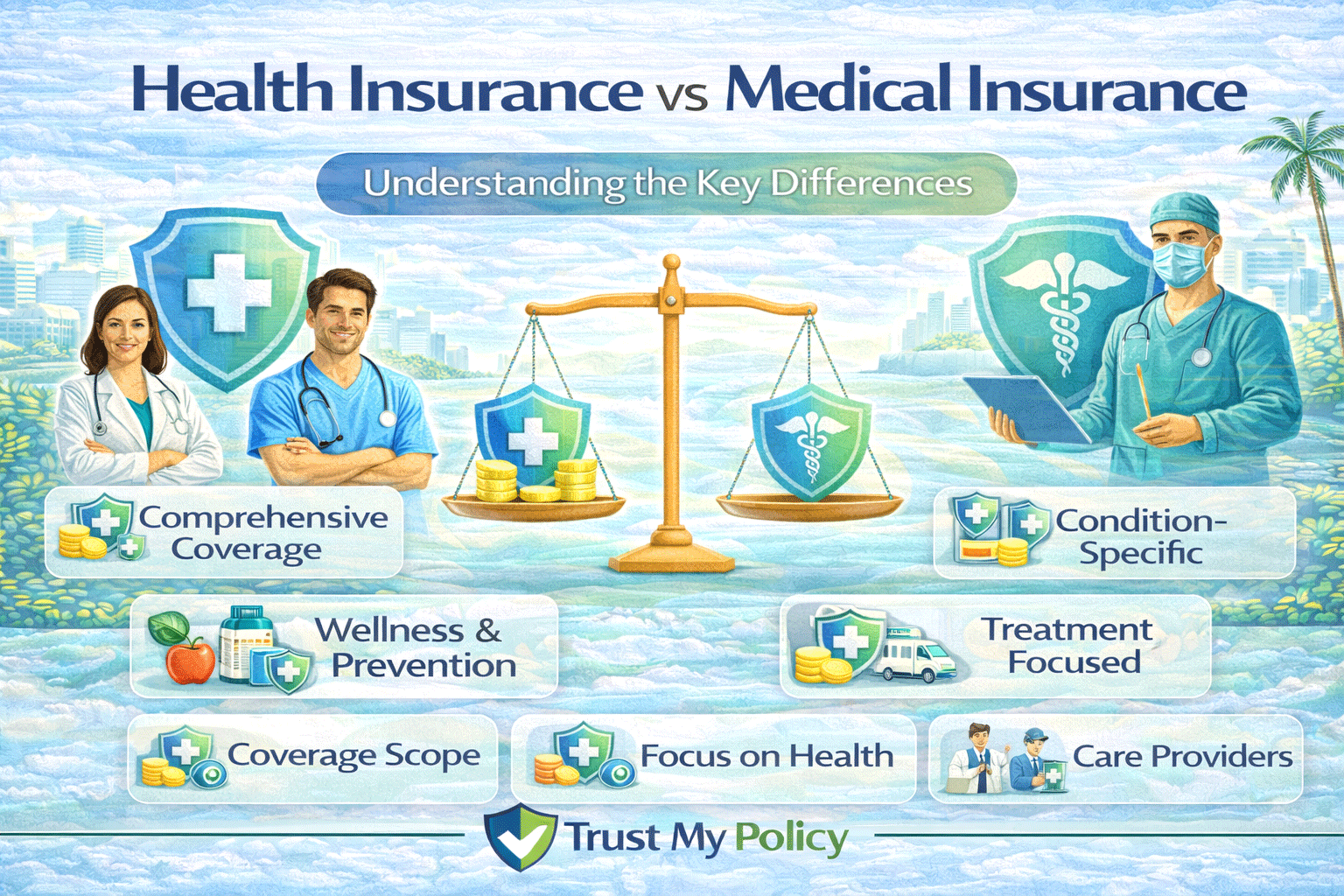
In the US, health insurance and medical insurance are generally the same thing, covering preventive care, hospital stays, and prescriptions. In the UK, health insurance is the broader umbrella term, while medical insurance usually means private medical insurance, which supplements NHS care with faster access to specialists, typically costing £30–£100 a month for an individual.
Tariq Aziz, 45, runs a small consultancy in London and assumed his NHS access meant he didn’t need to think further about coverage, until a colleague mentioned “private medical insurance” as something separate worth having. Tariq had been using the terms health insurance and medical insurance interchangeably for years, never realizing they often describe genuinely different products depending on which country you’re in.
Health Insurance vs Medical Insurance in 2026 comes down to scope: in the US, the terms are largely interchangeable and both typically refer to comprehensive coverage including preventive care, prescriptions, and hospital stays. In the UK, “health insurance” is a broad umbrella term, while “medical insurance” or “private medical insurance” specifically refers to private coverage that supplements the NHS rather than replacing it. This guide breaks down exactly what each term means in your country and which one you actually need.
This article covers the real terminology differences by country, what each type of coverage includes, real scenarios showing the practical impact, and a clear comparison to help you choose. By the end, you’ll know exactly which term applies to your situation.
| Feature | Details |
| What it is | Two overlapping terms whose meaning depends heavily on your country |
| Who needs to understand this | Anyone comparing US marketplace plans or UK private medical cover |
| Typical US cost | $400–$700/month for an individual marketplace health plan before subsidy |
| Typical UK cost | £30–£100/month for individual private medical insurance |
| Key benefit | Clarifies whether a plan replaces or supplements your existing coverage |
| Key limitation | UK private medical insurance does not replace the need for NHS registration |
| Regulator | State insurance departments and CMS (US); Financial Conduct Authority (UK) |
Imagine asking for “soda” in one country and “pop” in another — same basic idea, different word, and sometimes a genuinely different product depending on where you are. Health insurance and medical insurance work similarly: the terms blur together in casual use, but the actual product behind them can differ sharply depending on whether you’re in the US or the UK.
In the US, health insurance and medical insurance are essentially synonyms for the same comprehensive coverage type, covering everything from annual checkups to surgery. In the UK, health insurance is the umbrella term, while medical insurance — more precisely called private medical insurance — is a specific product that sits on top of NHS coverage rather than replacing it. Anyone comparing US marketplace plans, or deciding whether to add UK private cover, needs to know which definition applies.
| Criteria | US Health Insurance (= Medical Insurance) | UK Private Medical Insurance |
| Cost | $400–$700/month individual, before subsidy | £30–£100/month individual |
| Role | Primary, comprehensive coverage | Supplemental, faster access alongside NHS |
| Coverage scope | Preventive care, prescriptions, hospital stays, specialists | Often faster specialist access, private rooms, select treatments |
| Best for | Anyone without employer or government coverage | Those wanting to avoid NHS wait times for non-emergency care |
| Pros | Comprehensive, often subsidized through the marketplace | Affordable relative to US plans, faster elective care |
| Cons | Can be expensive without a subsidy | Doesn’t replace the need for NHS registration for emergencies |
We recommend US readers treat the two terms as interchangeable and focus on plan details, while UK readers should treat “medical insurance” as a specific add-on decision separate from their existing NHS access.
Scenario 1: Tariq, 45, consultant in London. Tariq assumed “health insurance” and “medical insurance” meant the same NHS access he already had, until he learned private medical insurance was a separate, optional product. Verdict: in the UK, the terms describe genuinely different things. Action: Tariq bought a £45/month private medical plan specifically to skip a six-month NHS specialist waiting list.
Scenario 2: Rachel, 33, freelancer in Denver. Rachel searched for “medical insurance” plans and found identical results to her “health insurance” searches on the marketplace. Verdict: in the US, the terms are functionally interchangeable. Action: Rachel stopped worrying about the label and compared plans directly by deductible and network instead.
Scenario 3: A family in Manchester relying solely on the NHS with no private cover. They faced an eight-month wait for a non-urgent orthopedic consultation. Verdict: the NHS covered their care fully, but speed was the trade-off without private medical insurance. Action: they’re now comparing family private medical plans specifically to reduce wait times for non-emergency issues.
Scenario 4: A small business owner in Texas offering “health insurance” as an employee benefit. An employee asked whether this was different from “medical insurance” mentioned in a previous job’s paperwork. Verdict: both terms referred to the same underlying US group health plan. Action: the employer standardized internal communications to use “health insurance” consistently to avoid confusion.
| Pros | Cons |
| US plans offer comprehensive, primary coverage in one product. | US health insurance can be very expensive without a subsidy. |
| UK NHS provides baseline care to all residents regardless of income. | UK NHS wait times for non-emergency specialist care can be long. |
| UK private medical insurance is relatively affordable as a supplement. | UK private medical insurance doesn’t replace the need for NHS registration. |
| US marketplace subsidies can significantly reduce premium costs. | Confusing terminology can lead to buying the wrong type of coverage. |
| Both systems offer some form of baseline protection against major illness. | Comparing plans across countries by name alone can be misleading. |
⚠️ WARNING: Never assume UK private medical insurance covers emergency care the way the NHS does. Most private medical plans exclude emergency treatment, which should still be accessed through the NHS.
| Your Situation | Our Recommendation |
| You’re in the US without employer or government coverage | Yes — apply for a marketplace health insurance plan |
| You’re in the UK and facing long NHS specialist wait times | Yes — consider private medical insurance as a supplement |
| You’re in the UK and assume private cover replaces the NHS | No — keep NHS registration active regardless of private cover |
| You’re comparing US plans labeled “health” vs “medical” insurance | Yes — treat them as the same, compare by deductible and network instead |
| You’re a UK employer considering a benefits package | Yes — private medical insurance is a strong, relatively low-cost benefit |
| You’re relying only on UK NHS with no urgent need for speed | No — private cover may not be necessary if wait times don’t affect you |
| You’re unsure what a specific plan actually excludes | Yes — read the policy document directly before assuming coverage |
💡 TIP: The single golden rule for these terms: in the US treat “health” and “medical” insurance as the same thing, but in the UK treat “medical insurance” as a specific, optional supplement to your existing NHS access.
| Scenario | Cost | Notes |
| US individual marketplace plan, subsidized | $0–$240/month | Varies heavily by income and state |
| US individual marketplace plan, unsubsidized | $400–$700/month | Standard Bronze to Silver tier range |
| UK individual private medical insurance | £30–£100/month | Varies by age, health, and insurer |
| UK family private medical insurance | £80–£250/month | Covers multiple dependents under one policy |
| US employer-sponsored health insurance (employee share) | $100–$300/month | Employer typically covers a significant portion |
| UK NHS access | £0 direct cost (funded via taxation) | Available to all UK residents regardless of private cover |
| US COBRA continuation coverage | $400–$700/month | Often the most expensive way to maintain coverage after job loss |
Blue Cross Blue Shield (US) — One of the largest US health insurance networks with broad nationwide marketplace availability. Cost range: competitive marketplace pricing. Best for: US individuals and families seeking wide network access. Rating: AM Best A.
Kaiser Permanente (US) — An integrated US health insurance and care provider known for coordinated, often lower-cost plans. Cost range: competitive in available regions. Best for: US residents in Kaiser’s service areas wanting integrated care. Rating: AM Best A.
Bupa (UK) — A leading UK private medical insurance provider offering fast specialist access alongside NHS care. Cost range: competitive UK private medical pricing. Best for: UK individuals and families wanting reduced wait times. Rating: Defaqto 5 Star.
AXA Health (UK) — A major UK private medical insurer with strong employer benefits packages and individual plans. Cost range: competitive UK pricing. Best for: UK employers and individuals comparing private medical options. Rating: Defaqto 5 Star.
UnitedHealthcare (US) — A large US health insurer offering both marketplace and employer-sponsored health insurance plans. Cost range: mid-market marketplace pricing. Best for: US individuals wanting broad plan options. Rating: AM Best A.
We recommend Blue Cross Blue Shield for US readers and Bupa for UK readers as best overall because both offer the broadest network or specialist access in their respective systems.
In the US, yes, the terms are generally interchangeable. In the UK, health insurance is a broader term, while medical insurance specifically refers to private medical insurance that supplements the NHS.
Not necessarily. The NHS provides baseline coverage to all residents; private medical insurance is an optional supplement mainly useful for reducing wait times for non-emergency care.
US health insurance typically covers preventive care, prescriptions, specialist visits, and hospital stays, with specific coverage varying by plan tier and insurer.
You can use it for many non-emergency treatments, but most private medical plans exclude emergency care, which should still be accessed through the NHS.
No, in the US these are generally the same product; focus on comparing deductibles, networks, and coverage details instead of the label used.
Individual UK private medical insurance typically costs £30–£100 a month, varying by age, health, and the specific insurer chosen.
Because the NHS already provides universal baseline health coverage, the UK insurance market uses “medical insurance” specifically to describe the private, supplemental product.
Most US employers use the term “health insurance” for this benefit, though “medical insurance” is sometimes used interchangeably in employee paperwork.
Yes. Private medical insurance is designed to supplement, not replace, your NHS access, and you should keep your registration active regardless.
US health insurance is typically more comprehensive because it usually serves as your primary coverage, while UK private medical insurance is intentionally narrower since it supplements free NHS care.
This guide reflects the latest 2026 insurance data.
This article is for informational purposes only. Always consult a licensed insurance professional before making coverage decisions. Trust My Policy does not sell insurance products or represent any insurer.

Jagadeesh Gutha is the founder of TrustMyPolicy.com, an independent insurance information platform covering life, health, car, home, and business insurance for US and UK readers. He researches insurance products, policy structures, and consumer rights to help everyday people make informed coverage decisions without the jargon. All content on TrustMyPolicy is independently researched, fact-checked, and written to educate — not to sell.


Insurance Guides for UK, USA & Worldwide We are not an insurer or broker.
Reader Comments (0)