
Why Insurance Companies Reject Claims: Common Reasons and How to Avoid Them
Insurance is designed to protect people from financial loss when unexpected events happen. Individuals and businesses purchase insurance policies to manage risks related to health problems, accidents, property damage, or other unforeseen situations. However, many policyholders feel confused or frustrated when their insurance claim gets rejected.
Understanding why insurance companies reject claims is important for anyone who relies on insurance coverage. In many situations, claim rejection is not necessarily unfair. Insurance policies are legal agreements that clearly define what is covered, what is excluded, and what steps must be followed when submitting a claim.
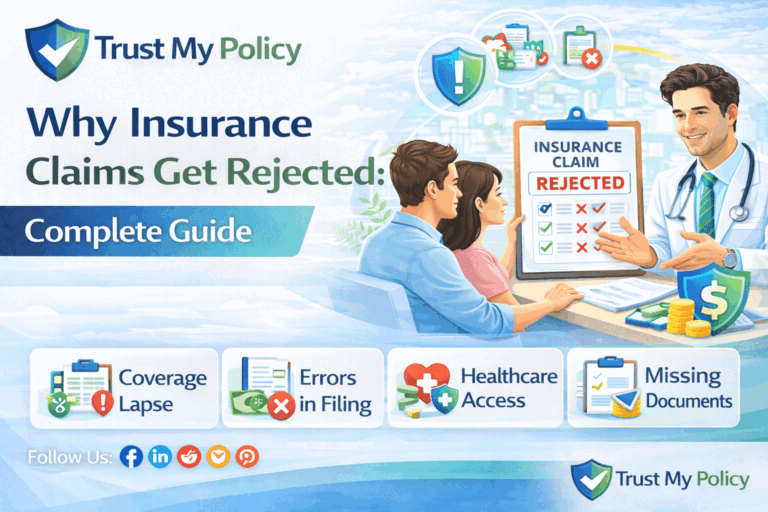
Claims may be denied for several reasons, such as missing documents, incorrect information, policy exclusions, late claim submissions, or unpaid premiums. Sometimes policyholders misunderstand their coverage or overlook important terms in the policy document.
This article explains the most common reasons insurance companies reject claims. It also explores how the claim process works, mistakes policyholders should avoid, and practical steps that can help reduce the risk of claim denial. By learning how insurers evaluate claims, readers can make better decisions and improve their chances of successful claim approval.
Table of Contents
ToggleQuick Summary: Why Insurance Companies Reject Claims
| Reason | What It Means | How to Avoid It |
|---|---|---|
| Policy exclusions | The event is not covered by the policy | Read coverage details carefully |
| Missing documentation | Required documents are not submitted | Provide all required paperwork |
| Policy lapse | Premium payments were missed | Keep policy active with timely payments |
| Late claim submission | Claim filed after the deadline | Report incidents quickly |
| Incorrect information | Errors in application or claim form | Provide accurate details |
| Fraud suspicion | Claim appears suspicious | Submit clear evidence |
| Waiting period limits | Claim filed during waiting period | Understand policy timelines |
Understanding Insurance Claims
Before exploring the reasons for claim rejection, it is helpful to understand how insurance claims work.
What Is an Insurance Claim?
An insurance claim is a formal request made by a policyholder to receive financial compensation from an insurance company after a covered event occurs.
Claims can relate to various situations such as:
-
Medical treatment costs
-
Vehicle accidents
-
Property damage
-
Business losses
-
Life insurance benefits
Once a claim is filed, the insurance company evaluates the request based on the policy terms.
How Insurance Companies Review Claims
Insurance companies follow a structured process to verify claims.
Typical Claim Process
-
Incident occurs
A loss or damage event happens. -
Claim notification
The policyholder informs the insurance company. -
Document submission
Supporting evidence and paperwork are provided. -
Claim investigation
The insurer verifies details and reviews policy coverage. -
Decision
The claim is approved, partially approved, or rejected.
Each stage helps the insurer determine whether the claim meets the policy requirements.
Detailed Comparison Table: Approved Claims vs Rejected Claims
| Factor | Approved Claim | Rejected Claim |
|---|---|---|
| Policy coverage | Event falls within policy coverage | Event falls under exclusions |
| Documentation | All required documents provided | Missing or incomplete documents |
| Policy status | Policy active and valid | Policy expired or lapsed |
| Claim timeline | Filed within required time | Submitted too late |
| Information accuracy | Correct and verified details | Incorrect or inconsistent details |
| Evidence | Sufficient proof available | Insufficient proof |
Major Reasons Why Insurance Companies Reject Claims
1. Policy Exclusions
Every insurance policy includes a list of exclusions. These are situations or conditions that the insurance company does not cover.
Common exclusions may include:
-
Pre-existing medical conditions
-
Damage caused intentionally
-
Illegal activities
-
Certain natural disasters
-
Normal wear and tear
If a claim relates to an excluded event, the insurer may reject it.
Understanding exclusions before purchasing a policy helps prevent confusion later.
2. Incomplete or Missing Documentation
Insurance companies require documents to confirm that a claim is valid.
Examples of required documents include:
-
Medical reports
-
Hospital bills
-
Police reports
-
Photos of damage
-
Repair estimates
If documents are missing or unclear, insurers may reject the claim or request additional evidence.
Proper documentation is one of the most important factors in claim approval.
3. Policy Lapse Due to Unpaid Premiums
Insurance coverage remains active only when premiums are paid regularly.
If a policyholder misses premium payments and the grace period passes, the policy may lapse.
Once a policy lapses:
-
Coverage stops
-
Claims may not be accepted
-
Benefits may be limited
Keeping premium payments up to date helps maintain continuous coverage.
4. Late Claim Submission
Most insurance policies require claims to be filed within a specific timeframe.
For example:
-
Car accident claims may need immediate reporting
-
Health insurance claims may require submission within a few days
-
Property claims often require prompt notification
Late reporting can make it difficult for insurers to verify the incident, which may lead to claim rejection.
5. Incorrect Information in Policy or Claim Forms
Providing incorrect or misleading information can affect claim approval.
Examples include:
-
Incorrect age or identity information
-
Inaccurate medical history
-
Wrong vehicle details
-
Incorrect incident description
Even small errors can create inconsistencies during the claim review process.
Accurate information helps insurers verify claims more efficiently.
6. Suspicion of Insurance Fraud
Insurance fraud is a major concern for insurers worldwide. When a claim appears suspicious, companies may investigate it carefully.
Possible fraud indicators include:
-
Fake accident reports
-
Inflated repair costs
-
False medical bills
-
Repeated claims for the same loss
If fraud is suspected, the claim may be rejected.
7. Waiting Period Restrictions
Some insurance policies include waiting periods. This means certain benefits are not available immediately after purchasing the policy.
Examples include:
-
Health insurance waiting periods
-
Coverage delays for specific illnesses
-
Maternity coverage waiting periods
If a claim occurs during the waiting period, it may not be approved.
8. Insufficient Evidence
Insurance companies require proof to verify that the claimed loss actually occurred.
Evidence may include:
-
Photos of damage
-
Witness statements
-
Medical records
-
Repair estimates
If evidence is weak or unavailable, the insurer may reject the claim.
Pros and Cons of Strict Claim Verification
Insurance companies use strict claim verification systems to evaluate requests.
Pros
-
Helps prevent fraudulent claims
-
Protects honest policyholders
-
Maintains financial stability in the insurance system
-
Encourages accurate claim reporting
Cons
-
Claim processing may take longer
-
Documentation requirements can be complex
-
Policyholders may misunderstand policy terms
-
Some claims require additional investigation
Real-Life Examples of Claim Rejections
Example 1: Missed Claim Deadline
A driver experiences a minor car accident but reports it several weeks later. Because the policy requires reporting within a short timeframe, the insurer rejects the claim.
Example 2: Pre-existing Medical Condition
A person buys health insurance and files a claim shortly afterward for a medical condition that existed before purchasing the policy. Since the condition falls under the exclusion or waiting period, the claim is denied.
Example 3: Missing Evidence
A homeowner files a claim for water damage but cannot provide photos or repair estimates. Without sufficient proof, the insurance company rejects the claim.
Common Mistakes That Lead to Claim Rejection
Many claims are rejected because policyholders overlook important policy rules.
Common mistakes include:
-
Not reading the insurance policy carefully
-
Ignoring coverage exclusions
-
Submitting incomplete documentation
-
Missing claim submission deadlines
-
Providing incorrect or inconsistent information
-
Not reporting incidents promptly
-
Allowing the policy to lapse
Understanding these mistakes can help policyholders avoid unnecessary claim denials.
Tips to Reduce the Risk of Claim Rejection
Policyholders can take several steps to improve their chances of claim approval.
1. Read the Policy Carefully
Understanding policy terms is essential. Pay attention to:
-
Coverage limits
-
Exclusions
-
Waiting periods
-
Claim procedures
2. Maintain Accurate Records
Keep important documents such as:
-
Insurance policy documents
-
Payment receipts
-
Medical reports
-
Accident photos
Good record keeping simplifies the claim process.
3. Report Incidents Quickly
Prompt reporting allows insurers to investigate the situation more effectively.
4. Submit Complete Documentation
Providing all required documents reduces delays and improves claim approval chances.
5. Keep the Policy Active
Always pay premiums on time to avoid policy lapse.
Frequently Asked Questions
Why do insurance companies reject claims?
Insurance companies may reject claims due to policy exclusions, missing documentation, late submission, incorrect information, or suspicion of fraud.
Can a rejected claim be appealed?
Yes. Policyholders can request a review or provide additional documents if they believe the claim was rejected incorrectly.
How long does insurance claim verification take?
The verification time varies depending on the complexity of the claim and the documents provided.
Are waiting periods common in insurance policies?
Yes. Many policies include waiting periods before certain benefits become available.
What should I do if my insurance claim is rejected?
Review the reason for rejection, check policy terms, gather supporting documents, and contact the insurer for clarification.
Can missing documents cause claim rejection?
Yes. Incomplete documentation is one of the most common reasons insurance claims are denied.
Do insurance companies investigate every claim?
Most insurers review claims carefully, especially large claims or those with unusual circumstances.
Conclusion
Insurance plays an important role in protecting individuals and businesses from financial losses. However, many policyholders face challenges when their claims are rejected. Understanding why insurance companies reject claims helps people avoid common mistakes and navigate the claim process more effectively.
Claim denials often occur because of policy exclusions, missing documentation, late submissions, or incorrect information. These issues can usually be avoided by reading policy terms carefully, maintaining accurate records, and following the proper claim procedures.
When policyholders understand how insurance claims work, they are better prepared to handle unexpected situations. Proper preparation and clear documentation can significantly improve the chances of a successful claim outcome.
Disclaimer: This article is for educational purposes only. Trust My Policy is an independent informational platform and does not sell insurance products or represent any insurance provider. Readers should consult official policy documents or licensed professionals for personalized advice.