Whole Life vs Universal Life Insurance: Understanding the Key Differences
Life insurance plays an important role in financial planning. It helps protect families and dependents by providing financial support if the insured person dies. Among the many types of life insurance available, two commonly compared options are whole life insurance and universal life insurance.
Both policies belong to the category of permanent life insurance, meaning they can provide coverage for the insured person’s entire life as long as policy requirements are met. In addition to death benefits, these policies may also include a cash value component that grows over time.
However, there are important differences between whole life vs universal life insurance, particularly in areas such as premium flexibility, cash value growth, and policy structure.
Understanding these differences can help individuals choose the type of life insurance that best matches their financial goals, risk tolerance, and long-term planning needs.
This guide explains the features, advantages, and limitations of both policy types. It also explores practical scenarios where each option may be useful and highlights common misunderstandings people often have when comparing whole life and universal life insurance.
Whole Life vs Universal Life Insurance
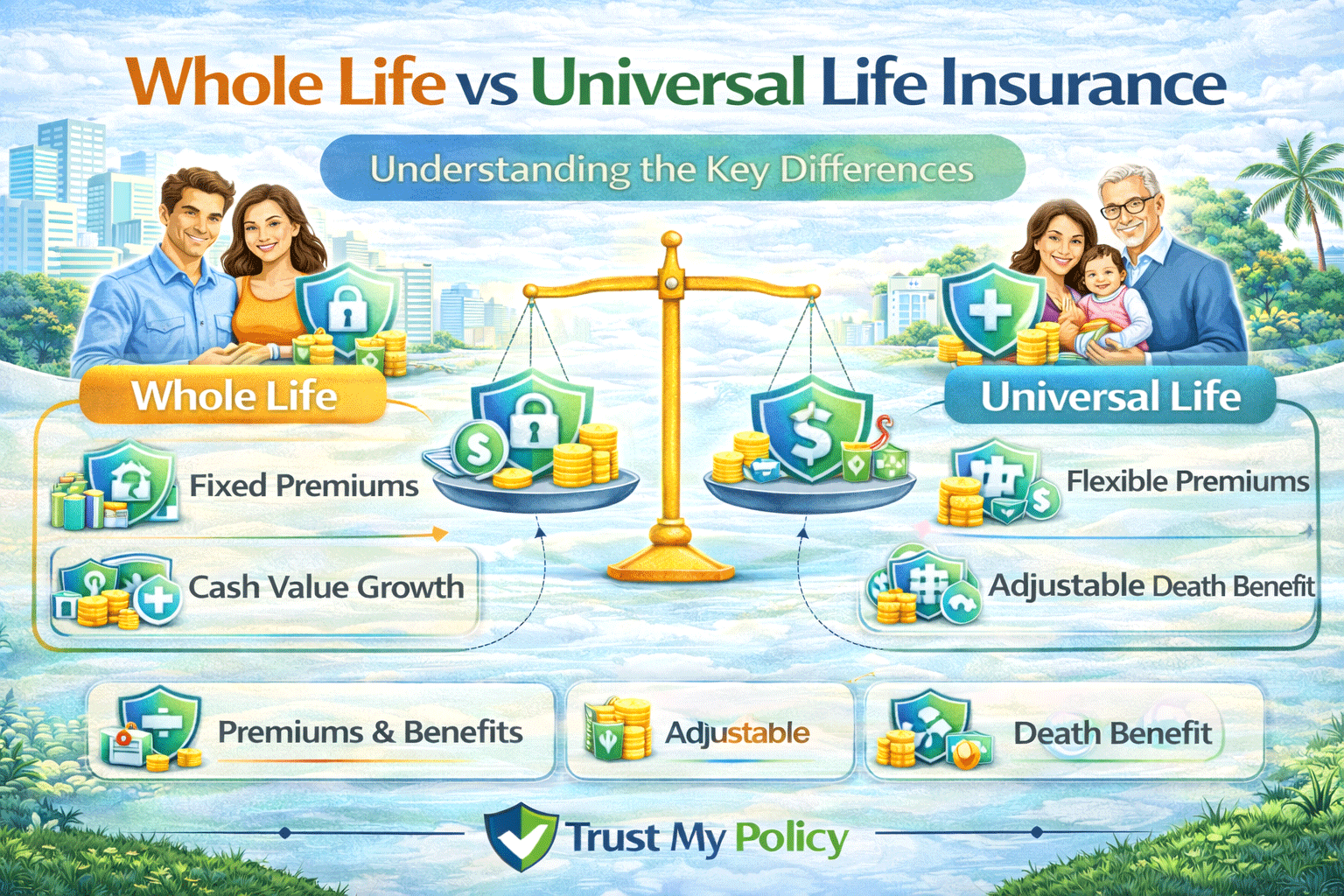
| Feature | Whole Life Insurance | Universal Life Insurance |
|---|---|---|
| Policy type | Permanent life insurance | Permanent life insurance |
| Premium payments | Fixed premiums | Flexible premiums |
| Cash value growth | Guaranteed growth in many policies | Growth may depend on interest rates |
| Policy flexibility | Low flexibility | Higher flexibility |
| Death benefit | Fixed in most cases | Can sometimes be adjusted |
| Policy management | Simple and predictable | Requires more monitoring |
| Suitable for | Long-term stability | Flexible financial planning |
Key takeaway:
Whole life insurance focuses on predictable coverage and stable cash value growth, while universal life insurance offers more flexibility in premiums and policy management.
What Is Whole Life Insurance?
Whole life insurance is a type of permanent life insurance policy that provides coverage for the insured person’s entire lifetime.
As long as premiums are paid and policy conditions are met, the coverage remains active. Whole life policies are known for stable premiums and predictable cash value growth.
Key Features of Whole Life Insurance
Whole life insurance typically includes the following components:
-
Lifetime coverage
-
Fixed premium payments
-
Guaranteed death benefit in many policies
-
Cash value accumulation
-
Potential dividends in certain policies
These features make whole life insurance a relatively stable and predictable form of permanent life insurance.
Cash Value in Whole Life Insurance
One unique feature of whole life insurance is its cash value component.
Over time, part of the premium paid may accumulate as savings within the policy.
This cash value may:
-
Grow at a guaranteed rate in many policies
-
Be borrowed against in some cases
-
Be used to support policy premiums later in life
However, the specific rules depend on the policy terms.
What Is Universal Life Insurance?
Universal life insurance is another form of permanent life insurance, but it is designed to provide greater flexibility compared to traditional whole life policies.
Universal life insurance allows policyholders to adjust certain aspects of the policy over time.
Key Features of Universal Life Insurance
Common characteristics include:
-
Lifetime coverage
-
Flexible premium payments
-
Adjustable death benefits in some cases
-
Cash value accumulation linked to interest rates
-
Greater control over policy structure
Because of this flexibility, universal life insurance may require more active management.
Cash Value Growth in Universal Life Insurance
Cash value in universal life insurance often depends on:
-
Interest rates
-
Policy performance
-
Policy structure
This means growth may vary depending on economic conditions.
Whole Life vs Universal Life Insurance: Detailed Comparison
| Feature | Whole Life Insurance | Universal Life Insurance |
|---|---|---|
| Policy type | Permanent life insurance | Permanent life insurance |
| Coverage duration | Lifetime coverage | Lifetime coverage |
| Premium structure | Fixed premiums | Flexible premiums |
| Cash value growth | Often guaranteed growth | Interest-rate dependent growth |
| Death benefit | Typically fixed | May be adjustable |
| Policy complexity | Simpler to manage | More complex |
| Financial predictability | High | Moderate |
| Flexibility | Limited | Greater flexibility |
| Risk exposure | Lower variability | Potential variability |
| Monitoring requirement | Minimal | Higher |
This comparison highlights how whole life insurance emphasizes predictability, while universal life insurance emphasizes flexibility and customization.
Key Differences Between Whole Life and Universal Life Insurance
1. Premium Payment Structure
One of the most significant differences between whole life vs universal life insurance is how premiums work.
Whole life insurance:
-
Premiums remain fixed
-
Payments follow a consistent schedule
Universal life insurance:
-
Premiums may be adjusted
-
Policyholders may increase or decrease payments within policy limits
2. Cash Value Growth
Cash value is another major difference.
Whole life insurance:
-
Often offers predictable growth
-
Growth may be guaranteed in many policies
Universal life insurance:
-
Growth may depend on interest rates
-
Cash value may fluctuate based on economic conditions
3. Policy Flexibility
Whole life policies are usually more structured and predictable.
Universal life policies allow adjustments such as:
-
Changing premium amounts
-
Modifying death benefits in certain situations
-
Using cash value to cover premiums
This flexibility can be useful for people with changing financial needs.
4. Policy Management
Whole life insurance requires relatively little ongoing management.
Universal life insurance may require policyholders to:
-
Monitor cash value performance
-
Adjust premiums when necessary
-
Review policy statements regularly
Pros and Cons of Whole Life Insurance
Advantages
-
Stable and predictable premiums
-
Lifetime coverage
-
Cash value accumulation
-
Lower policy management requirements
-
Financial stability for long-term planning
Disadvantages
-
Less flexibility in premium payments
-
Premiums may be higher compared to other policies
-
Limited ability to adjust policy structure
Pros and Cons of Universal Life Insurance
Advantages
-
Flexible premium payments
-
Adjustable death benefit options
-
Potential cash value growth based on interest rates
-
Customizable policy structure
Disadvantages
-
Cash value growth may vary
-
Policy management may require regular monitoring
-
Complexity compared to whole life insurance
Real-Life Examples of Whole Life vs Universal Life Insurance
Understanding real-world situations can help illustrate the differences between these policies.
Example 1: Long-Term Financial Stability
An individual wants predictable life insurance coverage that requires minimal monitoring.
Whole life insurance may provide:
-
Fixed premiums
-
Stable long-term coverage
Universal life insurance may offer flexibility but may require more active management.
Example 2: Changing Income Over Time
A professional expects income to fluctuate throughout their career.
Universal life insurance may allow:
-
Adjusting premiums
-
Using cash value during lower income periods
Whole life insurance usually requires consistent premium payments.
Example 3: Estate Planning
Some individuals use permanent life insurance as part of long-term estate planning.
Both whole life and universal life policies may provide:
-
Lifetime coverage
-
Death benefits for beneficiaries
However, the choice may depend on whether stability or flexibility is more important.
Common Mistakes When Comparing Whole Life and Universal Life Insurance
Many people misunderstand the differences between these policies.
1. Assuming All Permanent Life Insurance Works the Same
Permanent life insurance includes several policy types, each with unique features.
Whole life and universal life policies operate differently.
2. Ignoring Policy Flexibility
Some individuals choose a rigid policy structure even though their financial situation may change in the future.
3. Not Monitoring Policy Performance
Universal life insurance may require periodic review to ensure the policy continues to perform as expected.
4. Overlooking Cash Value Rules
Cash value access and growth may vary depending on policy terms.
Understanding policy conditions helps avoid unexpected limitations.
5. Choosing Based Only on Premium Cost
Lower premiums may not always mean better long-term value.
Coverage structure, policy flexibility, and financial goals should also be considered.
Frequently Asked Questions
What is the main difference between whole life and universal life insurance?
Whole life insurance typically offers fixed premiums and predictable cash value growth, while universal life insurance provides flexible premiums and adjustable policy features.
Do both policies provide lifetime coverage?
Yes. Both whole life and universal life insurance are forms of permanent life insurance, meaning they can provide coverage for the insured person’s entire life if policy requirements are met.
Which policy offers more flexibility?
Universal life insurance generally offers more flexibility in premium payments and policy adjustments.
Does whole life insurance build cash value?
Yes. Whole life insurance policies usually accumulate cash value over time.
Can universal life insurance premiums change?
Yes. Universal life insurance policies often allow premium adjustments within certain policy limits.
Do both policies include death benefits?
Yes. Both types of life insurance provide a death benefit to beneficiaries when the insured person dies.
Conclusion
Understanding whole life vs universal life insurance is important for individuals planning long-term financial protection.
Both policy types belong to the category of permanent life insurance and provide lifetime coverage along with a cash value component. However, they differ in how premiums are structured, how cash value grows, and how flexible the policy can be.
Whole life insurance emphasizes stability and predictability, with fixed premiums and consistent policy structure.
Universal life insurance focuses on flexibility, allowing policyholders to adjust premiums and manage policy components over time.
Choosing between these options depends on individual financial goals, risk tolerance, and preference for flexibility or stability. Careful review of policy terms and features can help individuals make informed decisions about long-term life insurance protection.
Disclaimer:
This article is for educational purposes only. Trust My Policy is an independent informational platform and does not sell insurance products or represent any insurance provider. Readers should consult official policy documents or licensed professionals for personalized advice.