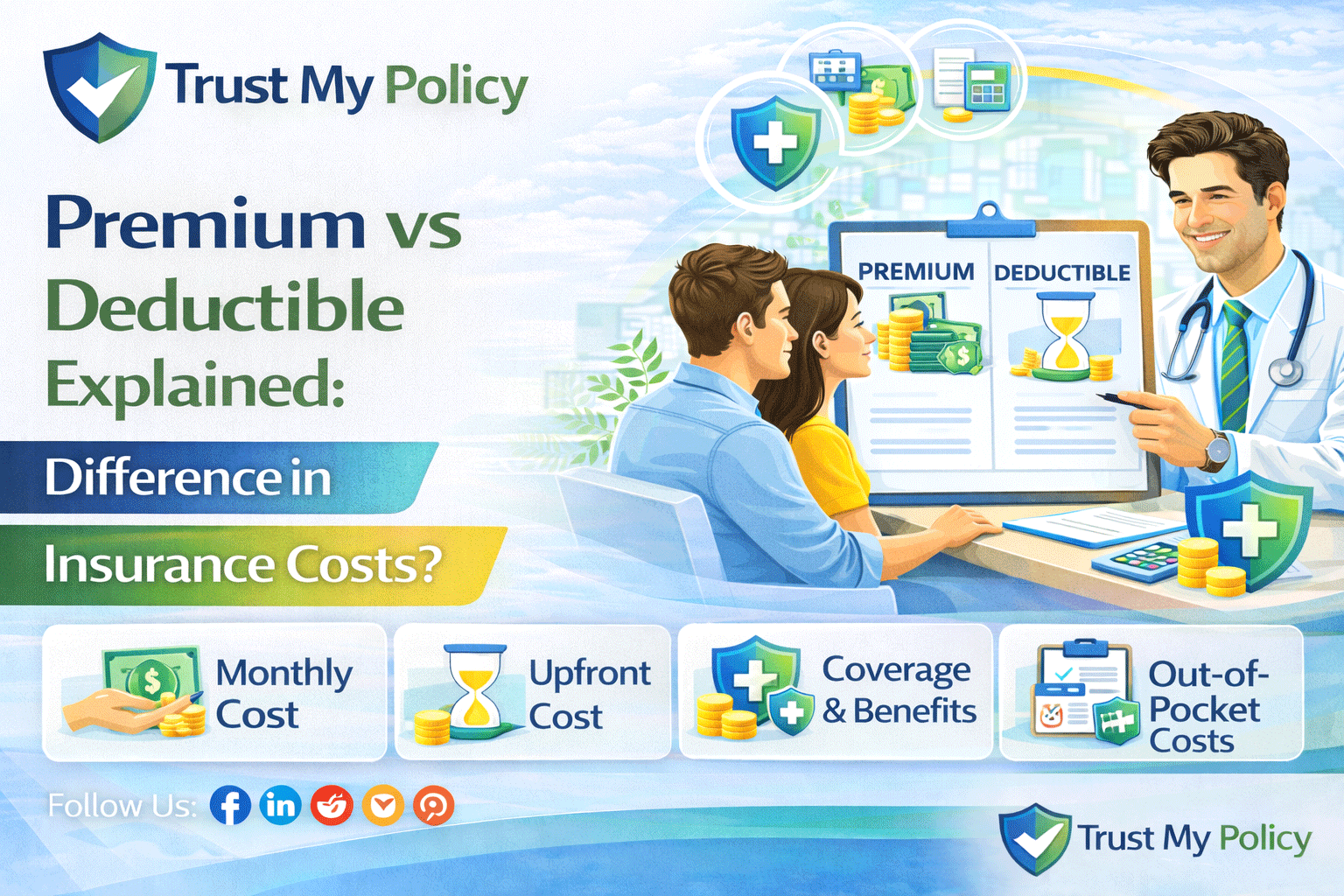
When buying any type of insurance—health, car, home, or travel—you will often see two important terms: premium and deductible. Many people confuse these terms or focus only on one of them. However, understanding the difference between premium vs deductible is essential for making smart financial decisions.
Your premium affects how much you pay every month or year to keep your policy active. Your deductible affects how much you pay when you actually file a claim. Both directly impact your total insurance costs.
Choosing a plan with a low premium but high deductible may save money upfront but cost more during emergencies. On the other hand, a higher premium may reduce your financial burden when something unexpected happens.
This guide explains premium vs deductible in simple language. You will find comparison tables, real-life examples, common mistakes to avoid, and answers to frequently asked questions. The goal is to help you clearly understand how these two costs work together in any insurance policy worldwide.
Premium vs Deductible
| Feature | Premium | Deductible |
|---|---|---|
| Definition | Amount paid regularly to keep insurance active | Amount you pay before insurance starts paying |
| Payment Frequency | Monthly, quarterly, or yearly | Only when you file a claim |
| Purpose | Maintains coverage | Shares claim cost |
| Predictability | Fixed and predictable | Depends on claims |
| Applies To | All types of insurance | Most insurance types |
| Financial Impact | Ongoing cost | Event-based cost |
Choosing the right insurance coverage requires understanding different policy types, benefits, and financial protection options available to policyholders. Many readers compare multiple guides before selecting a plan so they can clearly evaluate premiums, claim procedures, and long‑term advantages. A useful resource to explore is Life Insurance Beneficiary Rules, which explains how this insurance policy works, the key benefits it offers, and situations where it may be the most suitable option. By reviewing this guide, you can gain deeper insights into coverage features, eligibility requirements, and practical tips that help individuals and families make smarter insurance decisions.
What Is a Premium?
A premium is the amount you pay to an insurance company to maintain your coverage. It is the price of your insurance policy.
You pay the premium whether or not you file a claim.
Key Features of a Premium
-
Paid regularly (monthly or annually)
-
Required to keep policy active
-
Based on risk factors
-
Can increase during renewal
For example:
-
Health insurance premium: $200 per month
-
Car insurance premium: $800 per year
-
Home insurance premium: $1,200 per year
If you stop paying your premium, your insurance policy may lapse or be canceled.
What Is a Deductible?
A deductible is the amount you must pay out of your own pocket before the insurance company begins to pay for a covered claim.
It applies only when you make a claim.
Key Features of a Deductible
-
Paid only when claim is filed
-
Reduces insurer’s risk
-
Higher deductible usually lowers premium
-
Resets annually (in many policies)
Example:
-
Deductible: $1,000
-
Medical bill: $5,000
You pay first $1,000.
Insurance pays remaining $4,000 (subject to policy terms).
Detailed Comparison Table: Premium vs Deductible
| Criteria | Premium | Deductible |
|---|---|---|
| Type of Cost给主人 to keep policy active | Cost-sharing during claim | |
| When Paid | Regular schedule | When claim occurs |
| Affects Budget | Ongoing expense | Emergency expense |
| Risk Impact | Higher premium = lower risk exposure | Higher deductible = more personal risk |
| Adjustable | Yes, based on coverage choices | Yes, chosen during policy selection |
| Influences | Age, location, coverage type | Policy structure |
| Financial Planning | Predictable budgeting | Requires savings buffer |
| Refundable | Usually no | Not applicable |
| Common in | All insurance types | Most claim-based policies |
Choosing the right insurance coverage requires understanding different policy types, benefits, and financial protection options available to policyholders. Many readers compare multiple guides before selecting a plan so they can clearly evaluate premiums, claim procedures, and long‑term advantages. A useful resource to explore is Whole Life vs Term Life Insurance, which explains how this insurance policy works, the key benefits it offers, and situations where it may be the most suitable option. By reviewing this guide, you can gain deeper insights into coverage features, eligibility requirements, and practical tips that help individuals and families make smarter insurance decisions.
How Premium and Deductible Work Together
Premium and deductible have an inverse relationship in many policies:
-
Higher premium → Lower deductible
-
Lower premium → Higher deductible
This balance allows policyholders to choose how they want to share financial risk with the insurer.
Insurance companies calculate premiums based on:
-
Risk profile
-
Claim history
-
Age
-
Location
-
Coverage amount
-
Deductible selection
Choosing the right combination depends on your financial stability and risk tolerance.
Premium vs Deductible in Different Types of Insurance
Health Insurance
-
Premium paid monthly.
-
Deductible paid before coverage for major treatments.
-
Often combined with copay and coinsurance.
Car Insurance
-
Premium paid yearly or semi-annually.
-
Deductible applies to collision or comprehensive claims.
Home Insurance
-
Premium paid annually.
-
Deductible applies to property damage claims.
Travel Insurance
-
Premium is one-time payment.
-
Deductible applies to medical or cancellation claims.
Choosing the right insurance coverage requires understanding different policy types, benefits, and financial protection options available to policyholders. Many readers compare multiple guides before selecting a plan so they can clearly evaluate premiums, claim procedures, and long‑term advantages. A useful resource to explore is Professional Liability Insurance, which explains how this insurance policy works, the key benefits it offers, and situations where it may be the most suitable option. By reviewing this guide, you can gain deeper insights into coverage features, eligibility requirements, and practical tips that help individuals and families make smarter insurance decisions.
Pros and Cons of Higher Premium
Advantages
-
Lower deductible
-
Smaller out-of-pocket cost during claim
-
Predictable protection
-
Better for frequent claims
Disadvantages
-
Higher ongoing expense
-
May feel expensive if no claims occur
-
Can affect monthly cash flow
Pros and Cons of Higher Deductible
Advantages
-
Lower premium
-
Saves money if no claims occur
-
Suitable for low-risk individuals
Disadvantages
-
Large payment during emergencies
-
Financial stress if savings are low
-
Risk of avoiding necessary claims
Real-Life Examples
Example 1: Low Premium, High Deductible
-
Premium: $100 per month
-
Deductible: $2,000
If you remain healthy for a year:
-
Total paid: $1,lany200 (premium only)
If you need surgery costing $5,000:
-
Pay first $2,000
-
Insurance pays remaining $3,000
Example 2: High Premium, Low Deductible
-
Premium: $250 per month
-
Deductible: $500
If surgery costs $5,000:
-
Pay $500
-
Insurance pays $4,500
But yearly premium cost:
-
$3,000 total
Example 3: Car Insurance Scenario
Car accident repair cost: $3,000
Policy A:
-
Premium: $600/year
-
Deductible: $1,000
You pay $1,000.
Policy B:
-
Premium: $1,000/year
-
Deductible: $250
You pay $250.
Your choice depends on how likely you are to file a claim.
How to Decide Between Higher Premium or Higher Deductible
Ask yourself:
-
Do I have emergency savings?
-
How often do I use medical or insurance services?
-
Can I afford a large unexpected expense?
-
Do I prefer predictable monthly costs?
-
What is my risk tolerance?
General Guidance
-
Young, healthy individuals → Higher deductible may be suitable.
-
Families or high medical users → Lower deductible may provide peace of mind.
-
Limited savings → Lower deductible reduces emergency risk.
There is no universal answer. It depends on financial stability and comfort level.
Read More: Copay vs Coinsurance
Common Mistakes and Misunderstandings
1. Choosing Only Based on Premium
Many people choose lowest premium without checking deductible.
2. Ignoring Total Annual Cost
Premium + possible deductible = true cost.
3. Not Checking Out-of-Pocket Maximum
In health insurance, total annual spending may be capped.
4. Assuming Higher Premium Means Better Coverage
Coverage depends on policy terms, not just cost.
5. Forgetting Deductible Resets
Most deductibles reset yearly.
Choosing the right insurance coverage requires understanding different policy types, benefits, and financial protection options available to policyholders. Many readers compare multiple guides before selecting a plan so they can clearly evaluate premiums, claim procedures, and long‑term advantages. A useful resource to explore is Insurance Rider Explained, which explains how this insurance policy works, the key benefits it offers, and situations where it may be the most suitable option. By reviewing this guide, you can gain deeper insights into coverage features, eligibility requirements, and practical tips that help individuals and families make smarter insurance decisions.
Frequently Asked Questions (FAQs)
1. Is premium better than deductible?
They serve different purposes. Premium keeps coverage active. Deductible applies during claims.
2. Does deductible reduce premium?
Yes, usually a higher deductible lowers premium.
3. Do I pay deductible every month_fmt?
No. Deductible is paid only when filing a claim.
4. Can I change deductible later?
Often yes, during policy renewal.
5. What happens if I cannot pay deductible?
Insurance may not process full claim payment until deductible portion is paid.
6. Is deductible refundable?
No. It is part of cost-sharing.
7. Does premium increase after claim?
In some cases, yes. It depends on insurer policies.
Key Takeaways
-
Premium = regular payment to maintain coverage.
-
Deductible = amount paid before insurance contributes.
-
Higher premium often means lower deductible.
-
Higher deductible lowers monthly cost but increases risk.
-
Financial planning should consider both.
Conclusion
Understanding premium vs deductible is essential when selecting any insurance policy. Premium is your predictable ongoing cost. Deductible is your financial responsibility during a claim.
Balancing these two elements helps control long-term insurance expenses. The right choice depends on your savings, healthcare needs, and ability to manage risk.
Before choosing a policy, review coverage details carefully and calculate total potential costs—not just the monthly payment.
Clear knowledge today can prevent financial stress tomorrow.
Disclaimer: This article is for educational purposes only. Trust My Policy is an independent informational platform and does not sell insurance products or represent any insurance provider. Readers should consult official policy documents or licensed professionals for personalized advice.
Leave a Reply