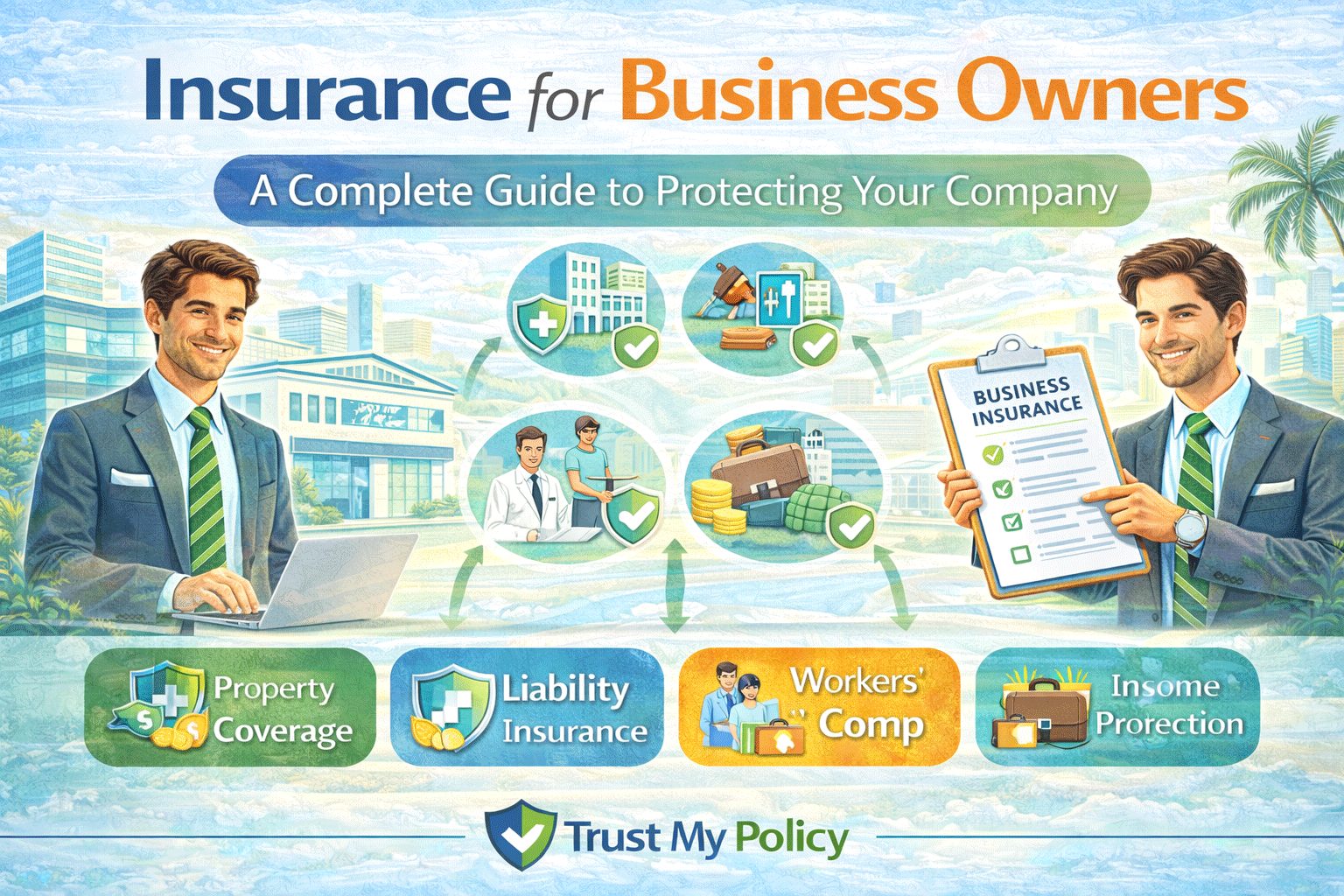
Insurance for Business Owners: A Complete Guide to Protecting Your Company
Running a business involves opportunity, growth, and risk. No matter the size of your company, unexpected events can affect operations, finances, and reputation. Accidents, lawsuits, property damage, cyberattacks, and employee injuries are real risks faced by business owners around the world.
Insurance for business owners helps manage these risks. It provides financial protection when something goes wrong. Without proper coverage, one serious incident could cause major financial loss or even force a business to close.
This guide explains how business insurance works, the different types of coverage available, how costs are calculated, and how to avoid common mistakes. It is designed for entrepreneurs, startups, small business owners, and growing companies globally.
Understanding business insurance is not about fear. It is about preparation. The right coverage helps protect your company’s assets, employees, and long-term stability.
Main Types of Insurance for Business Owners
| Insurance Type | What It Covers | Who Needs It | Required by Law? | Risk Level Protected |
|---|---|---|---|---|
| General Liability | Injury or property damage claims | Most businesses | Usually No | High |
| Professional Liability | Errors in services or advice | Consultants, agencies | No | High |
| Property Insurance | Office, equipment, inventory | Physical businesses | No | High |
| Workers’ Compensation | Employee injuries | Businesses with staff | Often Yes | High |
| Business Interruption | Lost income after disaster | Retail, manufacturing | No | Medium |
| Cyber Insurance | Data breaches, cyberattacks | Online businesses | No | High |
| Commercial Auto | Business vehicles | Delivery, transport | Often Yes | High |
| Product Liability | Product-related harm | Manufacturers, sellers | No | High |
What Is Insurance for Business Owners?
Insurance for business owners refers to a set of policies designed to protect companies from financial loss caused by accidents, lawsuits, disasters, and operational risks.
Unlike personal insurance, business insurance focuses on:
-
Company property
-
Business operations
-
Employees
-
Customers
-
Professional services
-
Digital assets
Each business has different risks depending on industry, size, and location.
Key Types of Insurance for Business Owners
1. General Liability Insurance
General liability insurance protects businesses from claims related to:
-
Bodily injury
-
Property damage
-
Advertising injury
-
Legal defense costs
Example: A customer slips inside a store and gets injured.
This is one of the most common forms of business insurance.
2. Professional Liability Insurance
Also called errors and omissions (E&O) insurance.
It protects businesses that provide professional advice or services.
Example:
-
A consultant gives advice that leads to financial loss
-
A design firm makes a costly mistake
It covers legal costs and settlements.
3. Property Insurance
Property insurance covers physical assets such as:
-
Buildings
-
Office equipment
-
Machinery
-
Inventory
-
Furniture
It protects against:
-
Fire
-
Theft
-
Natural disasters (depending on policy)
4. Workers’ Compensation Insurance
This insurance covers:
-
Employee medical expenses
-
Lost wages
-
Workplace injury compensation
In many countries, this insurance is legally required if you have employees.
5. Business Interruption Insurance
If a disaster forces your business to close temporarily, this policy may cover:
-
Lost income
-
Fixed operating expenses
-
Rent payments
It helps businesses survive temporary shutdowns.
6. Cyber Insurance
With digital operations increasing globally, cyber insurance is becoming more important.
It may cover:
-
Data breach costs
-
Ransomware attacks
-
Legal fees
-
Customer notification costs
Businesses handling customer data often consider this essential.
7. Commercial Auto Insurance
If your business owns vehicles, this policy covers:
-
Accidents
-
Vehicle damage
-
Third-party injuries
Personal auto insurance usually does not cover business use.
8. Product Liability Insurance
Businesses that manufacture or sell products may need this coverage.
It protects against claims that a product caused injury or damage.
Detailed Comparison of Major Business Insurance Types
| Feature | General Liability | Professional Liability | Property Insurance | Cyber Insurance | Workers’ Compensation |
|---|---|---|---|---|---|
| Covers lawsuits | Yes | Yes | No | Yes | No |
| Covers employee injuries | No | No | No | No | Yes |
| Covers building damage | No | No | Yes | No | No |
| Covers service mistakes | No | Yes | No | No | No |
| Covers data breaches | No | No | No | Yes | No |
| Legal requirement | Rarely | No | No | Often | Often |
| Suitable for | All businesses | Service providers | Physical businesses | Digital businesses | Employers |
How Much Does Insurance for Business Owners Cost?
The cost depends on several factors:
-
Industry risk level
-
Business size
-
Annual revenue
-
Number of employees
-
Location
-
Claims history
-
Coverage limits
High-risk industries (construction, manufacturing) usually pay higher premiums than low-risk industries (consulting, design).
Small businesses typically pay lower premiums compared to large enterprises.
Pros and Cons of Business Insurance
Pros
-
Financial protection from lawsuits
-
Helps businesses recover from disasters
-
Builds credibility with clients
-
Required for contracts in some industries
-
Protects employees
Cons
-
Ongoing premium cost
-
Coverage limits may apply
-
Complex policy terms
-
Not all risks are covered
Real-Life Use Cases
Example 1: Restaurant Fire
A restaurant kitchen catches fire. Property insurance covers building repairs and equipment replacement. Business interruption insurance helps cover lost income during closure.
Example 2: Consulting Error
A marketing consultant makes a campaign mistake leading to client financial loss. Professional liability insurance helps cover legal costs.
Example 3: Employee Injury
An employee slips in a warehouse. Workers’ compensation covers medical expenses and partial wages.
Example 4: Cyberattack on Online Store
Hackers access customer payment data. Cyber insurance helps cover investigation costs and legal fees.
Common Mistakes Business Owners Make
-
Assuming general liability covers everything
-
Not reviewing policy exclusions
-
Choosing the lowest coverage limits
-
Ignoring cyber risks
-
Forgetting to update coverage after business growth
-
Not reading policy details carefully
Many claim denials occur due to misunderstanding coverage limits.
How to Choose the Right Insurance for Your Business
Step 1: Identify Business Risks
Ask:
-
Do customers visit my location?
-
Do I provide professional advice?
-
Do I store customer data?
-
Do I employ staff?
-
Do I sell physical products?
Step 2: Understand Legal Requirements
Some countries require:
-
Workers’ compensation
-
Commercial auto coverage
Check local regulations carefully.
Step 3: Compare Coverage Limits
Higher coverage limits provide greater protection but increase premiums.
Balance affordability with risk level.
Step 4: Review Annually
Businesses evolve. Insurance coverage should evolve too.
Frequently Asked Questions (FAQs)
1. Is insurance mandatory for business owners?
Some types, like workers’ compensation and commercial auto, are often required by law. Others are optional but strongly recommended.
2. What is the most important insurance for small businesses?
General liability insurance is commonly considered essential for most businesses.
3. Does business insurance cover natural disasters?
It depends on the policy. Some disasters require additional coverage.
4. Can freelancers need business insurance?
Yes. Freelancers may need professional liability and cyber coverage.
5. What happens if a business has no insurance?
The owner may be personally responsible for lawsuits, damages, and losses.
6. Does home-based business need insurance?
Yes. Personal home insurance usually does not fully cover business activities.
7. How often should business insurance be reviewed?
At least once per year or after major business changes.
Conclusion
Insurance for business owners is a key part of risk management. Every business faces uncertainty, whether from lawsuits, accidents, disasters, or cyber threats.
The right coverage depends on:
-
Industry
-
Business size
-
Legal requirements
-
Risk exposure
Understanding policy types, exclusions, and limits helps reduce financial risk. While insurance adds cost, it also provides protection that can safeguard a company’s future.
Business owners should regularly review their coverage, update policies as the company grows, and ensure they understand what is included and excluded.
Prepared businesses are more resilient. Insurance is not about expecting problems. It is about being ready when they happen.
“Disclaimer: This article is for educational purposes only. Trust My Policy is an independent informational platform and does not sell insurance products or represent any insurance provider. Readers should consult official policy documents or licensed professionals for personalized advice.